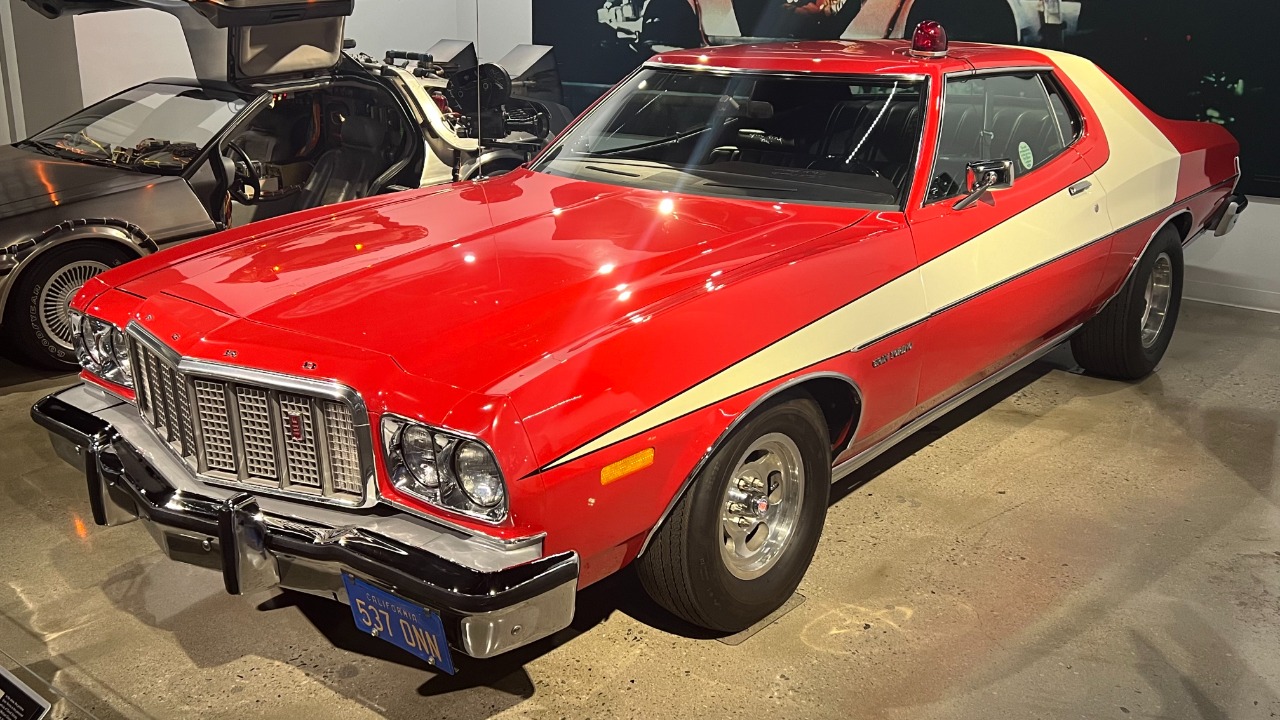
The 1976 Ford Gran Torino arrived at the tail end of Detroit’s big-car era, a moment when size was still a selling point even as fuel prices and regulations were starting to bite. By then, Ford had spent nearly a decade stretching and reshaping the Torino line, and the Gran Torino had evolved into a full-size statement of comfort, presence, and unapologetic bulk. When I look at that final model year, I see a car that did not just tolerate its dimensions, it treated them as a feature.
To understand why the 1976 Ford Gran Torino leaned into size so confidently, you have to trace how the Torino family grew, how the market shifted around it, and how its driving character tried to reconcile muscle-car memories with emerging expectations for refinement. The story runs from early intermediates to a full-size cruiser, from track-inspired fastbacks to TV-star hero cars, and it ends with a machine that made its mass part of its personality rather than something to hide.
From intermediate upstart to full-size Ford heavyweight
When the Torino name first appeared, it was attached to an intermediate that slotted below Ford’s biggest sedans, but the car did not stay modest for long. As the muscle era heated up, the Torino grew in both footprint and ambition, mirroring the way American buyers equated more sheet metal with more status. Over successive redesigns, the line added length, width, and curb weight until the Ford Gran Torino emerged as a full-size car produced by Ford from 1972 to 1976, positioned as a continuation and update of the 1970 to 1971 Ford Torino. By the time the 1976 model rolled off the line, the nameplate had completed its journey from mid-size contender to big-car mainstay.
That evolution did not happen in a vacuum. The second generation, often remembered as the most dramatic stylistic leap, literally stretched the formula. Enthusiasts who rank the eras place the Rank #2: Second Gen 1970 and 71 cars as a favorite, noting that, like its stablemate Mustang, the Torino grew in size and weight and that the wheelbase added an inch, which all enthusiasts know translated into a more substantial presence. That extra span set the stage for the Gran Torino that followed, because once the platform had been stretched and the market had accepted a bigger intermediate, Ford had permission to push the car even further into full-size territory.
The third generation doubles down on comfort and isolation
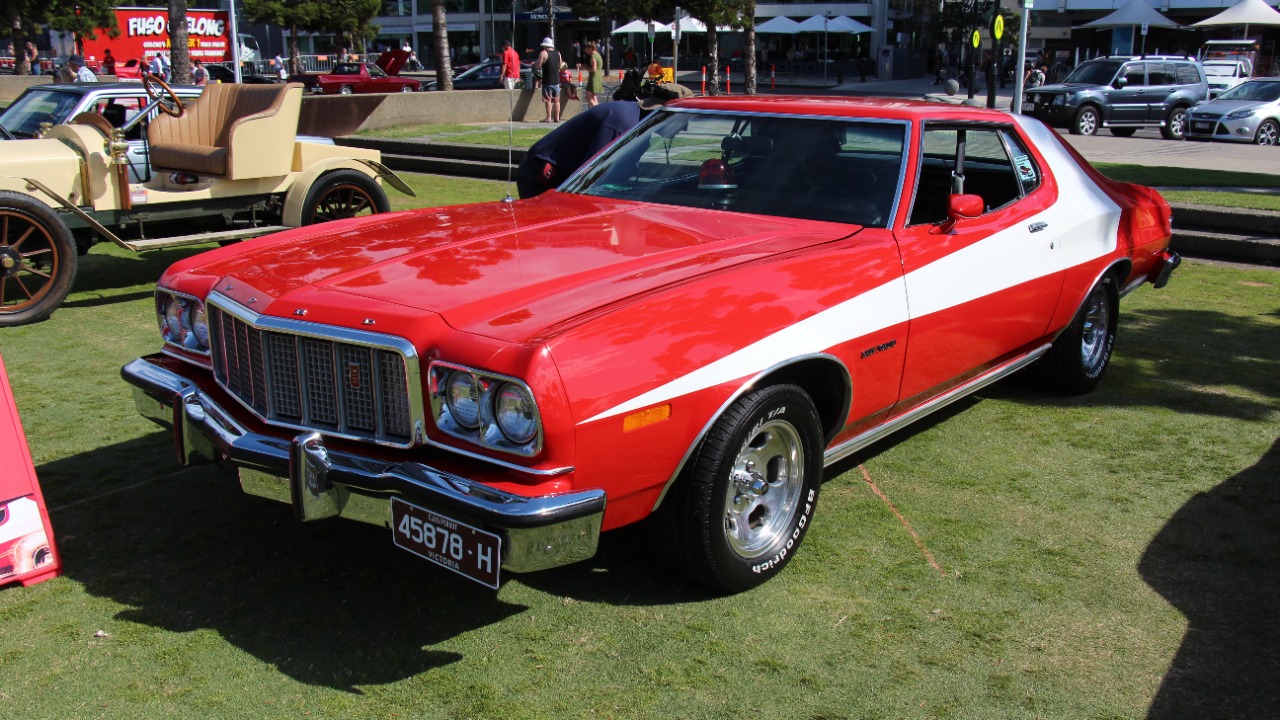
By the early 1970s, Ford had to reconcile the Torino’s growing bulk with changing expectations for ride quality and refinement. The third generation of the Ford Torino was a significant evolution compared to its predecessor, introduced with a clear focus on smoothing out the rough edges of earlier muscle-era cars. Instead of chasing ever-harder performance, the engineers leaned into the idea that a larger car should feel calmer and more composed, and they tuned the chassis and body structure to deliver a quieter and more isolated ride that suited the Gran Torino’s upscale positioning.
That shift in character is crucial to understanding the 1976 model’s personality. The same third-generation redesign that made the Torino bigger also made it more sophisticated, and the Gran Torino became the logical expression of that approach. As the line matured, the car’s size was no longer just about visual drama, it was about creating a cocoon for the driver and passengers. Contemporary overviews of the third generation of the Ford Torino emphasize how this era prioritized a quieter and more isolated ride, and that philosophy carried straight through to the final 1976 Gran Torino, which treated its generous dimensions as a platform for comfort rather than raw speed.
How the Gran Torino drove when big still meant desirable
On the road, the 1976 Ford Gran Torino felt every bit as substantial as it looked, but it also surprised drivers with a level of polish that earlier intermediates lacked. The Gran Torino offered a driving experience characterized by robust power delivery and a surprisingly refined ride, blending the torque-rich feel people expected from a big American V8 with suspension tuning that favored smoothness over razor-sharp responses. When I picture guiding one along a highway, I imagine the steering a bit relaxed on center, the body leaning gently in corners, and the car settling into a steady lope that made long distances feel shorter.
That balance between muscle and manners was not accidental. Period-focused analyses of The Gran Torino describe how the chassis delivered both stability and control, although it leaned towards the comfort side of the spectrum rather than outright sportiness. In practice, that meant the car’s size worked with its mission: the long wheelbase and wide track helped it track straight and soak up rough pavement, and the extra mass contributed to a sense of security that buyers in the mid 1970s still valued. Instead of trying to disguise its weight, the Gran Torino used it to project calm authority on the move.
Television fame and the visual drama of sheer bulk
Even if someone has never read a spec sheet, they probably know the Gran Torino from television, where its size and shape became part of its on-screen charisma. The most famous example is the bright red “Starsky and Hutch” car, whose long hood, broad shoulders, and sweeping white stripe turned the Gran Torino into a rolling character. In walkaround footage of a 1976 Ford Gran Torino Starsky and Hutch Edition, filmed in Sep, the camera lingers on the car’s expansive body panels and wide stance, and you can see how the proportions themselves do a lot of the storytelling. The car fills the frame in a way a smaller coupe never could.
That TV exposure did more than sell replicas, it cemented the idea that the Gran Torino’s bulk was part of its appeal. When I watch that Starsky and Hutch Edition roll past the lens, the overhangs and the sheer acreage of sheet metal read as confidence rather than excess. The car’s full-size status, already established when the Ford Gran Torino was defined as a full-size car produced by Ford from 1972 to 1976, translated perfectly to the screen, where visual presence matters more than lap times. The 1976 model, arriving as that TV fame peaked, leaned into that image with bold colors, vinyl roofs, and trim packages that highlighted rather than minimized its dimensions.
Why the 1976 Gran Torino still resonates in a downsized world
Looking back from an era of crossovers and strict efficiency standards, the 1976 Ford Gran Torino can feel like a relic from another planet, yet it continues to resonate with enthusiasts. Part of that staying power comes from the way the Torino line charted the broader arc of American car design, moving from lean intermediates to full-size cruisers as tastes and regulations shifted. Comprehensive guides to the Ford Torino generations trace how each redesign responded to market pressures, from the early performance focus to the later emphasis on comfort and isolation, and the 1976 Gran Torino stands as the final, fully realized expression of that journey.
There is also a certain honesty in how the car embraced its role. Instead of pretending to be a lightweight sports coupe, the 1976 Gran Torino accepted that it was a big, comfortable, full-size Ford and tried to do that job well. When I think about why people still seek out these cars, restore them, and debate which generation they prefer, I keep coming back to that clarity of purpose. The second generation that enthusiasts rank so highly, the third generation that refined the ride, and the full-size Gran Torino that capped the line all tell a consistent story: as the Torino grew, it did not apologize. It leaned into size, and in doing so, it captured a very specific, very American moment on four wheels.
More from Fast Lane Only: