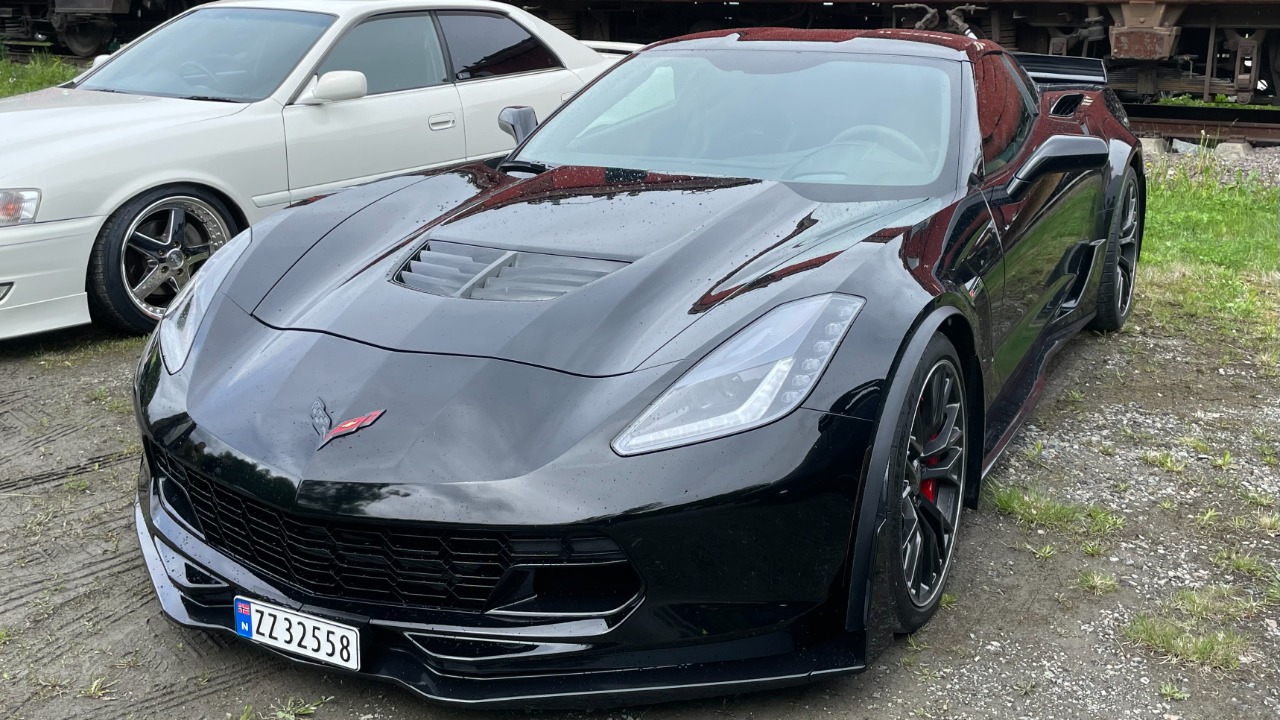
The 2015 Chevrolet Corvette Z06 arrived with the kind of spec sheet that usually belongs to hand built exotics, yet it wore a familiar badge and a price that undercut Europe’s elite. It did not just nibble at the edges of the supercar club, it went hunting for the established names that had long defined that world. To understand why it chased supercars so hard, I look at how it mixed raw numbers, race bred engineering, real world compromises and a still simmering debate over what “supercar” even means.
The powertrain that made supercars nervous
Any serious run at the supercar establishment starts with the engine, and the Z06’s LT4 V8 was a statement of intent. We are talking about a supercharged unit that produces 650 hp at 6,400 rpm and 650 lb-ft of torque at 3,600, figures that put it squarely in the same conversation as contemporary Italian and German halo cars. That output made it the most powerful power unit General Motors had ever put in a production car at the time, and it translated into the kind of instant, everywhere thrust that defines modern supercar performance. The LT4’s character, with a tidal wave of torque available low in the rev range, meant the Z06 could leap out of corners and past slower traffic with a brutality that felt more race car than boulevard cruiser.
Those numbers were not just impressive on paper, they delivered the kind of acceleration that forced people to rethink what a Corvette could be. Owners and testers reported the car ripping from 0 to 60 mph in under 3 seconds, with one enthusiast post highlighting that a 2015 Chevrolet Corvette Z06 accelerates from 0-60 mph in 2.95, a figure that plants it firmly in supercar territory. When you combine that launch with the LT4’s relentless mid range and the available manual or quick shifting automatic, you get a car that does not just keep up with the usual suspects, it occasionally embarrasses them on straight line runs. From a powertrain perspective alone, the Z06 had every right to line up against the world’s best.
Aero, grip and the Z07 obsession with lap times
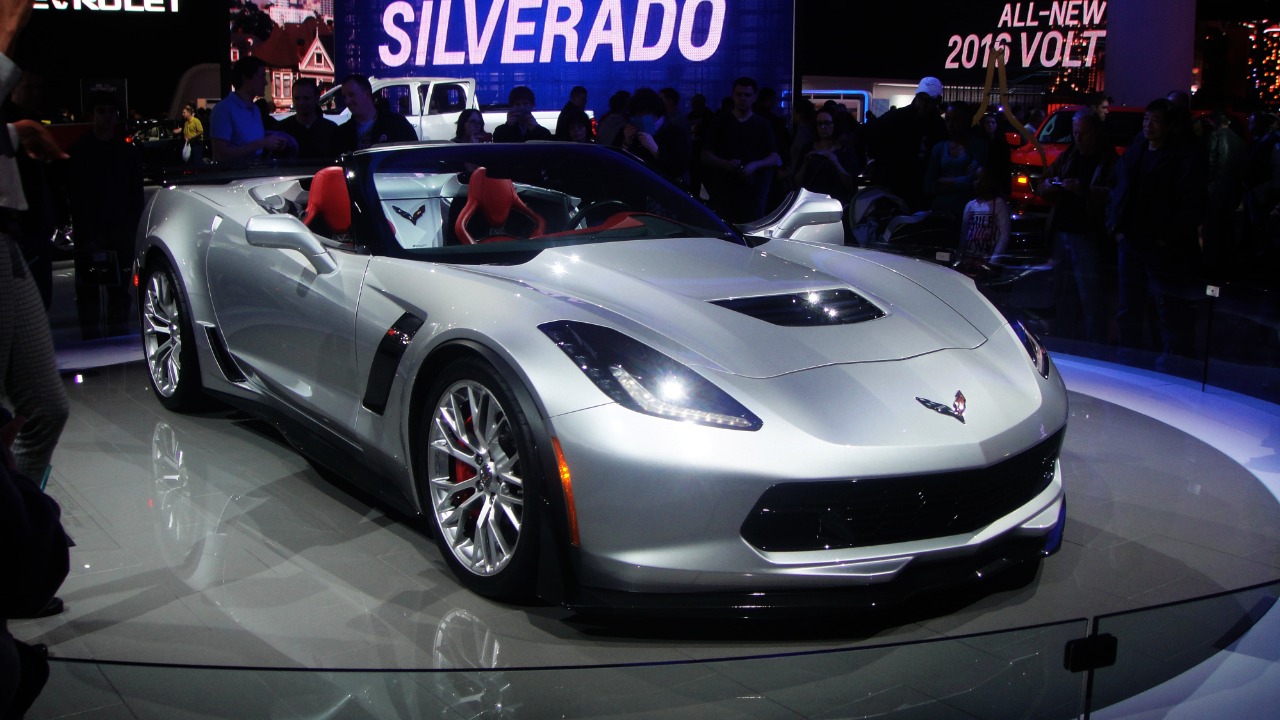
Power is only half the supercar story, and Chevrolet knew it had to back the LT4 with serious chassis and aero work if the Z06 was going to be taken seriously on track days. The answer was the Z07 Performance package, a bundle that turned the car into a downforce obsessed weapon. The package added larger end plates for the front splitter, an adjustable transparent wickerbill on the rear spoiler and Michelin Pilot Sport Cup 2 ZP tires, all aimed at squeezing every last bit of grip from the platform. That focus on aero balance and tire technology is exactly the sort of detail work that defines modern supercars, and it showed that Chevrolet was not content to rely on brute force alone.
The factory did not stop at the basic Z07 kit either, and the aftermarket quickly pushed the formula even further. One striking example is a 2015 Chevrolet Corvette Z06 Z07 Callaway SC757, which takes the already wild package and layers on Callaway’s tuning expertise to extract even more power and presence. On the engineering side, Chevrolet’s own development work framed the Z06 as part of a “new world order” for the brand, with the aero part of the Z07 package including larger front winglettes and a see-through rear spoiler that would not look out of place on a GT racing car. When you look at the Z06 through that lens, it is clear Chevrolet was chasing lap times and cornering speeds that belonged in the same conversation as the best from Europe and Japan.
Track manners, real world compromises and the heat problem
On a proper circuit, the Z06 could feel like a revelation, but it also exposed the fine line Chevrolet was walking between road car and track special. One detailed comparison of the 2015 Chevrolet Corvette Z06 vs 2015 Nissan GT-R Nismo noted that The Level 3 aero package (Z07) could actually be too much for certain tracks, with the extra drag and downforce demanding a very specific driving style to unlock its full potential. That kind of nuance is familiar to anyone who has tried to tame a serious supercar on a tight circuit, and it underlined how far the Corvette had moved from its old image as a straight line bruiser. The car’s Brembo carbon ceramic brake rotors and sticky rubber, highlighted in testing where All test results were achieved with Z06 coupes fitted with the Z07 Performance package, Brembo carbon ceramic brake rotors and Michelin Pilot Sport Cup 2 tires, gave it the stopping power and grip to match its ferocious acceleration.
Living with that level of performance, however, brought its own challenges, and the Z06’s cooling system became a recurring talking point as mileage climbed. A detailed look at common C7 issues notes that Overheating Issues in the C7 Corvette Z06 can lead to the car overheating and entering limp mode, particularly when driven hard in hot conditions. Another section in the same guide, titled Another significant issue, reinforces that owners needed to be mindful of how sustained track use could stress the cooling package. That trade off is not unique to Chevrolet, but it did remind drivers that they were piloting a machine tuned right to the edge of what a front engine, rear drive platform could handle, especially when pushed repeatedly to its limits.
From budget hero to “is it a supercar?”
Part of what made the 2015 Z06 so disruptive was how much performance it delivered for the money, a point that resonated far beyond traditional Corvette circles. In one video review titled “Why The 2015 C7 Corvette Z06 Is The BEST Performance Car,” the host Jun offers Special Thanks To Lafontaine Chevy of Dexter, Follow Us on Instragram while arguing that the car delivers the kind of thrills you would expect from a Ferrari for roughly a quarter of the price. Another enthusiast video, framed as THE ULTIMATE BUDGET SUPERCAR, pits a 650 HP Corvette Z06 vs. Stingray Z51 7-Speed Manual | Is Slower Sometimes Better, using that 650 figure to highlight just how far the Z06 stretches beyond the already quick Corvette Stingray. When you can buy that level of power and capability in a car that still offers a usable hatch and everyday ergonomics, it is no surprise that the value argument became a central part of the Z06’s appeal.
That value, however, also fed into a long running debate about whether the C7 Z06 truly counts as a supercar or sits in a slightly different category. On one enthusiast forum, a thread titled “Do you consider the Chevrolet Corvette Z06 C7 a supercar?” includes a comment that references the 911 G while arguing that cars like the C8 Z06 and 911 GT2RS are clearly supercars, and that the C7 Z06 sits close to that line. The commenter notes that the thing is that it can deliver performance worth twice its price tag, which captures the essence of why the 2015 Z06 chased supercars so aggressively. It may not have had the exotic mid engine layout or six figure sticker of some rivals, but in terms of raw capability and drama, it was playing in the same league.
Design, usability and the everyday supercar question
What really set the 2015 Z06 apart for me was how it blended that performance with a level of usability that many traditional supercars simply did not offer. A detailed road test described the 2015 Chevrolet Corvette as a technological tour de force, praising the way the supercharged V-8 could serve as a daily driver in places like Scottsdale, Arizona while still delivering track ready power. The same review pointed out that there is a hatch in back big enough for a carry-on and a briefcase, a detail that sounds mundane until you remember how compromised many mid engine exotics are when it comes to luggage and comfort. Inside, the C7 generation finally gave Corvette buyers the kind of materials and tech that felt worthy of the performance, which helped the Z06 feel less like a hot rod and more like a genuine rival to European grand tourers.
The structural engineering behind the convertible version also showed how seriously Chevrolet took the platform. A deep dive into the soft top model notes that the structure, built at GM’s Bowling Green Assembly plant, was designed to the specifications of the Corvette Stingray, Corvette Z06 and the Corvette Racing C7, which meant the open car did not feel like a floppy afterthought. That kind of rigidity is crucial when you are dealing with 650 horsepower and track capable suspension, and it helped the Z06 convertible earn its own “soft-top supercar” billing. On the road, reviewers who had previously dismissed Corvettes as crude found themselves admitting that after a drive in the Z06, you would never think about the badge the same way again, a sentiment captured in a review that described the Z06 as a machine that longs for the race track and performs as well as it looks on paper.
The cultural shift: from muscle car to track bred icon
Beyond the numbers and engineering, the 2015 Z06 marked a cultural pivot for the Corvette nameplate. Earlier generations had plenty of straight line speed, but they rarely earned the kind of respect from track focused drivers that European exotics enjoyed. That changed when testers started calling the 2015 Corvette Z06 a 650 HP All-American middle finger to Euro rivals, praising how incredibly good it was on track and how outstanding it felt when pushed hard. Another review framed the Z06, especially with the bad-ass Z07 package, as a delicious, all-American package of aerodynamics and tasty details that GM should celebrate, reinforcing the idea that this was not just a fast Corvette, it was a statement about what American engineering could achieve.
That shift also played out in enthusiast media and owner communities, where the Z06 was increasingly discussed alongside cars that had once seemed out of reach. A video review of a tuned example asked whether the Chevy C7 Corvette Lingenfelter Z06 has supercar credentials, while another clip dubbed the C7 CORVETTE Z06 CONVERTIBLE a soft-top supercar in its own right. Even practical guides that catalogued issues like Overheating Issues did so in the context of a car that owners were routinely taking to track days and high speed events, something that would have been less common with earlier generations. When you put all of that together, the 2015 Chevrolet Corvette Z06 did not just chase supercars on spec sheets and lap times, it helped redefine what the Corvette badge could mean in the modern performance car landscape.
More from Fast Lane Only: