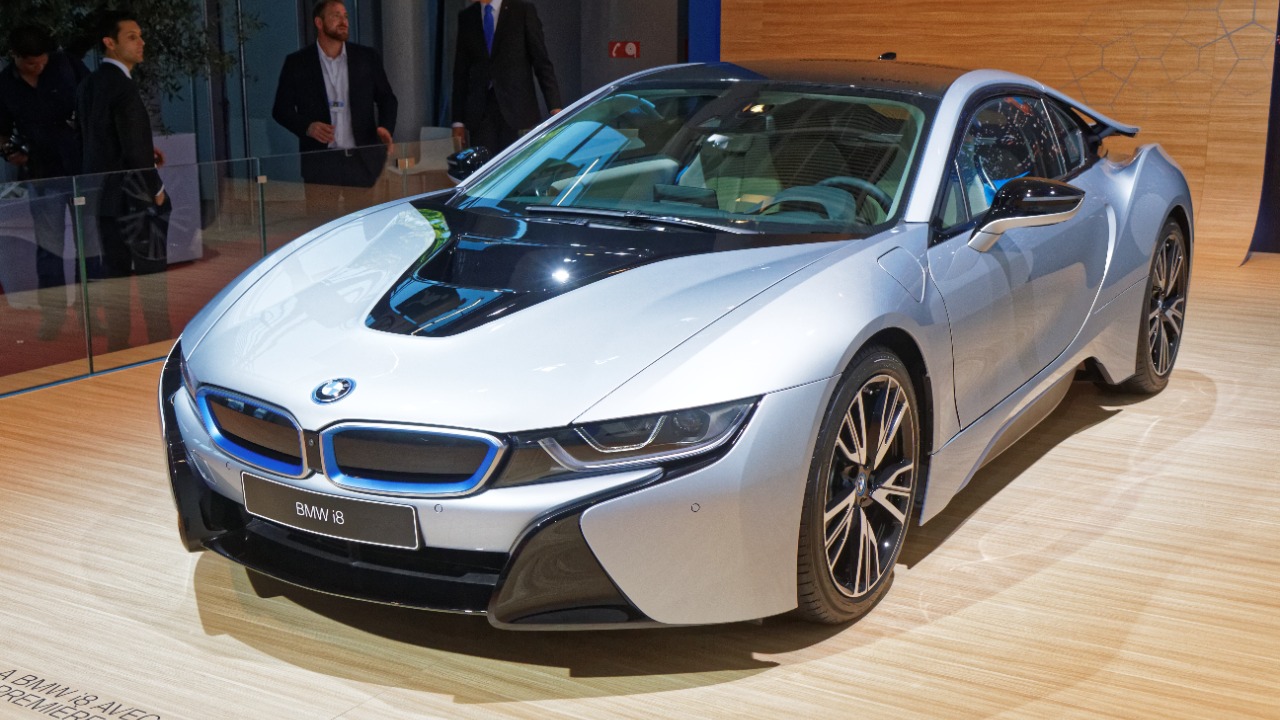
The 2014 BMW i8 arrived at a moment when “hybrid” still sounded like a compromise, a sensible choice rather than a dream car. Instead of leaning into that image, BMW wrapped plug‑in tech in a low, dramatic body that looked closer to a concept sketch than a commuter special. The result did more than turn heads at traffic lights, it proved that a car with batteries and a small engine could sit comfortably in the same mental space as Italian exotics.
Looking back now, I see the i8 as the car that made it socially acceptable for a hybrid to be poster‑worthy. It combined a futuristic silhouette, a carbon‑rich structure and a powertrain that treated efficiency as a performance tool, not a moral obligation. That mix, more than any single spec figure, is what let this BMW rewrite what a hybrid could look and feel like.
The concept car that actually made it to the street
Typically, radical show cars are watered down long before they reach a dealership, their wild lines sacrificed to crash tests and cost accountants. The i8 broke that pattern by arriving in production form with the same low nose, flying buttresses and dihedral doors that had made the original concept so arresting, a rare case where a dramatic prototype translated almost intact into a car you could register. Contemporary coverage noted how Typically concept machines either start outrageous and end up bland or never leave the show stand at all, which is exactly why the i8’s fidelity to its original vision felt so shocking.
BMW leaned into that sense of theater with details that would have looked at home at an auto show, from the layered rear bodywork that appears to float over the taillights to the cockpit that flows visually out of the exterior surfacing. The official legacy description of the BMW i8 highlights how the car was conceived from the outset as a plug‑in hybrid sports car rather than an electrified afterthought, which helped designers integrate its unusual proportions instead of disguising them. That commitment meant the i8 did not just resemble a concept car, it behaved like one in the wild, pulling eyes and smartphones in a way few hybrids ever had.
Design that looked like it drove out of a sci‑fi movie
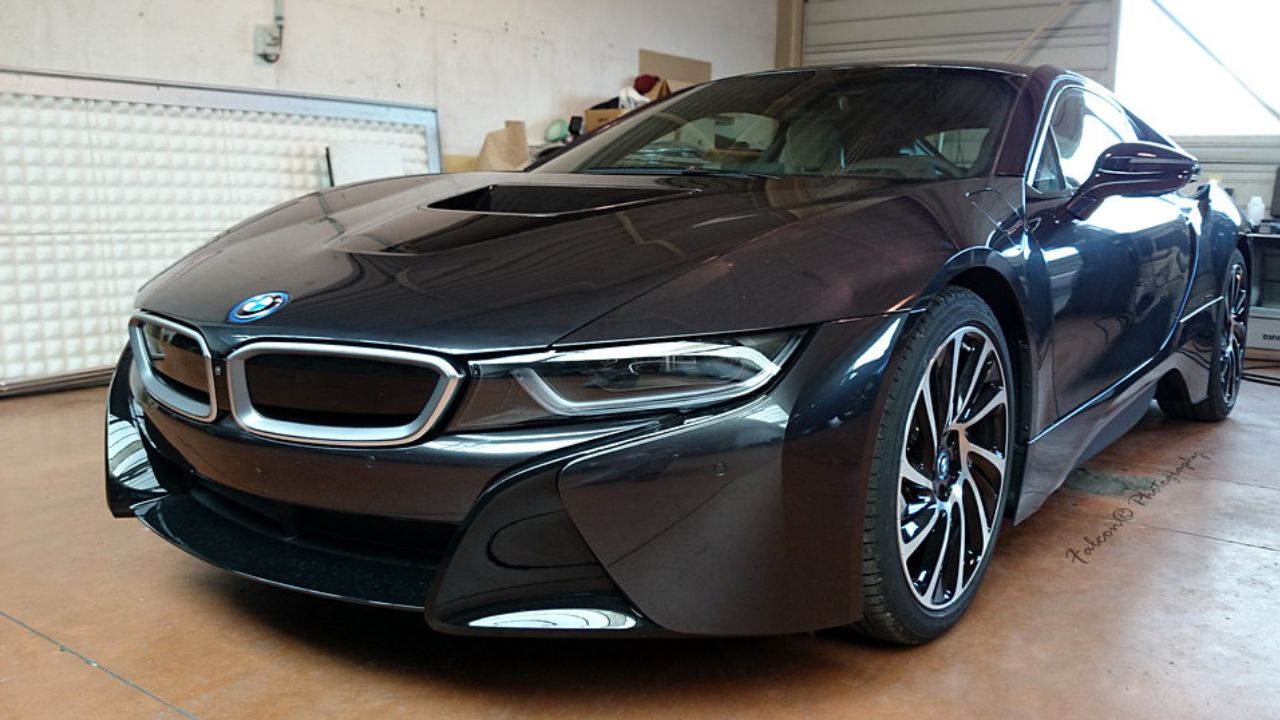
Even parked, the i8 reads like a piece of science fiction, and that is no accident. BMW’s stylists created what they called a “black belt” of contrasting bodywork that starts in a V shape on the hood, runs over the roof and then splits around the rear deck, visually separating the glasshouse from the muscular fenders. Detailed design notes explain how BMW designers used this dark ribbon to emphasize the car’s low stance while also framing the plug‑in hybrid’s battery packaging, so the visual drama and the engineering story were literally layered together.
From the side, the car’s Exterior surfacing is a study in negative space, with deep cutouts behind the doors that channel air toward the rear and create those signature flying buttresses. Official descriptions of the Exterior design stress that the sculpted panels were not just for show, they were shaped to manage airflow and reduce drag, which helped the i8 slice through the air more efficiently than many conventional sports cars. That blend of visual flair and aerodynamic purpose is what made the car feel like a spaceship that just happened to wear a license plate.
A carbon‑rich structure built for drama and efficiency
Underneath the styling, the i8’s structure was as unconventional as its silhouette, and that engineering allowed the designers to be so bold. BMW created what it called LIFEDRIVE ARCHITECTURE, splitting the car into a lightweight passenger “Life Module” and a separate “Drive Module” that carried the powertrain and battery pack. The Life Module used Carbon Fiber Reinforced plastic extensively, and official technical descriptions of this LIFEDRIVE ARCHITECTURE explain how The Life Module formed a high strength but low weight safety cell, while the lower structure housed the combustion engine, electric motor and batteries of an electric car.
That layout did more than tick engineering boxes, it gave the i8 its exotic stance. With the heavy components mounted low and centrally, the roofline could be dramatically low without sacrificing interior space, and the long wheelbase with short overhangs echoed classic supercar proportions. BMW’s own overview of the legacy i8 notes that this architecture was developed specifically for the brand’s electrified “i” sub‑label, which meant the chassis was not compromised by adapting an existing gasoline platform. In practice, that meant the car could look as radical as it did while still delivering the everyday usability that helped it stand apart from more temperamental exotics.
Performance that treated hybrid tech as a weapon
Visually, the i8 could stand next to traditional supercars, but its powertrain philosophy was very different, and that contrast is what made it such a turning point for hybrids. Instead of a big V8 or V12, the car paired a compact turbocharged three‑cylinder engine with an electric motor and a plug‑in battery, using the instant torque of electricity to fill in the gaps and sharpen responses. Early technical previews of the BMW i8 highlighted how the system was tuned to deliver all‑wheel drive when both power sources worked together, turning what might have been a fuel‑saving gimmick into a performance advantage.
From behind the wheel, that approach translated into a car that felt light on its feet and eager to change direction, more like a mid‑engined coupe than a heavy plug‑in. Reviewers who lived with the car for extended periods, including detailed video walk‑throughs such as the 2016 BMW i8 in depth review by Jan, often emphasized how the hybrid system blended power sources so smoothly that drivers could forget they were piloting a science project. In that review, the host from BMW i8 In Depth testing praised the way the car could cruise quietly in electric mode before snapping to attention when the gasoline engine joined in, a dual personality that made the i8 feel both futuristic and familiar.
A hybrid that still turns heads like a supercar
What really cements the i8’s legacy is how it continues to draw attention years after production ended, behaving in public more like a limited‑run exotic than a discontinued plug‑in. Owners and long‑term drivers often talk about the constant stares and conversations the car sparks, even in cities saturated with expensive metal. In one enthusiast video, Jun describes how driving the i8 still attracts “oh my god” reactions from pedestrians and other motorists, a reaction that underscores how the car’s shape has not faded into the background. That ongoing sense of occasion comes through clearly in the Hybrid Supercar video, where Jun notes that the looks the car gets today rival those of far more expensive machinery.
That enduring appeal has helped the i8 slide into a new role as a relatively attainable collectible, especially compared with the seven‑figure hypercars it once shared headlines with. Enthusiast analyses describe how The BMW i8 is framed as an affordable dream car, pointing out that The BMW coupe looks like a spaceship compared to most vehicles on the road while offering the lower running costs of a plug‑in hybrid. One such assessment argues that The BMW i8 has become an attractive entry point for collectors who want drama without the traditional supercar tax, precisely because it proved that adapting PHEV technology for performance could be both exciting and livable.
From “weird hybrid” to design icon
When it first appeared on public roads, the i8 did not fit neatly into any existing category, and that ambiguity became part of its charm. Some observers compared it to a UFO, and one memorable reflection described how The BMW i8 could be a spaceship, joking that it looked like it had just driven out of Area 51. That sense of otherworldliness is captured in a retrospective that calls The BMW i8 one of the coolest looking hybrids, a reminder that the car’s visual impact has outlasted the initial novelty of its powertrain.
At the same time, the i8 earned serious critical respect, not just curiosity. When it was unveiled, Receiving five‑star reviews across the board became part of its story, with commentators praising how the BMW i8 combined the thrill of a sports car with far lower emissions than traditional rivals. One overview of the best electric sports cars notes that Receiving
A canvas for art, tech and the future
The i8’s futuristic shape also made it a natural canvas for collaborations that linked technology with culture, reinforcing its status as more than just another model in the catalog. One of the most striking examples was the Futurism Edition, which celebrated Italian art and innovation by wrapping the car in a livery inspired by early twentieth century painters. Official commentary on that project notes that in more than 100 years of artistic and technological progress, the dialogue between design and engineering has only deepened, a point underlined by the 100 year span referenced in the collaboration’s description.
Those special editions did not change the fundamentals of the car, but they did highlight how naturally the i8 sat at the intersection of aesthetics and innovation. Even in its standard form, the car’s layered bodywork and illuminated accents felt like rolling installation art, and projects like the Futurism Edition simply made that subtext explicit. In that sense, the i8 did more than prove that a hybrid could look exotic, it showed that electrified performance could be a platform for creativity, a direction that later EV supercars have eagerly followed.
More from Fast Lane Only: