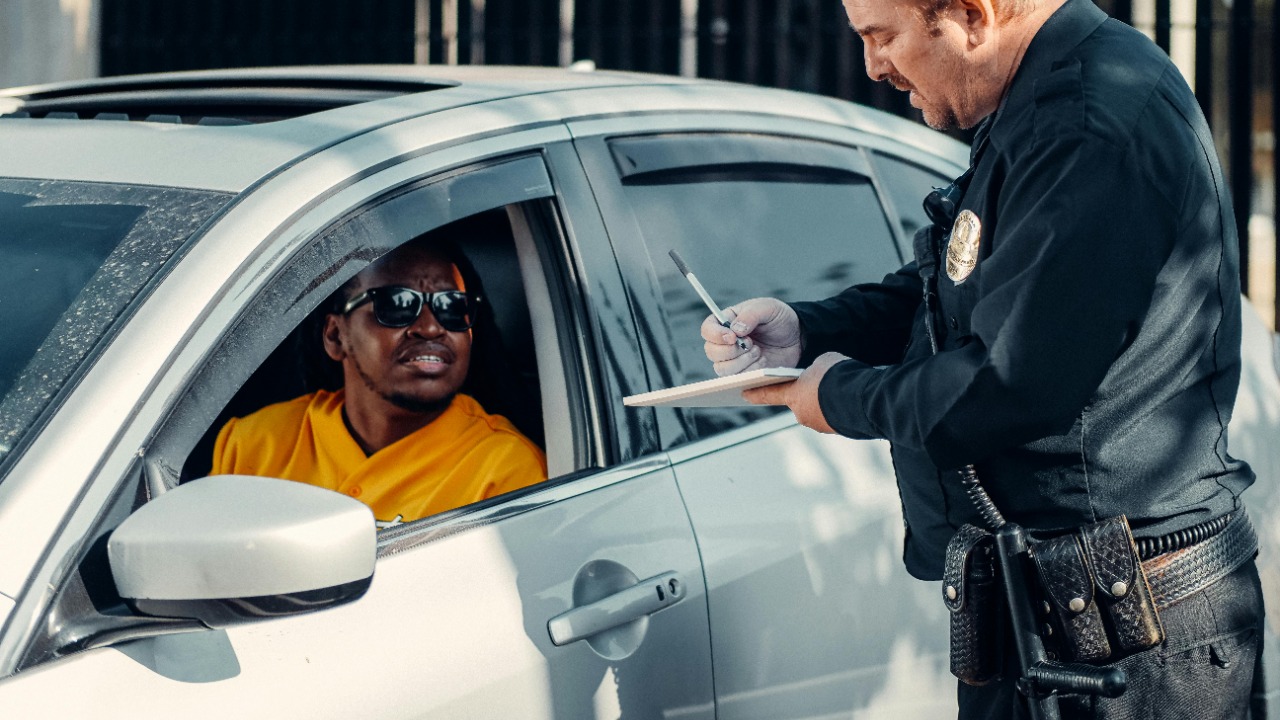
You probably think of a traffic stop as a minor inconvenience, a few minutes on the shoulder before you get back on the road. Yet research on police encounters, officer training materials, and even DUI defense videos all point to the same hard truth: the first seconds of contact between you and an officer can tilt everything toward calm conversation or toward arrest, fear, or violence.
Those opening moments carry so much weight because both you and the officer are reading each other, deciding how safe you feel, and locking in assumptions that can be hard to undo. By understanding what is happening in that tiny window, you give yourself a better chance to stay safe and protect your rights.
Why those first seconds feel so tense
When you see flashing lights in your mirror, your heart rate jumps. You may think about the ticket, your insurance, or what you did wrong. On the other side of the windshield, the officer is imagining something different. Training videos on high risk stops ask officers to picture pulling over a vehicle without knowing who is inside or what they might be carrying. That uncertainty is built into every stop, including yours.
Officer safety guides from the Office of Justice Programs break a stop into stages: the location, the way the cruiser is positioned, the approach to your door, and the officer’s reactions if there is a struggle. At each stage, the officer is taught to scan for danger and to assume that even a simple speeding stop could turn violent. You feel singled out. The officer feels exposed.
That mismatch is why you often hear the phrase that there is not any routine traffic stop. A post from a California highway unit put it bluntly: There is not any routine traffic stop. Sometimes an officer, whether thinking about family or another distraction, can pay for a lapse with their life. You might be thinking about getting home for dinner. The officer might be thinking about survival.
What the science says about first words
Researchers have started to measure how quickly those tensions show up in the way officers talk to you. One study, discussed in a segment with Amna Nawaz, analyzed 577 stops of Black drivers and found that the first 45 words spoken by the officer could help determine how that encounter ended. The segment on Black drivers linked those opening phrases to outcomes like tickets, searches, or worse.
Another research team asked people to listen to only the opening 27 seconds of recorded stops, then guess whether the stop ended in arrest. On average, the Black men in the study reported feeling more negative emotions after hearing just those first sounds of the encounter. The project, described in a Stanford business insight, found that listeners could often predict an arrest based only on tone and language in that short clip. The study on whether a police stop end shows how quickly your brain starts to judge whether you are in danger.
Computer scientists such as Eugenia Rho at the College of Engineering have gone further by using machine learning to examine vehicle stop footage. In work highlighted by Virginia Tech, Eugenia Rho emphasized the importance of first impressions, especially during vehicle stops involving Black male citizens. When you hear the officer’s first words, you are not just hearing information. You are hearing a signal about respect, threat, and how much power you have in that moment.
How officers are trained to control the scene
From the officer’s side, those first seconds are not improvised. Training materials on traffic stops teach officers to control the location, choose a safe angle to park, and decide how to approach your car. One set of Traffic Stops Training best practices urges officers to Control the Location and Choose positions that let them see your hands and limit your ability to surprise them.
Another training piece on Non Compliance During Traffic Stops, subtitled The Main Concerns of Police Officers Regarding Their Safety, explains that While traffic stops can seem like minor events to drivers, officers worry about sudden non compliance that can escalate into fights, foot chases, or shootings. The guidance on Non Compliance During tells officers to watch your body language from the moment they step out of the cruiser.
Officer survival videos hammer the same point. One clip on traffic stop safety warns that traffic stops are one of the most dangerous things patrol officers do and that none of them are routine. In those first steps toward your window, the officer is deciding where to stand, how loudly to speak, and whether to keep a hand near their holster. You may barely have your window down before the officer has already made a mental list of risks.
The extra weight of race and history
If you are a Black driver, those first seconds carry even more history. The research Amna Nawaz discussed was built on stops of Black drivers and connected officer language to patterns of searches and enforcement that fall disproportionately on Black communities. The same study that asked listeners to judge the first 27 seconds found that Black men often felt more anger and anxiety just from hearing the officer’s tone.
Survey work on policing has found that Racial disparities pervade police encounters. A national analysis of police contact described how Traffic stops are a common site of police violence and how Black people face higher rates of stops and force. The report on Racial disparities links those everyday roadside moments to broader questions about trust and legitimacy.
When you put that history into the first ten seconds, you get a volatile mix. You might remember names like Philando Castile or Tyre Nichols, whose deaths began with stops that were supposed to be minor. The officer might remember protests and headlines. Both of you arrive at the window with stories in your head that can make even a neutral greeting feel loaded.
What you say in a DUI stop
Defense lawyers who focus on DUI cases talk about this same ten second window, but from the angle of your legal risk. In one Instagram reel about DUI stops, a lawyer named David Ridings tells you that the first ten seconds can decide everything about the stop. The clip notes that the post had 48 likes and 2 comments and urges you to learn what to say and what not to say when the officer first leans in. The 48 likes are not the point. The point is that your first words can hand the officer evidence about drinking, impairment, or where you came from.
In a companion video, David Writings explains that usually when a police officer walks up to your car he is going to tell you immediately, Sir or ma’am my name’s David Writings, I am with the department, and here is why I stopped you. That script, shown in the DUI stop secrets video, is designed to sound polite and professional, but it also invites you to start talking. If you ramble, apologize, or volunteer that you are coming from a bar, you may make the officer more confident that a field sobriety test or arrest will hold up in court.
More from Fast Lane Only