It started the way a lot of car stories do: with a noise that didn’t sound expensive… until it did. For weeks, she’d been hearing a faint clunk when turning into parking spots and a little wobble on the highway that she kept blaming on rough pavement. Nothing dramatic, nothing that screamed “pull over,” just enough to make her turn the radio down and listen.
Still, the nagging feeling wouldn’t go away. She checked her tire pressure, cleaned out the trunk, and even convinced herself it was “just how this car drives now.” Then a friend mentioned that “weird little changes” can be how big problems announce themselves, and that was enough to book an appointment.
A routine visit that didn’t feel routine
When she brought the car in, she expected the usual: a quick test drive, a few guesses, maybe a suggested alignment. Instead, the mechanic asked a handful of questions that made her realize he was actually listening—when the sound happened, whether it got worse in the rain, how the steering felt at low speed. She later said it felt like describing symptoms at a doctor’s office, only with more grease under the fingernails.
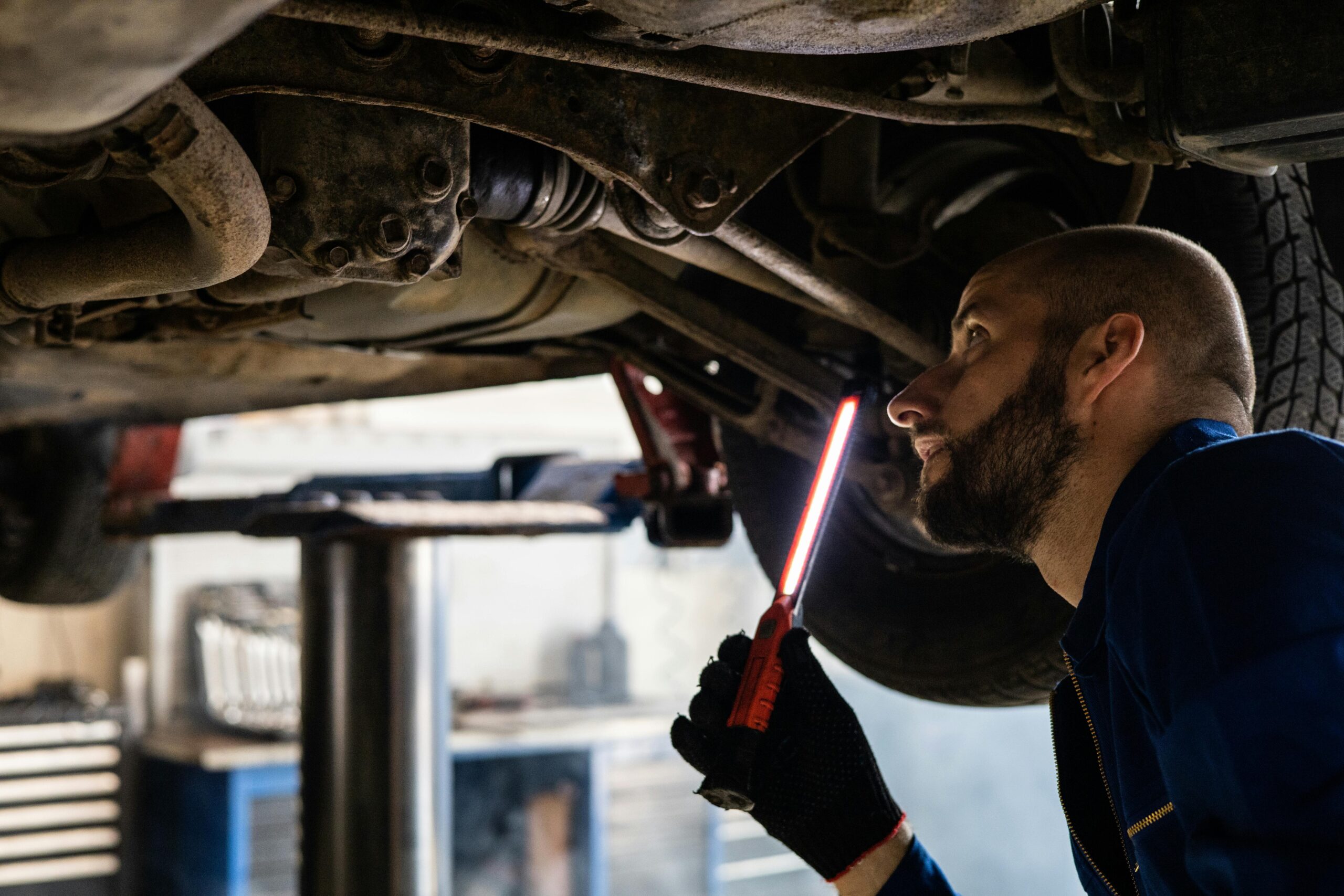
He took the car for a short drive and came back with the kind of calm expression that can mean anything from “easy fix” to “you’re not going to like this.” Then he put it up on the lift and started checking the usual suspects: suspension components, wheel bearings, brake hardware. So far, everything looked normal.
The moment: “That bolt shouldn’t be there like that”
The turning point, she said, came from something so small it sounded almost silly at first. While inspecting the underside, the mechanic paused, leaned in closer, and pointed out a single bolt that looked slightly off—like it wasn’t seated the way the others were. Not missing, not snapped in half, just… out of place.
To most people, a bolt is a bolt. But to someone who spends all day staring at the same layouts and patterns, one “wrong” fastener can stick out like a crooked picture frame. He told her it wasn’t just cosmetic: if that bolt wasn’t torqued correctly or had shifted, it could allow subtle movement where there shouldn’t be any, leading to the clunk she’d been hearing.
How one bolt can turn into a whole story
Once the mechanic spotted it, everything else lined up fast. He checked the surrounding hardware, compared it to the other side, and found signs that the area had been worked on before. That was the first “wait, what?” moment—because she hadn’t had any major work done recently, at least not that she remembered as “major.”
Then it clicked: months earlier, she’d gone in for what she thought was a straightforward repair after hitting a nasty pothole. The bill wasn’t outrageous, the car seemed fine afterward, and life moved on. Now the mechanic was suggesting that the earlier job may have involved removing parts in that area, and the bolt might not have been tightened to spec—or might have been the wrong type for the mounting point.
Why the symptoms were so easy to brush off
Part of what made the story so relatable is that the warning signs weren’t dramatic. A clunk at low speed can sound like anything: a loose item in the glove box, a shifting floor mat, even a creaky seat frame. And when the car still starts every morning, it’s surprisingly easy to tell yourself you’ll deal with it “next week.”
She admitted she did what a lot of people do: she adapted. She turned wider to avoid the sharpest angle that made the noise worse and avoided certain bumps on her commute like they were personal enemies. The problem with adapting, of course, is that it can mask an issue long enough for it to become a bigger headache.
What the mechanic checked next
After identifying the out-of-place bolt, the mechanic didn’t just tighten it and send her on her way. He inspected the surrounding components for wear, checking whether the movement had affected bushings, mounts, or alignment. He also looked for any signs of stress—metal that looked rubbed, shiny, or slightly ovaled where it should’ve been tight and still.
In her case, he said the good news was that the fix was relatively straightforward: replace the questionable hardware with the correct bolt, torque everything to manufacturer specifications, and re-check alignment. The “not-so-fun” news was that a small amount of extra play had started to wear a nearby bushing. It wasn’t catastrophic, but it was on its way to becoming one of those repairs that snowball if ignored.
The emotional whiplash: relief, then annoyance
She described feeling relieved first—because the car wasn’t falling apart in some mysterious, expensive way. There was an actual explanation, and it wasn’t in her head. The sound had a source, and it made sense.
Then came the annoyance. If the bolt had been installed incorrectly during earlier work, that meant the whole situation might’ve been avoidable. It also meant she’d spent weeks second-guessing herself, wondering if she was being paranoid, when in reality her car was politely asking for help.
A tiny detail with big implications
Stories like this spread because they hit a nerve: most of us assume major problems come with major warnings. Smoke. Grinding. A dashboard lighting up like a holiday display. But plenty of real issues start as whispers—little sounds, small vibrations, the faint feeling that something isn’t quite right.
Mechanics who are good at their jobs often talk about pattern recognition. They notice what “normal” looks like on a specific model, and they’re quick to spot when one fastener, clip, or bracket breaks that pattern. It’s not magic, just experience—and it’s the difference between guessing and diagnosing.
What drivers can take from it (without becoming bolt detectives)
Her biggest takeaway wasn’t that everyone should start crawling under their car with a flashlight. It was simpler: if your car starts acting differently—new noises, new vibrations, changes in steering feel—it’s worth writing down when it happens and getting it checked before it becomes a bigger repair. The earlier you go in, the more likely it’s a small fix instead of a chain reaction.
If you’ve had suspension, wheel, or brake work done recently and something feels off afterward, it’s also okay to ask questions. What parts were removed? Were new bolts used where required? Were they torqued to spec? A good shop won’t be offended; they’ll usually be happy to explain, and the best ones will appreciate that you care.
In the end, she drove away with a quieter car and that oddly satisfying feeling of having solved a mystery. One bolt, slightly out of place, turned out to be the clue that made the whole timeline click. And if nothing else, it’s a reminder that sometimes the smallest things really do rattle the loudest.
More from Fast Lane Only