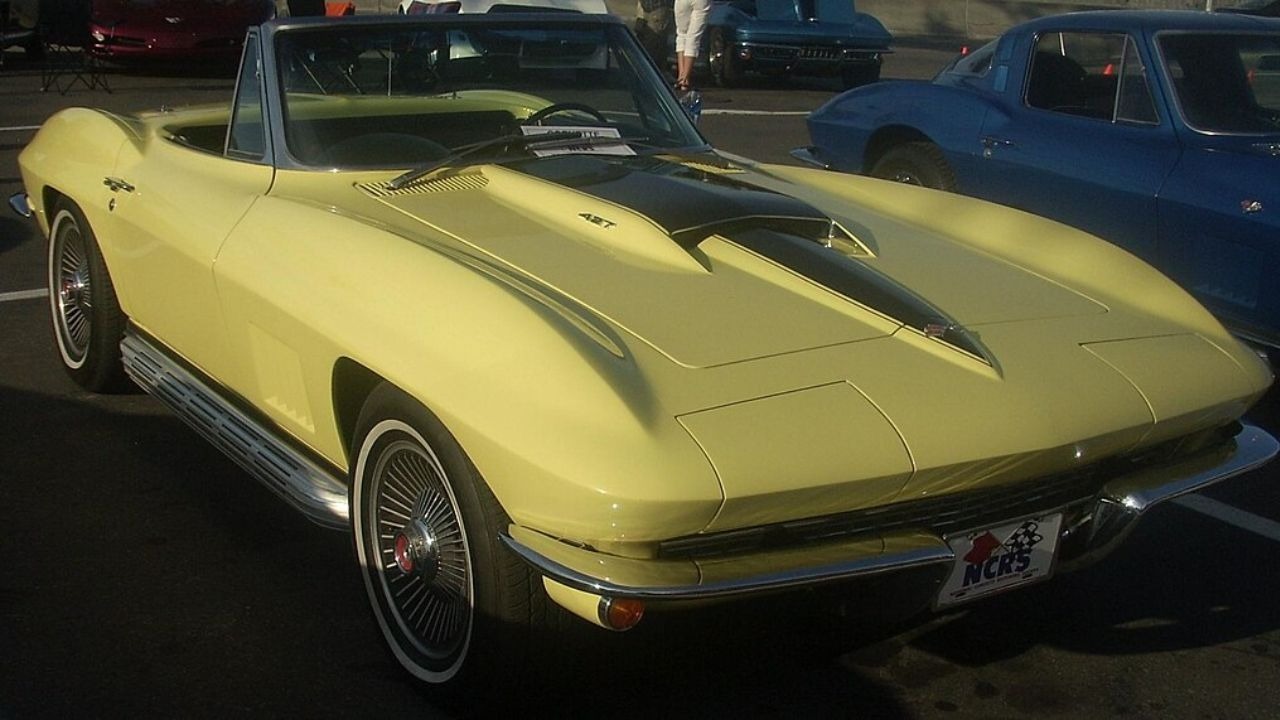
The 1967 Corvette L88 looked like any other big-block Sting Ray sitting on a showroom floor, but it was quietly engineered to punish your wallet and your nerves if you tried to use it like a normal car. Built as a factory racing weapon that just happened to carry license plates, it demanded race fuel, track prep, and deep pockets long before it became a seven‑figure collectible. If you are drawn to machines that blur the line between road car and race car, the L88 is the moment when Chevrolet pushed that idea to its most extreme.
Today you see the 1967 L88 described as a “holy grail” Corvette, a car that can bring millions at auction and still feel barely tamed. Yet the same traits that now make it legendary once made it a financial and practical nightmare for anyone who bought one expecting a fast weekend cruiser. To understand why, you have to look at how deliberately Chevrolet stacked the deck toward the racetrack and away from everyday life.
The secret race motor hiding in plain sight
From the start, the L88 was not built for you to commute in, it was built for you to win with. Inside that familiar C2 body sat The Chevrolet L88 427 big‑block V8, a racing engine first and a street engine second, with high compression, aggressive internals, and a focus on surviving flat‑out abuse rather than idling in traffic. Factory literature framed it as just another option, but under the skin it was a competition package disguised as a production Corvette.
Chevrolet’s own documents described What Is a Corvette L88 in almost clinical terms, yet the intent was clear: this 427 was engineered for sanctioned competition, then slipped into regular production so privateers could buy it over the counter. Only 216 L88 Corvettes were produced in total, with just 20 in 1967, 80 in 1968, and 116 in 1969, a tiny run that reflected how specialized the package really was for serious racers rather than casual Corvettes fans who wanted a fast street car.
Underrated power and track‑only hardware
If you had walked into a dealership in period, the spec sheet would have tried to talk you out of the L88 even as it tempted you. Horsepower was laughingly underrated at 430, or five fewer horses than the L71 427, a deliberate move to steer the unknowing away from the most extreme option and keep the insurance companies calm. In reality, period testing and later analysis suggest the engine was far stronger than that polite figure, especially when tuned for the race fuel it was designed to drink.
Under the hood, the L88 Configuration was Born To Dominate, with Technical Highlights like a Forged steel cross‑drilled crankshaft and four‑bolt mains that pointed straight at endurance racing rather than boulevard cruising. In terms of power, the L88 engine was officially rated at that modest figure, but it relied on a radical camshaft, high compression, and racing fuel requirements that made it temperamental on pump gas, as detailed in period performance notes that also mention how teams often swapped the cast‑iron exhaust manifolds for headers to improve flow and reduce its weight.
Why regular buyers were never supposed to want one
Chevrolet did not just rely on a low advertised Horsepower number to keep casual buyers away, it booby‑trapped the order form. The L88 package was unavailable with creature comforts, so if you checked that box you lost basics like a radio and a heater, and you were forced into heavy‑duty cooling with an aluminum cross‑flow radiator and other race‑ready hardware. To drive the point home, a sticker between the seats on an L88 even reads “Warning: vehicle must use 103 octane fuel,” a blunt reminder that this Corvette was calibrated for the pits, not the gas station on the corner.
That strategy fit a broader pattern inside Chevrolet, where engineers and product planners quietly built a Corvette so powerful they tried to hide it from regular buyers. In enthusiast retellings you hear how Chevrolet and Chevy marketing essentially created a wink‑and‑nod system, where only insiders who understood the order codes and the fine print would end up with an L88, while everyone else was nudged toward more civilized big‑block Corvette options that still felt wild but would not strand you hunting for race gas on a Sunday night.
Driving experience: brutal, expensive, unforgettable
If you did manage to buy one, the Driving Experience and Handling Dynamics were as raw as the paperwork suggested. Reports describe the L88 as a brutal, unadulterated driving experience, with savage acceleration, a heavy clutch, and a chassis that came alive only when you pushed it hard enough to scare yourself. On public roads it demanded constant attention, tramlining on imperfect pavement and drawing police and bystander attention in equal measure every time you leaned on the throttle.
That intensity translated directly into cost. You were feeding a high‑compression 427 that really wanted racing fuel, chewing through tires and brakes, and living with a car that ran hot and rough in traffic because it had been tuned to sit at redline for long stretches. Contemporary accounts of Driving Experience and Handling Dynamics make it clear that the L88 was happiest on a circuit, where its heavy‑duty suspension, competition‑grade cooling, and race‑bred engine could work together, and where you could justify the maintenance bills as the price of chasing lap times instead of just getting to work.
From financial burden to million‑dollar obsession
For the handful of original owners who tried to daily‑drive one, the 1967 L88 could feel like a money pit. Only 216 L88 Corvettes were built, and that scarcity, combined with the car’s uncompromising nature, meant many were raced hard, blown up, or modified beyond recognition. Yet that same rarity and focus are exactly what turned the survivors into blue‑chip collectibles, with collectors now treating each remaining chassis as a piece of American racing history rather than a temperamental old sports car.
The market has responded accordingly. Another 1967 Corvette L88 Breaks Auction Record with $3.85 Million Sale is the kind of headline you now see attached to these cars, with one red‑on‑red Chevy Corvette L88 bringing $3.85 M at a high‑profile sale and cementing its status as a Million Sale benchmark. The World’s Most Expensive 1967 Corvette L88 Fails To Sell Again Despite a $2.6-Million Bid The saga shows how expectations have climbed, with one celebrated Chevrolet Corvette L88 that previously sold for $3.2 million now turning away a $2.6 offer as owners hold out for even higher numbers.
More from Fast Lane Only