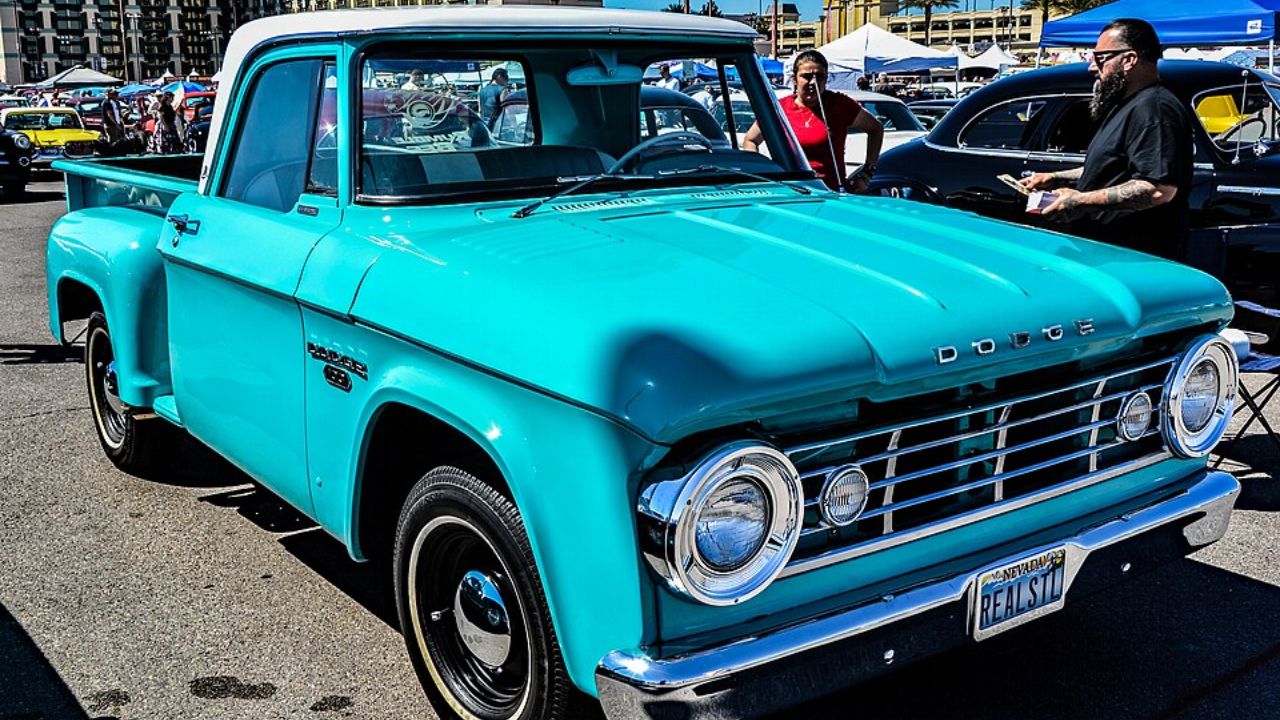
The old pickup looked like a time capsule at first glance. A 1967 Dodge D100 in that honest, work-truck stance, with paint that seemed sun-worn but authentic, and trim that looked like it had simply survived rather than been restored. The buyer figured they’d found one of those rare rigs that hadn’t been messed with much—just driven, parked, and remembered.
Then came the first wash. Nothing dramatic, no soap-and-water jump scare. But as the grime lifted and the surface started to shine in patches, something felt… off.
The “all original” vibe held up—until water hit the panels
Before the wash, the truck read as original in the way older vehicles sometimes do: slightly uneven gloss, light oxidation, and a few small flaws that looked earned. The seller had described it as “mostly original,” which is usually code for “it’s old, but it hasn’t been totally rebuilt.” And honestly, standing next to it, that story made sense.
After a careful rinse, the buyer noticed the paint didn’t behave consistently across the body. Water beaded tightly on some sections like a freshly waxed modern finish, but on other panels it sheeted off like tired single-stage paint that hadn’t seen protection in years. If you’ve ever watched water on a car hood and thought, “Huh, that’s weird,” you know exactly the feeling.
A faint line appeared where no line should be
Once the truck dried, a subtle edge became visible along a rear quarter area and near a door seam—almost like a boundary between two slightly different surfaces. In the shade it was hard to see. In direct light, it looked like a soft outline, the kind you might notice on a phone screen protector after you finally see the corner lifting.
The buyer ran a fingertip over it and felt a tiny change in texture. Not a sharp ridge, not a crack—just enough of a difference to trigger that little internal alarm bell. Original paint usually fades and thins, but it doesn’t typically form neat “zones” that stop and start at convenient places.
Small clues started stacking up fast
With the truck clean, more details stood out. The orange-peel texture—those slight ripples in the finish—looked different between the cab and the bed. One area reflected light with a smoother, more uniform gloss, while another had that flatter, chalkier look common to older finishes.
Then there were the fast, telltale tells: a tiny speck of paint on a rubber seal, a crisp tape line tucked inside a door jamb, and a spot where the color looked just a hair warmer under certain angles. None of these alone screams “repaint.” Together, they start to sound like a chorus.
Why a wash can reveal what photos hide
Dust is great at hiding sins. A slightly dirty truck can look wonderfully “survivor,” because grime softens reflections and makes everything feel uniformly aged. Once you wash it, the surface becomes honest again—especially if the paint has been cleared, blended, or corrected in patches.
Soap also strips some temporary shine. A truck that was dressed up for a sale might have had glaze, quick detailer, or even a heavy wax that made everything appear consistent. After the wash, that cover-up layer can vanish, and the underlying differences in paint, clearcoat, or repair work start to show themselves.
What it might be: repaint, blend, or smart cosmetic work
The most likely explanation is a partial repaint or blend from an older repair. Maybe the truck took a hit decades ago, got fixed, and was painted just enough to make it look right. A lot of trucks from this era lived working lives, and bodywork was more about “back on the road” than “perfect color match.”
Another possibility is that it’s wearing a newer clearcoat over older paint in certain areas. That can happen when someone tries to preserve patina but still wants protection, or when a panel gets resprayed and the shop clears the repaired section to match gloss. The result can look fantastic—until lighting, water behavior, or surface texture gives it away.
The real question: does it matter for a 1967 Dodge D100?
Here’s where it gets practical. A 1967 D100 isn’t usually bought because it’s a perfect museum piece; it’s bought because it’s cool, usable, and full of personality. If the truck runs well, has solid metal, and isn’t hiding major structural damage, a partial repaint might be more “normal history” than “deal breaker.”
But originality does affect value, and so does honesty in the listing. If someone paid a premium believing it wore factory paint everywhere, then discovering repairs matters. Not because repainting is evil—because the price should match the reality.
Easy ways buyers can check for paintwork—without turning into a detective
A paint thickness gauge is the cleanest shortcut if you can get one. Factory finishes tend to be relatively consistent, while repainted areas often read thicker, especially if there’s filler or multiple layers. Even a basic gauge can help you spot “this panel is different” in minutes.
Without tools, light and touch do a lot. Look along the body in low, angled sunlight and watch reflections bend across panels. Feel for edges around trim, door jambs, and weatherstrips where masking might’ve left a line. And check bolts on fenders and hinges—if the paint is chipped on bolt heads, it can hint something’s been off before.
What the buyer did next
After spotting the inconsistencies, the buyer took a slower walk around the truck and snapped close-up photos of the questionable areas. They checked inner lips of the bed sides, the backside of panels where overspray sometimes hides, and the cab corners where old Dodge trucks love to rust. The goal wasn’t to “catch” anyone; it was to understand what they actually owned.
They also reached out to the seller with a simple, calm question: had any paintwork been done that they knew of? Sometimes sellers genuinely don’t know, especially if they’ve owned the vehicle for a short time. Other times, that question gets you a story that suddenly explains the tape line you just met.
A classic-truck reminder: “original” is a spectrum
In the vintage truck world, “original” can mean a lot of things. It might mean original drivetrain but repainted body, or original body with replacement bed floor, or “it looks like an old truck and I didn’t restore it.” That’s not necessarily misleading—it’s just imprecise.
The wash didn’t ruin the magic of the D100. It just changed the story from “untouched survivor” to “lived-in classic with a few chapters filled in.” And honestly, for a 1967 workhorse, that’s not the worst twist—just the kind you’d rather learn before you negotiate the price.
More from Fast Lane Only