The 1967 Pontiac GTO gave buyers a rare choice between two distinct 400 cubic inch performance paths, the 400 HO and the Ram Air package. Each engine delivered serious speed, but they did it with different hardware, different personalities, and very different production footprints. Understanding how these two 400s diverged helps explain why one became the street hero and the other the legend.
The 400 HO served as the accessible high performance option, while the Ram Air setup turned the already potent 360 horsepower Tri-Power into a focused drag strip weapon. Enthusiasts still debate which configuration defines the ultimate 1967 GTO, yet the answer depends on how a driver values flexibility, rarity, and outright edge.
How Pontiac reshaped the GTO’s 400 lineup for 1967
Pontiac reshaped its midsize performance strategy in 1967 by retiring the earlier 389 and rolling out a new 400 cubic inch family for The GTO. The model offered several states of tune, with the base 400, the hotter 400 HO, and a top 360 horsepower Tri-Power configuration that could accept the Ram Air package. Reporting on the 1967 Ram Air notes that The GTO featured a new, upgraded 400-cubic-inch engine and confirms that both the 400 HO and the Ram Air build used this same basic displacement.
Engine development at Pontiac did not happen in isolation, since the broader Pontiac V8 family had already evolved through displacements like 370 and 369.4 cubic inches. Earlier engineering work increased bore size to 4+1⁄16 inches, which raised displacement to 369.4 cubic inches and helped set the stage for the 400. That same reference lists 370 and 103.2 m millimeter bore figures, which show how Pontiac steadily pushed its V8 architecture before settling on the 400 as the core of its late sixties muscle strategy.
Inside the 400 HO: street friendly muscle
The 400 HO sat between the base 400 and the wild Ram Air Tri-Power, and it targeted drivers who wanted strong performance without race car compromises. Factory fact sheets for 1967 Pontiac Mid Size Cars describe an optional GTO 335 horsepower V8 and detail camshaft timing, torque curves, and specific part numbers for the hotter engines. Those documents list camshaft timing figures such as Intake 273°, Intake 288°, and Intake 301°, along with torque ratings like 441 at 3400 RPM and 438 at 3600 and 3800 RPM, which highlight how Pontiac tuned the 400 HO for broad midrange pull rather than peaky race power, as shown in the Pontiac Mid reference.
Buyers who chose the 400 HO received a four barrel carburetor, hotter camshaft, and free flowing exhaust, yet they still kept full drivability and comfort options. The same fact sheet notes that only the Corvette may use multiple carburetors, which explains why Pontiac limited Tri-Power to specific applications and kept the 400 HO on a single four barrel. That rule appears in the 1967 Pontiac Mid Size Cars Factoids, which state that only the Corvette may run multiple carburetor setups inside General Motors, which shaped how Pontiac positioned the HO versus the Tri-Power Ram Air combination.
Ram Air as a Tri-Power based package, not an HO add on
The critical distinction for 1967 sits in the fact that Ram Air did not bolt onto the 400 HO, but instead built on the 360 horsepower Tri-Power engine. Contemporary coverage of the 1967 Ram Air GTO explains that The GTO used a new 400-cubic-inch engine in four states of tune, and that the top Tri-Power configuration, not the 400 HO, formed the basis for the Ram Air option. That same reporting notes that components from the 400 HO were also used, but the Ram Air package specifically targeted the highest output Tri-Power setup, which confirms that Ram Air did not serve as a simple add-on to the 335 horsepower HO, as detailed in the 1967 Ram Air overview.
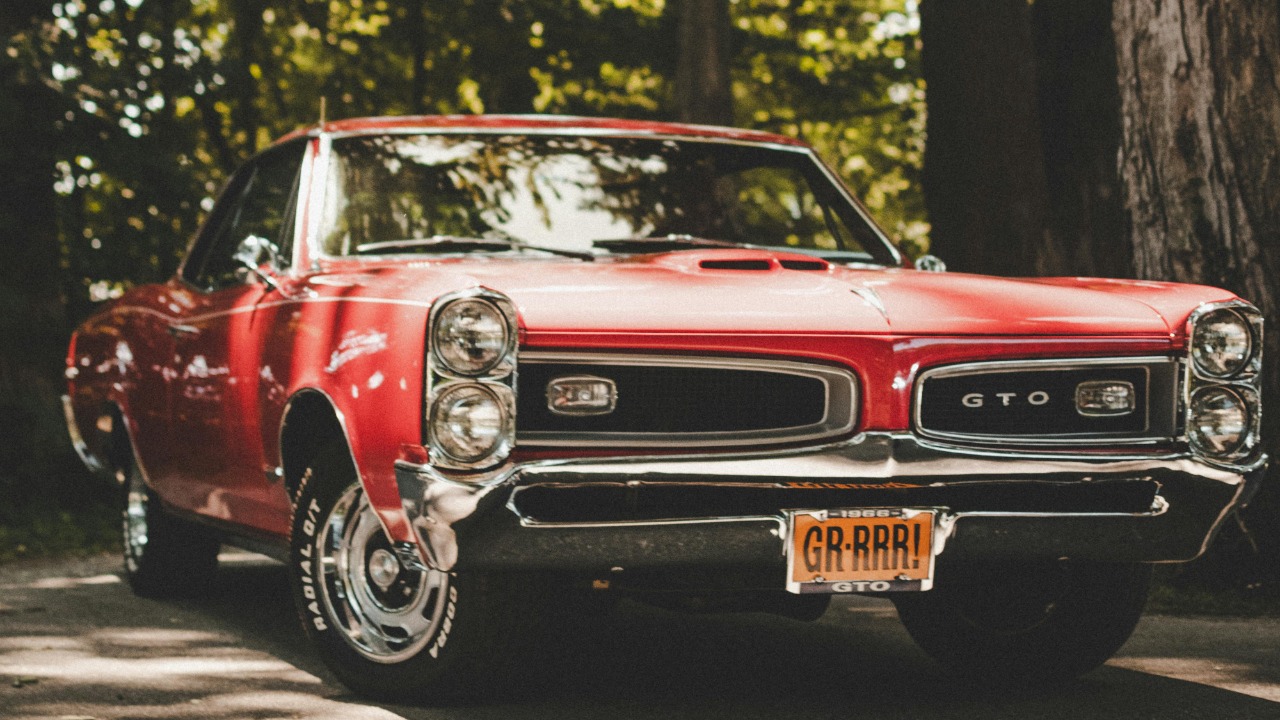
Period testing backs up that hierarchy by repeatedly citing 360 horsepower ratings for the most aggressive 400s. A later performance comparison of two 1967 GTOs describes both test cars and an unmodified GTO as using 360-hp, 400-cubic-inch V8 engines, which aligns with the Tri-Power and Ram Air specifications rather than the 400 HO. That report explicitly calls out 360-hp and 400-cubic-inch figures, reinforcing that the Ram Air package sat on top of the 360 horsepower Tri-Power foundation and not the 335 horsepower HO four barrel.
Hardware differences that separate HO and Ram Air
Hardware choices created the real gap between the 400 HO and the Ram Air Tri-Power. The HO relied on a single four barrel carburetor, a performance cam, and free flowing exhaust manifolds, while the Ram Air build combined three two barrel carburetors with a functional cold air system and valvetrain upgrades. A detailed profile of the 1967 Pontiac GTO notes that for another $263, the 1967 Pontiac GTO’s high output mill could be fitted with Ram Air, and that these ultimate GTO V8s used extra strong valve springs and a special hood pan with a foam rubber skirt, which sealed to the underside of the hood to feed cooler air, as described in the $263 upgrade summary.
Ram Air development did not stop with that first iteration, since Pontiac later refined the concept into multiple Ram Air stages. A technical review of Pontiac’s Ram Air engine production traces how engineers created Ram Air I, Ram Air II, and later versions, and it notes that enthusiasts still debate how to adapt parts like manifolds and heads to larger displacements such as 455 cubic inches. That same piece includes reader Comments from Richard Meredith, who wrote on June 11, 2023 about trying to fit a 455 using Ram Air components, which shows how the original 400 based Ram Air architecture continues to influence modern builds, as outlined in the sorting guide.
Real world performance and drivability contrasts
On the street, the 400 HO delivered a broad torque curve and easier manners, while the Ram Air Tri-Power rewarded aggressive driving and careful tuning. Contemporary road tests of the Ram Air GTO describe trap speeds that compared favorably with rivals like the Plymouth GTX, and one vintage review notes that The GTO’s trap sped made a revealing comparison with a 1967 Plymouth GTX hardtop that Car Life had tested earlier. That account of The GTO and the Plymouth GTX, drawn from a Car Life reprint, underscores how the Ram Air package pushed the GTO into “supercar” territory, as seen in the Car Life review.
Later coverage of Ram Air GTOs across several model years notes that the 360-horsepower 400 Ram Air remained relatively unchanged when Pontiac moved into 1968, even as the bodywork evolved. That same retrospective explains that the 360-horsepower 400 Ram Air became known as Ram Air I, which shows how Pontiac treated the 1967 specification as the baseline for later refinements. The piece dates from Dec 12, 2019 and highlights how the 360-horsepower 400 Ram Air in the 1968 GTO carried forward the core hardware and philosophy of the earlier car, as summarized in the 360-horsepower overview.
Rarity, restoration realities, and long term legacy
Production numbers and equipment rules made Ram Air GTOs far rarer than their 400 HO counterparts, which affects today’s collector market and restoration decisions. A feature on restoring a 1-of-751 1967 Ram Air GTO notes that Ram Air GTOs did not come with air conditioning, yet they still used the A/C radiator and support to improve cooling. That same piece, dated Mar 1, 2006, opens with the phrase Though Ram Air GTOs were not available with air conditioning and then explains how restorers chase correct parts and documentation, as detailed in the Though Ram Air feature.
Later engine programs at Pontiac built on the Ram Air concept and pushed it even further from the street friendly 400 HO template. A technical breakdown of Ram Air IV Specs notes that in 1967 Pontiac retired the Tri-Power setup and later introduced more advanced Ram Air versions, including Ram Air IV, which used a 400ci displacement with specific induction and valvetrain changes. That piece, dated Dec 9, 2024, includes a Ram Air IV Specs table with Displacement and Induction entries that list 400ci for both, showing how Pontiac kept the 400ci size while transforming the top end hardware, as described in the Ram Air IV Specs analysis.
Why the 400 HO and Ram Air comparison still matters
Modern enthusiasts still compare the 400 HO and the Ram Air Tri-Power because each engine represents a different philosophy within the same 1967 GTO lineup. The HO offered a balanced mix of power, comfort, and availability, while the Ram Air Tri-Power delivered maximum performance at the cost of complexity and scarcity. Later retrospectives on Pontiac’s Ram Air engines, including pieces dated Jan 8, 2018 and Dec 12, 2019, show how historians now group the original 1967 specification under the Ram Air I label and trace its influence on later packages, as seen in the Jan and Dec reporting.
The broader Pontiac V8 story also keeps the 1967 400s in context, since later engines like the 455 and advanced Ram Air variants built on the same architecture. Enthusiasts who study the Pontiac V8 engine family see how the 400 remained in production and how torque figures in 1968 reached significant levels, which underscores the strength of the basic design. That continuity, documented in the Pontiac V8 overview, helps explain why the 400 HO and the Ram Air Tri-Power still anchor debates about the greatest GTO engines of the muscle car era.