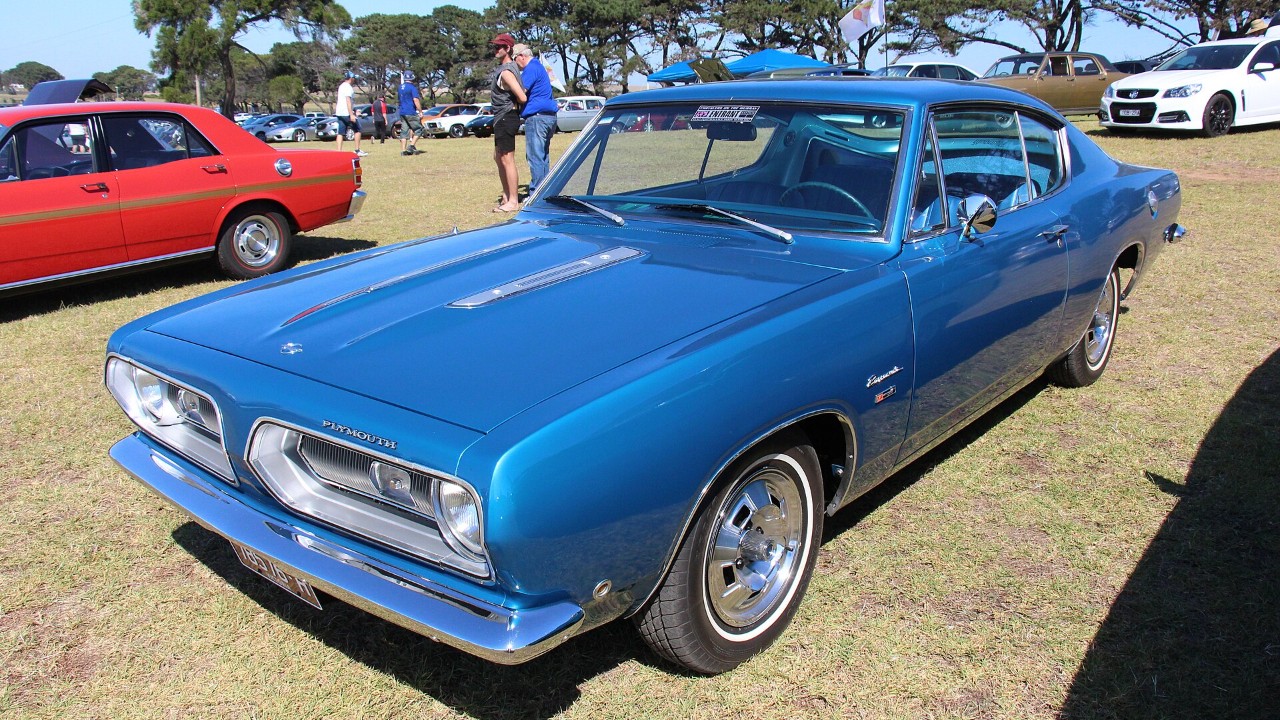
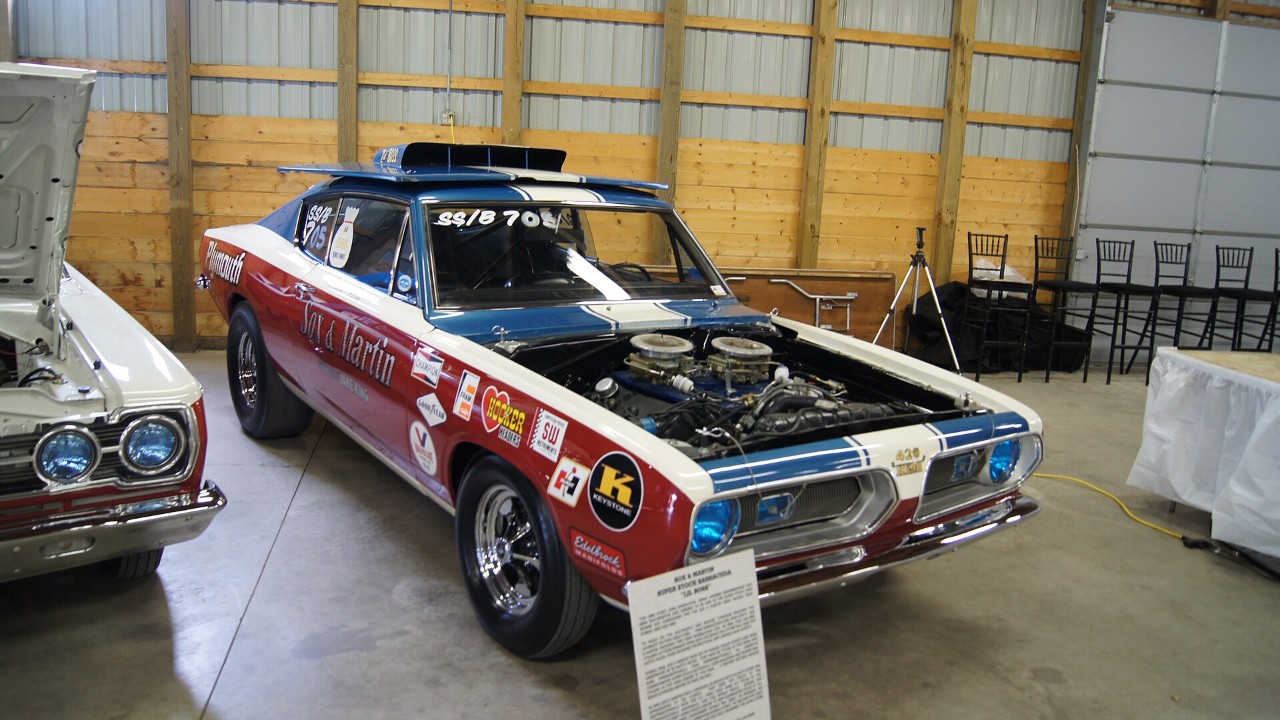
For the 1968 drag racing season, Chrysler built 50 lightweight 1968 Hemi Barracuda race cars, and Hurst helped put them together. Instead of street cars, they were stripped, lightened factory specials for NHRA’s Super Stock classes.
The recipe was simple on paper. Take Plymouth’s compact Barracuda fastback, fit the race version of the 426 Hemi, and pull out every pound that did not make it quicker. The recipe also included fiberglass front fenders.
Here is how Chrysler engineered the car, what Hurst did, and where the survivors are today.
Why Chrysler built 50 Hemi Barracudas
Super Stock racing had a production rule. According to the Barrett-Jackson catalog for one of the cars, NHRA required at least 50 identical cars for a model to qualify. As a result, Chrysler needed a batch, not a one-off.
The total is 50, according to NHRA’s own history of the program. “Chrysler built 50 Hemi Super Stock cars for the 1968 season,” NHRA writes, and Hurst partially built the production cars. Classic Industries also puts the run at approximately 50 Barracudas.
Barrett-Jackson adds that Chrysler hired Hurst to fit the 426 Hemi into both the Barracuda and the Dodge Dart. In other words, Plymouth’s car had a Dodge twin built for the same classes.
The mule: how the 1968 Hemi Barracuda started
Before Hurst touched a production car, Chrysler engineers built a prototype. NHRA says the mule began as a 1967 small-block Formula S Barracuda that already had street miles on it. Engineers in Highland Park, Michigan, then re-engineered it to take the 426 Hemi.
Tom Hoover, known as the “Father of the Hemi,” worked on it with Dick Maxwell, according to NHRA. They took the car to California to test at the original Irwindale Dragstrip. Meanwhile, they used special suspension changes and lightweight fiberglass front-clip parts to push it into the 10-second range.
That same mule survives. MoparInsiders calls it the very first prototype of the 1968 Hemi Barracuda. Myron Serbay of Plymouth, Michigan, has cared for it for more than 20 years, the site says.
What went under the hood
The engine was the race Hemi, not a street tune. NHRA describes 12.5:1 compression, Hooker headers and two Holley four-barrel carburetors on a cross-ram intake manifold. The cross-ram’s long, equal-length runners helped the power curve at high rpm, NHRA adds.
Barrett-Jackson’s description of a production car matches on the key points. It lists the cross-ram manifold, Hooker headers and 12.5 compression, with a manual-shift 727 TorqueFlite automatic and a 4.85 rear gear.
The mule itself has run both transmission choices. According to NHRA, it has used an A-833 four-speed manual and the TF-727 automatic. Power goes to the slicks through a Dana 60 rear axle with a 9¾-inch ring gear.
Fiberglass fenders and other weight cuts
Lightness was the whole point. MoparInsiders says the cars, coded B029, got lightweight fiberglass front fenders and thin glass windows. The cars also went without rear seats and sound-deadening material, and MoparInsiders credits Hurst Performance with the assembly.
Barrett-Jackson’s catalog goes further on the car it sold. There, the front fenders and hood are fiberglass, and its doors went through an acid dip. In addition, the interior lost its rear-view mirrors, and the seats are lightweight Dodge van buckets.
How quick were they? Factory cars could cover the quarter-mile in under 11 seconds, according to MoparInsiders. With further tuning, the site says, some have run 8.9 seconds at up to 148 mph.
Where the 1968 Hemi Barracudas are now
Several cars still race. NHRA says the B029 cars continue to race and win today, and they inspired the Sox & Martin Challenge. That annual event at the NHRA U.S. Nationals pits Dodge Darts against Plymouth Barracudas.
The mule had its own moment there. MoparInsiders reported in August 2024 that the restored prototype fired up to lead the parade of Sox & Martin Hemi Challenge cars at the U.S. Nationals.
Individual cars carry their own racing records too. Barrett-Jackson describes its lot as the second Hemi ‘Cuda Hurst built and the first to leave the shop, because the first car was destroyed. Philadelphia-area racer Jack Werst ran it from 1968 through 1970 as “Mr. 5 and 50,” and Barrett-Jackson sold it at its 2012 Scottsdale auction.
More from Fast Lane Only
- Unboxing the WWII Jeep in a Crate
- 15 rare Chevys collectors are quietly buying
- 10 underrated V8s still worth hunting down
- Police notice this before you even roll window down
This article was created with the help of AI and was reviewed and edited by Fast Lane Only editors before publication.