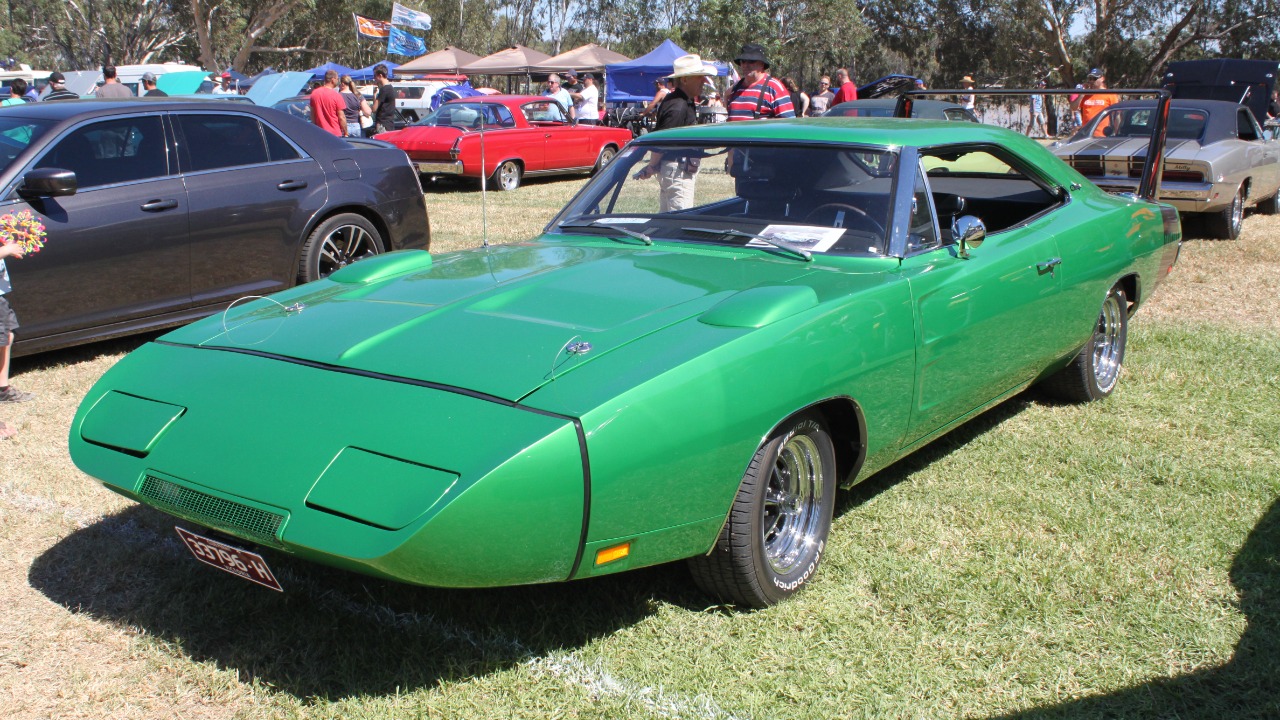
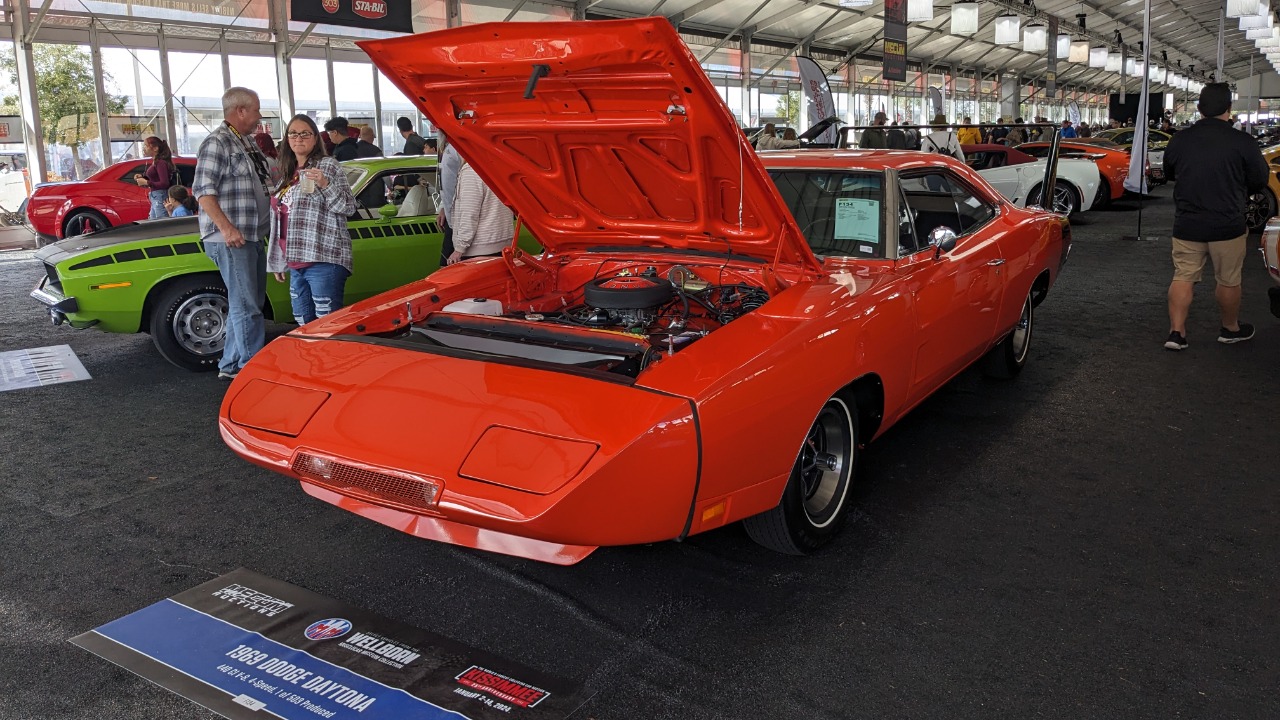
The 1969 Charger Daytona sits at the sharpest edge of American muscle car rarity, and recent auction results prove it. Collectors now treat the winged Dodge as a blue-chip asset, yet values still swing wildly depending on originality, options, and race-bred history.
I want to cut through the mythology and explain why some cars trade for house money while others remain “merely” expensive. The key lies in understanding how few Daytonas exist, how the market ranks their specifications, and why a handful of headline sales reset expectations for everyone else.
How rare is a 1969 Charger Daytona, really
Rarity starts with production, and even that figure sparks debate among specialists. One detailed account states that Only 505 units left the factory as the radical Dodge Charger Daytona for the 1969 model year, which already places the car in ultra-low volume territory. Another period focused source notes that Dodge produced 503 units for NASCAR homologation, so even the most generous count keeps the total under 510 cars. That tiny pool must now satisfy a global collector base that spans Mopar loyalists, motorsport historians, and investors who chase the rarest American aero machines.
Production numbers only tell part of the story, because survival rates and specification breakdowns narrow the field further. One valuation focused report describes the 1969 Dodge Charger Daytona as one of the most sought-after American muscle cars ever built, and that status reflects how few unrestored examples remain. Another detailed feature on a 1969 Dodge HEMI Charger Daytona notes that it belongs to a group of just Dodge Charger Daytonas built with that engine, which means the true pool of top-spec cars shrinks to a fraction of the already tiny production.
Why NASCAR roots drive demand and values
Collectors do not chase the Daytona only for its nose cone and rear wing, they chase its direct link to stock car racing. Dodge created the Charger Daytona to dominate NASCAR, and the car’s radical aero package helped push race speeds into uncharted territory. One detailed survivor profile notes that the Dodge Charger Daytona contributed to rule changes that reshaped American stock car racing after the 1971 season, which gives every surviving road car a direct line to that era’s most dramatic speed wars.
That competition pedigree now feeds straight into pricing, especially when a specific car carries documented race history or period-correct specification. A valuation deep dive on one record-setting Dodge Charger Daytona by Conner Golden explains how provenance, color, and options can push a car beyond typical guidebook estimates. When a Daytona checks every historical box, bidders do not just pay for fiberglass and sheet metal, they pay for a tangible piece of the sport’s most controversial aero era.
What recent record sales reveal about top-end pricing
Headline auctions now set the tone for the entire Daytona market, and the numbers keep climbing. One detailed sale report from Aug 18, 2024 states that a Dodge Charger Daytona reached $3.3-million, more than doubling the average price for the model and setting a new benchmark for the most expensive example. A video feature on the same Mecum event describes the car as SOLD FOR $3.3 MILLION, and highlights how that $3.3 M result set a new Mecum Auction Record for a Dodge Daytona. Those figures now anchor every negotiation around top-tier cars, because sellers can point to a concrete public result rather than vague market chatter.
Earlier coverage already signaled that the ceiling kept rising. A detailed analysis from May 29, 2022 notes that one Dodge Charger Daytona broke an auction record at the time, and Conner Golden argued that the car might have climbed even higher under different circumstances. That earlier record now looks modest next to the $3.3 result, but it helped normalize seven-figure expectations for the best examples and prepared the market for the leap that followed in Aug 2024.
How condition, mileage, and options shape real-world values
Not every Daytona sits in the same financial league as the record-setters, and condition remains the first major divider. A valuation guide focused on the Dodge Charger Daytona states that buyers typically can expect to pay around $384,500 for a car in good condition with average specification. That figure sits far below the auction peaks, yet it still reflects serious money for a driver-quality example. The same guide notes that the highest sale over the last three years reached $3,300,000, which shows how far the best cars can stretch beyond the “typical” range.
Mileage and originality then separate the merely valuable from the truly exceptional. One detailed feature on an unrestored survivor highlights a 1969 Dodge Charger Daytona with just 3,700 miles, and that kind of untouched condition commands a significant premium over restored cars. Another report on a Dodge Charger Daytona in Rare Color Packs Nasty Surprise Under the Hood, posted on Feb 21, 2025, describes a car with 44,000 miles and extensive upgrades that move it away from strict originality. Enthusiasts may love the modifications, but purist collectors usually pay the highest prices for cars that still match their factory build sheets.
How to read the market if you want to buy or sell
Anyone who wants to participate in this market needs to separate hype from data. I start by treating the big auction results as outliers that define the upper boundary rather than the norm. The Aug 18, 2024 record at $3.3-million and the Aug 21, 2024 coverage that framed it as $3.3 MILLION set expectations for the very best cars, but the guidebook figure of $384,500 for a typical Dodge Charger Daytona in good condition offers a more realistic starting point. I then adjust up or down based on engine, documented history, color, and how closely the car matches its original configuration.
Options and specification can swing values dramatically, so I pay close attention to build sheets and period documentation. The highly detailed profile of a 1969 Dodge HEMI Charger Daytona shows how a heavily optioned car can stand apart even within a run of 503 or 505 units. When I evaluate a car, I weigh those details alongside mileage and originality, because the market now rewards the rarest combinations of specification just as strongly as it rewards low production.