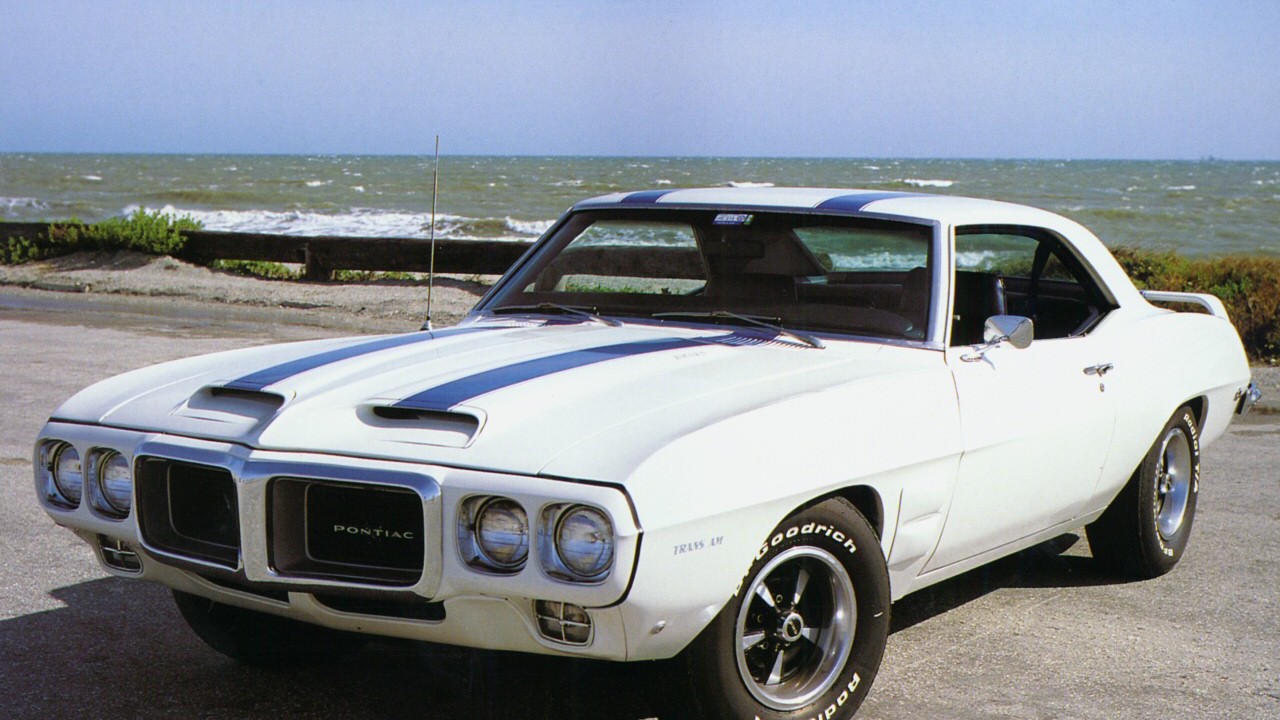
Pontiac built just eight examples of the 1969 Trans Am convertible, the open version of a brand-new performance package for the Firebird. The coupe was scarce too, at 689 cars. Pontiac also paid the Sports Car Club of America $5 a car to use the name.
That name stayed in Pontiac’s lineup until 2002. However, the first Trans Am was a small, late-arriving option that most Firebird buyers never ordered. Its convertible version barely existed at all.
Here is what the package included, where the name came from and why Pontiac built so few. Each figure below comes from an RM Sotheby’s catalog essay, Hagerty and a model-year reference, and this story flags where they disagree.
A late arrival for 1969
The 1969 Firebird was already a changed car. According to Oldride’s 1969 Firebird history, it got a major restyle that year, with revised fenders, wheel openings, front and rear ends and interior. The Trans Am came later in the season.
Sources date that debut slightly differently. RM Sotheby’s catalog essay says Pontiac introduced the package at the Chicago Auto Show in February. Meanwhile, Oldride’s Trans Am page says Pontiac released a “little publicized option package” in the spring of 1969.
The package even cost different amounts depending on who you ask. Some references quote one option price and others a much higher one, so this story leaves the price out until a factory document settles it.
Paying the SCCA for the Trans Am name
The name came from road racing. As Hagerty puts it, “The livery and name echoed the SCCA’s Trans Am series,” a road racing series run by the Sports Car Club of America. In short, Pontiac was borrowing a racing series’ identity for a street car.
That borrowing came with a bill. The RM Sotheby’s essay says Pontiac paid “a $5 per car royalty to the Sports Car Club of America for the use of the name.” Similarly, Oldride describes a $5 license fee to the SCCA for each Trans Am it built and sold.
Five dollars a car sounds like pocket change. Even so, the name stayed on Pontiacs long after 1969. In fact, Hagerty notes the badge lasted from 1969 to 2002.
What the Trans Am package added
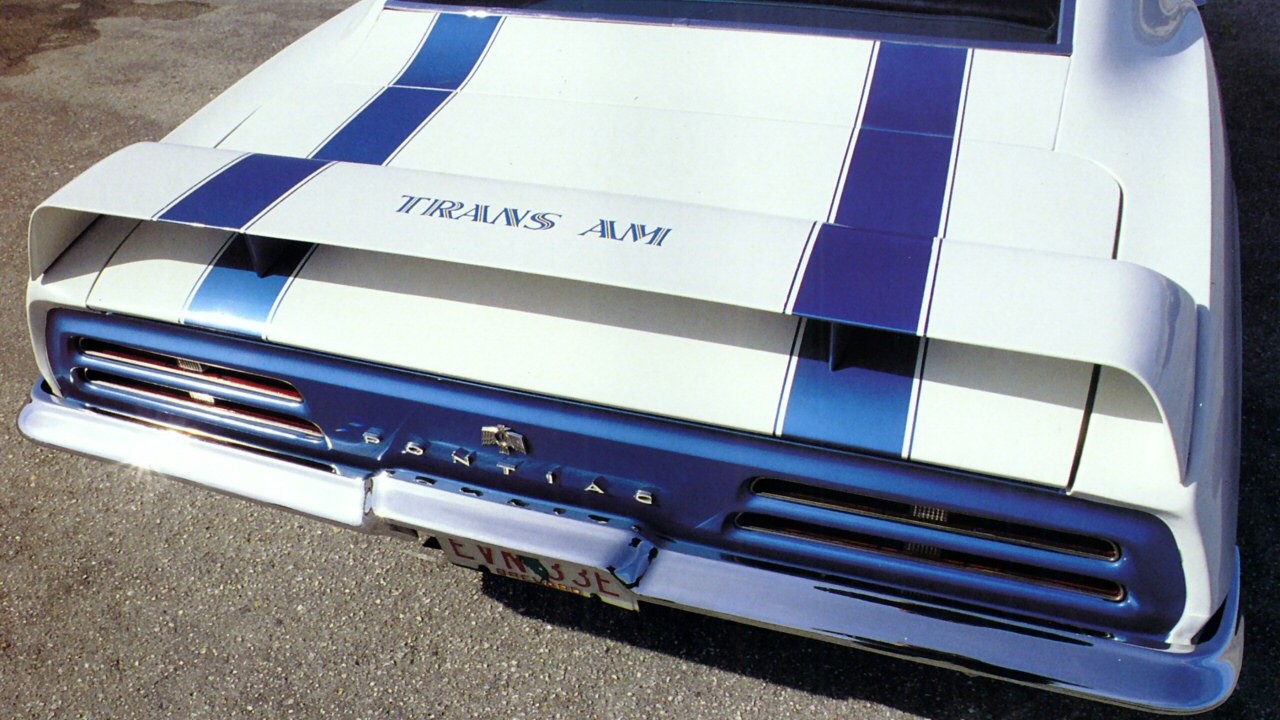
At first glance, every 1969 car looked the same from across a parking lot. Oldride says all Trans Ams were Polar White with blue racing stripes, a rear spoiler and decals. RM Sotheby’s describes the same Polar White paint with blue stripes and Trans Am lettering.
Still, the equipment went beyond paint. According to RM Sotheby’s, the package included the Ram Air 400 V8, heavy-duty suspension, power front disc brakes and variable-ratio power steering. It also added a special hood, fender scoops and a rear wing.
Better yet, those scoops did real work. Oldride says the hood had functional air intakes the driver could close, while the fender scoops vented the engine bay.
Two 400 V8s under the hood
Both engines displaced 400 cubic inches. Hagerty lists the Ram Air III setup at 335 horsepower and the Ram Air IV at 345 horsepower. Oldride also gives the Ram Air 400 a 335-horsepower rating.
The names can confuse buyers today. For example, the RM Sotheby’s essay calls the base engine the Ram-Air 400. By contrast, Hagerty calls the 335-horsepower engine the Ram Air III, the name most collectors use.
Why only eight 1969 Trans Am convertible cars exist
The production numbers lean hard toward the coupe. RM Sotheby’s says, “Only 689 coupes and eight convertibles were produced.” Hagerty gives the same numbers: “Pontiac made 689 Trans Am coupes, and a mere eight convertibles.” Oldride lists 689 coupes and 8 convertibles as well.
Put another way, the 1969 Trans Am convertible made up about one percent of a 697-car run. However, the sources give no reason for the split. What they do agree on is that the package arrived partway through the season, and it was an extra-cost option.
None of the sources here lists the colors or engines of the eight individual convertibles. As a result, any claim about a specific car should come with its own documentation.
Where the Trans Am went next
The badge outlasted that first small batch by decades. Hagerty calls the Trans Am a flagship performance car that ran from 1969 to 2002.
That 33-year run started with 697 white cars in 1969. Of those, according to RM Sotheby’s, Hagerty and Oldride alike, only eight were convertibles.
More from Fast Lane Only
- Unboxing the WWII Jeep in a Crate
- 15 rare Chevys collectors are quietly buying
- 10 underrated V8s still worth hunting down
- Police notice this before you even roll window down
This article was created with the help of AI and was reviewed and edited by Fast Lane Only editors before publication.