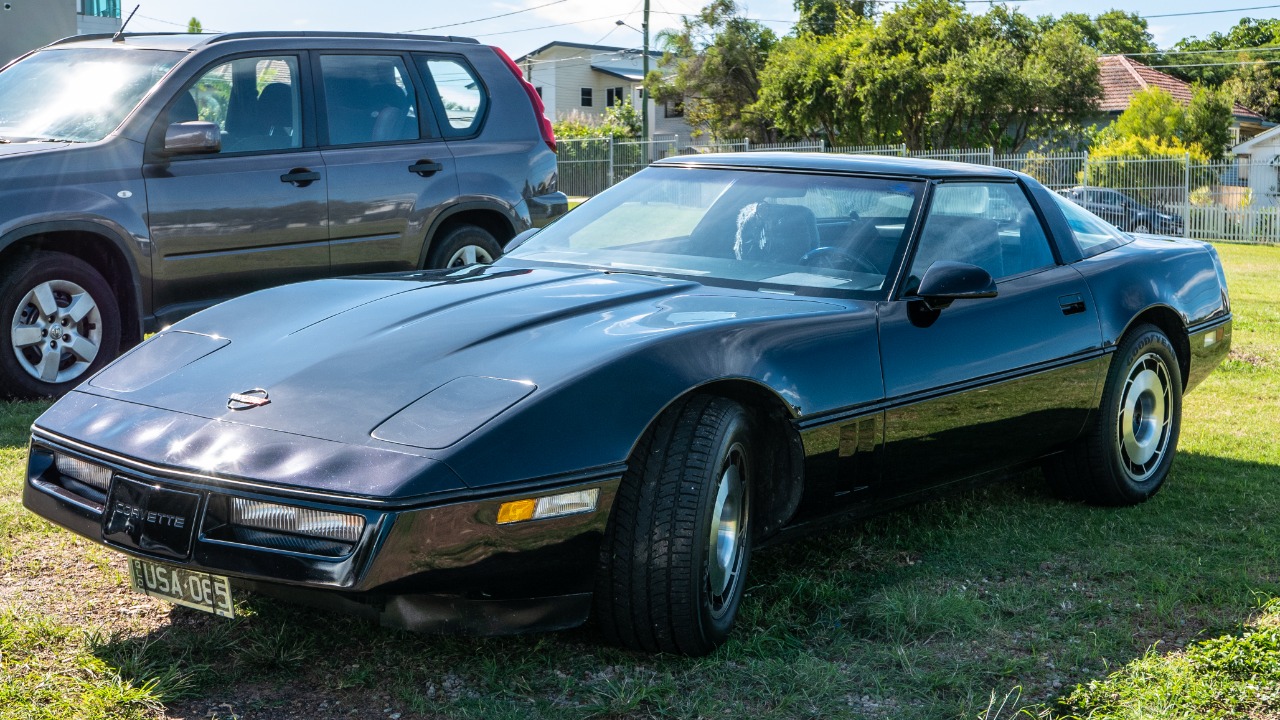
You see it long before you hear it: a low, angular wedge of fiberglass gliding into view, its body split into two shades that make the profile look even sharper. A 1985 Corvette Coupe in a clean two-tone scheme still stops you in your tracks because it captures a moment when American performance tried to look futuristic without losing its swagger. Look closely at how that car was built, painted, and engineered, and you understand why the style still feels fresh instead of like a period costume.
This is not just nostalgia; it is a carefully honed package where color, aerodynamics, and hardware all work together. The two-tone treatment highlights lines that were already advanced for their time, and the engineering underneath gives that visual drama real substance every time you turn the key.
Why the 1985 Corvette’s shape begs for two-tone paint
Walk around a 1985 Corvette and you immediately notice how the long hood, short rear deck, and sharply cut fenders create natural break lines for color. The exterior was designed to be, in the factory’s own words, “State of the art. Unmistakably Corvette. There,” and that bold language reflects how confidently the C4 generation stepped away from the curves of earlier cars into a more technical look. The low-slung silhouette and glassy hatch make the car feel almost like a concept vehicle that escaped the design studio, and a contrasting lower color simply traces those planes so your eye can follow every crease more easily, especially around the front cornering lamps and wraparound rear glass that define the profile.
The shape is not just about looks; it is also about how the car moves through the air. The factory notes that the wind will barely feel a Corvette coming through because the 1985 model reached the lowest coefficient of drag the nameplate had ever recorded up to that point. Add a darker lower body to a lighter upper half and you visually lower the car even more, quietly hinting at that aerodynamic efficiency every time you see it glide past. The result is a shape that invites you to use color blocking, and when you do, the design suddenly looks even more intentional and modern.
The factory paint science that made two-tone work
To make two-tone paint look crisp instead of gimmicky, you need a clean, consistent surface, and the 1985 car was built with that in mind. The entire paint operation is contained in a dust-free, clean-room environment in which the air pressure is maintained positive to keep contaminants away from the body as it moves through the line. That controlled environment meant sharp masking lines and smooth clearcoat, exactly what you need when you lay a darker color along the rocker panels and a lighter shade above the beltline without any fuzzy edges or orange peel to distract from the contrast.
From the factory, you could order combinations like Light Bronze over Dark Bronze, a pairing that shows how carefully the color palette was tuned to the body. The official specifications highlight that Light Bronze over setup as part of a broader push to give you sophisticated finishes instead of flat, single-tone slabs. Because the paint system was already engineered for precise application, two-tone schemes could hug the car’s character lines rather than relying on straight-across stripes, which is one reason those original combinations still look tailored instead of dated when you see them today.
How a modern two-tone build blends style with upgrades
Look at a current listing for a 1985 Chevrolet Corvette Coupe that wears a custom two-color finish and you see how that factory groundwork lets you go further without losing coherence. A recent feature on a car described as a Feb 1985 Chevrolet Corvette Coupe Combines Two Tone Style With Performance Upgrades shows a coupe that pairs its contrasting bodywork with suspension and cooling improvements aimed at more demanding driving conditions. The car keeps the stock proportions and glass roofline, but the updated wheels, stance, and chassis tuning give you a more planted feel that matches the visual punch of the paint.
The same build illustrates how you can refresh an older C4 without stripping away its character. The Feb listing credits the Chevrolet Corvette Coupe Combines Two Tone Style With Performance Upgrades project with a cohesive appearance inside and out, where the exterior colors echo in the cabin trim and the mechanical upgrades quietly support the look rather than shouting over it. By tying the aesthetic theme to real hardware changes, the car becomes more than a cosmetic exercise, and the Tone Style With approach shows you how two-tone can be the visual shorthand for a deeper rethinking of how the car drives.
Inside the cabin, design and light keep the look cohesive
Step into a 1985 coupe and you find that the interior was already designed to feel high tech and integrated, which makes it easy to echo whatever is happening on the body. The cockpit wraps around you with a digital instrument cluster and squared-off surfaces that mirror the angular exterior, and the official description leans on phrases like State of the and Unmistakably Corvette to convey how unified the design brief really was. Coordinate seat piping, door inserts, or stitching with the lighter upper body color and you tie that “There” design language together so the car feels like one continuous object rather than a shell with a separate cabin dropped inside.
Light also plays a big role in how you experience the colors from behind the wheel. All 1985 cars could be ordered with a Removable Transparent Roof Panel that is described as a Single piece, glass roof panel that gives driver an open air feel while driving, and that feature makes your paint choices feel more immersive because you see the sky and reflections pouring into the cabin. With a two-tone layout, the darker lower shade grounds the car visually while the lighter roof and the Removable Transparent Roof keep the interior bright, which is especially welcome on longer drives when you want drama on the outside but comfort and visibility inside.
Performance hardware that backs up the attitude
No one wants a car that looks fast and then feels sleepy when you press the throttle, and the 1985 model year made sure that did not happen. The 1985 Corvette introduced the L98 V8 with Tuned Port Injection, a system that significantly improved throttle response and torque over the previous setup. One summary of the car’s significance points out that the 1985 Chevrolet Corvette (C4 generation) is remembered for bringing that Tuned Port technology into the lineup, which turned the sleek coupe into a far more flexible partner in everyday traffic and on back roads.
Real-world examples bring those specs to life. In a walkaround of a 1985 Corvette with T-tops, the presenter highlights a 350 tuned port injection motor and notes how the car, finished in light bronze over dark bronze, feels like a preserved time capsule. That combination of a 350 cubic inch engine and a carefully maintained two-tone finish shows you how the hardware and the paint can age gracefully together, and it also reminds you that the factory color pairings were chosen to look right on a serious performance car, not just a boulevard cruiser. When you see a similar car today, the way the Corvette squats under acceleration matches the visual aggression of the darker lower body, which makes the whole package feel honest.
More from Fast Lane Only