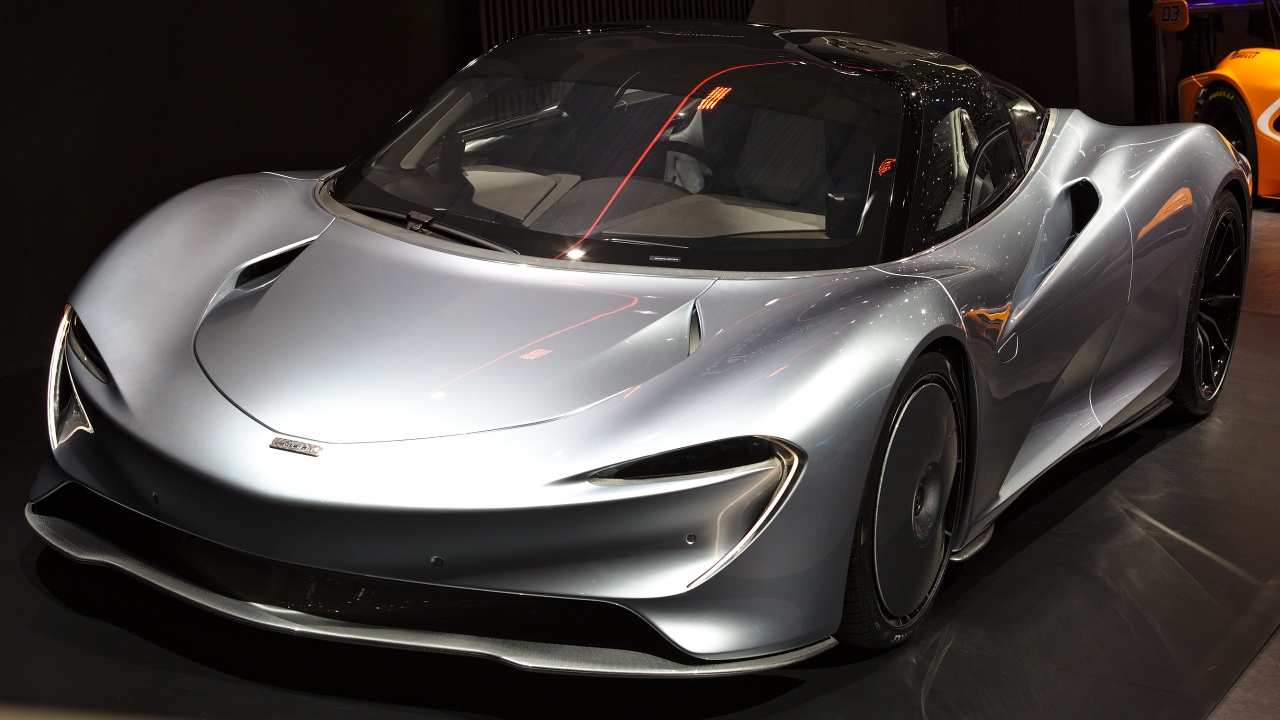
The 2019 McLaren Speedtail marked a decisive shift for the brand, taking the company’s Ultimate Series away from track-obsessed specials and toward a streamlined, top-speed grand tourer. Instead of chasing lap times, McLaren engineered a “Hyper-GT” that treats 250 mph as a cruising objective, blending extreme performance with long-distance comfort. It is the first modern McLaren conceived primarily to dominate the horizon rather than the circuit.
A successor to the F1 that replaces the Senna at the top
When McLaren introduced the Speedtail, it framed the car as the latest evolution of its Ultimate Series, the rarefied tier that previously gave us the P1 and the Senna. The Speedtail follows the Senna in the product timeline, although it actually replaces that car as the ultimate McLaren road car, shifting the focus from track aggression to high speed refinement. Contemporary reviews described it as a “Son Of” the original F1, and I see that lineage clearly in the three-seat layout, the obsessive attention to aero efficiency, and the way the car is positioned as a once-in-a-generation flagship rather than just another limited-run special.
That F1 connection matters because fans of McLaren have been waiting for a spiritual successor for decades, and the Speedtail Review material makes explicit that “Fans of” the brand saw this car as the answer. Where the Senna was unapologetically pugnacious, with a design that prioritized downforce and lap time, the Speedtail is presented as a stunningly different hyper-GT, a world away from the Senna and the more traditional supercar silhouettes that came before. The Ultimate Series label signals that this is not a side project but the new apex of McLaren’s road-car ambitions, built to carry the F1’s legacy into a world where top speed and cross-continent capability share equal billing.
Hyper-GT philosophy and the 250 mph brief
McLaren openly describes the Speedtail as its First Ever Hyper-GT, a term that captures the car’s dual mission as both a long-legged grand tourer and a machine capable of extreme velocity. Rather than chasing Nürburgring times, the engineering brief was to create a car that could surge toward the horizon with minimal drama, holding enormous speeds with the composure of a luxury GT. Official material highlights that the Speedtail delivered the fastest acceleration and maximum speed of any McLaren road car At the time of its release, and that focus on outright velocity is what sets it apart from the rest of the range.
The numbers behind that philosophy are stark. The Speedtail is Built for Speed, Powered by a twin-turbo 4.0-liter V-8 paired with a seven-speed dual-clutch transmission and a hybrid system that together produce a quoted 1,055-hp. That output, combined with a slippery body and long tail, allows the car to reach a claimed 250 mph, a figure that early previews and later drive reviews both reinforce. In a 250 MPH McLaren Speedtail POV Drive Review, Jun demonstrates how the car gathers speed with a relentless, turbine-like surge, underscoring that this is not a peaky track engine but a powertrain tuned for sustained, high-speed running in the Hyper-GT mold.
Design: DRAMATIC EXPRESSION in the wind tunnel
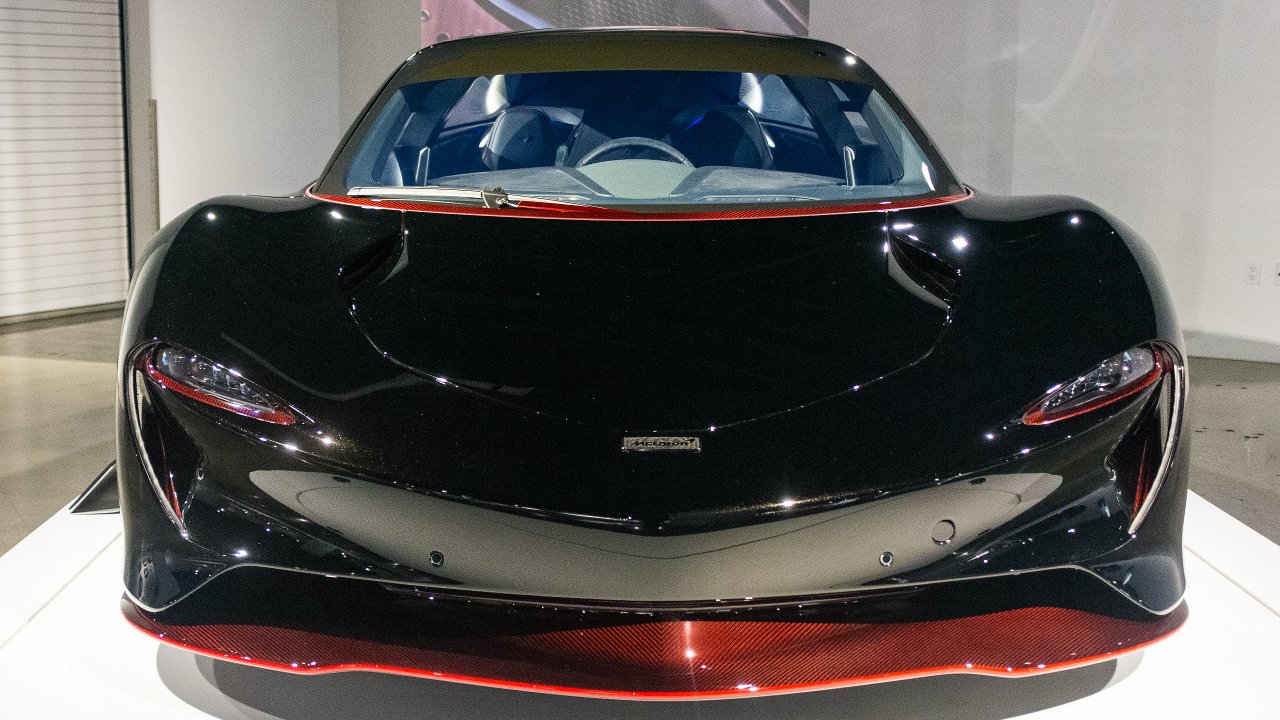
Visually, the Speedtail is DRAMATIC and an EXPRESSION of what happens when you let aerodynamics dictate almost every line. The car’s elongated rear, minimal frontal area, and flowing surfaces are all about slicing through the air with as little resistance as possible. Official descriptions emphasize that the Speedtail encapsulates pure McLaren drama, but it is a quieter, more elegant drama than the Senna’s exposed wings and vents, more akin to a wind-sculpted object than a traditional supercar. The long tail is not a styling flourish, it is a functional extension that stabilizes the car at very high speeds and reduces turbulence behind the body.
Even the teaser campaign for the car leaned into this aero-first identity. Early material showed a mysterious, invisible car in a wind tunnel, Mimicking a wind-tunnel aerodynamics test with a flowing smoke effect that traced the outline of what would become the Speedtail. That focus on airflow is backed up by the Specifications, which note that The Speedtail uses a version of the M840T twin turbocharged V8 engine from the 720S, upgraded and integrated into a hybrid system that works hand in hand with the bodywork to deliver both acceleration and stability. The result is a silhouette that looks almost otherworldly when The Speedtail passes by, a world away from the Senna and the more conventional mid-engine shapes in McLaren’s lineup.
Three-seat cockpit and Hyper-GT usability
Inside, the Speedtail doubles down on its connection to the F1 with a central driving position flanked by two passenger seats, a layout that instantly sets it apart from other modern hypercars. The driver sits in the middle, with the passengers slightly set back on either side, creating a cockpit that feels more like a jet than a road car. In the Speedtail Review, the cabin is described as a place where key controls reside above the driver’s head, reinforcing that aircraft-like impression and emphasizing how the ergonomics are tailored around the person in the central seat rather than a conventional left or right hand drive layout.
That three-seat configuration is not just a nostalgic nod, it is part of the Hyper-GT brief. By placing the driver at the center, McLaren improves visibility and balance, which matters when you are traveling at the kind of speeds the Speedtail can reach. At the same time, the two additional seats and the relatively generous cabin space make it more practical for long journeys than a typical two-seat supercar. The official Learn More About material leans into this, presenting the car as an epic car for an epic person, someone who wants to share the experience with two companions while still enjoying the performance of a 1,055-hp Hyper-GT that can surge toward that horizon with ease.
On-road experience and the mixed legacy of the fastest McLaren
From behind the wheel, the Speedtail’s character is defined by its seamless, almost surreal acceleration and its calm demeanor at speeds that would unsettle most cars. In the 250 MPH Mclaren Speedtail POV Drive Review, Jun shows how the Speed Tail gathers pace with a smooth, continuous shove rather than a violent hit, the hybrid system filling in any gaps in the V8’s power delivery. The car’s long gearing and aero stability mean that triple-digit speeds arrive quickly yet feel strangely unhurried, which is exactly what a top-speed GT is supposed to deliver. The emphasis is on covering ground with devastating efficiency rather than darting from corner to corner.
Yet the Speedtail’s story is not unambiguously triumphant. A later assessment bluntly notes that the fastest McLaren ever made was a bit of a fail, arguing that although The Speedtail has a hybrid powertrain and headline-grabbing performance figures, it was not quite enough to make waves in a market crowded with other ultra-fast exotics. That critique suggests that while the car achieved its technical goals, its impact on the broader hypercar conversation was more muted than McLaren might have hoped. Even so, the Speedtail remains a pivotal experiment, the moment when McLaren committed to a Hyper-GT concept that prioritizes top speed and long-distance composure over track-day theatrics, and in that sense it stands as the first modern McLaren truly built for top-speed GT duty.
More from Fast Lane Only: