You probably feel it every time you scroll through a new-car configurator: more screens, more modes, more menus. Yet the cars that win lifelong fans are often the ones that keep things clear and mechanical. From classic runabouts to modern hybrids, these nine vehicles show how choosing “less” can give you more reliability, more confidence to wrench at home, and more years on the road.
Citroën 2CV

The Citroën 2CV is simplicity taken almost to a thought experiment. Citro devoted huge effort to stripping cost and complexity, with Pierre-Jules Bo aiming for what was essentially “a bicycle with four seats.” Period descriptions of the original brief talk about carrying farmers and eggs across rough fields without breaking anything, which is why the suspension is soft, the body panels are thin, and the controls are almost comically basic.
Because the 2CV was engineered to be cheap and rugged rather than fast, you get a car you can understand at a glance. Owners still praise how easily you can reach every major component with hand tools, a direct expression of Pierre and Jules Bo thinking about rural drivers first. That mechanical honesty has turned the 2CV into a rolling lesson in how few parts you really need to keep moving.
Classic Jeep Wrangler

The Jeep Wrangler proves that even a modern off-roader can keep one foot in the analog world. Sure, the fourth-generation Jeep Wrangler is available with a touchscreen-based infotainment system and an array of electronic driver aids, but the core layout still lets you remove the doors and roof, and the windscreen can fold flat on the bonnet. That physical flexibility comes from a body and frame that stay close to the original template.
When you are bouncing along a trail, that simplicity matters more than another drive mode. Fewer fragile trim pieces and exposed sensors mean less to break, and the square body makes it easy to see where your corners are. For you as an owner, the Wrangler’s straightforward ladder frame and accessible axles make basic maintenance and modifications feel approachable, even if you are not a seasoned mechanic.
First‑generation Mazda MX‑5 Miata

The Mazda MX-5 Miata is a legend in the sports car world, and the first generation shows why simple engineering can feel magical. The Mazda MX design kept weight low and the structure tidy, so Miata drivers enjoy responsive handling without exotic materials or complicated electronics. Its naturally aspirated engine, modest tire sizes, and manual soft top all reflect a “just enough” philosophy.
Because its systems are so straightforward, Its upkeep tends to be predictable and affordable. Enthusiasts often point out that a Miata needs less maintenance compared to more complex vehicles with turbochargers and adaptive suspensions. If you are learning to track your car or just want a weekend toy you can service in your driveway, that balance of fun and mechanical clarity is hard to beat.
Toyota Corolla (including Hybrid)

The Toyota Corolla has become shorthand for no-drama commuting, and its simplicity is a big reason. Indianapolis Mechanics Recommend the Corolla among the Top choices in lists of the Most Reliable Used Cars to Buy Right Now, noting that Car reliability depends on clear, durable engineering rather than flashy tech. Notably, the Toyota Corolla Hybrid is highlighted in a 2025 Consumer Reports survey for combining efficiency with that same low-stress ownership.
For you, that means a cabin with intuitive controls, engines that prioritize durability over peak power, and parts that every shop knows. The Corolla’s long production run also keeps components cheap and widely available. Whether you pick a basic gasoline model or the Hybrid, you are buying into a platform that treats simplicity as a path to long-term value.
Honda Civic

The Honda Civic has spent decades proving that you do not need complexity to feel modern. Honda Civic We enthusiasts and reviewers alike keep repeating that The Honda Civic is known as one of the most reliable cars of all time, and Its fuel efficiency and straightforward drivetrains are central to that reputation. Even as screens and driver aids have crept in, the underlying engines and transmissions remain conservative and well tested.
That makes the Civic especially appealing if you are a new driver or a budget-conscious commuter. You get clear sightlines, predictable handling, and a cabin layout that does not bury basic functions in submenus. Over years of ownership, that simplicity shows up as fewer surprises at the repair shop and a car that still feels familiar every time you slide behind the wheel.
Second‑generation Toyota Prius

The second-generation Prius often surprises people who assume hybrids are complicated nightmares to maintain. In enthusiast discussions of the most simple, reliable, and DIY-friendly cars, the Gen2 Prius keeps coming up because information is easily accessible and the gasoline Japanese components are robust. Owners trade step-by-step guides for common fixes, from hybrid battery checks to suspension refreshes.
Under the skin, the Prius uses a planetary gearset instead of a traditional automatic, which actually reduces the number of wear-prone parts. For you as a DIY-inclined driver, that means fewer fluid services and no conventional starter or alternator to fail. The result is a car that quietly demonstrates how thoughtful hybrid design can be simpler to live with than many non-hybrid rivals.
Citroën 2CV‑inspired classics
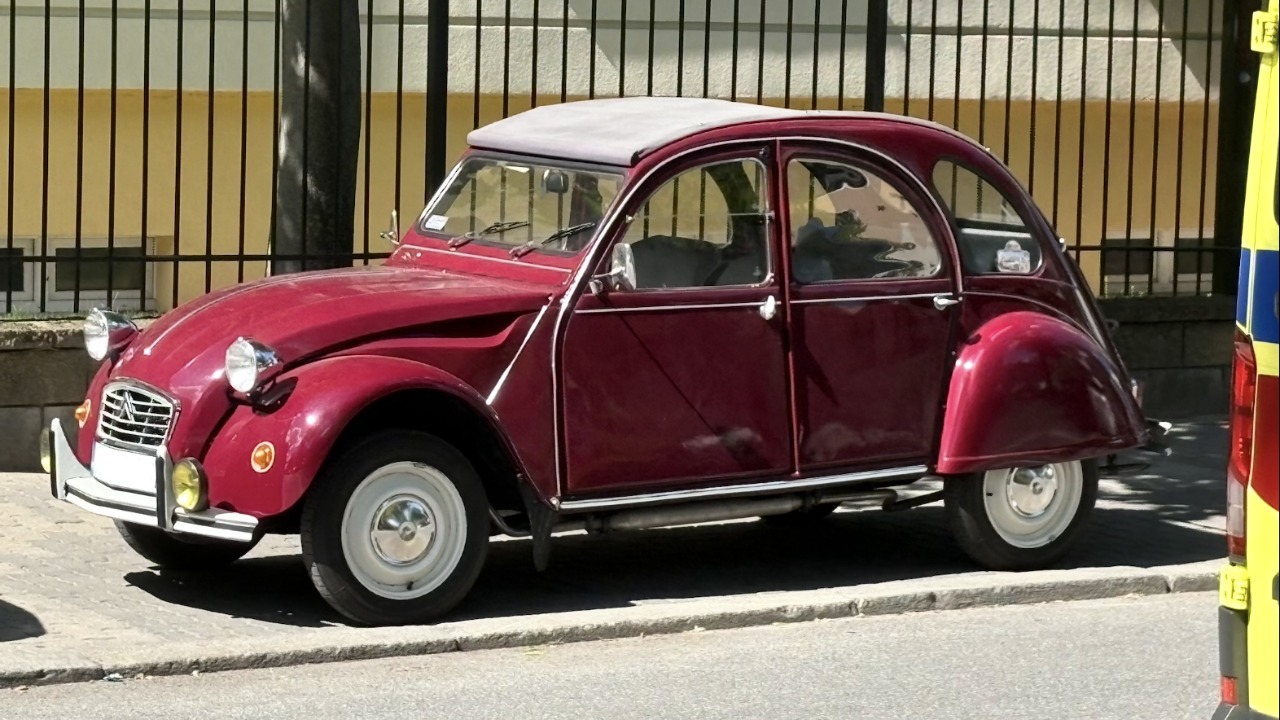
Classic cars that follow the 2CV’s template show why older engineering still resonates. Articles on Mechanical and Engineering Appreciation point out that Classic cars often have mechanical simplicity compared to modern vehicles, making them more approachable for enthusiasts to work on and restore. When you look at small European saloons and basic pickups from the same era, you see similar priorities: minimal electronics, accessible engines, and interiors you can strip and refit yourself.
One of the recurring themes is that these vehicles can last astonishingly long when properly maintained. One of the most striking observations is that, Unlike many modern cars, their rugged materials and mechanical simplicity make them incredibly durable. If you enjoy turning wrenches, that means a classic can be both a hobby and a practical, long-lived machine rather than a fragile museum piece.
Toyota workhorses that reach 400,000 miles

When you talk about simple cars that just keep going, Toyota inevitably enters the conversation. Analyst Pyle identified specific models that have the best shot at reaching 400,000 miles on their original powertrain, and singled out Toyota for having many models that can realistically hit that mark. That kind of longevity does not come from chasing every new gadget, but from refining proven engines and transmissions.
For you, the implication is clear: a straightforward Toyota sedan or crossover may lack some cutting-edge features, but it trades that for a powertrain designed to survive decades of daily use. If you are planning to keep a vehicle until the wheels practically fall off, prioritizing this kind of conservative engineering can save you the cost and hassle of multiple replacements.
The “simple modern car” ideal

Beyond individual models, some designers argue you should demand a new car that keeps the spirit of older ones. Commentators looking at VW history note how the brand, particularly through its advertising, made a mockery of bigger plus glitzier plus more powerful equals better. By the same token, few contemporary vehicles fully embrace that ethos, which is why one analysis sketches a simple modern car as a small wagon with clear sightlines and minimal tech.
In that vision, you get physical climate knobs, modest wheel sizes, and a cabin that does not depend on constant software updates. A piece on what a simple modern car should look like argues that this approach would give you a contemporary small wagon that is easier to maintain and less distracting to drive. It is a reminder that you can, and should, ask automakers for vehicles that keep things simple where it counts.
More from Fast Lane Only