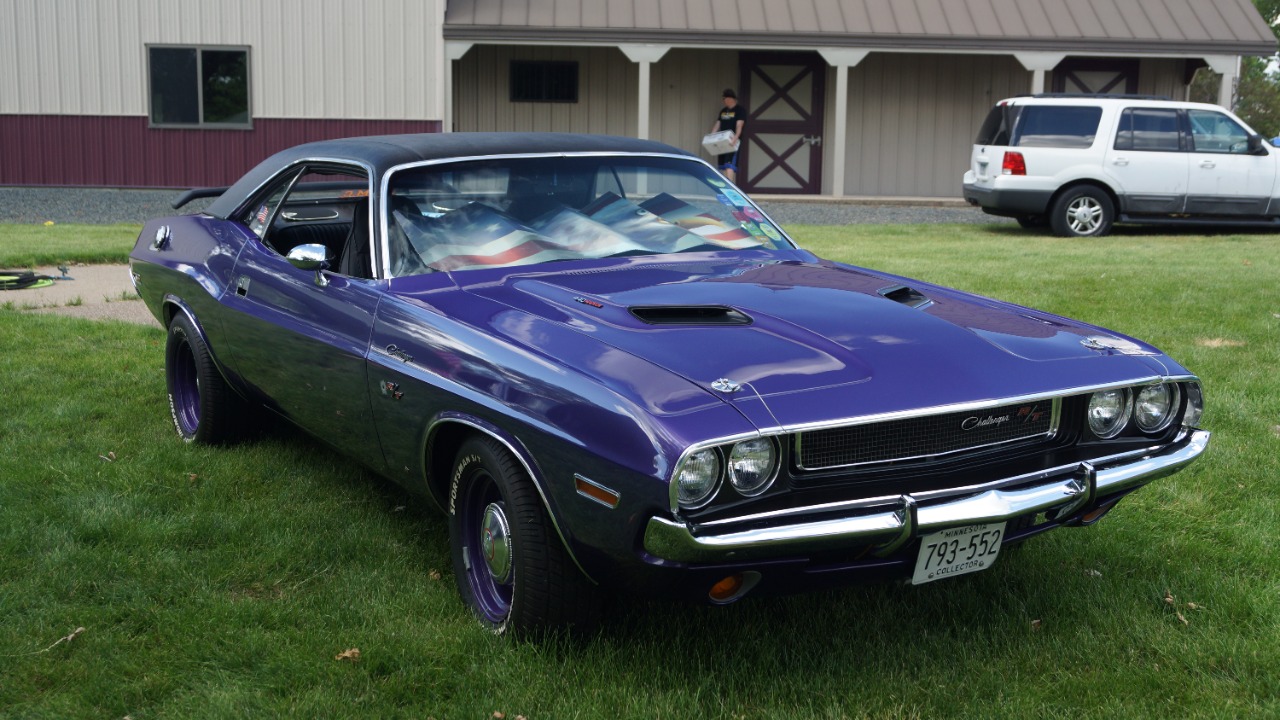
It’s the kind of story that makes car people wince and non-car people suddenly understand why “trust but verify” exists. A buyer says a “fully restored” 1970 Dodge Challenger looked absolutely flawless when it rolled off the trailer: glossy paint, tidy seams, fresh interior, and that unmistakable long-hood swagger. Then the weather changed, the car got caught in a steady rain, and the illusion reportedly started to wash away.
According to the buyer, what seemed like a show-ready classic quickly revealed problems you don’t spot under perfect lighting or on a dry driveway. Water started appearing where it shouldn’t, and the car’s “restoration” began to look less like craftsmanship and more like cosmetics. It wasn’t a dramatic movie moment with panels falling off, but it was enough to trigger that sinking feeling: something had been hidden.
A dream purchase—right up until the clouds showed up
The buyer says the Challenger was advertised as “fully restored,” a phrase that carries a lot of weight in the classic-car world. “Fully restored” usually implies more than shiny paint—ideally, it means metalwork handled correctly, rust addressed properly, weather seals replaced, and everything brought back to a reliable, roadworthy standard. In reality, that phrase can be used loosely, and the gap between expectation and reality is where stories like this are born.
At pickup and during the first few dry days, the car allegedly looked every bit the part. Panel gaps seemed straight, trim looked clean, and the interior had that fresh, redone feel people pay real money for. Friends and neighbors, the buyer says, were impressed—because how could you not be, staring at a freshly finished E-body?
Then came the rain. The buyer says the car sat outside for a short period during wet weather, and soon enough water showed up inside—around the windows and into areas that should’ve stayed bone-dry. That’s when the confidence started to drain faster than the puddles in the driveway.
When water gets in, it doesn’t just “get in”
Classic cars leak sometimes—nobody expects 1970 to behave like 2026. But there’s a difference between a tiny drip from an old seal and water intrusion that suggests underlying body or assembly issues. The buyer claims the rain exposed signs that weatherstripping, sealing, or even metalwork wasn’t done to the standard they were led to believe.
Water inside a restored car is rarely just an inconvenience. It can soak carpets and padding, encourage moldy smells, and start corrosion in places you can’t easily see. And if it’s getting in through seams or poorly repaired areas, it hints at bigger questions: what’s under the paint, and how long will it hold up?
The buyer also says the situation felt especially frustrating because everything looked “done.” It’s one thing to buy a project and discover new issues—that’s the hobby. It’s another to pay restored-car money and find out the restoration might’ve focused on what photographs well.
The tricky truth about “fully restored” listings
In the collector market, the words in an ad can be slippery. “Fully restored” isn’t a regulated term, and sellers can mean wildly different things by it. One person might mean a full nut-and-bolt, rotisserie restoration with documentation; another might mean “we repainted it, put in new carpet, and it starts.”
That’s why documentation matters so much. Receipts, before-and-after photos, a list of what was replaced, who did the work, and when—those are the details that turn a claim into something you can trust. Without that paper trail, a buyer is basically relying on presentation and optimism, and both of those look fantastic under showroom lights.
The buyer says they didn’t expect perfection. They just expected that the big-ticket “restoration” items—like sealing the glass properly and addressing rust-prone areas—had been handled. Rain, unfortunately, is a brutally honest inspector.
What rain can reveal that a sunny test drive won’t
There’s a reason some seasoned shoppers like to see a classic car after it’s been washed. Water can highlight issues around window channels, cowl vents, trunk seals, and door weatherstripping. It can also show whether drains are functioning or whether they’ve been blocked by undercoating, seam sealer, or old debris.
On cars like a 1970 Challenger, problem areas often include the cowl, lower windshield corners, door bottoms, trunk gutters, and rear window channel. If those sections were patched quickly or filled rather than repaired with solid metal, water may find paths it shouldn’t have. And if someone used heavy seam sealer or thick undercoating to hide uneven repairs, moisture can get trapped and quietly do damage.
The buyer’s complaint, as described, isn’t that a 56-year-old car behaved like a 56-year-old car. It’s that the car was sold as restored in a way that implied the usual weak points had been addressed correctly. The rain was just the messenger.
What the buyer says happened next
After spotting moisture inside, the buyer says they started checking more closely—lifting mats, looking under trim edges, and paying attention to musty odors and damp spots. That kind of deep inspection often turns up clues fast: water lines, fresh adhesives, recently painted surfaces that don’t match surrounding texture, or new carpet installed over questionable floors.
At that point, the buyer says the conversation shifted from “Isn’t it beautiful?” to “What exactly was restored?” Re-sealing glass and replacing weatherstripping isn’t necessarily catastrophic, but it can get expensive quickly if the real issue is rust hiding under trim or improperly repaired channels that need metalwork. And if water has already been sitting in hidden cavities, the repair list can grow in a hurry.
The buyer also notes that the emotional whiplash is real. Buying a dream car is supposed to be a victory lap, not a scavenger hunt for leaks. Still, they say the experience has made them far more cautious about ads that lean heavily on glossy photos and big claims without details.
How shoppers can protect themselves without killing the fun
The simplest advice is also the least exciting: ask for proof. A legitimate restoration usually comes with a stack of receipts, progress photos, and some kind of build story. If the seller can’t show what was replaced, who did the work, and which rust areas were repaired, treat “fully restored” as “looks restored from six feet away.”
If possible, inspect the car in conditions that aren’t perfect. Look closely at window trim and rubber seals, feel for dampness in footwells and the trunk, and check for bubbling paint near glass edges. A pre-purchase inspection by a shop familiar with classic Mopars can cost a bit, but it’s cheaper than discovering your “restoration” has a surprise indoor pool feature.
And yes, it’s okay to like shiny paint. Just don’t let it be the only thing you’re buying. A Challenger can look stunning in photos and still hide the kind of shortcuts that only show up when the weather doesn’t cooperate.
A familiar lesson, delivered by a not-so-gentle drizzle
To be fair, rain has exposed plenty of modern cars’ quirks too, and old muscle cars weren’t engineered with today’s seal standards in mind. But when a car is sold as “fully restored,” buyers naturally expect the basics—solid structure, proper sealing, and repairs that aren’t relying on luck. In this case, the buyer says the Challenger passed the beauty test and failed the weather test.
The upside is that many of these issues can be fixed, especially if the underlying metal is solid. The harder part is the trust that gets lost when the first real storm brings out the problems. And if there’s a moral here, it’s not “don’t buy classics”—it’s “don’t let perfect paint convince you the hard work underneath was done, too.”
More from Fast Lane Only