The driver of a Dodge Challenger Hellcat found out the hard way what happens when a 700‑plus horsepower muscle car meets a freight train. Caught on video, the car ended up stranded on railroad tracks as a train bore down, turning a showpiece of modern performance into a cautionary tale about judgment, physics, and basic rail safety. The images are dramatic, but the most important detail is simple: everyone walked away.
A high-powered car in the wrong place
The Hellcat incident unfolded when the driver turned the powerful coupe directly onto active railroad tracks and tried to keep going along the rails. Instead of gliding over them, the car quickly lost momentum, its low body and wide tires no match for the uneven surface. As the video shows, the Dodge ground to a halt and became stuck, leaving the driver scrambling as the situation shifted from foolish stunt to genuine emergency.
According to reporting on the crash, the driver had been maneuvering the Challenger Hellcat when he turned onto the railroad right of way and attempted to drive along the tracks. The car did not get far before it became immobilized, its underbody and suspension hung up on the steel and ballast. With the vehicle stranded and no quick way to free it, the driver and a passenger were forced to abandon the car as a freight train approached, a sequence captured in the widely shared clip of the Hellcat on the tracks.
The moment the freight train arrives
Once the car was stuck, the danger escalated quickly. The video shows the crossing lights and gates activating as the freight train neared, leaving only seconds for the occupants to react. They ran from the Challenger and moved away from the right of way, turning back just in time to see the locomotive slam into the stranded car. The impact obliterated the Dodge, scattering debris and underscoring how little chance a passenger vehicle has when it is sitting in the path of a fully loaded train.
Reporting on the crash notes that the freight train struck the Hellcat head on, pushing the car down the tracks and destroying it. The driver and any passengers had already cleared the area, which is why, as coverage of the incident stresses, no one was hurt when the train hit. The sequence plays out exactly as rail safety campaigns warn: once a train is that close, it cannot stop in time, and anything on the tracks becomes expendable compared with the lives at risk on board and around the crossing.
Why trains cannot stop for stranded cars
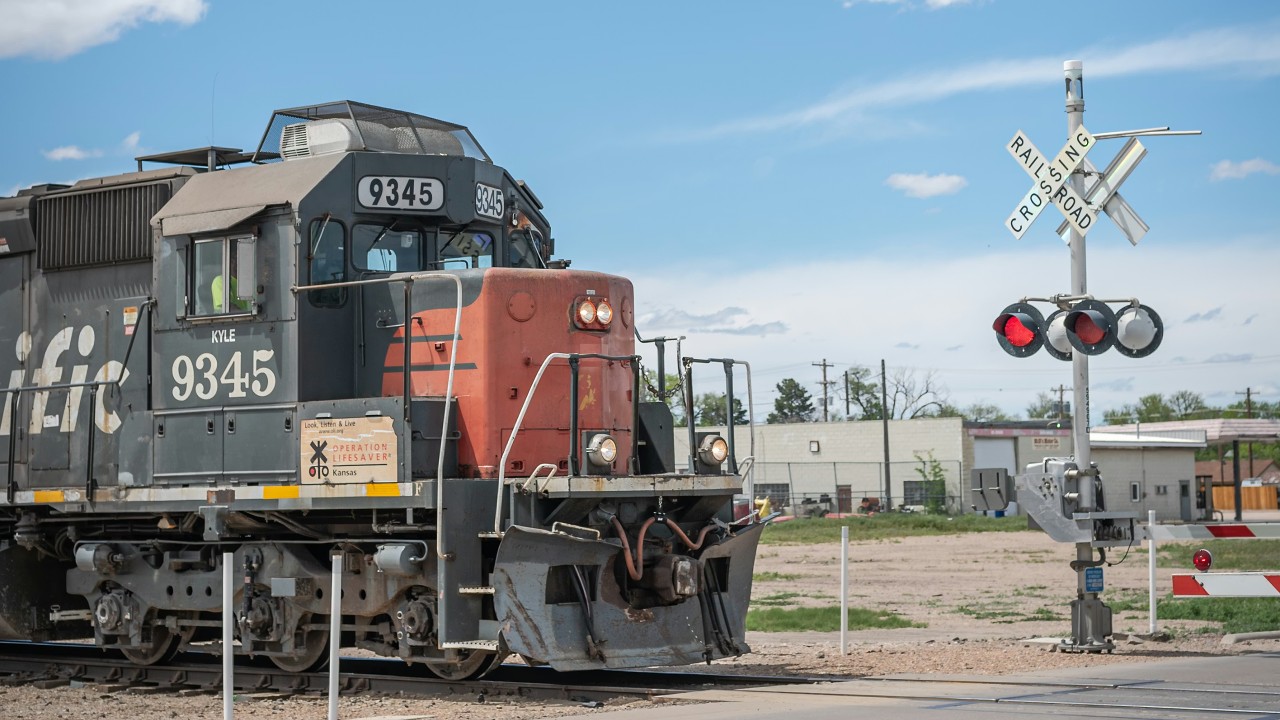
It is tempting to assume that a train crew, seeing a car on the tracks, can simply brake harder and avoid a collision. In reality, freight trains are extraordinarily heavy, often weighing thousands of tons, and their stopping distances stretch for the length of dozens of football fields even under ideal conditions. By the time the engineer in this case would have seen the Hellcat, the physics were already settled, which is why railroads and safety officials repeat the same message: never put a vehicle on the tracks unless you are crossing them in a straight line and can clear them completely.
The Hellcat crash illustrates that point with brutal clarity. The video of the Dodge grinding to a halt shows how quickly a car can become trapped once it is aligned with the rails instead of crossing them. Even if the driver had tried to rock the car free or push it off the tracks, the time window between getting stuck and the train’s arrival was far too short. That mismatch between human reaction time and the momentum of a moving train is why safety guidance treats any deliberate driving along tracks as inherently reckless.
The expensive lesson for the Hellcat’s owner
Beyond the immediate danger, the crash left the Hellcat’s owner with a financial and legal mess. A Dodge Challenger Hellcat is not a cheap car, and the one in the video appears to have been completely destroyed in the collision. Insurance companies routinely scrutinize incidents that involve clear negligence, and deliberately turning onto railroad tracks is the kind of behavior that can lead to denied claims or limited payouts. Even if coverage applies, the owner is likely facing the loss of a rare performance car and potential liability for damage to rail equipment and infrastructure.
Coverage of the incident notes that the driver learned a “very expensive lesson” when the Hellcat was destroyed. That phrase captures more than the cost of the vehicle itself. When a train hits a car, the railroad may need to inspect and repair tracks, check the locomotive for damage, and account for delays to freight schedules. Those costs can be passed on to the person who put the obstruction on the rails. For a driver who may have thought of the maneuver as a stunt or shortcut, the aftermath can stretch into years of financial consequences.
Rail safety, social media, and the lure of spectacle
Incidents like this do not happen in a vacuum. High performance cars such as the Dodge Challenger Hellcat are built to attract attention, and social media rewards dramatic footage of burnouts, high speed runs, and risky maneuvers. When I watch the clip of the Hellcat stranded on the tracks, I see that culture at work, turning a dangerous choice into shareable content. The problem is that trains and crossings are not props, they are part of critical infrastructure, and misjudging that reality can put lives at risk far beyond the driver’s circle of friends or followers.
The reporting on the Hellcat incident emphasizes how fortunate it was that no one was injured, a point that should resonate with anyone who has ever been tempted to treat public roads or rail lines as a personal stage. In a different scenario, a passenger might have stumbled while escaping, or debris from the impact could have struck bystanders. The fact that this crash ended with only property damage should not obscure how close it came to being a tragedy, and how easily similar behavior in another town or at another crossing could produce a very different headline.
More from Fast Lane Only: