Supercar spec sheets today are full of tightly wound V8s and V12s that trade size for speed, yet half a century ago Detroit quietly built a production V8 so vast it makes most modern exotics look modest. Buried in that era’s land yachts was a 500 cubic inch engine that prioritized effortless thrust over headline horsepower, and its story says as much about American car culture as it does about raw displacement. I want to trace how that giant came to be, what made it technically distinctive, and why its reputation never quite matched its colossal size.
The quiet giant of the muscle era
At the height of the muscle car boom, when big blocks were everywhere, one engine still managed to stand apart on size alone. The Cadillac 500 V8 arrived in 1970 as the brand’s ultimate expression of smooth, abundant torque, and contemporary reporting describes it as The Cadillac 500 V8 Was The Biggest Displacement Production Engine Of The decade. While other manufacturers were still pushing performance through revs and compression, Cadillac leaned into sheer cubic inches to move cars that often weighed north of 4,500 pounds with unruffled ease.
Under the skin, the 500 was an evolution of Cadillac’s existing big block architecture, but engineers stretched it to a scale that even Detroit rarely attempted. Technical documentation notes that for 1970, Cadillac fitted a crankshaft with a 4.304 in (109.3 m) stroke, paired with a large bore to reach a total displacement of 500 cubic inches. Another detailed breakdown puts the bore at 4.30 inches, which, when combined with that stroke, yields a precise displacement of 500.02 cubic inches, or 8.2 liters. On paper, that figure eclipses the engines in many of today’s headline exotics, which typically sit in the 4.0 to 6.5 liter range.
How Cadillac engineered 500 cubic inches
What makes the 500 particularly interesting to me is that it was not a racing special or a limited-run halo motor. It was a mass production V8 designed to start every morning, idle quietly, and survive years of gentle abuse from owners who cared more about climate control than quarter-mile times. The long 4.304 inch stroke and roughly 4.30 inch bore created a broad, flat torque curve that suited heavy front-drive and rear-drive luxury cars, especially the big coupes and sedans that defined Cadillac’s image. That combination of dimensions, verified in period technical references, is what pushed the engine to the 500 and 500.02 cubic inch marks without resorting to exotic materials or fragile internals.
In practice, that meant the 500 delivered its punch at relatively low engine speeds, a contrast to the high-revving character of many modern performance V8s. Contemporary analyses of the 1970 to 1976 run describe gross output figures that looked strong on paper, but the real story was the way the engine moved weighty cars with minimal effort. One technical history notes that the 8.2 liters of displacement allowed Cadillac to tune for smoothness and drivability rather than chasing peak numbers, a philosophy that fit the brand’s focus on quiet, isolated cruising. The result was an engine that felt almost lazy, yet had reserves of torque that smaller, more stressed modern units often need turbochargers to match.
The Eldorado and the age of excess
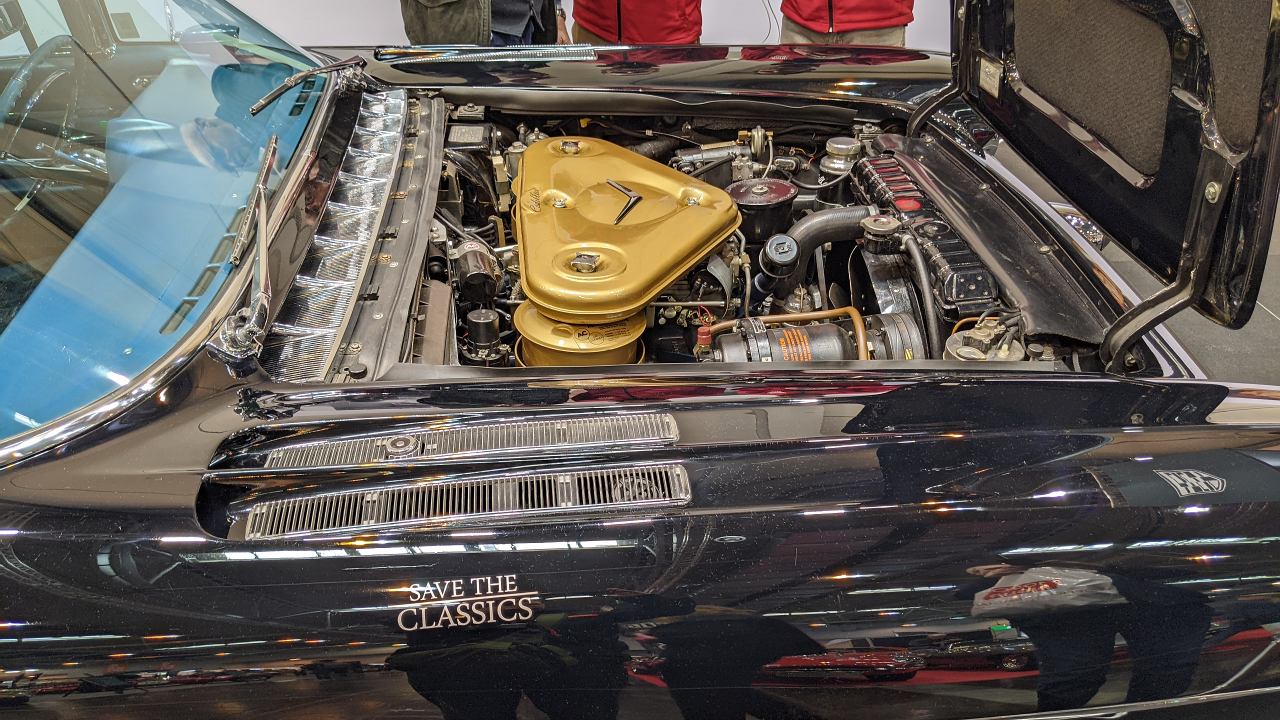
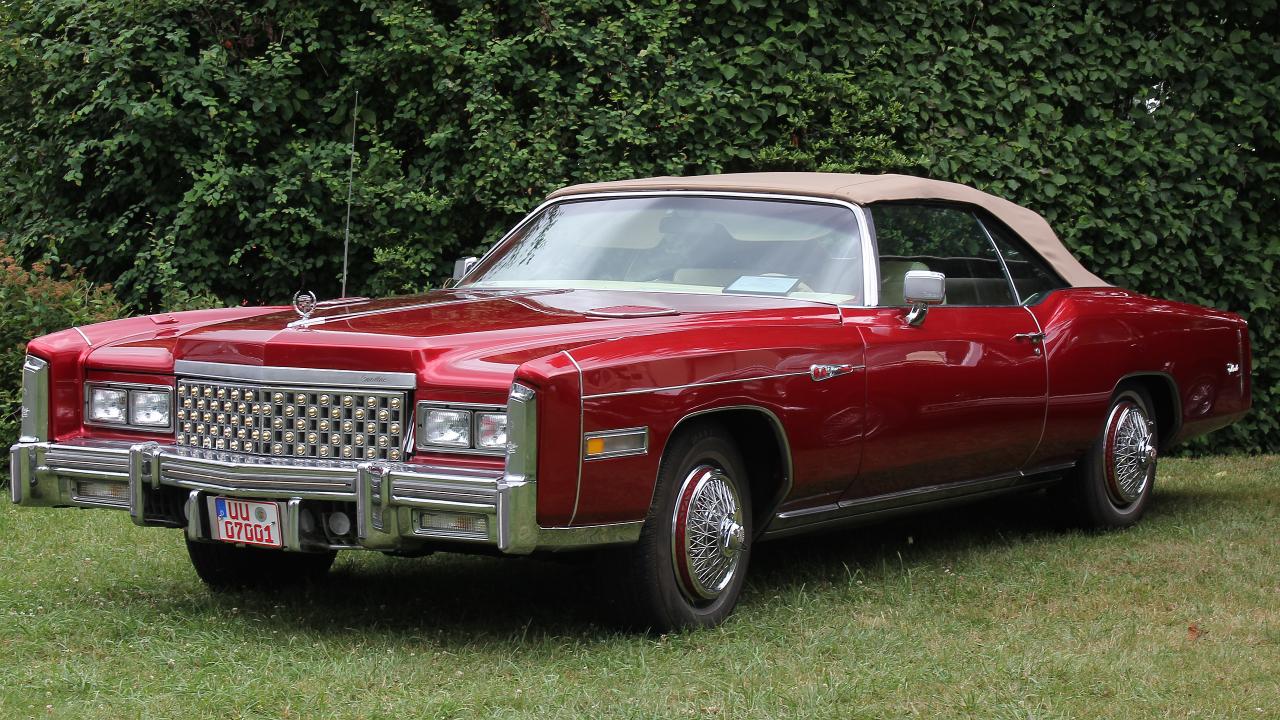
The Cadillac 500 V8 did not exist in a vacuum, it was built to serve specific flagships that embodied American excess. The Eldorado, which had already gone through multiple generations by the late 1960s, kept growing in size and weight, and reporting on its evolution notes that The Eldorado required increasingly large engines to maintain the effortless performance buyers expected. By the time the 500 cubic inch V8 was installed, the car had become a rolling showcase for how far Detroit would go to preserve the sensation of gliding on a cushion of torque.
That pairing of a massive coupe and an even more massive engine helped cement the 500’s status as the largest displacement V8 ever put in an American production car, a distinction that still resonates in enthusiast circles. While other brands within General Motors also experimented with huge engines, later coverage of the Biggest Displacement V8s in a Chevrolet Production Car makes clear that even those efforts did not surpass Cadillac’s outright size. In that context, the 500 was not just another big block, it was the apex of a corporate strategy that treated displacement as a tool for preserving luxury, even as fuel costs and regulations began to shift under the industry’s feet.
Why such a huge V8 feels forgotten today
For all its technical significance, the 500 cubic inch Cadillac V8 rarely gets mentioned alongside legendary American performance engines, and I think that disconnect comes down to image. When people think of Cadillac, they usually picture luxury big cars, plush leather seats, and the feeling of gliding on a cloud, as one detailed video history of Cadillac culture puts it. That comfort-first identity meant the 500 spent its life under the hoods of formal coupes and sedans rather than muscle cars or sports models, so it never built the same mythology as smaller but more aggressive engines that dominated drag strips and road courses.
There is also the uncomfortable fact that, by modern standards, the 500’s output can look underwhelming relative to its size. A critical retrospective that labels the Caddy 500 one of the weakest engines for its displacement points out that emissions rules and low compression tuning steadily eroded its power, even as the cubic inches stayed the same. That analysis, shared in a widely viewed breakdown, argues that the old saying about there being no replacement for displacement only holds if the engine is allowed to breathe and rev, conditions the 500 rarely enjoyed in its later years. As a result, enthusiasts who judge engines purely by horsepower per liter often overlook what this motor actually delivered in its own context, which was quiet, relentless shove at everyday speeds.
How it stacks up against today’s exotics
Measured purely on displacement, the Cadillac 500 V8 still stands tall against many of the most celebrated engines in modern supercars. With its 500 and 500.02 cubic inch capacity translating to 8.2 liters, it exceeds the size of the naturally aspirated V8s and V10s that power a lot of current exotics, which typically range from about 4.0 to 6.5 liters. Even some of the largest contemporary performance V12s fall short of that figure, relying instead on higher rev limits, advanced valve timing, and forced induction to produce their power. The Cadillac’s approach was the opposite: use a vast swept volume, a 4.304 inch stroke, and a roughly 4.30 inch bore to generate torque without drama, then let gearing and weight soak up the rest.
Where modern engines win decisively is in efficiency and specific output, and that contrast helps explain why the 500 feels like a relic despite its impressive numbers on paper. Contemporary coverage of General Motors’ big V8s, including the Ever In Chevrolet Production Car, shows how far engineering has come in extracting power from smaller packages, often with the help of electronics and turbocharging. Against that backdrop, the Cadillac 500 looks less like a performance benchmark and more like a monument to a time when fuel was cheap, cars were huge, and the easiest way to make them feel effortless was simply to build an engine bigger than almost anything that would follow. Even if it is not a household name, its 8.2 liters of displacement still outmuscle the spec sheets of many modern exotics, and that alone earns it a place in automotive history.
More from Fast Lane Only: