Infiniti is trying to climb back into the premium conversation by betting on a pragmatic mix of hybrid powertrains and driver-focused models instead of a headlong rush into full electrification. The centerpiece of that strategy is a new hybrid SUV and a revived sport sedan, both intended to restore some of the brand’s lost identity while keeping pace with shifting regulations and customer tastes. I see a company that once defined Japanese luxury performance trying to reconcile its enthusiast roots with the realities of a market that is still feeling its way toward an electric future.
From stalled EV dreams to a hybrid reset
Infiniti’s leadership has effectively admitted that its earlier ambition to go all-in on battery electric vehicles has been overtaken by market reality. In a recent discussion about its electrification roadmap, executives acknowledged that the brand is making changes to its bold EV plans, a shift that reflects slower than expected demand growth and the high cost of dedicated EV platforms, as highlighted in an interview shared in Aug on YouTube. Instead of chasing volume with a fleet of expensive, pure electric models, Infiniti is repositioning hybrids as a bridge technology that can deliver lower emissions and strong performance without asking customers to fully abandon internal combustion.
That recalibration is visible in the way Infiniti and its parent company, Nissan, now describe their North American product strategy. Corporate communications for the region emphasize “next generation technologies” that include electrified powertrains but stop short of promising a rapid, all-electric lineup, with executives stressing that customer excitement still depends on performance and refinement as much as on plug-in capability, according to a detailed product roadmap released in Mar under the banner “Under the” agreement with battery supplier SK On. I read that as a recognition that the brand’s comeback depends less on hitting an EV quota and more on delivering vehicles that feel aspirational again, even if they rely on hybrid systems rather than large battery packs.
QX65 and the hybrid SUV as volume anchor
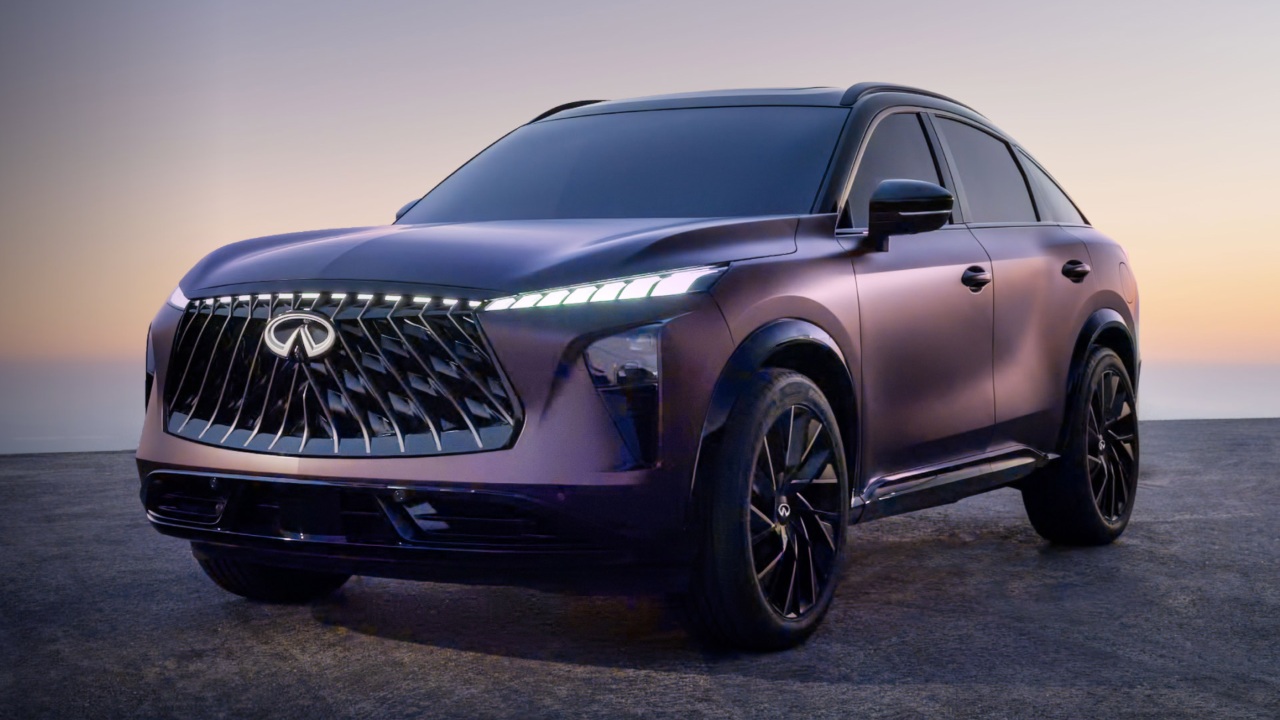
The clearest expression of this new pragmatism is the upcoming QX65, a coupe-style SUV that Infiniti is positioning as a halo for its hybrid-heavy push. Dealer-facing previews describe the QX65 as a new entry that blends the style of a fastback with the practicality of a family utility vehicle, and they frame it as a key part of what is new for INFINITI in 2026, including a First Look at the model alongside an Updated QX60. In that material, Infiniti signals that it is “saying goodbye” to some older nameplates while leaning into crossovers that promise the best of both worlds, pairing expressive design with more efficient powertrains, a direction that aligns neatly with the broader hybrid strategy outlined in What, New for INFINITI, First Look, Updated, INFINITI.
Behind the styling, the QX65 is expected to rely on Nissan’s latest electrified hardware, including hybrid systems that have already been sold in Nissan products overseas, a detail that surfaces in planning documents describing what Infiniti’s hybrid heavy comeback will look like, with EVs on the Back Burner and a focus on Infiniti Plans Sports Sedan and Hyb. That reuse of proven components is not just a cost play. It also allows Infiniti to promise the kind of smooth, torquey acceleration and quiet operation that customers increasingly associate with premium vehicles, while still avoiding the charging anxiety that can accompany full EVs. In my view, making the QX65 the volume anchor of this strategy is a calculated move: it gives dealers a fresh, fashion-forward SUV to sell while the brand rebuilds credibility with enthusiasts through more focused models.
Sport sedan revival and the 400-HP statement
If the QX65 is meant to pay the bills, the planned sport sedan is designed to repair Infiniti’s image with drivers who remember the days of the G35 and early Q50. Reporting on the brand’s future lineup makes clear that Infiniti intends to reintroduce a proper sport sedan, and crucially, to offer it with a manual transmission, a detail that has been framed as a deliberate nod to enthusiasts in Dec coverage of Infiniti’s revival plan. That same reporting notes that the manual option is being treated as a differentiator in a segment where three pedals have become a rarity, suggesting that Infiniti is willing to trade some volume for the kind of halo effect that comes from building a car for people who still care about the act of driving.
The clearest preview of that car arrives in early looks at the 2028 Infiniti Q50, described as a 400-HP, Manual Sports Sedan Worth Waiting For, with writer Caleb Miller presenting it as a pivotal product for a brand that has “a bit lost” its way. Those early specifications, which emphasize both the 400-HP output and the availability of a manual gearbox, underline how aggressively Infiniti wants to reassert its performance credentials, even as it acknowledges that many buyers will still gravitate toward a more practical family SUV. I see this as a two-track strategy: the sport sedan may never be a volume leader, but it can serve as a rolling manifesto for what Infiniti wants its badge to mean again, while the hybrid SUV lineup quietly does the commercial heavy lifting.
Manufacturing, batteries, and the SK On factor
None of this product planning would be credible without a clear industrial backbone, and here the partnership with SK On is central. Under the recent agreement with SK On, Nissan and Infiniti have committed to using U.S.-manufactured batteries in future models for the United States and Canada, a move that supports both local content rules and customer expectations around supply security, as spelled out in the Mar communication labeled Under the. That same roadmap notes that these batteries will underpin electrified powertrains that deliver strong acceleration paired with quiet operation, language that dovetails neatly with the hybrid SUV and sport sedan concepts now being teased.
On the assembly side, Infiniti is also preparing to localize key products in North America. Planning documents for future product indicate that an electric midsize crossover will be built at the Canton facility in Mississippi, with Production of Infiniti’s first electric vehicle scheduled to begin there as part of a broader investment in Electric models. While that particular crossover is a full EV rather than a hybrid, its development alongside hybrid utilities and sedans suggests that Infiniti is trying to share as much architecture and supplier capacity as possible, a strategy that should help contain costs and smooth the transition as customer demand gradually shifts. In my assessment, tying the hybrid-heavy comeback to domestic battery production and a plant like Canton gives Infiniti a more resilient footing than a purely import-based, EV-only push would have offered.
Dealer expectations and the road to 100,000 units
For all the attention paid to technology and design, Infiniti’s turnaround will ultimately be judged by dealers who have watched the brand’s sales slide over the past decade. Internal conversations with retailers, relayed by Infiniti vice president Tiago Castro, suggest that the message from the field has been blunt: new vehicles matter most. Castro has described a plan to launch one new product per year in the United States and Canada starting in 2025, with Infiniti targeting 100K units by 2029, a trajectory that depends heavily on the successful rollout of the hybrid SUV and the sport sedan that anchor the current plan. I interpret that cadence as an attempt to restore confidence among retailers who have had to rely on an aging lineup for too long.
Those same dealer discussions underscore why Infiniti is leaning into segments where it already has some equity. The QX60 remains a core three-row model, and the QX65 is being positioned as a stylish complement rather than a replacement, according to the What, New for INFINITI, First Look, Updated, INFINITI preview that highlights an Updated QX60 alongside the new coupe-style SUV. By pairing those utilities with a revived sedan that carries the emotional weight of a 400-HP, Manual Sports Sedan Worth Waiting For, Infiniti is trying to give showrooms a mix of practical and aspirational metal that can justify premium pricing again. If the brand can execute on the promise of one fresh product each year, and if the hybrid systems deliver the refinement and efficiency that the SK On partnership is meant to enable, the target of 100K units by 2029 looks ambitious but not out of reach.
More from Fast Lane Only: