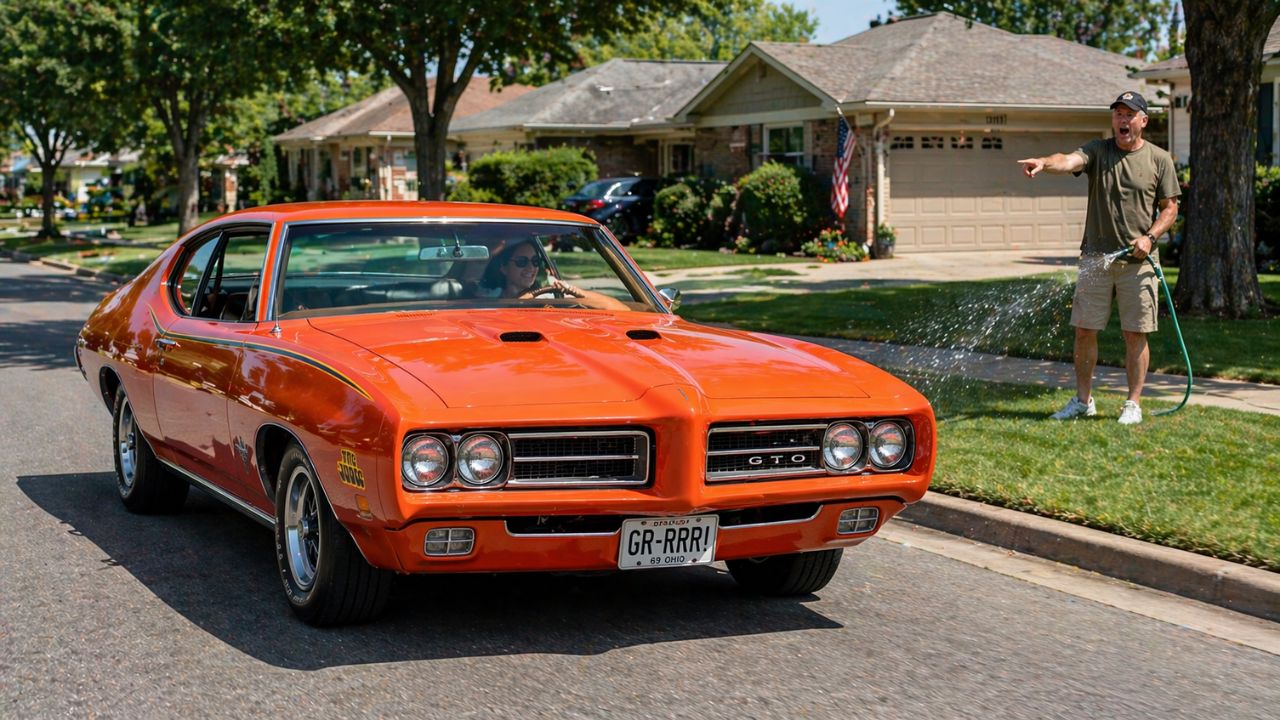
He thought the hard part was over: tuck the car away, keep it safe, and come back when life finally made room for a proper restoration. But instead of finding his 1969 Pontiac GTO right where he left it, he says he discovered something far weirder — evidence that someone else had been enjoying his “stored” muscle car like it was their own daily driver.
The claim has turned into the kind of story that makes car people lean in a little closer. Not because it’s flashy, but because it’s painfully relatable: you stash something valuable, you trust the place, and then you notice the small details that don’t add up. And once you see them, you can’t unsee them.
A classic put away for “just a while”
According to his account, the GTO had been in storage for years, parked intentionally and left with the expectation that it wouldn’t move. Like a lot of long-term storage situations, “temporary” quietly became “not right now,” and then it became “next season,” and then it became “how did it get to be three years already?”
He says the plan was simple: keep the car protected from weather, away from curious hands, and safe from the slow grind of time. The GTO wasn’t supposed to be racking up miles or collecting fresh wear. It was supposed to be waiting, like a time capsule with a V8.
The first signs something wasn’t right
What raised alarms wasn’t one dramatic moment, he says, but a bunch of little ones. The car looked “off” in the way only an owner tends to notice — the kind of thing you can’t always explain at first, but your gut doesn’t ignore.
He describes noticing changes consistent with recent use: the kind of dust pattern that disappears when a car’s been wiped down, minor scuffs that weren’t there before, and a general sense that the vehicle had been handled. The most unsettling part, he says, was the feeling that the car hadn’t just been moved a few feet to reshuffle storage space. It looked like it had been driven.
Why a 1969 GTO isn’t just “any old car”
If you’re not a muscle-car person, it might be tempting to shrug and think, “Okay, so it got moved.” But a ’69 GTO isn’t the kind of vehicle you casually borrow to run errands. It’s a high-attention car, the sort that turns every gas stop into a conversation and every stoplight into someone staring at your hood.
There’s also the value question. Even in average condition, classic muscle cars can represent serious money, and in nicer shape they can climb fast. Which makes the idea of an unauthorized joyride feel less like a prank and more like someone treating a retirement account as a rental.
The storage problem nobody talks about
Long-term storage works great right up until it doesn’t. Many places are perfectly legitimate, but the reality is that a stored car can become a blind spot: out of sight, out of mind, and visited less often than it should be.
He says that’s what made this so disturbing. If a vehicle is rarely checked, the opportunity for “small” boundary crossings grows — a quick move here, a short drive there, then suddenly you’re wondering what else you haven’t been seeing. And because older cars can have quirks, it can be hard to tell whether a new issue is age-related or “someone did something.”
How owners usually figure it out
People who store cars for long periods tend to notice the same categories of red flags when something’s been used without permission. Mileage that doesn’t match expectations is the obvious one, but it’s not always available if the battery’s dead or the odometer isn’t trusted. Then you’re looking at fuel level, tire wear, and whether the car starts “too easily” for something that’s been sitting for ages.
Owners also look for signs of recent contact: fresh footprints on dusty floor mats, a seat position that feels wrong, different radio settings, or even a new smell. It sounds silly until it happens to you, and then it’s like realizing someone moved the picture frames in your house by half an inch. Technically minor, emotionally huge.
What he says happened next
He says he raised the issue after spotting those inconsistencies, and that’s when the situation got tense. In stories like this, the conflict often isn’t just “Did someone drive it?” but “Who had access, and what counts as permission?” A storage arrangement can involve keys, staff, family members, or multiple parties who all assume someone else is responsible.
He also claims the car wasn’t simply repositioned on the property. The details he points to suggest repeated use — the kind that implies someone got comfortable. And that’s the part that makes listeners bristle: not a one-time mistake, but a pattern.
The tricky part: proving unauthorized use
Even if you’re certain your car’s been driven, proving it can be surprisingly difficult. Unless there are cameras, access logs, or a GPS tracker, the evidence is often circumstantial. And classic cars can be messy that way: they can leak a little, run a little rich, or show wear that’s hard to date.
Still, patterns matter. A few extra miles, fresh debris in the tread, a warm engine when it shouldn’t be, or maintenance items that look recently touched can build a stronger picture. The problem is that owners often discover the issue after the fact, when the cleanest proof — like video footage — may already be gone.
What experts typically recommend in situations like this
When a stored vehicle appears to have been used without consent, the usual advice is to document everything immediately. Photos of the odometer, fuel gauge, tires, interior, and any damage can be surprisingly helpful later. Saving texts, emails, contracts, and payment records matters too, because the disagreement often becomes about what was agreed to in the first place.
Many owners also choose to involve their insurer early, even if they aren’t sure whether a claim will be filed. And if there’s serious value on the line, they may consult an attorney to understand options. At minimum, people often change locks, retrieve keys, or move the vehicle somewhere access is tightly controlled.
The bigger takeaway for anyone storing a car
The story has struck a nerve because it taps into a common assumption: that storage means “frozen in time.” In reality, storage is only as secure as the controls around keys, access, and accountability. If multiple people can get near the vehicle, it’s worth assuming that “near” can turn into “in,” and “in” can turn into “on the road.”
For owners, the safest habits are also the least exciting ones. Visit the vehicle occasionally, keep a record of mileage, consider a discreet tracker, and make sure the agreement clearly states that no one is allowed to operate the car without explicit permission. Because as this man’s story shows, the moment someone decides a classic GTO would be fun for a spin, the line between storage and “free weekend car” can disappear fast.
More from Fast Lane Only
- Unboxing the WWII Jeep in a Crate
- 15 rare Chevys collectors are quietly buying
- 10 underrated V8s still worth hunting down
- Police notice this before you even roll window down
*Research for this article included AI assistance, with all final content reviewed by human editors.