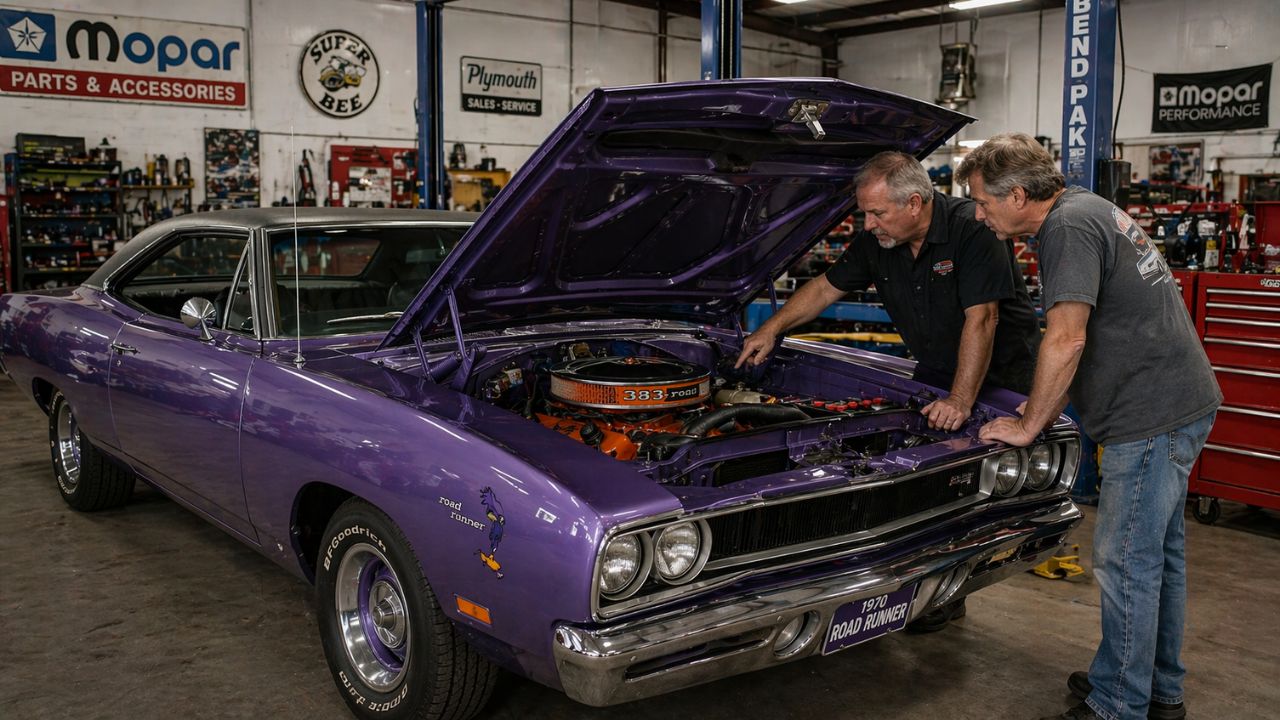
It started the way a lot of classic-car stories do: with a little pride, a little worry, and a very loud engine. He’d brought his 1970 Plymouth Road Runner to a local shop after noticing a rough idle and a faint tapping that seemed to come and go. Nothing catastrophic, just enough to make you turn the radio down and start listening a little too closely.
He expected a basic diagnosis—maybe a timing tweak, a valve adjustment, or a small parts swap. Instead, he says he got hit with a verdict that felt like a sledgehammer: full engine rebuild, no question. According to him, the mechanic sounded certain, like the engine was on borrowed time and the only smart move was to tear it down completely.
“It’s done.” Then the numbers started climbing
He says the explanation came fast and heavy on urgency. The mechanic allegedly described “low compression across the board,” “bearing wear,” and “signs of imminent failure,” and followed it with a rebuild estimate that quickly crept into the thousands. The shop offered to start right away, which, on paper, can sound reassuring.
But he says the details didn’t match the car he drove in. The Road Runner was running rough, sure, but it still started, still pulled, and wasn’t smoking like a mosquito fogger. For a motor that supposedly needed a full teardown immediately, it didn’t behave like one.
A second look at the “low compression” claim
The first thing that bothered him was how the compression test was described. He says he asked for the actual numbers per cylinder and got vague answers—more “it’s bad” than “here’s what we measured.” That’s not always a red flag on its own, but it can feel odd when the proposed fix is the most expensive option on the menu.
So he did what a lot of people do when their gut won’t settle down: he sought a second opinion. Another technician, according to him, repeated the compression test and found readings that were uneven but not rebuild-level dire. More importantly, the second tech reportedly asked a simple question the first shop never raised: was the test done with the throttle held open and the battery fully charged?
Small testing mistakes can make big problems look “real”
Compression testing isn’t complicated, but it is picky. If the throttle plate stays closed, the engine can’t gulp enough air and numbers can look worse than they are. A weak battery can also lower cranking speed, which can drag down readings and make an engine look tired even when it’s just being tested under the wrong conditions.
He says the second shop also did a “wet test”—adding a small amount of oil to see if compression rises, which can hint at ring wear versus valve issues. The results, he claims, didn’t point toward a full rebuild at all. They pointed toward something more ordinary: ignition and carb tuning, plus a closer look at valvetrain noise.
The tapping noise that wasn’t what it seemed
That original tapping had been the emotional hook of the whole visit. “Tapping” in an old V8 can mean a lot of things, from an exhaust leak to a lifter that’s not happy. It can also mean “your wallet is about to experience turbulence,” depending on who’s listening.
In his case, he says the second shop found an exhaust leak near the manifold that can mimic a mechanical tick, especially under load. They also found a loose heat shield and a plug wire routed a little too close to something hot. Nothing glamorous, but enough to make an engine sound like it’s writing a check it can’t cash.
A parts list that didn’t match the timeline
Then came the moment he says really made him stop and squint at the paperwork. The first shop had already started talking about parts—bearings, rings, machine work, the whole rebuild shopping cart—before providing a clear diagnostic trail. He says it felt like the plan was decided first and justified afterward.
He also claims the shop mentioned machining work that would require sending components out, but the turnaround time they promised was suspiciously short. Anyone who’s dealt with machine shops knows “next week” can be an optimistic concept, like “I’ll only have one slice of pizza.” That disconnect made him wonder whether the rebuild was truly happening as described, or whether he was being steered toward a big bill without the usual steps.
Why classic cars can be easy targets for expensive fixes
Older cars are different animals. They’re louder, smellier, and more dramatic, which can make normal quirks sound like impending doom. On top of that, many owners don’t have a baseline for what’s “normal” for a high-compression, big-cam, old-school muscle car, so uncertainty can turn into anxiety fast.
And anxiety is powerful. When someone says, “If you drive it like this, it could grenade,” the safest emotional move is to say yes to the biggest repair. He says that’s exactly what the first shop leaned on: urgency, worst-case outcomes, and a rebuild presented as the only responsible choice.
What a trustworthy shop usually does differently
A full rebuild isn’t automatically suspicious. Sometimes an engine truly is worn out, and doing it right is the cheapest option in the long run. The difference is how the decision is supported: numbers, photos, leak-down results, oil pressure readings, and a clear explanation of what failed and why.
He says that’s what he finally got from the second shop—imperfect but concrete data and a staged plan. Start with the basics, verify oil pressure, fix the exhaust leak, dial in timing and fuel, then reassess. If deeper issues show up, fine, but you don’t start with “tear it all down” unless the evidence is already there.
Where things stand now
After the tune and repairs, he says the Road Runner’s idle smoothed out and the tapping faded to what he calls “normal old-car noises,” the kind you notice only when you’re listening for trouble. It didn’t transform into a brand-new engine, but it also didn’t act like one that needed to be rebuilt yesterday. For him, that was the point: the car’s behavior finally matched the diagnosis.
He says he’s not out to declare every big estimate a scam, and he’s careful to frame it as his experience. But he does hope other classic-car owners learn one thing: if someone insists on a full rebuild, it’s fair to ask for the numbers, the test conditions, and the logic chain. If the answers get slippery, it’s also fair to get a second opinion—especially when the “fix” costs more than a decent used commuter car.
A handy reality check for anyone in the same spot
If you’re ever told your engine needs a rebuild, ask for compression readings per cylinder and whether a leak-down test was done. Ask what the oil pressure is hot at idle, and whether the noise changes with RPM or load. And if the shop can’t explain the difference between an exhaust tick and a valvetrain tick in plain language, it might be time to find someone who can.
He says the weirdest part of the whole ordeal wasn’t the big quote—it was how quickly it showed up, and how little it was anchored to verifiable checks. In the end, the math didn’t add up because the story didn’t match the car. And when a 1970 Road Runner is involved, it’s worth remembering: loud doesn’t always mean broken, and expensive doesn’t always mean necessary.
More from Fast Lane Only