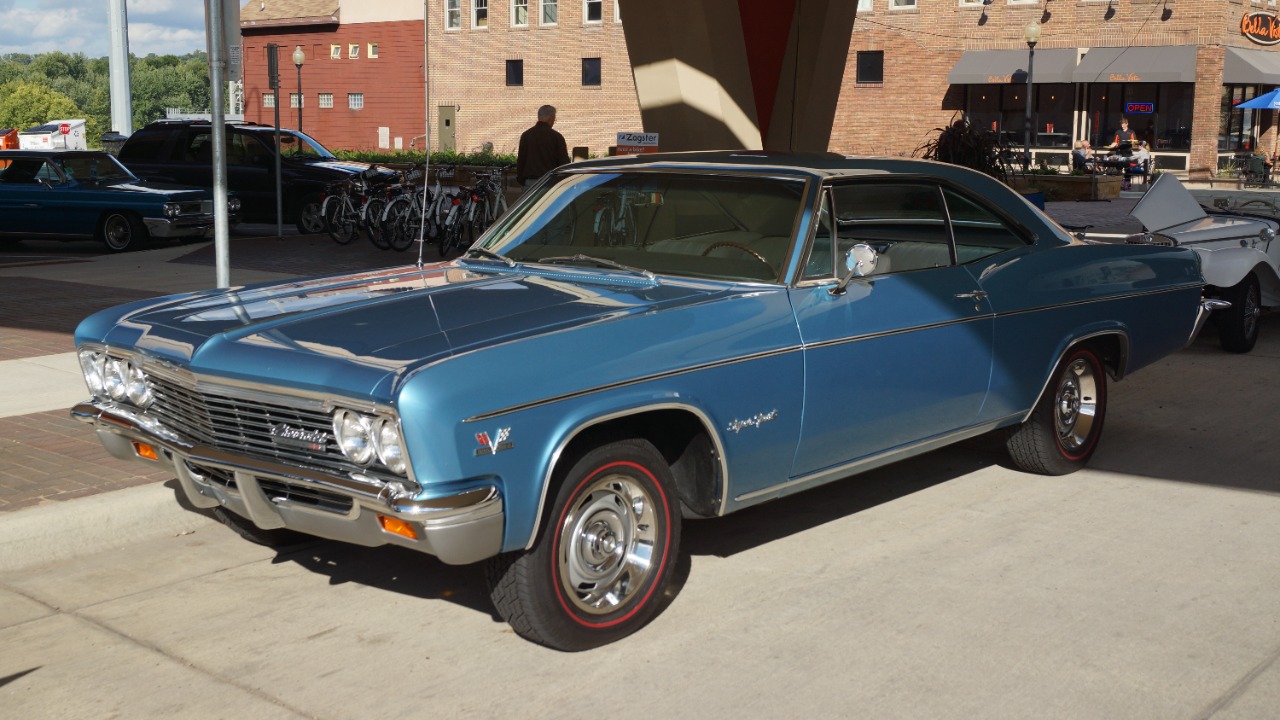
It’s one thing to worry about a repair bill. It’s another thing to look up from a stoplight and see your own classic car cruising by—without you in it. That’s the situation one local man says he found himself in after dropping off his 1966 Chevrolet Impala at a shop he believed would treat it like the time capsule it is.
According to his account, the Impala wasn’t just transportation. It was a project, a memory, and the kind of car people point at in parking lots. So when he says he handed over the keys with trust, he means the deep, “please don’t scratch it” kind of trust.
A drop-off that felt routine—until it didn’t
He says he brought the Impala in for work that sounded straightforward: diagnostics and repairs that needed a lift and a mechanic’s ear. The shop took the car in, gave the usual timeline talk, and he went back to his day expecting updates, not surprises.
At first, nothing seemed off. He says he waited like anyone would, checking his phone and figuring classic-car work can take time. Then, not long after, he says he got the kind of real-world update nobody asks for: he spotted the Impala out in the wild.
The moment he says he recognized it
He describes it like a double-take you can feel in your stomach. Same long body lines, same stance, same unmistakable look of a mid-’60s Chevy that’s hard to confuse with anything else. And, he says, there were personal details—small cues—that made it clear it wasn’t just “an Impala,” it was his.
He says he watched it move through traffic across town, far from the shop and nowhere near a test route he’d expect. For a second, he says his brain tried to make it make sense. Then reality landed: his car was out driving, and he hadn’t authorized some casual cruise.
Why the distance matters
Most people understand a quick test drive. Fixing brakes, sorting out a misfire, listening for a suspension clunk—sometimes you’ve got to put a car under real conditions. But he says what bothered him wasn’t just that it moved, it’s where it was.
From his perspective, a “verify the repair” loop is a few miles, not a cross-town appearance. He says the route looked more like errands than diagnostics. And when it’s a 1966 classic with parts that aren’t sitting on every shelf, that difference feels huge.
What he says he did next
He says he immediately tried to figure out who was driving and why. In situations like this, people tend to bounce between anger and disbelief, and he says he was no different. His main thought was simple: “If anything happens to it, what then?”
According to him, he contacted the shop right away to ask for an explanation. He says he wanted a clear answer, not a shrug, because the car wasn’t dropped off for anyone’s personal use. And he says he started documenting what he could—where he saw it, when, and any details that might matter later.
The shop’s side—what typically gets said in situations like this
The shop’s specific response wasn’t confirmed here, but situations like this often come with a familiar set of explanations. Shops will sometimes say a road test was necessary, that a technician needed to “put miles on it,” or that the car was being checked for intermittent issues. Those can be legitimate reasons—up to a point.
The problem is that customers usually expect those reasons to be communicated in advance, especially with older or collectible vehicles. A quick call—“Hey, we need to drive it 10 miles to confirm the fix”—can prevent a lot of drama. Without that, even a well-meant road test can feel like someone borrowed your favorite jacket without asking.
Why classic cars make everything more sensitive
A modern commuter car is replaceable in a way a well-kept Impala isn’t. Even if it’s insured, even if you can find another one, it’s not the same car with the same history. He says part of the trust was that the shop understood that difference.
There’s also the practical side: classic cars don’t always have modern braking, handling, or safety features. A casual drive can turn into a real risk if the driver isn’t familiar with older steering feel, drum brakes, or quirks that come with age. If you love old cars, you know they’ve got personality—and sometimes that personality shows up at exactly the wrong moment.
What this can mean legally and financially
In many places, the big question is authorization and scope. Shops generally have permission to operate a vehicle as needed to diagnose, test, and move it around the property, but that doesn’t automatically mean unlimited personal use. If a vehicle is taken off-premises in a way that’s not reasonably tied to the work, that can become a serious dispute fast.
Then there’s liability. If something happens during an unauthorized drive—damage, a crash, even a parking lot scrape—insurance coverage can get complicated. A customer’s policy, the shop’s garage-keepers insurance, and the details of what was agreed to can all matter, and they don’t always line up neatly.
How people are reacting
Friends he spoke with reportedly had the same reaction most of us would: “Wait… you saw your own car out driving?” It’s the kind of story that spreads quickly because it hits that universal nerve about trust and boundaries. And because, honestly, it sounds like a movie scene until you remember the paperwork is real.
Car enthusiasts tend to react even more strongly, because the relationship between owners and shops is built on respect. You’re handing over something valuable, sometimes sentimental, often both. If that respect feels broken, it’s hard to get back—even if the car comes home unharmed.
What to do if something similar happens
If you ever find yourself in a situation like this, it helps to stay calm and gather details. Note the time, location, and anything you can safely observe, and contact the shop directly to ask what’s going on. If the explanation doesn’t add up, you can request everything in writing, including who drove the vehicle and why.
It also helps to review your work order and any terms you signed, because that’s where “road test” permissions sometimes hide in plain sight. If you believe the car was used outside the scope of permission, you can contact your insurer for guidance and consider speaking with local authorities or a consumer protection office depending on the facts. None of this is fun, but clarity beats arguing from memory later.
A trust issue that’s bigger than one car
He says what sticks with him isn’t just the shock of seeing the Impala rolling through town. It’s the feeling that something unspoken was taken for granted. Even if the car came back in one piece, he says the question lingers: if it happened once, what stops it from happening again?
For anyone who’s ever handed over keys and hoped for the best, the story lands a little too close to home. Most shops do right by customers, and most technicians wouldn’t dream of treating a client’s car like a personal ride. But when trust slips, even for a short drive, it can travel a long way—sometimes all the way across town.
More from Fast Lane Only