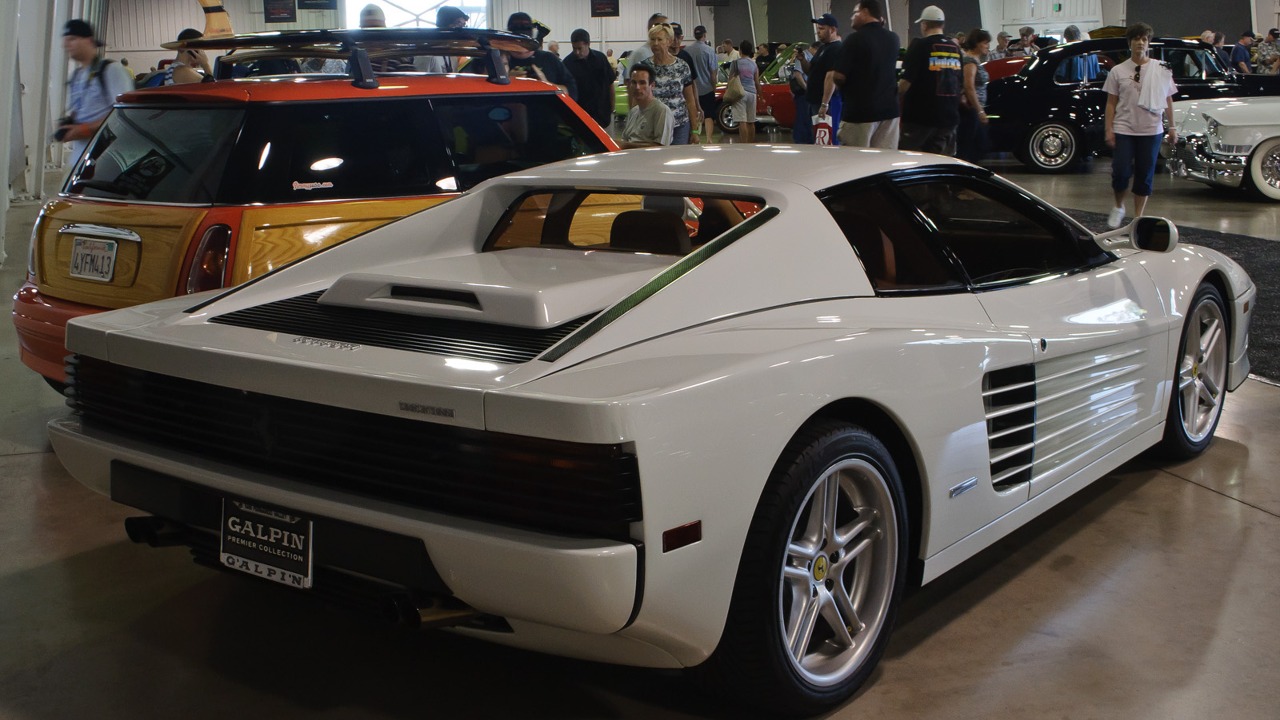
The 1989 Ferrari Testarossa is one of those rare cars that can stop a crowd on style alone, then justify the attention with real performance. Born at the tail end of the analog supercar era, it combines dramatic design, a charismatic flat-12 engine and a driving experience that still feels raw and involving today.
More than three decades on, the Testarossa has evolved from poster icon to serious collectible, and the 1989 model year in particular captures a moment when Ferrari styling, engineering and cultural impact all aligned. Examining how it looks, how it drives and how it stacks up against rivals helps explain why this wedge-shaped coupe still matters.
What happened
By 1989, the Testarossa had already been on the market for several years, yet Ferrari continued to refine the formula rather than replace it outright. The basic ingredients remained familiar: a 4.9‑liter flat-12 mounted longitudinally, five-speed manual gearbox, rear-wheel drive and a body dominated by wide hips and straked side intakes. The 1989 cars sat at the crossroads between the original mid‑1980s specification and the later, more heavily revised 512 TR.
Under the rear deck, the flat‑12 delivered the sort of power and character that defined Ferrari’s flagship road cars of the era. Period figures for Testarossa output clustered around the 380 horsepower mark, with torque in the mid‑360 lb‑ft range, depending on market and emission controls. That was enough to send the coupe to 60 mph in roughly 5 seconds and on to a top speed in the 180 mph neighborhood, numbers that put it squarely in supercar territory at the time and still brisk by modern standards.
What separated the 1989 Testarossa from many other high‑end exotics was how it delivered that performance. The car was large and wide, yet the steering was relatively light once under way, and the long-travel throttle made it easy to meter out the flat‑12’s power. Contemporary testers noted that the engine pulled cleanly from low revs, then surged toward redline with a rising wail that only a multi‑cylinder Ferrari could produce. The experience was less about instant turbocharged shove and more about building speed through revs and gears.
Tuners also saw the Testarossa as a canvas. One of the most striking period examples was the Koenig Specials interpretation, which took a 1989 car and added extensive bodywork, aero pieces and significant power upgrades. A detailed drive review of a Koenig Testarossa describes how the tuner version amplified the base car’s character, with a louder exhaust, stiffer suspension and more aggressive turbocharged output, turning the already dramatic Ferrari into something closer to a road‑legal race car.
Ferrari itself was also experimenting with the Testarossa platform as a design and engineering test bed. The company collaborated with Pininfarina on the 1989 Mythos concept, a radical barchetta that used a mid‑mounted flat‑12 derived from the Testarossa. The Mythos concept exaggerated the production car’s wedge profile, with even more pronounced rear buttresses and an open cockpit, showing how far the basic proportions could be pushed while still reading as a Ferrari supercar.
Beyond Ferrari’s own stable, the performance context around the Testarossa was shifting quickly. Lightweight rivals were starting to challenge the idea that a flagship needed twelve cylinders to be fast. A period comparison of performance bargains points out that a well‑sorted four‑cylinder Lotus could deliver more speed at, undercutting the Ferrari on price while matching or beating its acceleration and handling on tight roads and circuits.
Against that backdrop, the 1989 Testarossa stood as a statement of a different philosophy. It was not the lightest or the most agile, and it was certainly not the cheapest. Instead, it offered a blend of styling drama, long‑legged performance and mechanical theater that appealed to buyers who wanted their supercar to feel special at every speed.
Why it matters
The Testarossa’s significance starts with its design. The shape is instantly recognizable, from the low nose to the wide rear track and the distinctive side strakes that feed air to the radiators. Those strakes were not just a styling flourish; they solved a practical cooling problem by channeling airflow to side‑mounted radiators while meeting safety regulations that restricted large open intakes. The result was a car that looked like nothing else on the road, yet was rooted in functional engineering.
In 1989, that design language represented a high point of the wedge‑era supercar. The Testarossa’s long, flat surfaces and sharp edges reflected contemporary aerodynamic thinking, yet the car still carried traditional Ferrari cues such as the low, almost delicate nose and the rear buttresses that framed the engine cover. The Mythos concept took those cues and stretched them into a more extreme form, but the production car’s proportions were already bold enough to dominate any parking lot or boulevard.
Inside, the Testarossa balanced luxury and purpose. The cabin wrapped around the driver with a low dashboard, clear analog instruments and a prominent open‑gate shifter. Leather trimmed nearly every surface, yet the seating position and view out over the front fenders reminded occupants that this was a serious machine. Compared with some contemporaries that prioritized plushness over feel, the Ferrari’s cockpit stayed closer to its racing roots.
Performance kept pace with the visuals. The flat‑12’s broad torque curve made the car flexible in everyday driving, while the upper rev range delivered the kind of acceleration that justified its flagship status. On a fast highway, the Testarossa came into its own, with long gearing and stable aerodynamics that encouraged high‑speed cruising. The wide rear track and mid‑engine balance contributed to strong high‑speed stability, even if the car’s size and weight demanded respect on tight, bumpy roads.
That weight and width also shaped the handling character. On narrow city streets, the Testarossa could feel oversized, and parking required attention to the broad rear haunches. On sweeping roads, however, the chassis settled into a confident rhythm. Period drivers described the steering as communicative once loaded up, with the front axle telegraphing grip levels clearly. The car rewarded smooth inputs and precise lines rather than aggressive, late‑braking antics.
The Koenig‑tuned variant illustrates how much performance headroom the base platform contained. By adding forced induction and reworked suspension, Koenig turned the Testarossa into a far more extreme device, with power figures that climbed well beyond the stock output. That transformation highlights the underlying robustness of the flat‑12 and the chassis, which could cope with significantly higher loads when properly upgraded.
Meanwhile, the rise of agile, lower‑cost alternatives such as the Lotus models mentioned earlier challenged the Testarossa from another angle. Those cars showed that advanced suspension tuning and low mass could deliver supercar‑level pace without a huge engine or price tag. For enthusiasts and reviewers, that raised a question of value: was the Testarossa’s premium justified by its performance, or was it more about brand, design and emotional appeal?
Over time, the market has offered a clear answer. While some of those lighter, cheaper rivals have become cult favorites, the Testarossa has grown into a blue‑chip collectible. Part of that stems from its cultural footprint. The car appeared in television shows, films and music videos, becoming shorthand for late‑1980s excess and aspiration. For many people who grew up in that era, the image of a red Testarossa cruising through a neon‑lit city remains lodged in memory, which feeds today’s demand.
Another factor is the car’s position in Ferrari history. The Testarossa was one of the last mass‑produced twelve‑cylinder Ferraris with a fully analog driving experience. It predated widespread adoption of power‑assisted steering in the brand’s mid‑engine flagships, and it arrived long before dual‑clutch gearboxes or complex stability control systems. That means each drive involves a level of physical engagement that modern supercars often filter out.
From a design perspective, the Testarossa also marks a transition between the curvier shapes of the 1970s and the more organic forms that would arrive in the 1990s and 2000s. Its sharp lines and strakes are very much of their time, yet they have aged into something iconic rather than dated. The Mythos concept, which exaggerated those traits, shows how easily the formula could have tipped into caricature. The production car stayed just on the right side of that line, which helps explain its lasting appeal.
In the collector world, that combination of design, performance and cultural resonance translates into strong values, particularly for well‑preserved, late‑production examples. The 1989 cars occupy an interesting niche, with incremental improvements over earlier years while retaining the original styling and mechanical character. For buyers who want the classic Testarossa look and feel without stepping into the later 512 TR territory, they represent a sweet spot.
What to watch next
The Testarossa’s trajectory from contemporary supercar to collectible icon raises several questions for the years ahead. One is how the market will continue to value analog, twelve‑cylinder machines in an era that is shifting toward electrification and downsized engines. As governments tighten emissions rules and manufacturers invest heavily in hybrid and battery‑electric performance cars, the appeal of a naturally aspirated flat‑12 that sings to redline is likely to grow among enthusiasts who value mechanical purity.
That trend is already visible in the way collectors chase late‑1980s and early‑1990s exotics. Cars that might once have been seen as temperamental or outdated now look like the last representatives of a particular engineering philosophy. The Testarossa, with its combination of dramatic styling and relatively usable road manners, fits neatly into that narrative. As more modern cars rely on software to shape the driving experience, the Ferrari’s analog simplicity becomes a selling point rather than a drawback.
Another area to watch is how the tuning and modification scene around the Testarossa evolves. The Koenig Specials example shows that there is a historical precedent for heavily modified cars, with turbocharged engines and wild body kits. In the current market, however, originality often commands a premium. Collectors tend to favor cars that remain close to factory specification, especially when they come from a brand as storied as Ferrari.
That tension between originality and period tuning affects how owners approach restoration and maintenance. Some may choose to preserve Koenig or other tuner conversions as artifacts of their era, while others may seek to return modified cars to stock form. The balance between those paths will influence which examples are seen as most desirable in the long term, and how the market values different configurations.
Design influence is another thread worth following. Elements of the Testarossa’s styling have already resurfaced in modern automotive culture. The idea of side strakes and strong horizontal lines has appeared in contemporary concept cars and even in some production models that nod to 1980s aesthetics. As retro‑inspired design gains traction across the industry, the Testarossa’s shape provides a rich reference point for designers who want to evoke that period without copying it outright.
The Mythos concept underlines how flexible the underlying proportions can be. By stripping the roof and exaggerating the rear buttresses, Pininfarina showed that the Testarossa layout could support very different body styles while retaining a clear identity. Future special projects or restomod efforts might draw on that idea, reimagining the Testarossa platform with updated materials, aerodynamics and technology while preserving the flat‑12 heart.
More From Fast Lane Only: