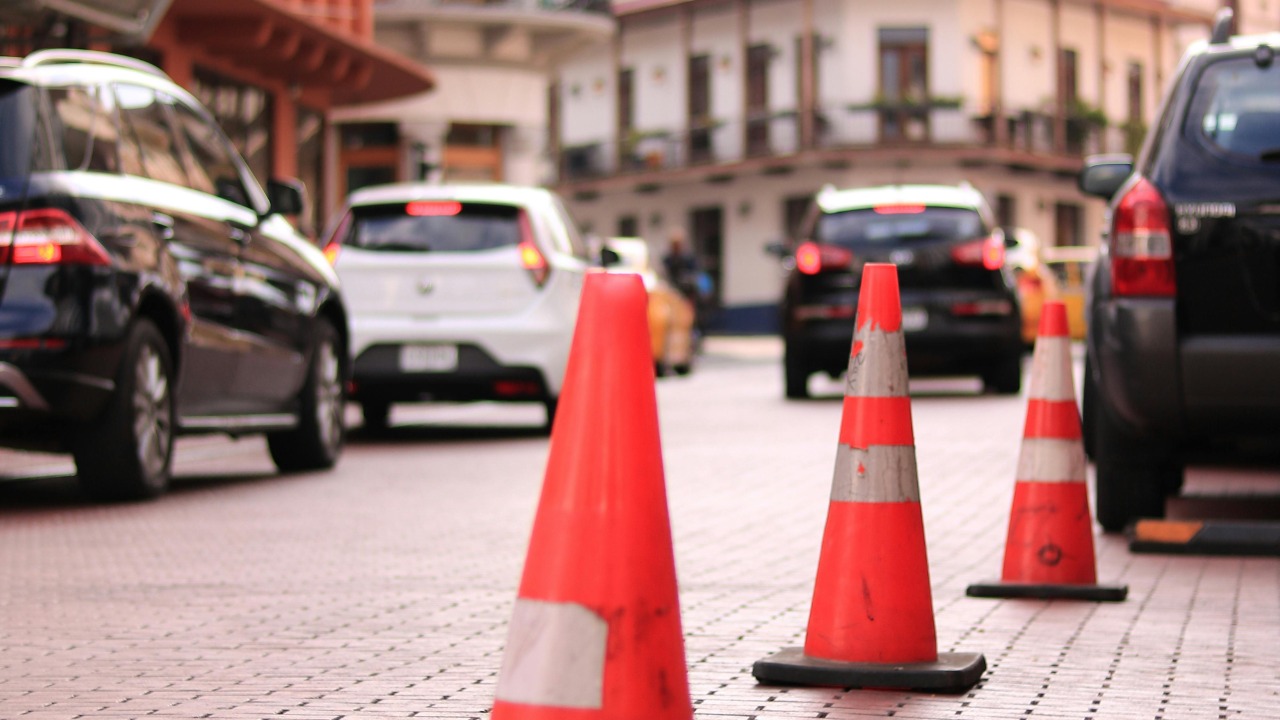
On a quiet stretch of city street that used to run on a simple first-come, first-served vibe, a new “system” has appeared: orange traffic cones. Not the official kind with reflective tape and a city logo, but the kind you can buy at a hardware store on a Saturday and deploy before your coffee gets cold. The mystery is that nobody seems to know who’s placing them—except for one stranger who’s now been spotted doing it openly.
Neighbors say the person sets cones out to “hold” a curbside spot, then walks away like it’s totally normal. When confronted, the response is a shrug and a line that’s quickly becoming the block’s most repeated quote: “Everyone does it.” It’d be funny if it weren’t also making people late for work and starting that low-grade neighborhood simmer that always feels one text message away from boiling over.
Cones, curb space, and a new kind of audacity
The pattern is simple, according to multiple residents: cones appear in the morning, often in pairs, spaced just wide enough to block a car from pulling in. Sometimes there’s even a bonus prop—an old folding chair, a bucket, or a piece of scrap wood—like the spot is being curated. Hours later, a vehicle arrives, the cones vanish, and the “reserved” space is suddenly occupied like it was booked in advance.
For the people who live nearby, the cones aren’t just an eyesore; they’re a message. The message is: this curb is no longer public, it’s private, and the person claiming it is betting nobody will challenge them. And if someone does challenge them, the bet shifts to whether anyone has the time, energy, or appetite for a sidewalk argument at 7:30 a.m.
“Everyone does it”—but do they, really?
That phrase—“everyone does it”—is doing a lot of work. In some places, informal parking etiquette is a real thing, especially after snowstorms where people dig out a spot and mark it with a chair. In other places, it’s less “etiquette” and more “parking folklore,” the kind of local habit that gets passed along until it feels like law even when it isn’t.
Still, plenty of neighbors say they’ve never seen anything like this on their block. They’ve lived there for years, they’ve survived street sweeping schedules that require a calendar and a prayer, and they’ve never needed cones to function as adults. The frustration isn’t just that someone’s taking a spot—it’s the confidence of doing it and acting like anyone who questions it is the weird one.
Why this gets under people’s skin so fast
Street parking is basically shared currency, and it’s already scarce in a lot of neighborhoods. People plan their day around it, circle the block like it’s a slow-motion sport, and celebrate a close spot the way you’d celebrate finding a $20 bill in a jacket pocket. So when someone “banks” a space with cones, it can feel like they’ve hacked the system while everyone else plays by the rules.
There’s also the simple unfairness of it: if one person can reserve a spot, why not everyone? Imagine the street filled with cones, chairs, trash cans, maybe a traffic barrel or two for flair. Suddenly public curb space turns into a cluttered obstacle course, and nobody’s actually parking—just staking claims like it’s a tiny suburban gold rush.
Is it legal to reserve a public spot with cones?
In most cities, public street parking isn’t something a private individual can reserve just because they want to. Temporary no-parking zones usually require permits for things like moving trucks, construction, film shoots, or other short-term needs. Those permits often come with official signage or markings—something that makes it clear the city knows about it, approved it, and can enforce it.
Unpermitted cones can fall into a gray zone until someone reports them, but that doesn’t mean they’re allowed. Many municipalities treat placing objects in the roadway as obstruction, littering, or illegal signage. Translation: the “everyone does it” defense might work in a casual argument on the sidewalk, but it tends not to hold up when the city gets involved.
What neighbors are doing instead of starting cone wars
As tempting as it is to picture an escalating “cone arms race,” most residents say they’re trying to keep it calm. A few have started taking photos—nothing dramatic, just documentation of when the cones appear and disappear. Others have kept notes on how long the “reserved” spaces sit empty, since an empty blocked spot tends to be the detail that really sticks when you’re explaining it to someone on a 311 line.
Some have tried direct conversation, with mixed results. A polite “Hey, is there a permit for that?” sometimes gets a vague answer or a repeat of the now-classic line. One neighbor described the interaction as “weirdly friendly, like he was giving me a helpful tip, not taking something from everybody.”
What the city can do (and what it usually wants from you)
If this turns into an official complaint, cities typically want specifics: exact location, time of day, and whether the cones are blocking access, driveways, hydrants, or crosswalks. Photos help, especially if they show cones sitting in an otherwise legal space for long stretches. It’s not about being petty; it’s about giving enforcement teams enough information to act without playing detective.
In many places, the first step is a non-emergency service request—311, a city app, or a neighborhood liaison depending on where you live. If the cones are creating a safety issue (say, forcing cars to stop suddenly or pushing traffic into a bike lane), that can bump it up the priority list. The reality is that cities are busy, but repeat complaints with clear details tend to get traction.
The tricky part: you don’t want this to turn into a feud
Everyone wants the same outcome—fair parking and less nonsense on the curb—but nobody wants the side quest of being “the cone enemy.” That’s why a lot of neighbors are trying to keep the temperature low: no yelling matches, no mysterious late-night cone relocations, no passive-aggressive notes that read like they were written during a caffeine shortage. It’s not that people are scared; they just don’t want everyday life to become a reality show.
A few residents are floating a more community-minded approach: if the person genuinely needs a reserved spot for a legitimate reason, they can apply for a temporary permit like everyone else would for a move or a repair. If they don’t have a legitimate reason, then the situation becomes simpler: public space stays public. Either way, it’s hard to argue with a system that’s the same for everybody.
Meanwhile, the cones keep showing up
For now, the orange markers continue to pop up like a recurring character in a neighborhood story. Some mornings they’re there, some mornings they aren’t, and people swap updates like they’re tracking a migrating species. One resident joked that if the cones get their own mailing address, the block is officially in trouble.
But beneath the jokes, the tension is real—and so is the shared curiosity. Who decided this was normal? How long have they been doing it? And are they truly convinced “everyone does it,” or is that just the easiest sentence to say when you’re caught red-handed holding a public parking spot hostage with $19.99 worth of plastic?
More from Fast Lane Only