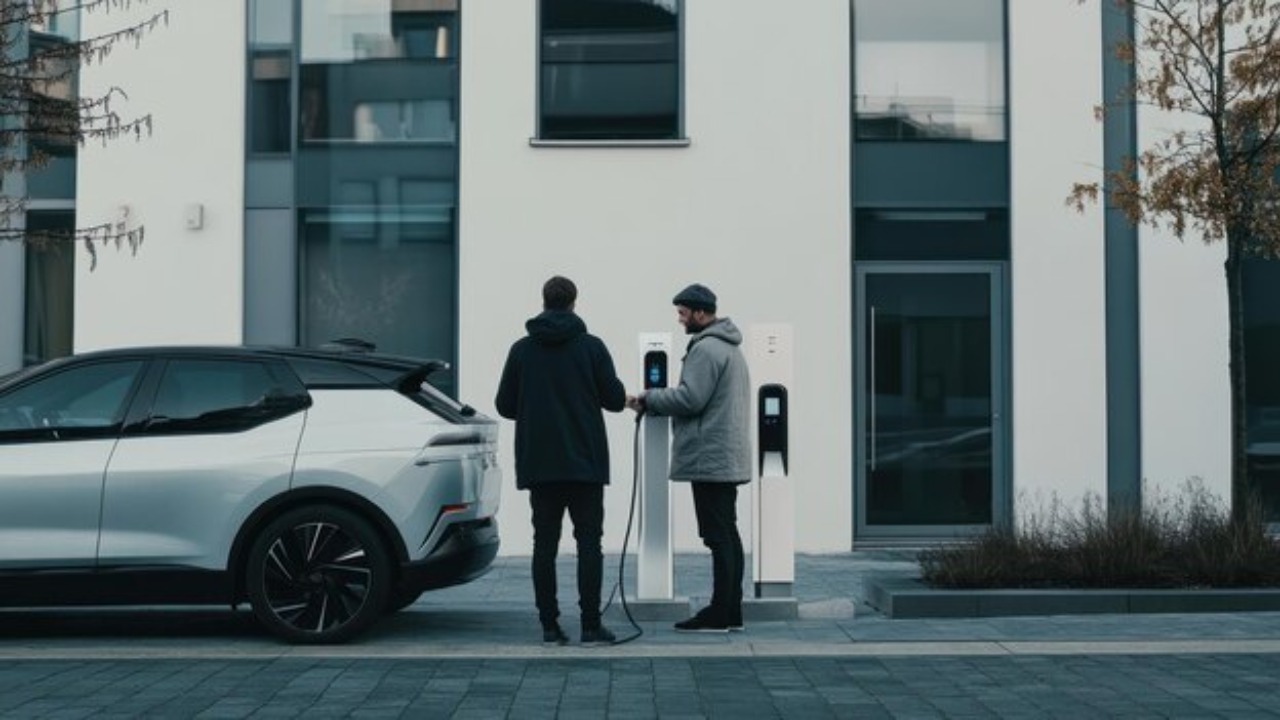
It starts innocently enough: you plug in your EV at the office, head inside, and feel like you’ve nailed modern adulthood. Then you come back out later and—surprise—your car’s sitting there politely not charging, cable dangling like a shrug. Meanwhile, a coworker’s vehicle is happily sipping electrons from the same station.
This kind of workplace charging drama is getting more common as more people drive electric, and the infrastructure hasn’t quite caught up. The awkward part isn’t even the lost miles. It’s the feeling that someone crossed a line you didn’t know needed a line.
Why this is happening more often than anyone expected
Workplace chargers were once a quirky perk for a handful of early adopters. Now they’re more like the office microwave at noon: everyone needs it, everyone’s in a hurry, and somehow the rules are mostly vibes. When chargers are limited, the temptation to “just swap for a bit” can get strong.
Add in the fact that different cars charge at different speeds, people have different commutes, and some drivers arrive with 5% battery and panic in their eyes. If your workplace doesn’t have a clear policy, the loudest policy becomes “whoever gets the plug wins.” That’s not ideal, unless your office is secretly training for a reality show.
Is unplugging someone else’s EV actually a big deal?
On paper, it can look minor: the charger’s there to be used, and maybe your car “already had enough.” In reality, unplugging someone else without asking is a lot like moving their lunch out of the fridge because you’re hungrier. It’s not illegal in most places, but it’s a social foul and, depending on the setup, could violate workplace rules.
There’s also a practical side. Many drivers plan their day around getting a certain amount of charge. Losing an hour or two can mean changing errands, skipping daycare pickup help, or stressing the whole commute home.
And then there’s the equipment. Yanking cables, letting connectors drag on the ground, or repeatedly handling someone else’s charging session can wear out the hardware. If a company is paying to install and maintain chargers, they’re usually not thrilled about employees treating them like a tug-of-war rope.
The unspoken etiquette most EV drivers follow
Even without formal rules, a few norms have emerged in EV-heavy workplaces. Don’t unplug a car you didn’t plug in, unless there’s explicit permission. If you need a charge urgently, ask—most people are reasonable when approached like a human being and not a charging pirate.
Another common expectation: if your car is done charging, move it. Not everyone can do that in the middle of meetings, but many workplaces set informal “swap windows” around lunch or mid-afternoon. The goal is simple—maximize access, minimize drama.
And yes, leaving a note is still a thing in 2026. A simple “Text me if you need the plug” with a phone number can prevent a lot of nonsense, though it shouldn’t be required for basic courtesy.
What you can do right now (without turning it into a workplace feud)
If you know who’s doing it, the cleanest first step is a calm, direct conversation. Something like: “Hey, I noticed my car got unplugged a couple times while it was still charging. Was that you? I’m happy to coordinate, but I need to know before my commute home gets risky.” It’s firm, but it gives them a chance to respond without feeling publicly accused.
If you don’t know who it is, a friendly sign can work surprisingly well. You can keep it light: “Hi! Please don’t unplug—happy to swap if you message me.” People behave better when reminded there’s a real person attached to the vehicle.
It also helps to check your car’s app notifications. Many EVs will alert you when charging stops unexpectedly, which lets you address it quickly. Catching it early can turn “I lost half my planned charge” into “annoying, but fixable.”
Tools and settings that might stop the plug drama
Some cars lock the connector to the vehicle while charging, and some keep it locked even when charging is paused. If your EV has a “lock connector” setting, it’s worth enabling—no confrontation required. Just note that this can frustrate others if your car is done and you’re not moving it, so it works best alongside a swap plan.
On the station side, networked chargers sometimes support reservations, queues, or session limits. If your workplace uses a charging network app, poke around for features like “idle fees,” “time limits,” or “notify when charging is complete.” These aren’t punishments so much as guardrails for sharing nicely.
And if the station is a basic, non-networked unit, the “tool” is mostly social: coordination. A shared calendar, a Teams/Slack channel, or even a whiteboard sign-up near the chargers can make everything smoother with minimal effort.
When it’s time to bring in a manager (and how to do it without sounding petty)
If unplugging keeps happening after you’ve tried the polite route, it’s reasonable to escalate. Frame it as an operational issue, not a personal complaint: “We’re having recurring conflicts over the chargers, and cars are being unplugged mid-session. Can we set a simple policy or signage?” Managers generally like solving problems before they become office legends.
Clear policies tend to be simple. Examples include a maximum charging window (say, four hours), a rule against unplugging others without consent, and an expectation to move once charging is complete. If your workplace can add more chargers, even better, but policies help immediately.
If there’s security or facility management, they may also be able to monitor the charging area, especially if the behavior is repeated and disruptive. Nobody wants a surveillance state for a parking lot, but consistent tampering with shared equipment is exactly the kind of thing facilities teams deal with.
What workplaces are doing to prevent “charger turf wars”
Companies that have been through this once often adopt a few smart fixes. They add more Level 2 stations, install dual-head chargers, or designate certain spots for shorter sessions. Some rotate access by department or create a waitlist system that’s fair and transparent.
Another trend is pairing EV charging with broader commuting benefits. If there are good transit subsidies, carpool perks, or flexible work hours, the pressure on the chargers can drop. Less pressure means fewer people making questionable choices with someone else’s plug.
And yes, sometimes the simplest change is just communication. A clearly posted “Charging Guidelines” sign can do wonders, mostly because it removes the ambiguity that lets rude behavior pretend it’s just “how it works.”
The human part: it’s not just about electricity
Workplace charging is weirdly personal. Your car is your car, and someone touching it—even just the cable—can feel invasive. The best outcomes usually come from treating it like any shared office resource: clear expectations, a little empathy, and a system that doesn’t rely on mind-reading.
If your coworker’s unplugging you because they’re anxious about their own battery, that’s understandable in a “we’ve all had a stressful day” way. It still doesn’t make it okay. The goal is to get to a setup where nobody has to choose between being polite and getting home.
More from Fast Lane Only