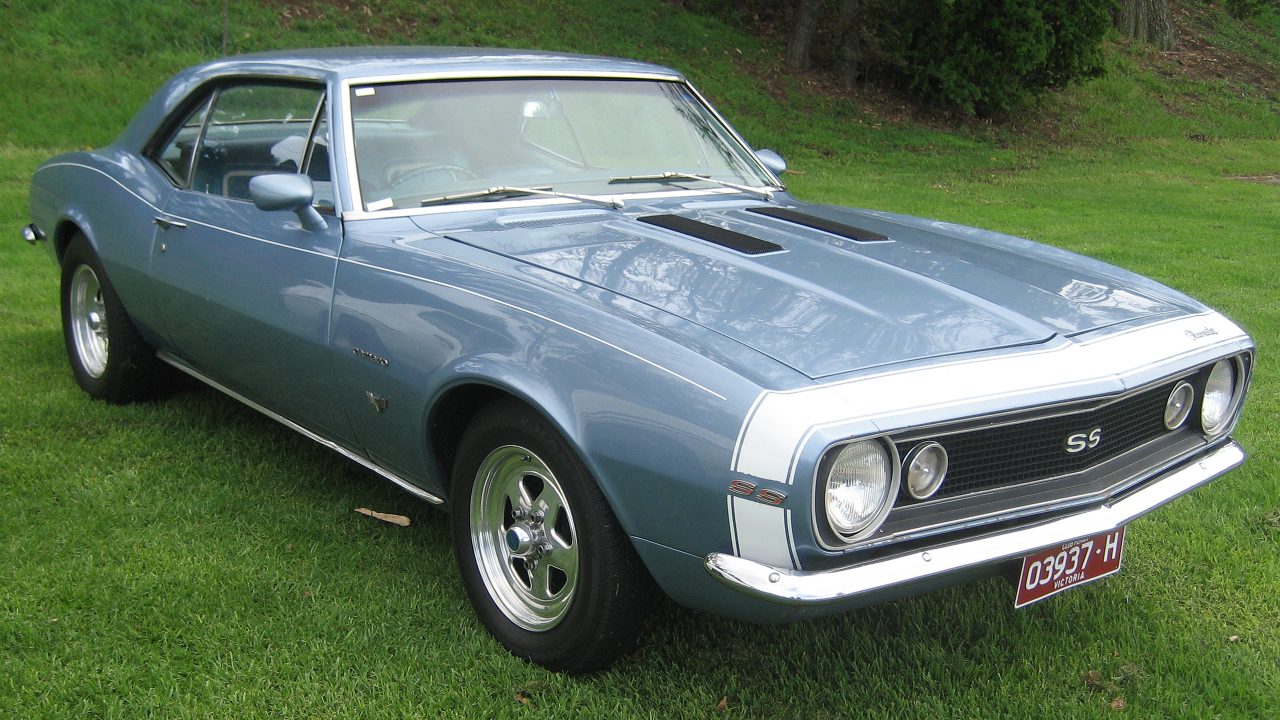
A classic-car project is supposed to be the fun kind of family drama: greasy hands, weekend tinkering, and a satisfying “before and after.” But one woman says her restoration story took a sharp turn when her brother offered to “fix” her 1967 Camaro and then wouldn’t return it. What started as a favor, she claims, has turned into a standoff with a very expensive, very sentimental prize sitting in someone else’s garage.
According to her account, the Camaro had been in her life for years and carried more meaning than resale value. It wasn’t a flawless show car, she said, but it was hers—paperwork, history, and all. She’d been planning to get it running better, just slowly, as time and money allowed.
A handshake deal that didn’t stay friendly
She says her brother has always been the “car person” in the family, the one who knows which wrench to grab without looking and can diagnose an engine noise like it’s a second language. When he offered to help, it sounded like a win-win. She’d get progress on the Camaro, and he’d get a project to work on.
The arrangement, she claims, was simple: he’d take the car for some repairs and tuning, and she’d cover parts and agreed-upon costs. No sale, no trade, no “maybe it’ll be mine if you don’t pay me back.” Just help. If you’ve ever relied on family for a job like this, you know how often it’s sealed with a casual “don’t worry about it” instead of a written contract.
Then the “fixing” started… and the access ended
She says that once the Camaro was at his place, the updates became harder to pin down. At first, she got occasional messages—bits and pieces about what he wanted to replace and what the car “really needed.” But when she asked for specifics, receipts, or a timeline, she says the conversation got tense.
Eventually, she claims, her brother stopped responding consistently and began acting like the car couldn’t leave until she met new conditions. The conditions, she says, weren’t part of the original plan: more money, more time, and at times, language that suggested he now saw the Camaro as leverage. Her requests to pick it up “as-is” were, she claims, brushed off or flat-out refused.
“It’s my car,” she says. “Why can’t I just take it?”
Here’s where things get sticky fast. From her perspective, ownership is straightforward: the title is in her name, and the car was never gifted or sold. So when she asked to retrieve it—even unfinished—she expected some grumbling, maybe an argument, but not an outright “no.”
She says her brother’s reasoning shifted depending on the day. Sometimes, she claims, he framed it as protecting his investment in parts or labor. Other times, she says, he implied she “owed” him for the work, even though the price and scope were never clearly agreed to. And at least once, she claims, he suggested the car was safer with him, which is a nice sentiment until it turns into permanent possession.
A classic car turns into a modern family tug-of-war
It’s not hard to see how this happens. Cars like a 1967 Camaro aren’t just transportation; they’re nostalgia on four wheels, and their value can jump quickly depending on what’s been done to them. Once the car is off your property and half-disassembled, the power balance changes, especially if the other person controls the parts, the keys, and the garage door.
And because it’s family, people often avoid formal boundaries until it’s too late. Nobody wants to be the sibling who asks for a signed work order, like you’re checking into a dealership service bay at Thanksgiving. But informality can create the perfect fog for misunderstandings—or for someone to rewrite the deal midstream.
What the dispute may come down to
Situations like this often hinge on a few unglamorous details: who holds the title, what communications exist, and whether there’s any proof of an agreement. If she has the title and registration in her name, that’s a strong indicator of ownership. But possession matters too, and once a car is in someone else’s garage, retrieving it can become more complicated than it should be.
Then there’s the question of money. If he truly paid for parts or put in substantial work, he might argue he’s owed compensation. Depending on where this is happening, there may be legal concepts like a mechanic’s lien or similar claims—but those typically require specific steps, documentation, and notice, not just a verbal “I’m keeping it until you pay me.”
The paper trail that suddenly matters a lot
She says she’s been going back through old texts, messages, and payment records, trying to reconstruct what was promised and what was paid. Screenshots of conversations about “just fixing it up” can be surprisingly important when everyone’s memory gets selective. Receipts for parts she reimbursed, towing invoices, and proof of insurance can also help show she never intended to relinquish ownership.
Even small details can matter: Did she ever refer to the car as “mine” in writing? Did he ever acknowledge it was hers? Did anyone else hear the agreement? It’s the kind of detective work nobody expects to do over a family project, but here it is.
Why this hits harder than a normal property dispute
She says the worst part isn’t even the car—it’s how quickly the relationship shifted. One day, it was a shared project and a point of pride. The next, it felt like bargaining with someone who knew exactly how much the Camaro meant to her.
That emotional weight isn’t trivial. Classic cars often carry stories: who taught you to drive, who rode shotgun, what you promised yourself you’d restore “someday.” When someone keeps that from you, it can feel less like a financial conflict and more like someone took a piece of your history and put it behind a locked door.
What happens next could be messy—or surprisingly simple
She says she’s still hoping for a resolution that doesn’t involve court, police reports, or watching family members take sides. Sometimes, these conflicts end the moment a neutral third party gets involved—someone who can stand in a driveway and say, calmly, “Hand over the car, and you two can fight about money separately.” In other cases, the dispute escalates because nobody wants to be the one who “loses,” even if the legal ownership is clear.
For now, she says she just wants her Camaro back, even if it’s in pieces and needs more work. She can handle a restoration. What she can’t handle, she says, is the idea that a favor turned into a hostage situation—especially when the hostage is a 1967 Camaro that never stopped being hers.
More from Fast Lane Only