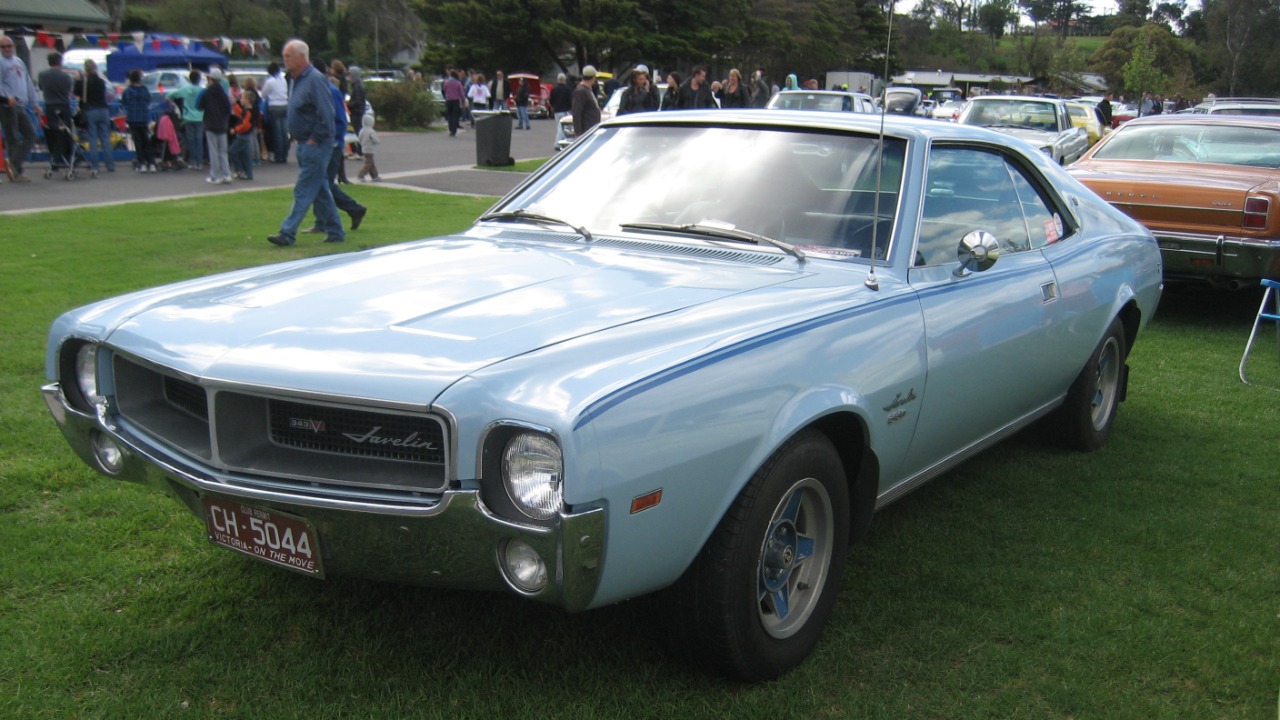
In 1968, the American Motors Corporation (AMC) introduced the Javelin, a groundbreaking muscle car that boasted impressive performance metrics for its time. With the ability to reach 60 mph in approximately 7 seconds, the Javelin was not just another contender in the muscle car arena but a statement of innovation and power.
Background of AMC and the Javelin
The American Motors Corporation, often overshadowed by the Big Three automakers—Ford, General Motors, and Chrysler—had established itself as a notable player in the automotive industry by the 1960s. Founded in 1954, AMC carved a niche with its unique offerings, focusing on compact and economical vehicles. However, the growing popularity of muscle cars in the mid-60s prompted AMC to reassess its strategies. The company aimed to compete directly with the established muscle car giants by creating the Javelin, a vehicle that would resonate with performance enthusiasts.
The development process of the Javelin was strategic, as AMC sought to create a car that could stand toe-to-toe with iconic models like the Ford Mustang and Chevrolet Camaro. Engineers and designers worked meticulously to craft a vehicle that was both visually striking and performance-oriented. The Javelin was officially launched in 1968 and quickly positioned itself as a serious competitor in the muscle car market, appealing to younger buyers looking for speed and style. AMC’s marketing strategy focused on the car’s unique features, emphasizing its sporty design and robust performance to capture the interest of its target audience.
Design and Aesthetics
The exterior design of the Javelin is one of its most striking features. With a long hood, short rear deck, and a wide stance, the Javelin exuded a sporty silhouette that was both aggressive and elegant. The car was available in a variety of bold colors, including the iconic “Go Green” and “Matador Red,” helping it stand out on the road. The design was influenced by contemporary trends that favored sleek lines and an aerodynamic profile, making it instantly recognizable among its peers.
Performance Specifications
The heart of the Javelin was its powerful engine options, which included a 290 cubic inch V8 and a more robust 343 cubic inch V8, delivering up to 280 horsepower. These engines allowed the Javelin to achieve impressive acceleration, with a 0 to 60 mph time of around 7 seconds. This performance placed the Javelin in direct competition with more established muscle cars, proving that AMC could deliver power without sacrificing reliability. The combination of a lightweight body and powerful engines made for a thrilling driving experience, appealing to speed enthusiasts.
In terms of handling, the Javelin was equipped with a well-engineered suspension system that allowed for responsive steering and cornering. The rear-wheel-drive layout contributed to a balanced driving dynamic, making it enjoyable on both highways and winding roads. When compared to competitors like the Ford Mustang and Chevrolet Camaro, the Javelin held its own in performance metrics, showcasing AMC’s commitment to creating a serious contender in the muscle car segment.
Technological Innovations
AMC’s engineering team implemented several technological advancements that contributed to the Javelin’s speed and agility. The vehicle featured a performance-oriented suspension system, which included front disc brakes and rear drum brakes, providing reliable stopping power. This was a significant upgrade over many vehicles of that era, where drum brakes were often standard. The Javelin’s engineering innovations not only enhanced its performance but also set new standards for safety and handling in the muscle car segment.
Additionally, the Javelin introduced features such as a factory-installed AM radio, which was a popular option among consumers at the time. The inclusion of these technologies reflected AMC’s understanding of consumer preferences and their desire for a more enjoyable driving experience. The innovations found in the Javelin influenced not only AMC’s future models but also set a precedent for other manufacturers looking to enhance their offerings in the competitive automotive landscape.
Market Reception and Sales Figures
The initial public reception of the Javelin was overwhelmingly positive. Automotive journalists praised its performance, design, and value proposition. Reviews in publications like Hot Rod highlighted its impressive speed and handling, while also noting its affordability compared to competitors. The favorable reviews contributed to a successful launch, with many consumers eager to experience the new muscle car from AMC.
In terms of sales, the Javelin performed remarkably well during its first year, with approximately 30,000 units sold. This success not only bolstered AMC’s financial standing but also helped solidify its reputation as a serious player in the muscle car market. The Javelin attracted a diverse customer demographic, appealing to young drivers and families alike, which further contributed to its sales success during a time when muscle cars were rising in popularity across the United States.
Racing Heritage and Achievements
The Javelin quickly made a name for itself in the world of motorsports. AMC recognized the potential for the Javelin to shine on the racetrack and actively promoted its participation in various racing events. The Javelin took part in the SCCA Trans-Am series, where it competed against some of the biggest names in racing. Notably, the Javelin was driven by legendary racers such as Mark Donohue, who helped secure impressive finishes and establish the car’s racing pedigree.
Throughout its racing career, the Javelin achieved numerous accolades, including several class wins and podium finishes. These accomplishments not only showcased the vehicle’s performance capabilities but also enhanced its brand image among car enthusiasts. The racing success of the Javelin solidified its legacy as a serious contender in the muscle car world and contributed to the growing popularity of AMC vehicles among racing fans.
Challenges Faced by AMC
Despite the Javelin’s success, AMC faced significant challenges in maintaining its market position against the Big Three automakers. The early 1970s brought economic downturns and rising fuel prices, which led to a shift in consumer preferences away from muscle cars towards more fuel-efficient vehicles. AMC struggled to compete with the extensive resources and marketing power of larger manufacturers, leading to difficult decisions regarding production and model offerings.
Additionally, the muscle car market began to decline as safety regulations and emissions standards were introduced, further complicating AMC’s strategy. The company had to navigate these market trends while also adapting to the changing automotive landscape. Despite these challenges, AMC continued to innovate and produce vehicles that appealed to a dedicated segment of car enthusiasts, ensuring the Javelin remained a beloved model long after its initial production.
Legacy of the 1968 Javelin
The 1968 AMC Javelin has left an indelible mark on automotive history. Its unique design, impressive performance, and racing achievements have made it a sought-after model among collectors and enthusiasts. Today, the Javelin is celebrated not only for its contribution to the muscle car era but also for its role in shaping the identity of AMC as a manufacturer that dared to compete with the industry’s giants.
The influence of the Javelin can be seen in subsequent AMC models and in how other manufacturers approached performance cars. The Javelin’s legacy continues to resonate within automotive culture, often featured in classic car shows and enthusiast gatherings. Its representation in media, such as documentaries and automotive history books, further cements its status as a classic muscle car deserving of recognition and appreciation.
More from Fast Lane Only