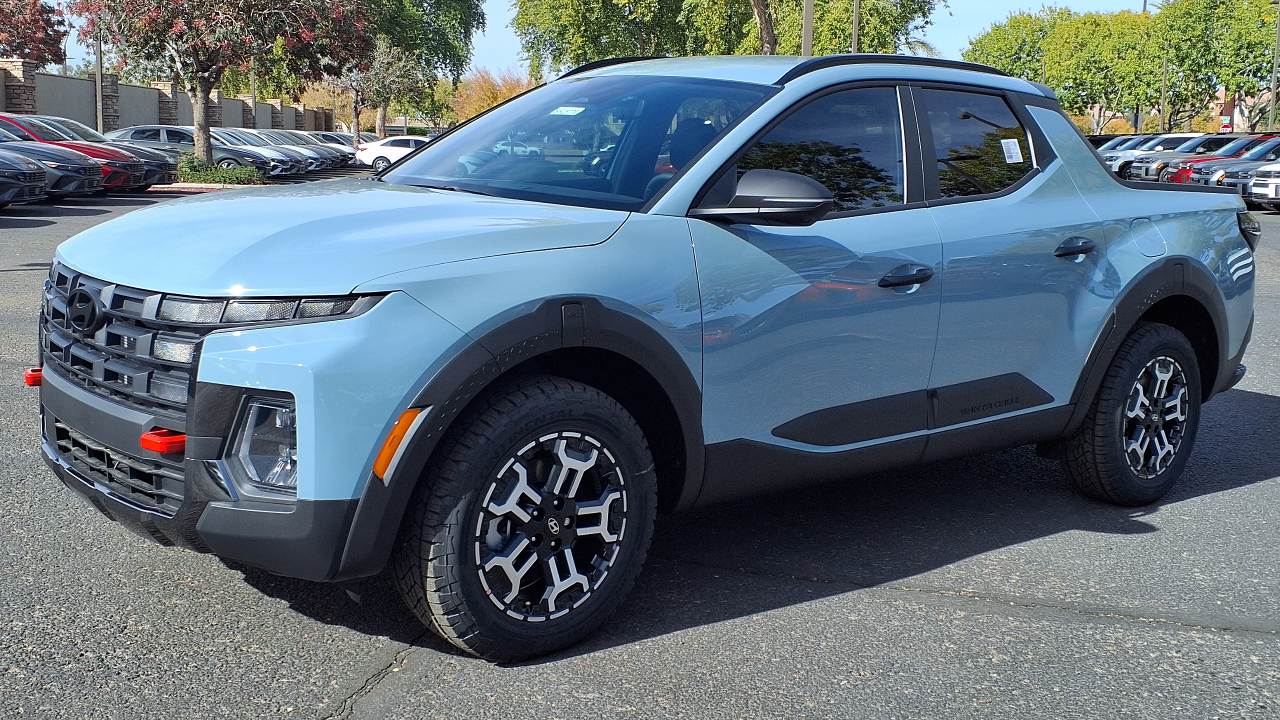
Hyundai is preparing to wind down the Santa Cruz, the compact pickup that tried to blend crossover comfort with open-bed utility. As the small truck quietly exits stage left, attention is already shifting to what comes next in Hyundai showrooms and what its departure says about the fast evolving truck market.
The decision to phase out the Santa Cruz reflects both the limits of the niche it tried to create and the intense pressure from more traditional rivals. Its fade from the lineup clears space for a larger, more conventional pickup that Hyundai is now developing, signaling a strategic reset rather than a retreat from trucks altogether.
A bold experiment that never quite fit the segment
The Santa Cruz arrived as a compact pickup built on the Hyundai Tucson platform, promising carlike manners with just enough bed space for weekend projects. It targeted buyers who wanted the stance and utility of a truck without the bulk or ride quality compromises of a body on frame design. By basing the small pickup on the Hyundai Tucson, Hyundai effectively turned a popular compact SUV into a lifestyle truck, betting that crossover owners would welcome an open bed without giving up the comfort and technology they already knew.
In practice, that formula left the Santa Cruz straddling categories in a way that confused some shoppers. Traditional truck buyers saw a unibody, Tucson based pickup with modest towing and payload figures, while compact SUV shoppers saw a vehicle that looked like a truck and carried the fuel economy penalties that come with it. Reports on Hyundai’s decision to discontinue the Santa Cruz describe it as a small pickup that never fully shook off questions about what it was supposed to be, with some buyers embracing the concept and others simply asking what it was meant to replace.
Outpaced by the Ford Maverick and a tougher small truck reality
The Santa Cruz did not operate in a vacuum. Its most direct rival, the Ford Maverick, arrived with a more conventional truck profile, a lower starting price, and a clear pitch as an affordable, practical pickup. Coverage of Hyundai’s move to drop the Santa Cruz notes that the compact truck was effectively “dog walked” by the Ford Maverick, a blunt way of saying that the Ford dominated the sales and mindshare battle in this emerging segment. Where the Maverick leaned into its truck identity, the Santa Cruz’s crossover roots and higher price point made it a tougher sell.
Pricing played a central role. Reports point to a starting figure of about 25,499 dollars for the Hyundai Santa Cruz, which placed it above the entry level Ford Maverick in a segment where value is a primary draw. For buyers comparing spec sheets, the Maverick’s combination of lower base price and strong capability created a straightforward choice, while the Santa Cruz’s more premium positioning narrowed its audience. The result was a small pickup that struggled to gain traction against a rival that felt more like a traditional truck and less like an experiment.
Why Hyundai is pulling the plug and what replaces it
Hyundai’s decision to discontinue the Santa Cruz is not simply a reaction to one underperforming model, it is part of a broader recalibration of its truck strategy. Reporting on the move indicates that the Santa Cruz will not return for the 2027 model year, effectively setting an end date for the compact pickup’s run. Behind that choice is a recognition that the small truck’s sales and positioning did not justify continued investment, especially when a more conventional pickup could serve a wider slice of the market.
At the same time, Hyundai is not walking away from trucks. The same reporting that confirms the Santa Cruz’s exit also points to plans for a larger, midsize pickup that would sit above the outgoing model. Described as a bigger truck that is coming to replace the role the Santa Cruz tried to fill, this future model is expected to align more closely with established midsize competitors in size and capability. By pivoting from a Tucson based compact to a dedicated midsize truck, Hyundai is signaling that it wants to compete head on in a segment where buyers have clearer expectations and where the brand can potentially command stronger volumes.
Lessons from a lifestyle truck that arrived early
The Santa Cruz’s fade from the lineup offers a case study in how timing and positioning can make or break a new vehicle concept. Hyundai attempted to anticipate a shift toward smaller, more efficient trucks that still offered genuine utility, and in some respects it was ahead of the curve. The compact pickup’s unibody construction, Tucson derived cabin, and focus on comfort anticipated the way many buyers now use trucks as daily drivers rather than purely work tools. Yet the market’s response suggests that being early is not enough if the value equation and messaging are not equally sharp.
One of the clearest lessons is that lifestyle oriented trucks still need a simple, compelling story. The Ford Maverick distilled its pitch to affordability and practicality, while the Santa Cruz leaned into design flair and crossover comfort at a higher price point. Reports describing how the Hyundai Santa Cruz was outperformed by the Ford Maverick underscore that buyers in this space gravitate toward straightforward utility and price, even when they appreciate modern styling and technology. For Hyundai’s upcoming midsize truck, that likely means a more conventional spec sheet, clearer capability benchmarks, and pricing that aligns with shopper expectations in the core truck market.
What the Santa Cruz’s exit means for Hyundai buyers
For current owners, the end of Santa Cruz production will not erase the truck’s appeal as a distinctive, relatively rare vehicle that blends SUV comfort with pickup practicality. Its Tucson based underpinnings should help with long term serviceability, since many mechanical components are shared with a high volume compact SUV. However, shoppers who were considering a new Santa Cruz will find their options narrowing as Hyundai winds down the model ahead of the 2027 model year, with inventory likely to taper off as production shifts and the company prepares for its next truck.
Looking ahead, Hyundai buyers interested in a pickup will be watching for more details on the planned midsize truck that is set to follow the Santa Cruz. Reporting that describes a bigger truck on the way suggests Hyundai intends to offer a more traditional alternative that can compete directly with established midsize nameplates while still reflecting the brand’s emphasis on design and technology. In that sense, saying goodbye to the Santa Cruz is less a farewell to Hyundai trucks and more a transition from a niche experiment to a more conventional, and potentially more competitive, entry in the heart of the pickup market.
More from Fast Lane Only