Ford spent the past year arguing that car buyers needed relief from aggressive environmental rules, not more mandates. Now, after publicly applauding President Donald Trump’s decision to relax fuel economy standards in the name of affordability, the company has welcomed him to one of its most storied factories to celebrate the F-150 and American manufacturing. The visit crystallizes how a debate over emissions policy has become a stage for corporate strategy, worker anxiety, and presidential politics.
From fuel rules reset to a presidential factory tour
When Ford Motor CEO Jim Farley endorsed President Trump’s reset of federal fuel standards, he framed it as a victory for drivers’ wallets rather than a retreat on climate. Farley argued that the administration’s new approach to vehicle rules would keep cars within reach for middle income buyers and insisted that customers should not be forced into products they do not want to buy. In his telling, easing the regulatory pressure on automakers would allow companies like Ford to balance efficiency with the trucks and SUVs that still dominate demand, rather than racing ahead of consumers with expensive technology that prices them out of the market.
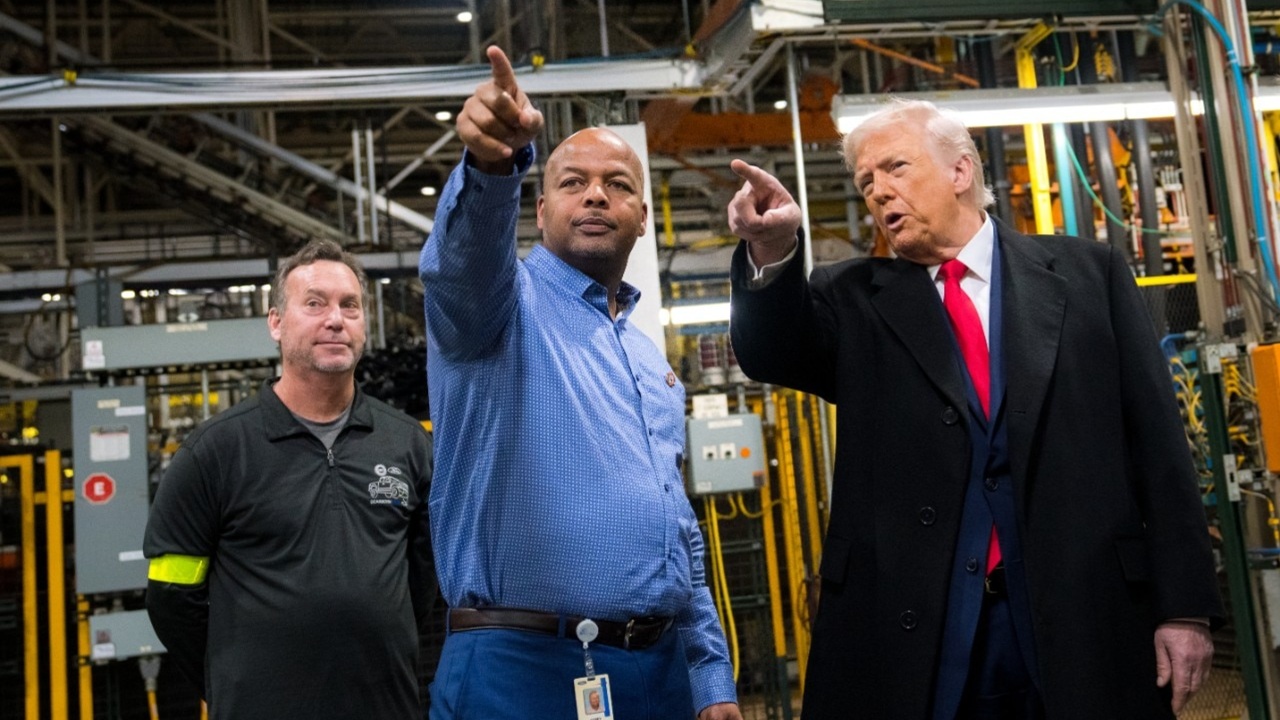
That message of “affordability” set the stage for Trump’s trip to Michigan, where the president highlighted what he cast as a revival of American auto manufacturing. At the Ford River Rouge Complex in Dearborn, home to the F-150, the White House sought to showcase the plant as proof that looser rules and a focus on domestic production could coexist. The company’s own communications described the event as a chance to highlight Ford’s U.S. manufacturing leadership, noting that the Rouge complex has been a symbol of industrial might since it produced war materials in September 1942. By inviting President Donald Trump and Treasury Secretary Scott Bessent at the request of the White House, Ford effectively turned its flagship truck plant into a backdrop for the administration’s economic narrative.
Affordability rhetoric meets Ford’s financial reality
Farley’s embrace of Trump’s fuel standards reset did not occur in a vacuum. Ford has been wrestling with steep losses in its electric vehicle division, Ford Model e, which the company has disclosed as $3.6 billion for 2025 year to date, after losses of $5.1 billion in 2024, $4.7 billion in 2023, and $2.2 billion in 2022. Those figures underscore why Farley has been pushing a pivot toward hybrids and more measured EV investments, and why he has been receptive to a regulatory environment that gives automakers more time and flexibility. In that context, praising a “common sense” reset of fuel rules is not just ideological alignment with the White House, it is a financial strategy to slow the burn rate while Ford recalibrates its product mix.
Hosting Trump at the F-150 plant fits neatly into that calculus. The F-150 remains a profit engine for Ford, and the company has every incentive to keep it front and center as it reassures investors that it can fund the transition to new technologies without abandoning its core truck business. During Farley’s White House meeting in Dec, he openly backed the Trump administration’s move to relax fuel economy rules, signaling that the company preferred a path that did not force an abrupt shift away from high volume pickups. By rolling out the red carpet for the president at the Dearborn Truck Plant, Ford reinforced that alignment, presenting its best selling truck as the embodiment of a policy mix that prioritizes affordability and domestic jobs over rapid regulatory tightening.
Trump’s Michigan message and the politics of the F-150
For President Trump, the Dearborn visit was one stop in a broader Michigan swing designed to sell his economic strategy. At the Detroit Economic Club, he defended his administration’s tariffs and argued that they were driving U.S. manufacturing without inflation, casting them as a driver for domestic investment rather than a drag on consumers. The White House amplified that message with a statement titled “Make Driving Great Again,” which claimed that tariffs were making U.S. production more competitive and helping to revive the auto industry. Against that backdrop, standing beside an American flag adorned F-150 on the factory floor allowed Trump to visually link his trade and regulatory agenda to one of the country’s most recognizable vehicles.
The symbolism was deliberate. The administration’s messaging stressed that tariffs and a reset of fuel standards were part of a single strategy to keep vehicles affordable while boosting U.S. jobs. At the Ford Rouge Ce, the president toured the assembly line, posed for selfies with workers, and spoke with CBS Evening News anchor Tony Dokoupil inside the Dearborn Truck Plant. The White House framed the event as a celebration of American manufacturing leadership, while Ford highlighted its long history at the site and its role in supplying both civilian trucks and wartime production. In political terms, the F-150 became a prop in a narrative that cast Trump as the defender of blue collar jobs and Ford as the corporate partner willing to validate that story.
Worker tensions on the factory floor
The carefully choreographed optics could not fully mask the tensions inside the plant. During Trump’s visit, a Ford employee in Dearborn engaged the president in a verbal exchange that later led to the worker’s suspension. According to accounts from the plant, the employee challenged Trump on the factory floor, prompting a response from the president and subsequent disciplinary action from Ford. The company confirmed that the worker had been suspended after the confrontation with President Donald Trump, a decision that quickly drew attention from colleagues and labor advocates who saw it as a sign of how tightly controlled the event had been.
The incident highlighted the gap between the celebratory framing of the visit and the anxieties of some workers about the administration’s policies and the company’s direction. While many employees lined up for photos and appeared to welcome the presidential spotlight, others were more skeptical of both Trump’s economic claims and Ford’s embrace of his agenda. Reports from the tour described a mix of enthusiasm and unease, with some workers cheering and others watching warily as the president moved through the Dearborn Truck Plant. The suspension of the outspoken employee underscored how dissent on the shop floor can collide with corporate efforts to maintain a smooth political event, especially when a sitting president is involved.
Optics, middle fingers, and the risks of political theater
Even beyond the worker confrontation, the visit produced moments that complicated the White House’s carefully crafted narrative. Video from the plant appeared to show Trump extending his middle finger while walking the factory floor with his right hand, a gesture that quickly circulated online and prompted questions about whether he had flipped someone off. The White House responded by saying it was “appropriate,” brushing aside criticism and insisting that the president’s conduct at the Ford plant had been in line with the occasion. The episode illustrated how easily a tightly scripted manufacturing showcase can be overshadowed by a few seconds of ambiguous footage.
For Ford, those optics carry their own risks. By aligning so visibly with Trump, from Farley’s praise of the fuel standards reset to the high profile factory tour, the company has tied its public image to a polarizing political figure at a moment when its own strategy is under scrutiny. Supporters of the administration’s approach see a coherent story: tariffs that, in the White House’s telling, are driving U.S. manufacturing without inflation, regulatory changes that prioritize affordability, and a flagship truck plant humming with activity. Critics, however, question whether loosening fuel rules will slow progress on emissions and whether the benefits of tariffs are as clear cut as the administration claims. The middle finger clip, the suspended worker, and the intense focus on the F-150 all serve as reminders that when a company turns its factory into a political stage, it inherits not only the spotlight but also the controversy that comes with it.
More from Fast Lane Only