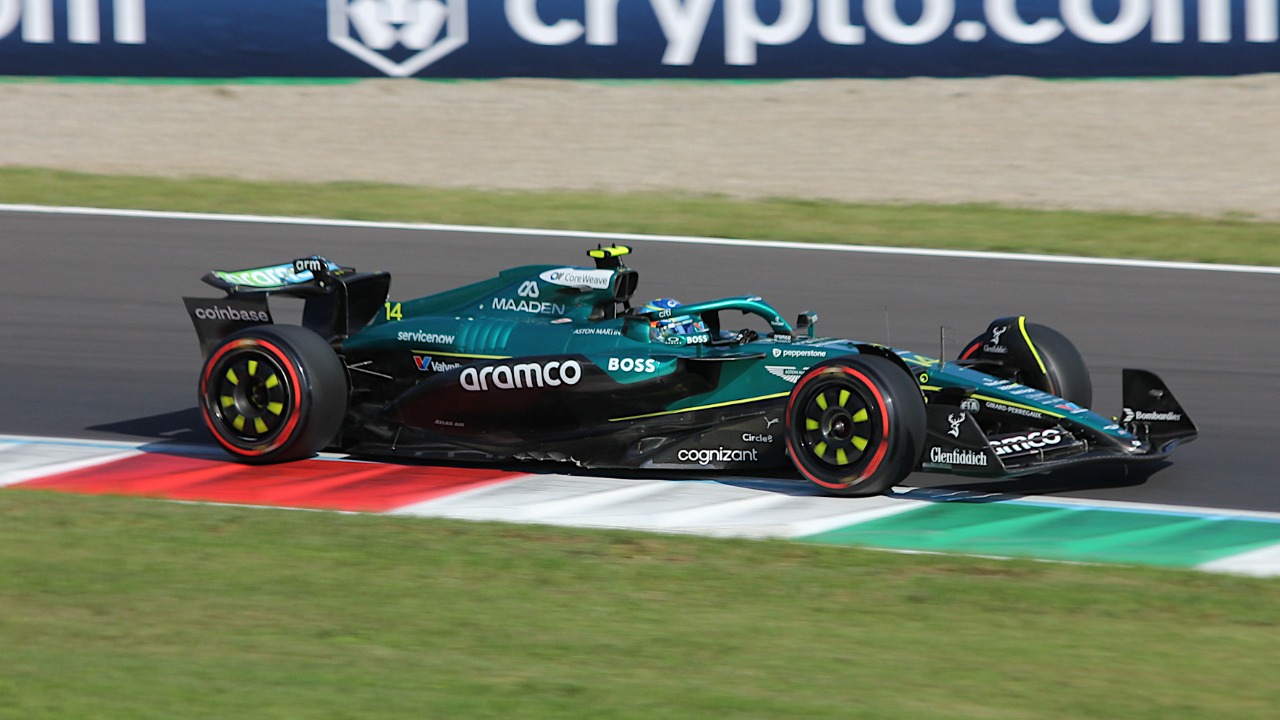
Aston Martin has arrived in Melbourne for the Australian Grand Prix, facing a problem that cuts deeper than lost lap time. The team has acknowledged that severe vibrations from its Honda power unit are so extreme that its drivers can safely complete only around 25 laps, far short of the 58 required to see the checkered flag. In a sport that usually treats mechanical discomfort as an acceptable trade-off for speed, Aston Martin is casting this as a matter of long-term health rather than race-day bravery.
The decision to cap mileage has triggered a rare public dispute over responsibility between a leading team and its engine supplier. Aston Martin has pointed directly at the Honda installation as the source of the problem, but the situation also exposes how aggressively the team has pushed its new chassis and packaging concept. The Melbourne weekend is now set to become an early stress test of Formula 1’s duty of care to drivers, as well as a stark example of how far the 2026 regulations can be stretched before safety lines are crossed.
Newey’s diagnosis and the 25‑lap red line
From Aston Martin’s side of the garage, the diagnosis is blunt. Team principal Adrian Newey has said that the vibrations originate in the Honda power unit and are being amplified through the car’s structure to a level that risks permanent nerve damage in the drivers’ hands. Internal data has led the team to a hard threshold of around 40 laps before the risk becomes unacceptable, and the engineers have built in a 15‑lap safety margin that leaves a maximum of 25 racing laps before they intend to retire the cars. That ceiling is not a tactical ploy but a medical line in the sand, based on feedback from specialists and the drivers themselves.
The picture is all the more alarming because the issue is not limited to comfort or endurance but to the possibility of lasting injury. Reports from the paddock describe a specific pattern of high‑frequency vibration that travels from the Honda engine through the gearbox, suspension, and steering column, then into the fingers. Newey has warned that the team cannot simply ask the drivers to tolerate the problem, because the cumulative effect over a full race distance at Albert Park could damage nerves in the hands and forearms. In internal briefings, Aston Martin has framed the 25‑lap cap as the only responsible response until Honda and the team can rework the installation.
Alonso, Stroll, and the human cost of vibration
For all the engineering language around frequencies and harmonics, the most vivid testimony has come from the drivers. Two-time world champion Fernando Alonso has described his hands going numb after relatively short runs, explaining that the steering wheel starts to feel as if it is buzzing out of his grip. Teammate Lance Stroll has echoed those concerns, saying that the sensation builds rapidly rather than gradually across a stint. Both drivers have privately indicated that they fear permanent damage if asked to complete the full 58 laps of the Australian Grand Prix at racing intensity.
The team’s medical advisers have focused on the risk of nerve damage in the fingers, a danger that Newey has linked directly to the way the vibration is transmitted through the steering system. As he has explained in briefings, the oscillations that begin in the Honda engine travel through the drivetrain and chassis before arriving at the steering wheel, where the driver’s hands absorb the final shock. That pathway has convinced Aston Martin that there is no quick fix through padding or gloves and that the only viable short-term mitigation is to limit exposure by cutting mileage. The decision to cap stints has therefore been framed internally as a welfare measure rather than a performance compromise.
Why Aston Martin expects to stop after 25 laps
The practical consequence is that Aston Martin is preparing for a race in which its cars are unlikely to see the finish. Team figures have already signalled that they do not expect to complete the full Australian Grand Prix, and that both cars are likely to be called into the pits around the 25‑lap mark. Internal projections suggest that any attempt to push closer to 40 laps would expose Fernando Alonso to the very nerve damage scenario that the team says it is determined to avoid. That stance has already drawn criticism from some fans, who see a top team effectively conceding the race before the lights go out.
From Aston Martin’s perspective, the alternative would be even more controversial. Under the Concorde Agreement, a team that withdraws from an event entirely can face financial penalties and reputational damage, particularly at a high-profile race in Melbourne, Australia. By choosing to start the Australian GP and then retire the cars early, the team believes it can meet its contractual obligations while still protecting its drivers. Internal planning documents describe a strategy of running limited laps in the Australian GP out of concern for driver welfare, with the 25‑lap limit treated as a non-negotiable safety boundary. That approach has been communicated to the race organisers and to Honda, even as discussions continue about how quickly a technical solution can be validated on track.
Honda vibrations, shared blame, and the road beyond Melbourne
In public, Aston Martin has placed the origin of the problem firmly with its engine partner. Newey has repeatedly referred to a Honda vibration issue that he says could cause the team’s cars to retire from the Australian GP, and internal briefings have highlighted how the problem was not fully captured in early dyno testing. The team’s analysis suggests that the unique combination of the Honda power unit, the tight packaging of the new chassis, and the specific loads at Albert Park has created a worst-case scenario that only became clear when the car ran at representative speeds. That has left Aston Martin facing a Melbourne crisis that one internal summary described as a mix of nerve damage risk, Honda blame, and the constraints of the Concorde Agreement.
More from Fast Lane Only