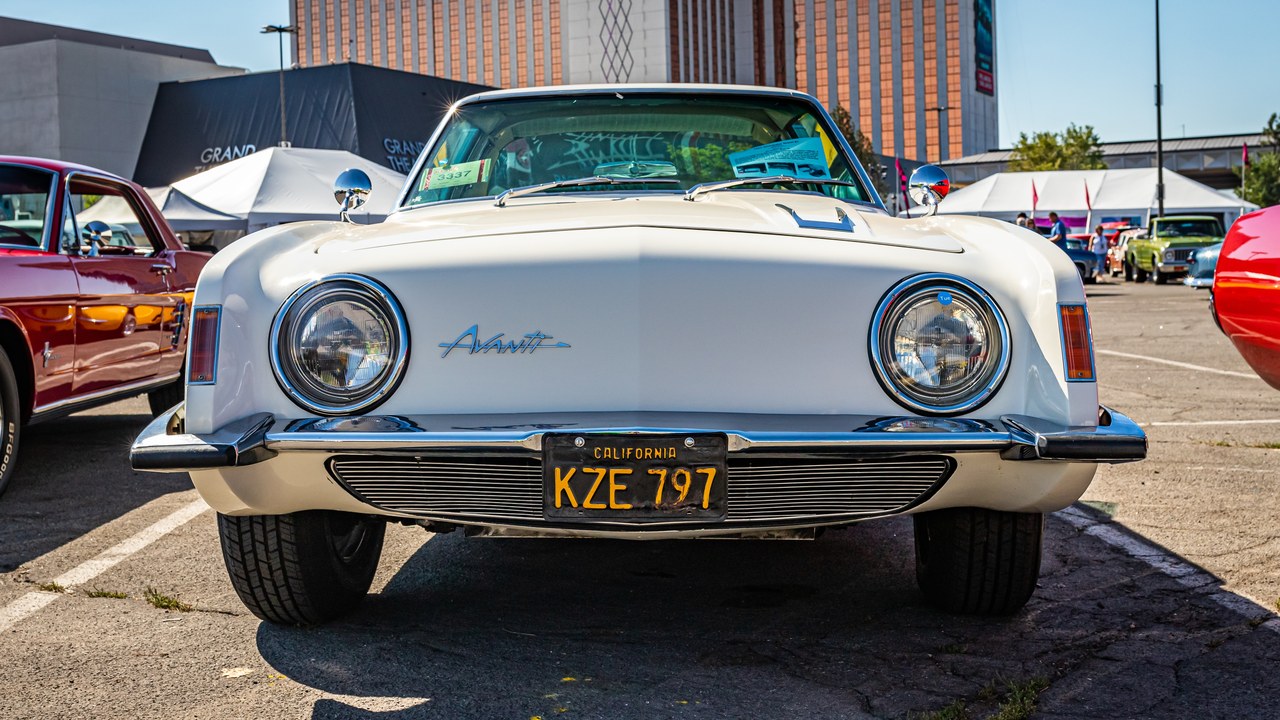
Studebaker announced in December 1963 that it would stop building cars in South Bend, Indiana. The last factory Avanti rolled out on New Year’s Eve that year. The fiberglass coupe should have ended there. Instead, two local Studebaker dealers took the design on as the Avanti II. A version of the car then stayed in production for decades, under owners who had nothing to do with Studebaker.
It is one of the stranger survival stories in American car history. In fact, the Avanti outlived the company that designed it, the plant that built it and the engine it launched with.
Here is how the original car came to be and how the Avanti II picked up where Studebaker left off. Then we’ll look at where to see the bookend cars today.
Studebaker’s last big swing
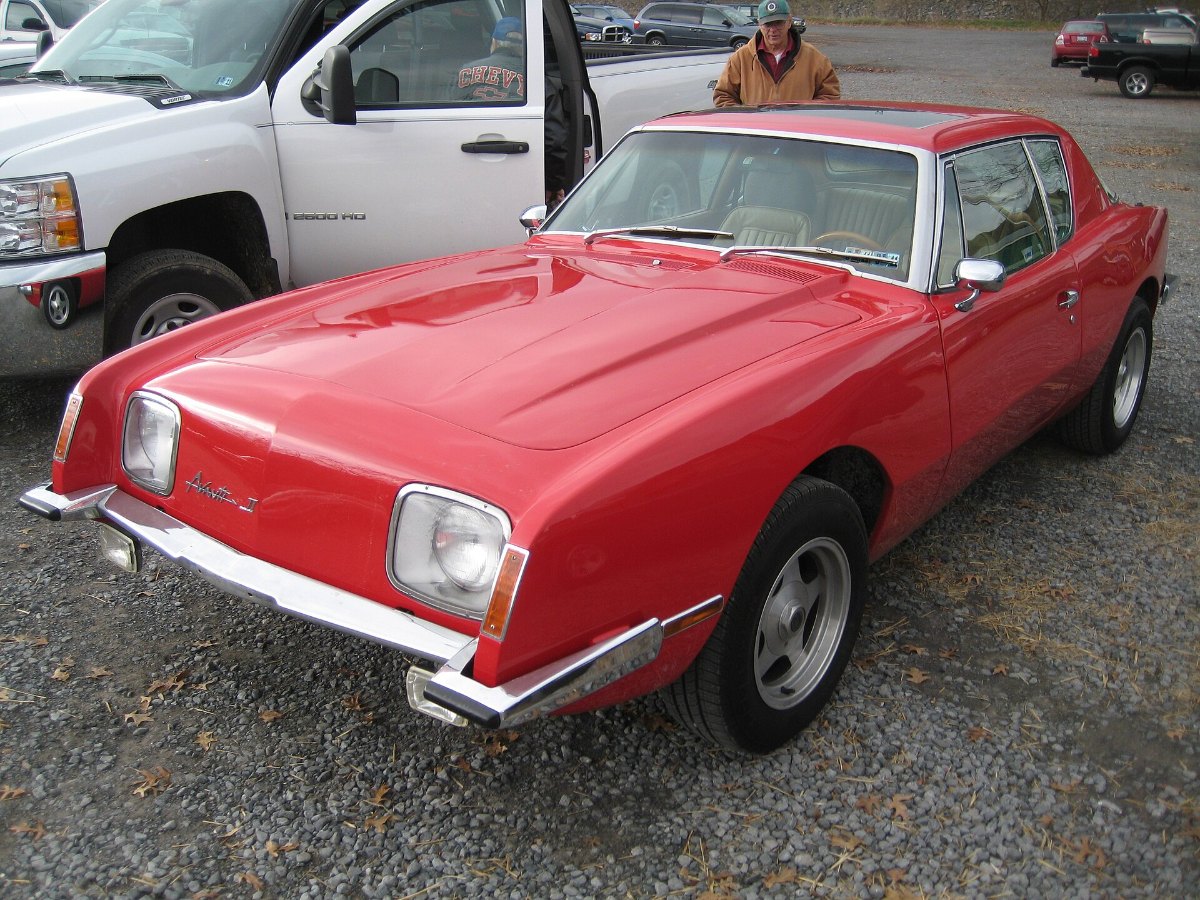
The Avanti was a rush job with a long reach. According to Classic Motorsports’ history of the car, Raymond Loewy’s team shaped it in early 1961, in a secret five-week session near Palm Springs, California. The car then made its public debut at the New York Auto Show on April 25, 1962. Classic Motorsports lists three engines: the 240-horsepower R-1, the supercharged 289-horsepower R-2 and a supercharged 335-horsepower R-3, of which Studebaker built only nine.
Speed was part of the pitch from the start. Classic Motorsports reports that in the fall of 1962, Andy Granatelli took an Avanti to the Bonneville Salt Flats. Granatelli was president of supercharger maker Paxton Products. There he set 29 American national stock car records, including a flying mile at 168.15 mph. Those runs gave Studebaker a performance story to sell alongside the Loewy styling. That made the car’s short life all the more abrupt.
Still, the production run was short. Classic Motorsports and Hagerty’s history of the Avanti both put Studebaker’s total at 4,643 cars. Hagerty also estimates perhaps 2,600 survive. Meanwhile, Classic Motorsports dates the South Bend closure announcement to December 9, 1963.
Two dealers, a Studebaker building and the Avanti II
Hagerty identifies Nate Altman and Leo Newman as two South Bend car dealers who took the design on. They then set up production in one of the former Studebaker interior finish buildings in South Bend. However, the National Corvette Museum’s account names Nate and Arnold Altman as Newman’s partners in forming the Avanti Motor Corporation.
They called their car the Avanti II, and it went on sale for 1965. Classic Motorsports reports a price of $6,500. But the new car did not keep the Studebaker V8.
A Chevrolet heart under fiberglass
Instead, the replacement came from Chevrolet. The National Corvette Museum says the Avanti II used Chevrolet’s small-block V8, the same engine family found in the Corvette. That link explains why a Corvette museum tells the Avanti II story. Classic Motorsports specifies the early engine as a 327-cubic-inch V8 rated at 300 horsepower. Later cars, Hagerty notes, moved to a 350-cubic-inch GM V8, with a 400 also offered.
According to the National Corvette Museum, the small South Bend company built the Avanti II from 1965 into the 1980s. That means it made the car for longer than Studebaker itself ever did. By comparison, Studebaker’s own Avanti stayed on the market for less than two years.
New owners, new engines, new bodies
The Altman and Newman era ended with a sale. Hagerty dates it to October 1, 1982, when Steve Blake bought the company. Blake pitched the car as an American answer to the Porsche 911, fitting 305-cubic-inch L69 Camaro V8s. Hagerty says Blake’s company closed in early 1986.
After that, the name kept changing hands. Old Cars Weekly’s feature on the “bookend” Avantis lists several later cars. They include a 1983 20th Anniversary Edition prototype from the Blake period and a 1990 four-door Avanti sedan from the Cafaro era. There is also a 2007 Avanti convertible from the Kelly era, a span of more than four decades from the first Studebaker car.
Where to see the first and last Studebaker cars
The cars at either end of the Studebaker run both sit in museums. Old Cars Weekly reports that R-1001, the first production Avanti, belongs to LeMay – America’s Car Museum in Tacoma, Washington. Studebaker assembled the last one, R-5643, on December 31, 1963, and the same feature places it at the Crawford Auto Aviation Museum in Cleveland. For the car that came next, the National Corvette Museum’s collection includes a 1977 Avanti II that Mike Hammer donated.
More from Fast Lane Only
- Unboxing the WWII Jeep in a Crate
- 15 rare Chevys collectors are quietly buying
- 10 underrated V8s still worth hunting down
- Police notice this before you even roll window down
This article was created with the help of AI and was reviewed and edited by Fast Lane Only editors before publication.