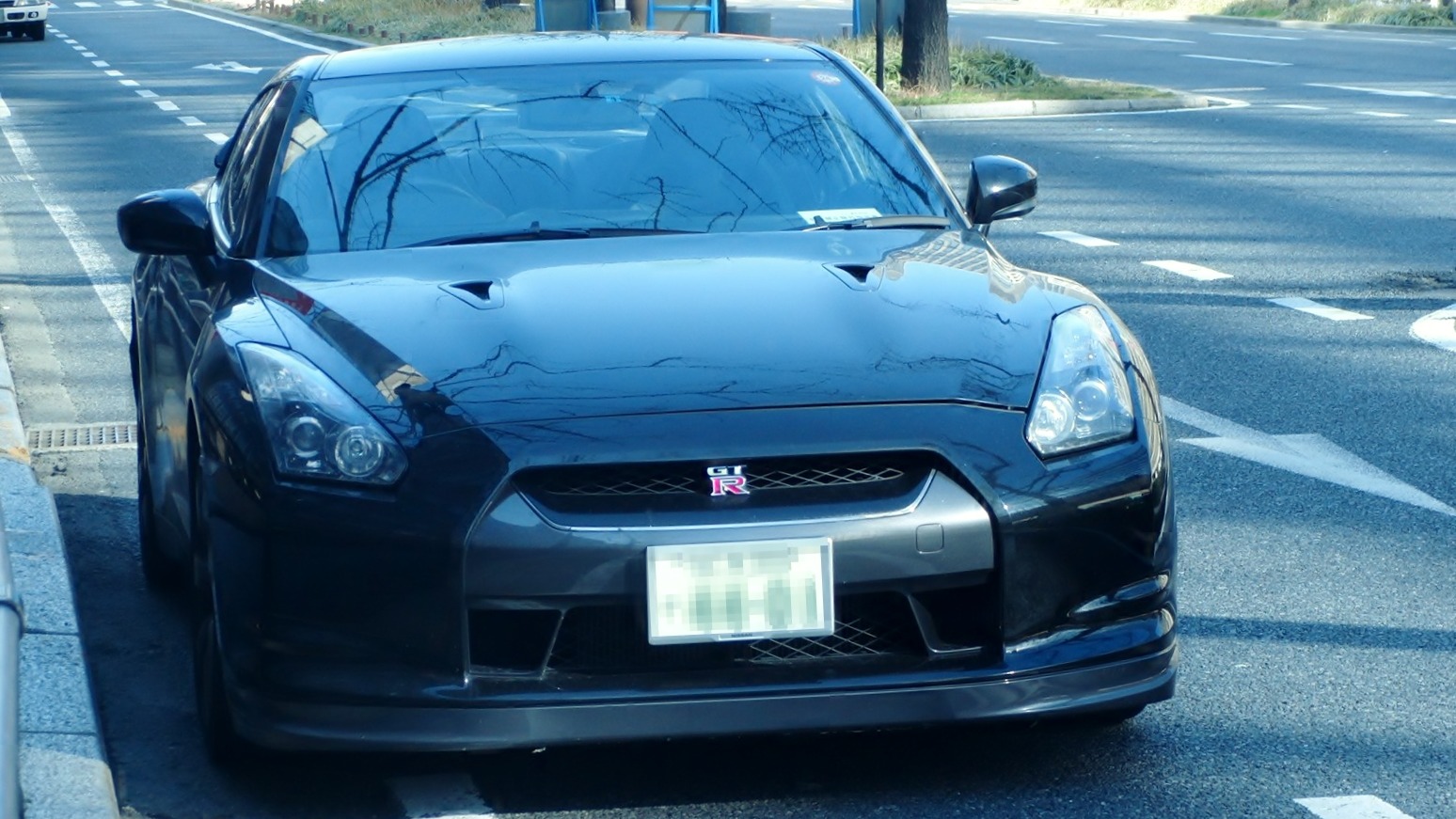
The 2012 GT-R Black Edition arrived at a turning point for Nissan’s supercar, taking the already ferocious R35 formula and sharpening it with targeted upgrades rather than a full redesign. By pairing more power and chassis refinement with a focused, track-ready interior, it set benchmarks that later GT-R variants would spend more than a decade chasing. As the R35 era winds down, that early special edition looks less like a trim package and more like the template for how Nissan would keep its icon relevant.
A turning point in the R35 story
When Nissan updated its performance lineup for the 2012 model year, the GT-R did not simply receive a mild refresh. The company lifted output, revised aerodynamics and suspension tuning, and introduced the Black Edition as a more focused alternative to the Premium model inside the broader 2012 lineup. That move signaled that the R35 would evolve through constant, detail-driven improvements rather than waiting for a full generational replacement.
Positioned above the standard GT-R but below later ultra-limited variants, the Black Edition gave Nissan room to experiment. It adopted hardware and settings that pushed the car closer to track use while still keeping it livable on the road. That balance, more than any single headline figure, is what made the 2012 package so influential in the GT-R’s long production run.
What made the 2012 Black Edition different
At the core of the 2012 GT-R story was the twin-turbocharged 3.8-liter V6, which received a power increase for that model year. The Black Edition used the same upgraded engine as the Premium model, but the way it delivered that performance was shaped by a series of targeted changes. Revised intake and exhaust flow, as well as updated engine mapping, sharpened throttle response, and helped the GT-R accelerate harder out of corners.
Beyond the powertrain, the Black Edition package focused on hardware that affected how the driver interacted with the car. Lightweight wheels, unique to the trim, reduced unsprung mass and improved steering feel on uneven surfaces. A retuned suspension calibration worked with those wheels to keep the car flatter in fast direction changes, which mattered both on circuits and on challenging back roads.
Inside, the Black Edition differentiated itself with deeply bolstered seats and a darker, more purposeful color scheme. The seating position and support changed the way drivers could use the car’s performance, especially during long sessions on track where fatigue and lateral support become real limitations. These changes were not about comfort alone; they were about enabling consistent lap times and confident braking deep into corners.
How the Black Edition reset GT-R benchmarks
By 2012, the GT-R already had a reputation for giant-killing performance, but the Black Edition raised internal expectations for what an R35 could be straight from the showroom. The combination of higher output, more aggressive suspension settings, and a track-oriented interior turned the car into a more serious tool for skilled drivers without requiring aftermarket modifications.
This shift mattered because it changed what enthusiasts could reasonably expect from a factory GT-R. Lap time comparisons from the period consistently showed the updated 2012 models running quicker than earlier R35 versions on the same circuits, even when driven by the same testers. The Black Edition’s focus on repeatable performance, rather than single hot laps, helped it stand out in long-session testing where brake feel, tire wear, and driver comfort all played a role.
The package also raised the bar for how much tech a high-performance car could integrate while still feeling analog enough to satisfy purists. The All Wheel Drive system, dual clutch transmission, and electronic stability controls worked in the background to manage traction and torque split, yet the car still demanded precise inputs. The Black Edition showed that a heavy reliance on electronics did not have to dilute driver engagement if the calibration was right.
Influence on later R35 variants
Many of the decisions that defined the 2012 Black Edition can be seen echoed in later GT-R models. Subsequent performance updates often followed the same pattern: small but meaningful power gains, revisions to suspension and aerodynamics, and interior tweaks that favored support over luxury. Nissan treated the R35 as a platform that could be honed year after year, and the Black Edition was an early proof of concept for that approach.
Later track-focused GT-R versions leaned even harder into the template that the Black Edition helped establish. They adopted more extreme aero, stiffer suspension components, and even more specialized seats, but the underlying logic remained similar. Instead of reserving serious performance hardware for a final run-out model, Nissan put it into a relatively early special edition and then kept refining the idea.
This strategy also influenced how the brand communicated about the GT-R. The car was no longer presented only as a straight-line acceleration champion. The Black Edition helped push the narrative toward total lap performance, driver confidence, and the ability to run repeated hot laps without falling apart mechanically or mentally. That repositioning gave the GT-R staying power even as newer rivals arrived with more power or fresher styling.
Context from the broader 2012 Nissan range
Within Nissan’s 2012 product range, the GT-R sat at the top of a lineup that spanned compact cars, crossovers, and trucks. The company used that model year to adjust several vehicles, but the performance flagship received some of the most technical attention in the model year changes. That investment underlined how central the GT-R had become to the brand’s identity.
While other models focused on fuel efficiency, packaging, or value, the GT-R served as a technology showcase. Its advanced transmission, All Wheel Drive system, and data rich instrument displays demonstrated engineering capabilities that filtered down to more accessible cars over time. The Black Edition, with its unique hardware and tuning, amplified that halo effect by giving enthusiasts a version that felt closer to motorsport than to daily commuting.
From early special to end-of-era reference point
The full significance of the 2012 Black Edition only becomes clear when viewed against the length of the R35’s production run. More than a decade after that model year, Nissan has begun to wind down R35 manufacturing, with the final R35 GT-R rolling off the line and marking the end of an unusually long life cycle for a modern performance car. That longevity means early variants like the Black Edition now serve as historical markers within the same generation rather than as distant predecessors.
Official communications around the end of production have framed the GT-R as a car that continuously evolved through careful updates rather than frequent full redesigns. When Nissan confirmed that it was bidding farewell to the R35 as the last car left, the company highlighted how the model had been refined over time. The 2012 Black Edition fits neatly into that story as one of the first significant steps in a long series of technical and character adjustments.
Enthusiasts looking back across the R35 timeline often point to a few key years when the car changed character. The introduction of the Black Edition is frequently grouped with those inflection points because it marked the moment when Nissan began to separate the GT-R into distinct flavors within the same generation. That approach allowed the car to serve both as a comfortable grand tourer and as a serious track weapon, depending on specification.
Why the 2012 formula still resonates
What keeps the 2012 Black Edition relevant today is not only its place in the GT-R’s historical arc, but also the way it anticipated current expectations for high performance cars. Modern buyers often demand a mix of daily usability, advanced electronics, and serious track capability straight from the factory. The Black Edition delivered that combination at a time when many rivals still forced owners to choose between comfort and circuit readiness.
The model also highlighted how small, targeted changes can transform the feel of a car without rewriting its fundamental architecture. By focusing on suspension tuning, wheel design, seating, and software, Nissan extracted more capability from the R35 platform without changing its core dimensions or engine layout. That philosophy has since become standard practice for many manufacturers that stretch a single generation across longer production runs.
From a driving perspective, the 2012 Black Edition struck a rare balance between approachability and challenge. The car’s electronics could flatter less experienced drivers by managing traction and stability, yet its chassis still rewarded precise inputs and punished sloppy technique. That dual character helped broaden the GT-R’s appeal and contributed to the loyal enthusiast base that sustained the model for so many years.
Lessons for future Nissan performance cars
As Nissan looks beyond the R35, the company faces pressure to define what a next generation performance flagship should be in an era shaped by electrification and stricter regulations. The experience of the 2012 Black Edition offers several lessons. One is that meaningful differentiation within a single model line can keep a car fresh without constant full redesigns. Another is that enthusiasts respond strongly to factory cars that feel track capable without sacrificing reliability or basic comfort.
Any successor to the R35 will likely need to balance advanced propulsion technology with a driving experience that feels as coherent as the 2012 Black Edition did within its own constraints. That means thinking about how power delivery, chassis tuning, and driver interfaces work together rather than treating them as separate checkboxes. The Black Edition’s success suggests that getting those relationships right can matter more than chasing the highest possible output figures.
There is also a branding dimension. The GT-R name now carries associations with constant evolution, special editions, and a tight connection between motorsport thinking and road car execution. The 2012 Black Edition helped cement that identity by proving that a relatively early variant could still feel special and technically ambitious. Any future halo car from Nissan will have to engage with that legacy, whether it carries the GT-R badge or not.
What enthusiasts and collectors are watching
With R35 production now ended, attention has turned to which versions might become the most sought after over time. Limited production variants and late run specials naturally attract interest, but early influential models like the 2012 Black Edition occupy a different niche. They represent the point where the formula was still being defined, before later updates added complexity and weight.
Collectors often look for cars that capture a distinct moment in a model’s development. The Black Edition fits that brief because it combined the raw, relatively simple character of early R35s with the first wave of meaningful performance and hardware upgrades. That mix gives it a unique driving feel that cannot be replicated by either the launch cars or the heavily revised late models.
Enthusiasts also pay attention to how a car’s story is told by the manufacturer. Nissan’s decision to highlight the R35’s evolution and to formally mark the final car leaving production has encouraged fans to think about the generation as a complete narrative arc. Within that arc, the 2012 Black Edition stands out as one of the early chapters where the GT-R made a clear step from impressive newcomer to established benchmark.
More from Fast Lane Only
- Unboxing the WWII Jeep in a Crate
- 15 rare Chevys collectors are quietly buying
- 10 underrated V8s still worth hunting down
- Police notice this before you even roll window down
*Research for this article included AI assistance, with all final content reviewed by human editors.