The 2008 Dodge Viper ACR arrived as a raw, track-focused evolution of America’s wildest production sports car, and its performance quickly justified the aggressive aero, stripped cabin, and unforgiving suspension. Often overshadowed by the later Viper ACR that dominated lap charts, the original modern ACR package laid the groundwork for Dodge’s time-attack reputation and showed how serious the brand could be about circuit speed. For enthusiasts who care more about lap times than leather stitching, it remains one of the most focused factory cars of its era.
Viewed in hindsight, the 2008 ACR marks a turning point in the Viper story. It sharpened the already ferocious SRT-10 into a genuine club-racing weapon, previewed the record-chasing mindset that would follow, and helped cement the Viper name as shorthand for unfiltered performance at a time when many rivals were adding electronics and comfort.
From brutal roadster to factory track tool
By the time the 2008 ACR appeared, the Viper line had already earned a reputation as a barely tamed race car for the street. Across its generations, the model evolved from the original RT/10 to later GTS coupes, then to the SRT-10 and its various special editions, all centered on a massive naturally aspirated V10 and rear-wheel drive. That progression is documented across the broader Viper family, which shows how Dodge consistently favored displacement and drama over subtlety or high-tech driver aids.
The 2008 American Club Racer package took that philosophy and aimed it squarely at track-day regulars. Based on the contemporary Viper SRT-10 coupe, it kept the front-engine layout and 8.4-liter V10 but reworked the car around lap-time performance. Power remained immense, with output in the 600 horsepower range and torque cresting above 550 pound-feet, figures that gave the ACR towering straight-line pace even before any chassis tuning came into play. According to model data for that year, the 2008 Viper delivered this performance through a six-speed manual and a traditional rear-drive layout, with no dual-clutch shortcuts or all-wheel-drive traction tricks in sight, as seen in detailed 2008 Viper specs.
Where the standard SRT-10 aimed to balance road use with performance, the ACR tilted the equation firmly toward track work. Dodge engineers removed weight, dialed in stiffer suspension, and added serious aerodynamic hardware. The result was a car that often felt more like a factory-built club racer with license plates than a typical production supercar.
Aerodynamics that actually earned their stripes
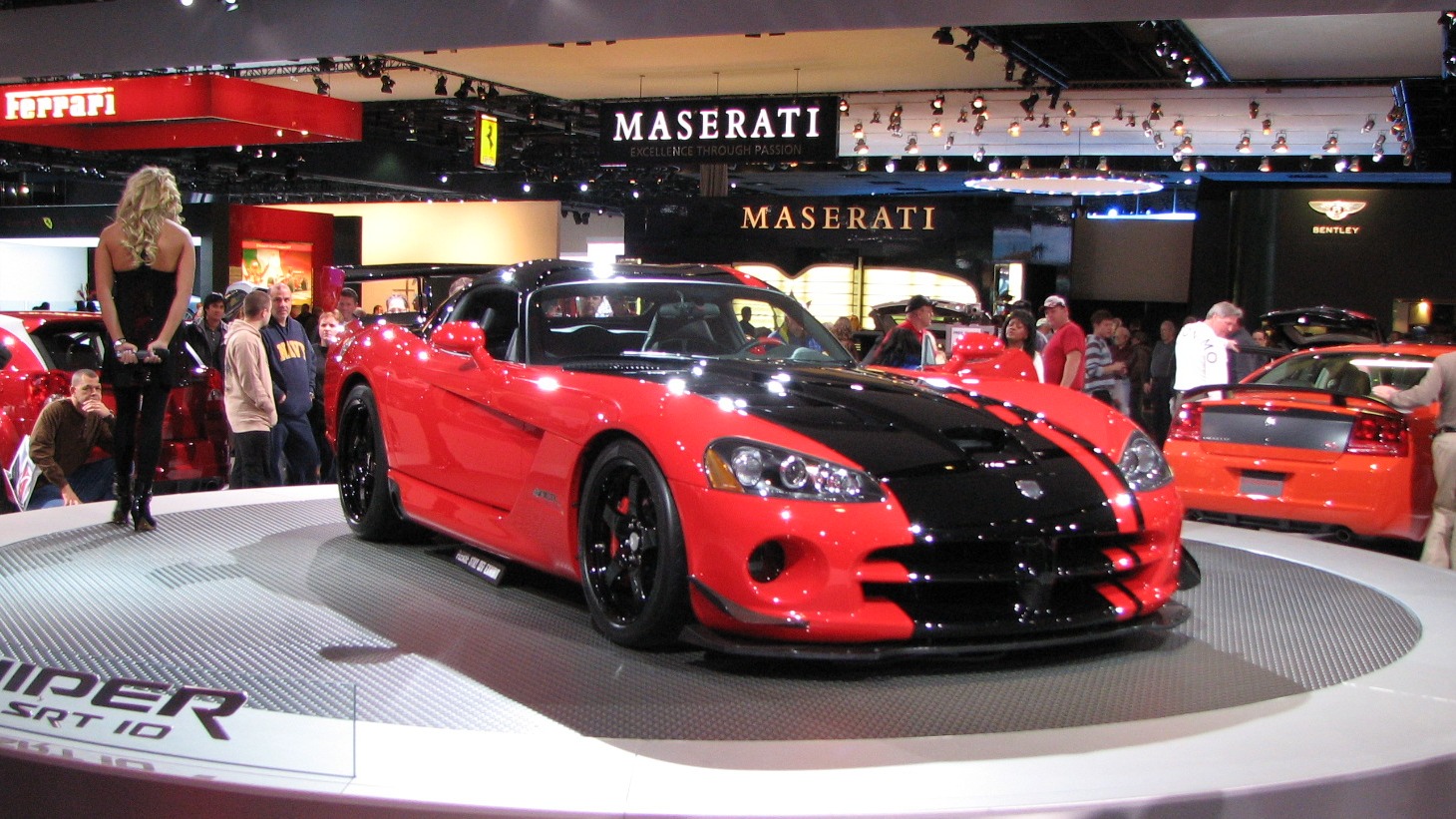
Visually, the 2008 Viper ACR announced its intent through its bodywork. The towering rear wing, deep front splitter, and additional dive planes were not cosmetic flourishes. They were functional pieces designed to generate real downforce at speed. Period technical breakdowns of the SRT-10 ACR highlight how the adjustable rear wing and front splitter worked together with underbody changes to create a balanced aero package that significantly increased grip at high speed, as illustrated in contemporary factory details on the 2008 Viper SRT-10 ACR.
The aero kit did more than simply add stability on fast straights. It allowed drivers to carry more speed through long corners and improved braking stability by pressing the car into the tarmac. Owners and testers noted that the car felt increasingly planted as speed rose, a characteristic more often associated with GT racing machinery than with street-legal coupes. The aggressive front splitter, in particular, demanded respect around town but paid dividends on track, where every extra kilometer per hour carried through a bend translated into time shaved from a lap.
The ACR’s appearance, with its signature stripes and wild wing, also helped define the visual identity of later hardcore Vipers. That look became a shorthand for the most serious versions of the car, and it started in earnest with this 2008 package.
Weight savings and a no-frills cabin
Weight reduction formed the second pillar of the ACR formula. Dodge removed components that did not contribute directly to speed, trimming items such as some sound insulation and luxury features to cut mass. The result was a curb weight meaningfully lower than the already lean SRT-10, which amplified the benefits of the big V10 and the aero kit.
Inside, the cabin was intentionally sparse. Reviewers at the time pointed out that the seats, belts, and basic controls were oriented around keeping the driver in place and in control at high lateral loads, rather than providing plush comfort. That approach aligned with the ACR’s intended mission as a car that might spend more time at track days than on long highway cruises.
Compared with European rivals that were beginning to integrate adaptive suspensions and adjustable driving modes, the Viper ACR felt almost analog. The driver interface was a straightforward steering wheel, a manual shifter, and a clutch pedal that demanded commitment. For track-focused buyers, that simplicity was part of the appeal, since it removed layers of software and left the driver directly responsible for lap time.
Suspension, grip, and the “knife-edge” reputation
The 2008 ACR’s chassis tuning completed the transformation from fast road car to circuit specialist. Dodge fitted stiffer springs and adjustable dampers, along with track-oriented alignment settings and high-grip tires. These changes produced huge cornering capability but also demanded respect. On cold rubber or rough surfaces, the car could feel nervous, and the lack of electronic stability aids meant that mistakes were rarely filtered out by software.
Period driving impressions stressed that the ACR rewarded smooth, committed inputs and punished clumsy throttle or steering with abrupt breakaway. One in-depth account of driving the 2008 ACR on road and track described the car as physically demanding but deeply satisfying once the driver adapted to its responses, capturing how the V10’s torque and the aero grip combined to create a car that felt alive at speed, as reflected in a detailed drive review of the 2008 Viper ACR.
In that sense, the ACR carried the Viper’s long-standing reputation for being a handful, yet it channeled that aggression into more consistent performance. The suspension setup made sense on smooth circuits, where the car could use its full range of motion without being upset by bumps. On public roads, especially poor surfaces, it felt uncompromising, which only reinforced its identity as a car built first for lapping days and only second for weekend cruising.
Lap times that set the stage for a record hunter
The 2008 ACR’s track performance did not exist in a vacuum. Its arrival signaled Dodge’s growing interest in using lap times as a benchmark for development and marketing. The car’s combination of power, aero, and weight reduction allowed it to post very competitive times at American circuits, and it demonstrated that a front-engine, rear-drive layout could still challenge more exotic mid-engine rivals.
That philosophy reached its peak with the later Viper ACR that arrived in the middle of the next decade. Dodge used that car to chase and claim a string of lap records at road courses around the United States, turning the ACR badge into a shorthand for track dominance. Official performance claims for the 2016 Viper ACR describe it as a “track record king,” with documented lap records at multiple circuits, which underlines how the ACR concept evolved into a record-focused program, as shown in factory performance data for the 2016 ACR.
Those later achievements often dominate discussions of the Viper’s track prowess, yet the 2008 car deserves credit for proving that an ACR-badged Viper could be more than a cosmetic package. It established the template: serious aero, serious suspension, and a willingness to sacrifice comfort in the pursuit of lap time. Without that groundwork, the later record-setting efforts would have looked far more experimental.
How the market now views the 2008 ACR
Over time, the collector market has started to separate casual special editions from genuinely significant performance models. Within the Viper world, the ACR variants have become some of the most sought after, particularly limited builds with unique paint and equipment. Auction coverage of later Viper ACRs, such as a 2017 Viper GTC ACR Extreme finished in matte gold that appeared at a Monterey sale, illustrates how rare, track-focused cars with distinctive specifications can command strong attention from bidders, as seen in a report on a matte gold ACR headed to auction.
Although that specific car belongs to a newer generation, the pattern is instructive. Enthusiasts and collectors have shown a willingness to pay premiums for Vipers that represent the most focused expression of the platform. The 2008 ACR fits that description for its era. It offers the rawness and analog feel that many buyers now seek, combined with a clear connection to the later record-chasing ACRs.
Production numbers for the 2008 ACR were limited relative to mainstream Viper variants, which further supports its appeal among collectors. As the Viper line has ended and Dodge has shifted its performance focus to other models, early ACRs have started to look more like turning points than curiosities.
Pricing context and the value of factory track packages
When Dodge returned to the ACR formula for the later Viper generation, pricing announcements made clear that the brand still viewed the car as a serious, specialized product. Official guidance for the 2016 Viper ACR placed its starting price in the low-to-mid one hundred thousand dollar range before options, positioning it above standard Viper trims and underscoring its role as a flagship track car, as outlined in pricing details released at the time.
That pricing structure reflects a broader trend in performance cars. Manufacturers have increasingly used track-focused packages as halo products that sit at the top of their ranges, often with higher margins and more limited production. The 2008 Viper ACR can be seen as an early step in this direction for Dodge, one that helped justify later investments in even more extreme ACR variants.
For buyers in the used market today, that context matters. The 2008 ACR offers much of the same philosophy as the later, more expensive ACRs, but at a different price point and with an even more analog driving experience. It occupies a sweet spot for drivers who want serious track capability without the full financial commitment of the final-generation cars.
Why the 2008 ACR still matters to drivers
From a driving perspective, the 2008 Viper ACR remains significant because it delivers a type of experience that has largely disappeared from new-car showrooms. There are no stability control nets, no adjustable drive modes, and no turbocharged torque curves smoothed by software. The driver deals directly with a large-displacement V10, a manual gearbox, and a chassis tuned for high grip and little forgiveness.
That character appeals to a subset of enthusiasts who value involvement and challenge over outright ease. For them, the ACR offers an opportunity to grow as drivers, learning to manage the car’s weight transfer, throttle response, and aero-assisted grip. The reward is a sense of accomplishment that can be harder to find in modern cars where electronics quietly correct mistakes in the background.
More from Fast Lane Only
- Unboxing the WWII Jeep in a Crate
- 15 rare Chevys collectors are quietly buying
- 10 underrated V8s still worth hunting down
- Police notice this before you even roll window down
*Research for this article included AI assistance, with all final content reviewed by human editors.