You now live in a world where a humanoid colleague can lift parts, check quality, and learn new tasks on the same factory floor as you. At BMW, that idea has moved from concept video to production reality, as the company leans on humanoid robots to build more cars at lower labor cost while promising safer, less repetitive work for human staff. You are watching a live experiment in how far you can push automation without stripping the factory of its human core.
For you as a manager, engineer, or line worker, the stakes are direct. Higher output, lower per unit labor cost, and tighter quality control all depend on how well BMW integrates humanoids into real jobs instead of staged demos. The way this rollout unfolds will shape what your own plant looks like in only a few model cycles.
From pilot curiosity to production workhorse
Your reference point for humanoid robots in auto plants probably started with a single machine in a cordoned-off area. At BMW, that phase is already behind you. The BMW Group describes how the world’s first deployment of humanoid robots at a BMW Group plant took place at the Spartanburg plant in the United States, where humanoids were brought into production and logistics at an early stage to handle physically demanding tasks alongside people, rather than in isolation, as part of a broader strategy to expand automation in real workflows through BMW Group.
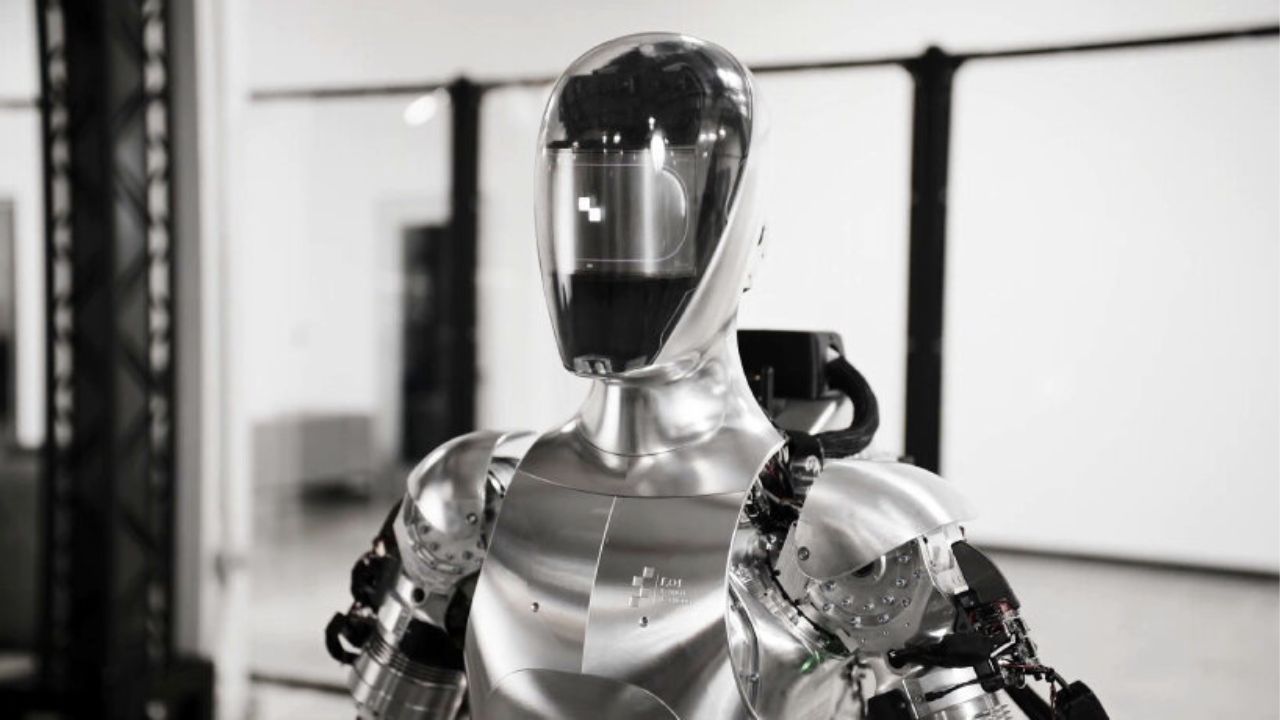
When you look at the humanoids BMW uses, you see why the company treats them as more than gadgets. In material describing Humanoid Robots for, BMW highlights a machine with Weight listed as 70 k, Height around 170, and a Load capacity of 20 kilogrammes, which lets it move metal parts into fixtures in a way that resembles a human operator. You can immediately see the appeal: a robot that fits into existing stations and tooling, rather than forcing you to redesign the line around a traditional industrial arm.
What 30,000 cars tell you about output
If you want proof that this is not just a lab exercise, you can follow the numbers. BMW and its robotics partner Figure describe how the system labeled F. 02 Contributed to the Production of 30,000 Cars at BMW, with the company explaining that Today it is sharing results from an 11 month Figure 02 rollout, in which it defined three critical KPIs for performance inside the plant, as detailed in the project update on production at BMW.
You can tie that claim directly to what happened on the ground. Reporting on the same 11 month deployment notes that Two humanoid robots at a BMW Group Plant completed an extended project that contributed to over 30,000 BMW X3 vehicles, which means the robots were embedded in the actual build of a high volume model rather than a side line, as described in coverage of Humanoid robots. When you consider that the BMW X3 is a core global product, confirmed by the dedicated model entry for the BMW X3, you can see why a 30,000 unit contribution matters to your volume planning rather than just your innovation marketing.
How the robots actually change your factory
For you on the factory floor, the real question is not whether a humanoid looks futuristic, but which tasks it can take over and how that changes your staffing. BMW’s own description of the technology in Spartanburg emphasizes that the humanoid robots are designed to fit into existing production and logistics, where they can pick up heavy parts, move containers, and manage ergonomically difficult motions that would otherwise strain human workers, as outlined in the company’s explanation of how humanoid robotics complements existing automation.
The learning curve is also getting shorter. Accounts of the early Spartanburg trials describe how BMW tested the humanoid robot called Figure 02 at the Spartanburg plant, where BMW used Figure robots on the production line and highlighted that the humanoid platform is driven by artificial intelligence that can learn and self correct in ways not available in traditional robots, as reported in analysis of BMW Figure tests. For you, that means less time writing rigid scripts and more time defining outcomes and safety limits.
Labor cost math you cannot ignore
Once you accept that humanoids can survive on your line, your next move is to run the cost comparison. One industry estimate cited in coverage of OpenAI powered humanoids puts the cost of building a humanoid robot at closer to $100,000, a figure that gives you a starting point for capital budgeting when you compare a robot’s purchase and maintenance to the fully loaded cost of human labor over several years, as discussed in analysis of $100,000.
You can sharpen that comparison using broader business data on humanoid deployments. A breakdown of What Are Humanoid Robots Used For in Business explains that Humanoid robots in business perform repetitive physical tasks in manufacturing, logistics, and retail, and that companies often benchmark them against human labor at $30/hour to evaluate payback periods and return on investment, as detailed in guidance on What Are Humanoid. When you combine that with the 30,000 unit contribution at BMW, you start to see how a humanoid that runs multiple shifts without overtime or fatigue can shift your cost per vehicle, especially on a high volume product like the BMW X3.
What this means for your job and your next plant
Even if you do not work at BMW, you feel the ripple effects. Reports on BMW’s European expansion explain that BMW Expands Humanoid Robot Pilot Project to First EU Plant and that the Group announced on Friday that it will deploy its first pilot project in Europe, after the work in Spartanburg, with a focus on proving that the robot can learn and adapt to new tasks in a different factory environment, as described in coverage of the First EU Plant. Another report notes that German car giant BMW is using AI humanoids in its Leipzig factory and links that directly back to earlier work in its plant in Spartanburg, where humanoids had already taken on four production tasks, as described in coverage of Your next BMW. If you manage a plant in another region, you can treat Leipzig as your template for how quickly the technology might reach you.
You also have to think about your own role in a more automated factory. One analysis of Humanoid Robots Work the BMW Factory Floor describes how a humanoid robot was spotted working inside a BMW manufacturing plant with the capability of self correcting mistakes, which implies that your job shifts from direct manual work to supervision, exception handling, and process improvement once such robots become standard, as described in coverage of Humanoid Robots Work. BMW’s own statements about digitalisation and artificial intelligence stress that the goal is to improve working conditions, not simply to cut headcount, but for you that still means learning to manage a mixed workforce of humans and humanoids and to argue for training budgets that let your colleagues move into higher skill tasks.
More from Fast Lane Only