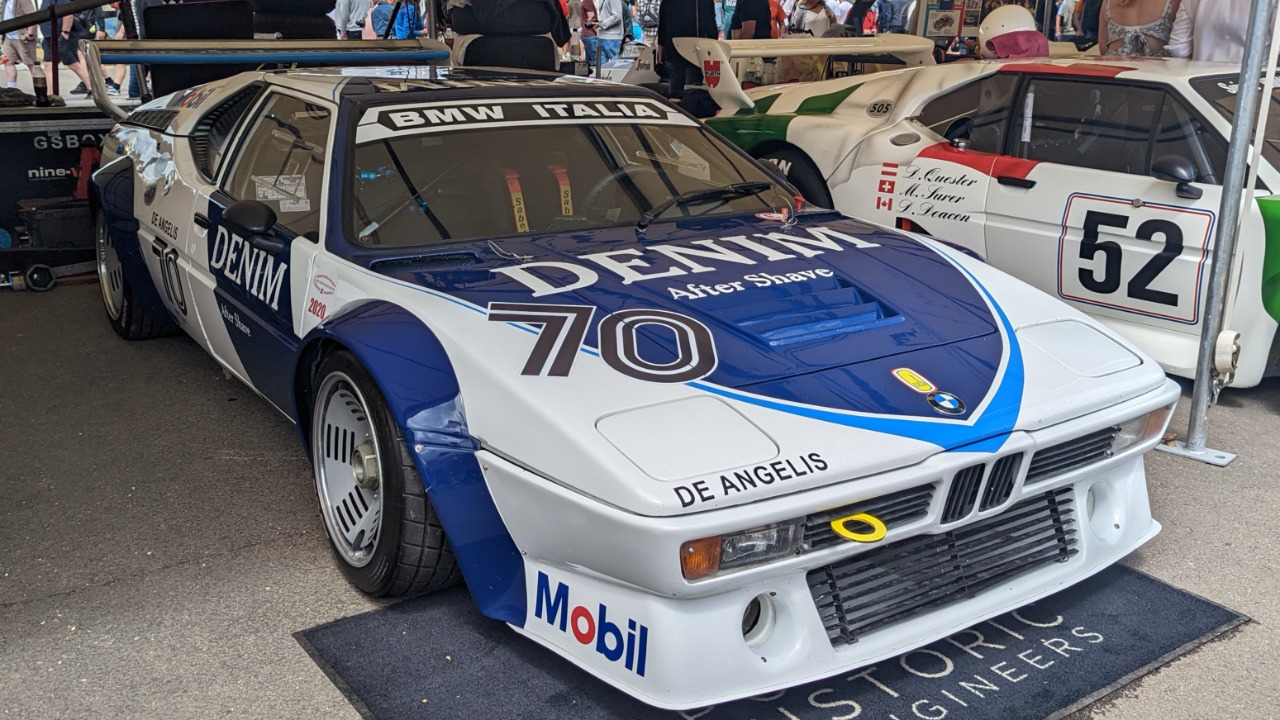
BMW had a new mid-engine race car in 1979 and nowhere to race it. The rules wanted hundreds of road cars first, and those cars were late. So BMW Motorsport invented its own championship, the BMW M1 Procar series, and ran it on Formula 1 weekends with Formula 1 drivers behind the wheel.
The idea lasted only two seasons. Even so, it put Niki Lauda, Nelson Piquet and a crowd of Grand Prix stars into identical BMWs on the Saturday before a race. Classic & Sports Car argues that the idea could not be repeated in today’s Formula 1.
Here is how the series came about, how its strange grid worked and why it ended after 1980. The story turns on one rulebook problem and one well-connected racing boss.
The homologation problem behind the BMW M1 Procar
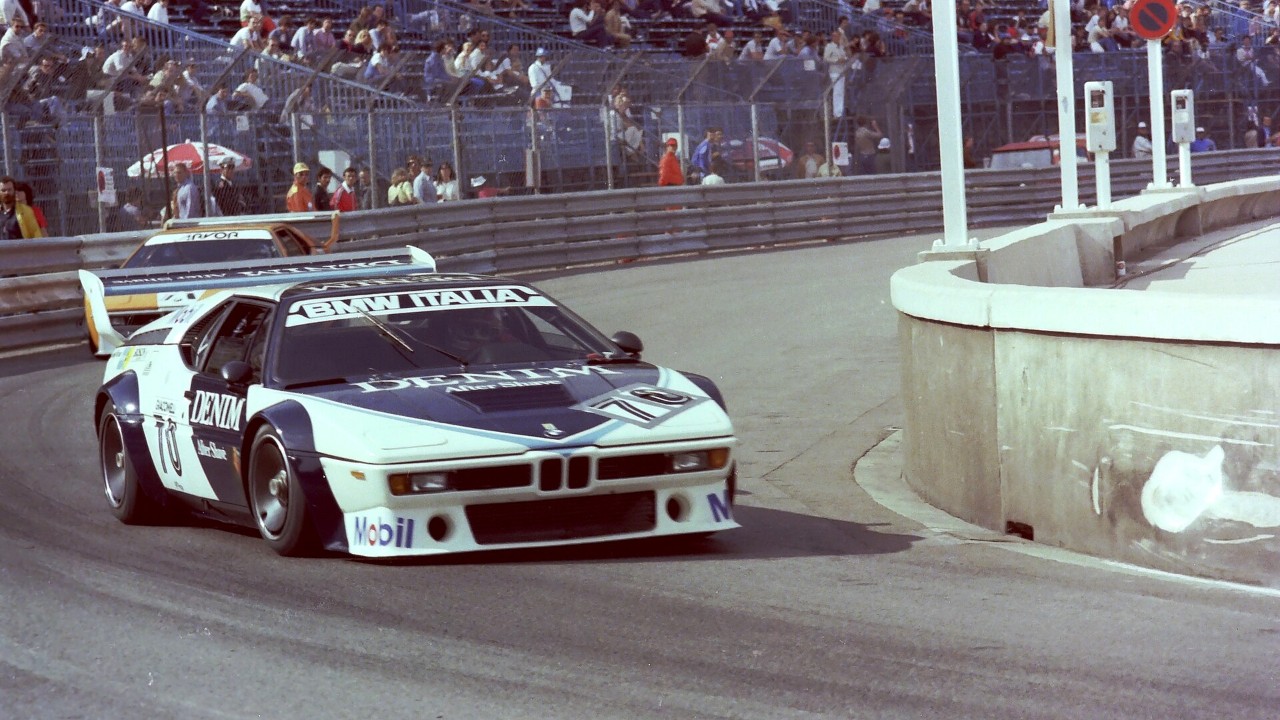
BMW built the M1 to race in Group 5. However, a car had to be homologated in Group 4 first, and Group 4 demanded 400 road cars. That rule appears in both Classic & Sports Car’s history of the series and Petrolicious’ profile of a surviving Procar.
Building 400 cars quickly proved impossible. Lamborghini, BMW’s partner at Sant’Agata, ran into financial trouble, and BMW chose not to invest there, Classic & Sports Car reports. As a result, the first M1s reached customers but, in the words of BMW Motorsport boss Jochen Neerpasch, they “couldn’t race.”
Neerpasch, a former racer, still needed to show the car off. His answer was a one-make series that sidestepped homologation entirely. He later called it a public-relations exercise, according to the magazine.
A deal with Ecclestone and Mosley
A support series needed a stage, so Neerpasch looked to Formula 1. He therefore worked out the plan with Bernie Ecclestone and Max Mosley. The races would run on the Saturday before each chosen Grand Prix.
Not everyone welcomed the idea. Jean-Marie Balestre, head of the sport’s governing body, announced that he would not allow Procar at the French Grand Prix. Ecclestone’s reply, as Classic & Sports Car tells it, amounted to no Procar, no French Grand Prix.
The money also made sense to BMW. Neerpasch put a competition version of a 3 Series at about 750,000DM, against about 30,000DM for the road car. By comparison, he priced an M1 road car at about 100,000DM and a Procar racer at about 150,000DM.
How the Procar grid worked
The format was the clever part. In 1979, the five fastest Formula 1 drivers from Grand Prix qualifying got factory-prepared M1s. They also got the first five places on the Procar grid. Privateer entries filled the rest of the field.
That rule changed for 1980. From then on, the Formula 1 drivers had to qualify for their places like everyone else, Classic & Sports Car notes. Meanwhile, some top names never took part at all.
Renault and Ferrari drivers stayed out, so Gilles Villeneuve never raced a Procar. The magazine also points to tyres: the BMWs ran on Goodyears, while some Formula 1 teams had Michelin contracts. Pay depended on results, too, and BMW deducted damage from a driver’s winnings.
The 1979 season: Lauda’s title
The first round ran at Zolder on 12 May 1979. Elio de Angelis won it in an Osella-entered car after many rivals crashed out or broke down. Then the series settled into a rhythm.
Niki Lauda entered his own car, run by Ron Dennis’s Project Four team. He also wanted the M1 road car that BMW offered the champion. Lauda won at Monaco, Silverstone and Hockenheim and took the 1979 title, according to Classic & Sports Car.
Other drivers shared the remaining wins. Jacques Laffite won in Austria, and Hans-Joachim Stuck won in Holland and Italy. Nelson Piquet took Dijon, along with the non-championship Gunnar Nilsson Memorial at Donington Park.
The 1980 season: Piquet’s late charge
For its second year, the series added races away from Grand Prix weekends, at Donington, the AVUS and the Norisring. Carlos Reutemann won at Brands Hatch, while Jan Lammers won at Donington Park. Manfred Schurti took the AVUS, and Stuck won at Monaco and the Norisring.
Not every race was friendly. At Hockenheim, Didier Pironi eased Stuck off the track while they fought for the lead and went on to win, the magazine recalls. Afterwards, Stuck confronted him.
Piquet saved his best for last. He won the final three rounds, in Austria, Holland and Italy, and claimed the 1980 championship. By then, however, BMW’s attention had moved elsewhere.
Why the series ended after two years
By the end of 1980, the M1 had finally earned Group 4 homologation. At the same time, BMW was preparing a turbocharged engine for the Brabham Formula 1 team. Neerpasch also left BMW for Talbot, and the company’s priorities shifted, Classic & Sports Car reports.
In total, BMW built 40 Procars across 1979 and 1980, according to Petrolicious. Not all of them raced. In fact, BMW has confirmed that four factory-sanctioned Procars never saw competition.
One of those, the 31st of the 40, went to a Munich dealer in 1979 as a road car. Canepa found it in a Texas barn in 2012 and took it to California for a ground-up restoration, Petrolicious reports. Its paint, Basalt Blau, is a color that only four factory cars received.
More from Fast Lane Only