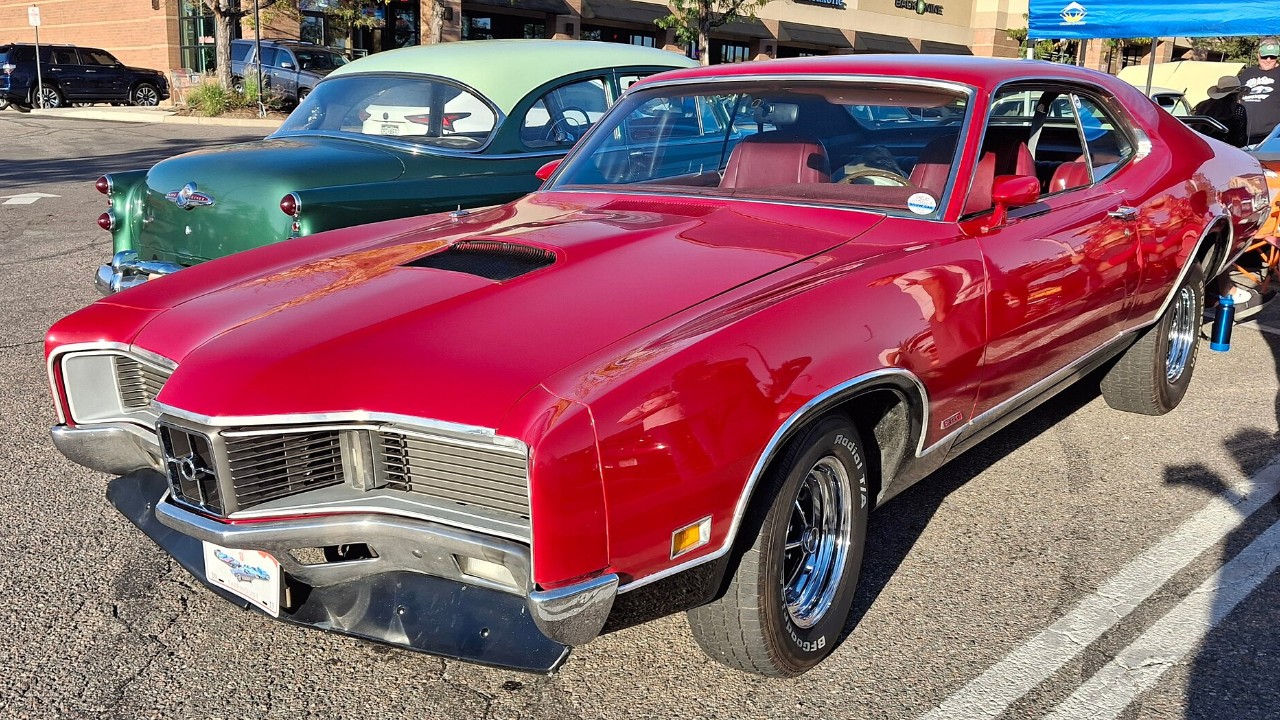
The Rambler Marlin began life as a show car, and that is the thread running through this list. Each of these eight cars wore a design idea that was new on the street when it arrived, from hidden headlights to a fiberglass body.
Still, the engineering backs up the styling, too. Every car here carried a V8 option with real performance, and each design detail below comes from a period record, a historian or a specialist magazine.
1. 1966 Dodge Charger

Dodge revealed the Charger to viewers of the Rose Bowl broadcast on January 1, 1966. At the back, its fastback roof ran into a full-width taillight that spelled out CHARGER. Up front, a full-length “electric shaver” grille hid fully rotating headlights.
Inside, meanwhile, four electroluminescent pods replaced ordinary bulb-lit gauges, according to MuscleCarFacts. Four bucket seats flanked a console that ran front to rear, and the rear seats folded for cargo. Dodge built 37,344 that year, and most buyers chose the 325 hp 383 V8.
2. 1963–1964 Studebaker Avanti R3
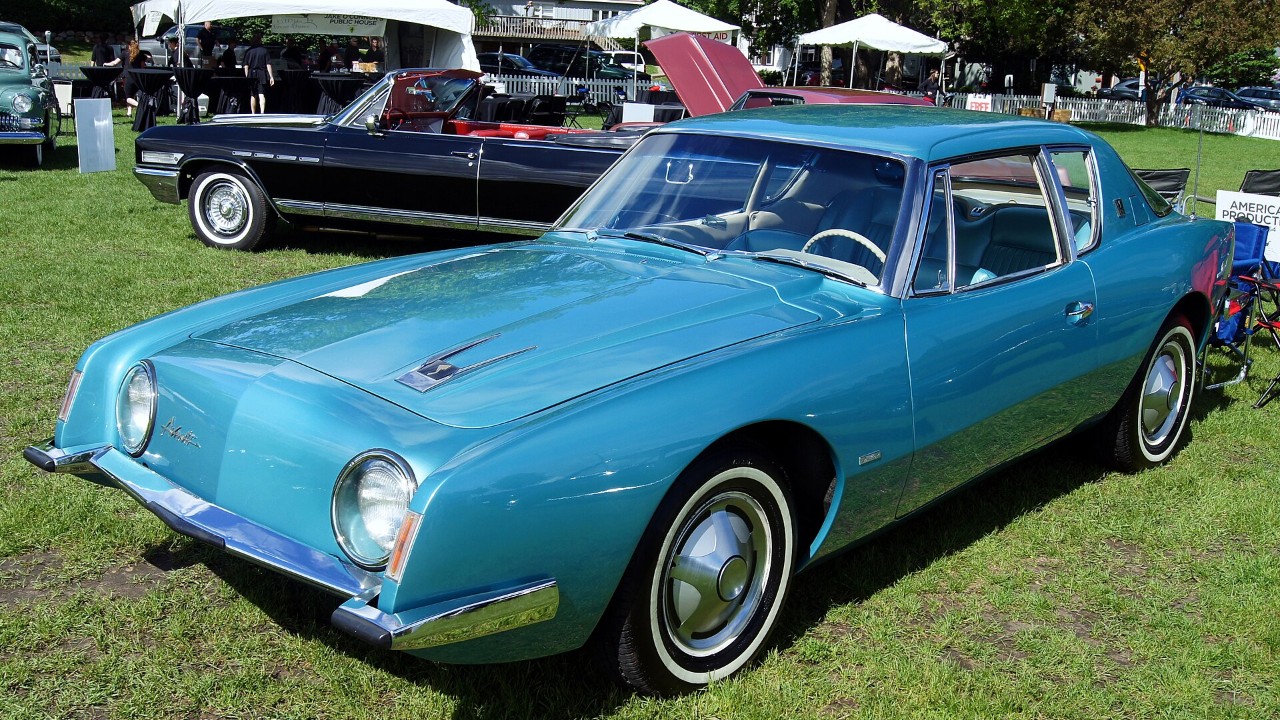
Raymond Loewy’s small team sketched the Avanti in a rented house near Palm Springs, starting in March 1961. Rather than steel, the body was fiberglass, and a roll bar ran through the roof. In addition, Silodrome says it was the first American production model with standard front disc brakes.
At first, the base R1 289 V8 made 240 bhp, while the supercharged R2 made 290 bhp. Later, only nine R3 cars got the bored-out 304.5 cubic-inch engine, rated at a claimed 335 bhp. In 1962, Andy Granatelli set 29 records at Bonneville, including a 168.15 mph two-way flying mile, per Silodrome.
3. 1965 Rambler Marlin

American Motors showed the Tarpon show car in 1964 under styling chief Richard Teague. Because the compact Tarpon platform could not take a V8, the production Marlin moved to the 112-inch Classic chassis. It went on sale on March 1, 1965, at a $3,100 base price.
In the showroom, the Rambler Marlin wore a fastback roof with a boomerang-shaped sail panel, and Bendix front disc brakes were standard. Buyers could pick a 232 six or 287 and 327 V8s, with V8 output topping out at 270 hp. Even so, sales fell from 10,327 in 1965 to 2,545 in 1967, according to Mac’s Motor City Garage.
4. 1970 Mercury Cyclone GT
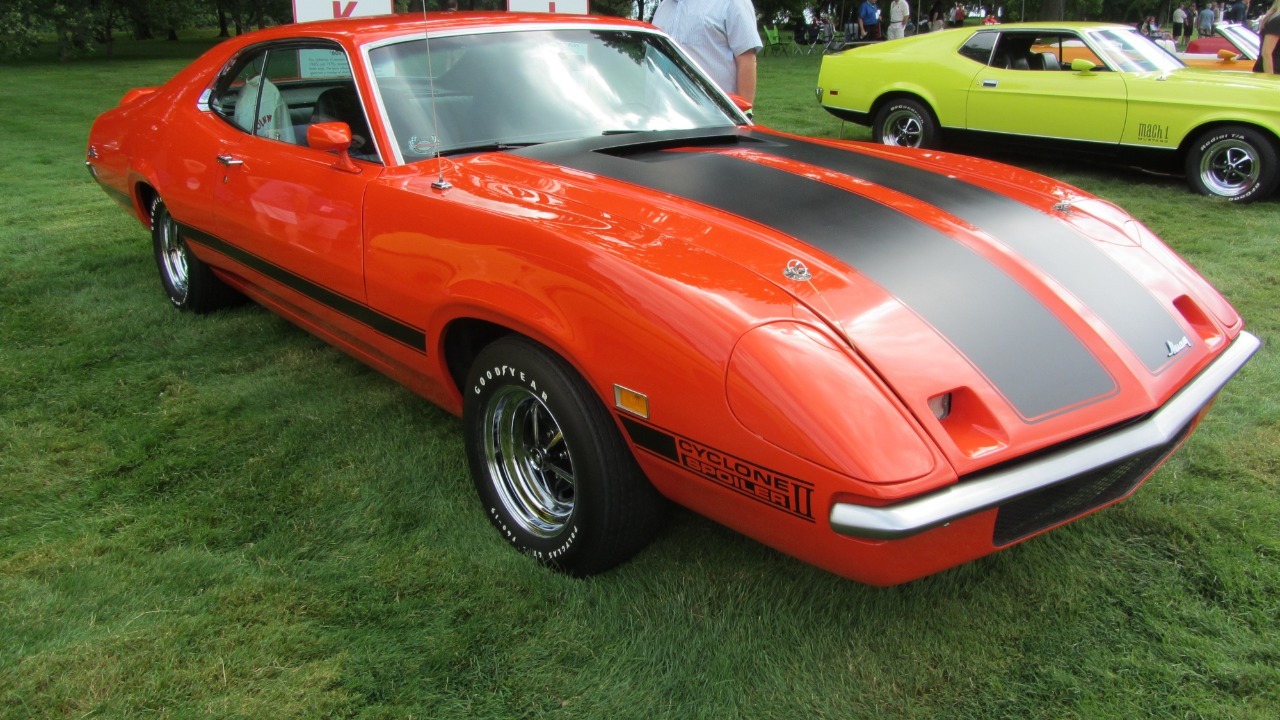
Mercury’s Cyclone began as the performance version of the Comet. By 1970, its front end had turned into what Jalopnik calls “muscle-car Baroque.” The nose pushes out roughly a foot and ends in a gunsight-style intake.
Meanwhile, the headlights hide behind false grille panels, and extra parking lights sit beside the nose. Unlike much of the trim, the hood scoop worked. The base car came with a two-barrel 351 Cleveland, while a four-barrel 429 was available with a four-speed or an automatic.
5. 1970–1971 Ford Torino GT SportsRoof
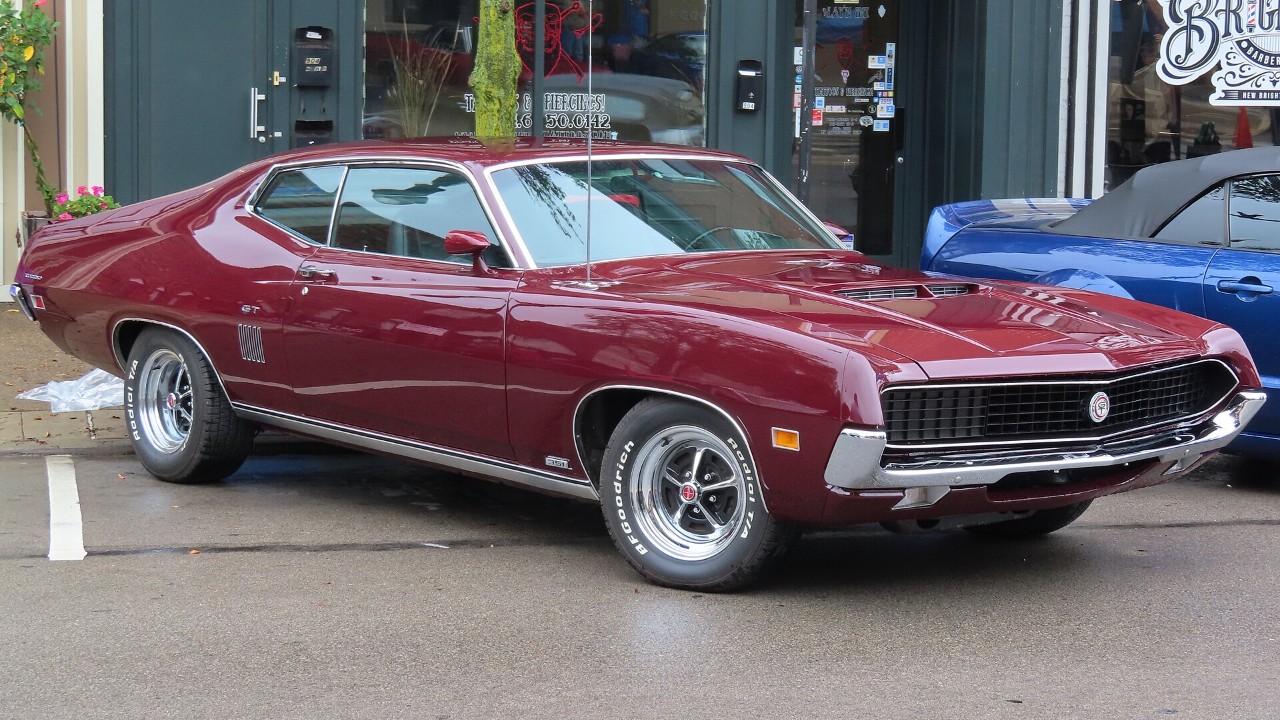
For 1970, Ford designer Bill Shenk drew the Torino with a “swoopy ‘Coke bottle’” body, and the SportsRoof models got even flatter fastback roofs. Hideaway headlights were optional on the GT, according to Old Cars Weekly.
By 1971, the 302 V8 was standard on the GT, and Ram Air was an option on the 351, 429 Cobra Jet and 429 Super Cobra Jet. Those Ram Air cars wore a shaker scoop. Looking back, Hagerty says the hidden lights made the 1970–71 cars look “that much more sinister.”
6. 1971 Buick Riviera GS
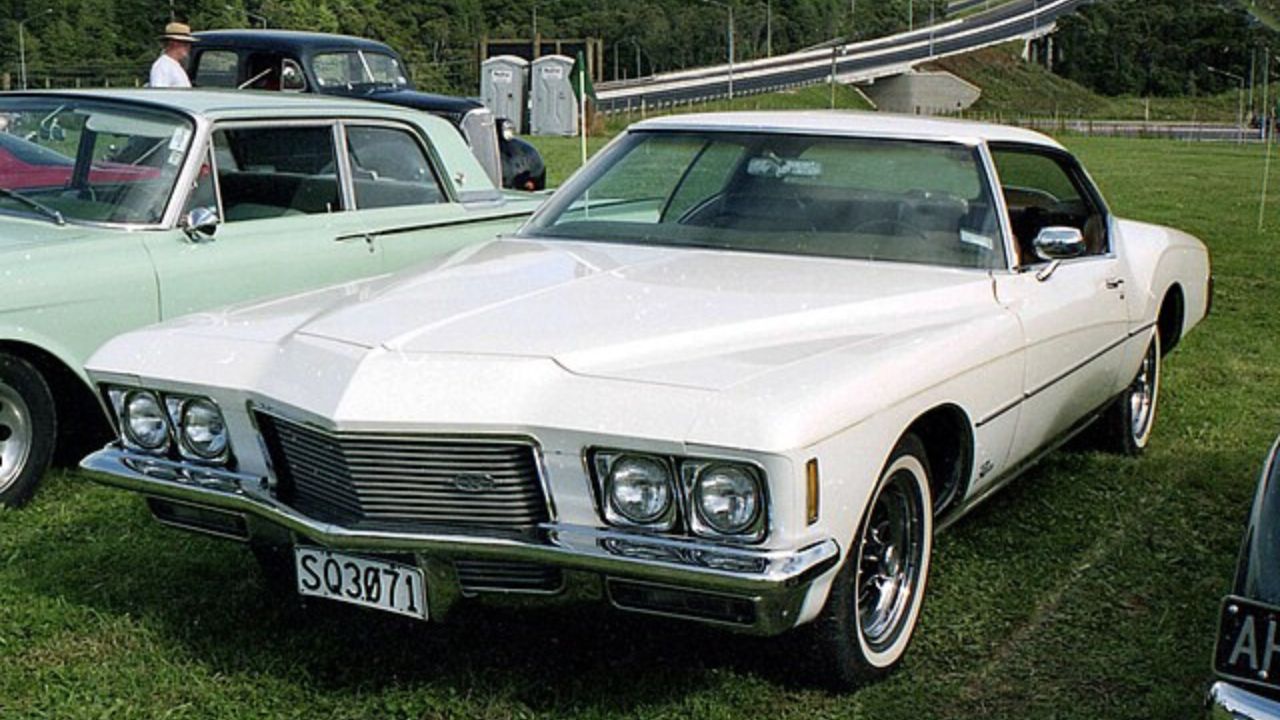
Bill Mitchell led the 1971 Riviera redesign, and the result had a “pointed leading edge” and a low beltline. At the back, a boattail with curved glass recalled the Mid-Year Corvette, according to Hagerty.
For more power, the GS option added Buick’s 455 big-block. Even so, “the Riviera GS couldn’t excite customers,” and Ford’s Thunderbird outsold it. Today, however, the market sees it differently. Hagerty reported a 1971 Riviera selling for $28,600 at RM Auburn, $6,000 above its #2-condition value.
7. 1974 AMC Matador X
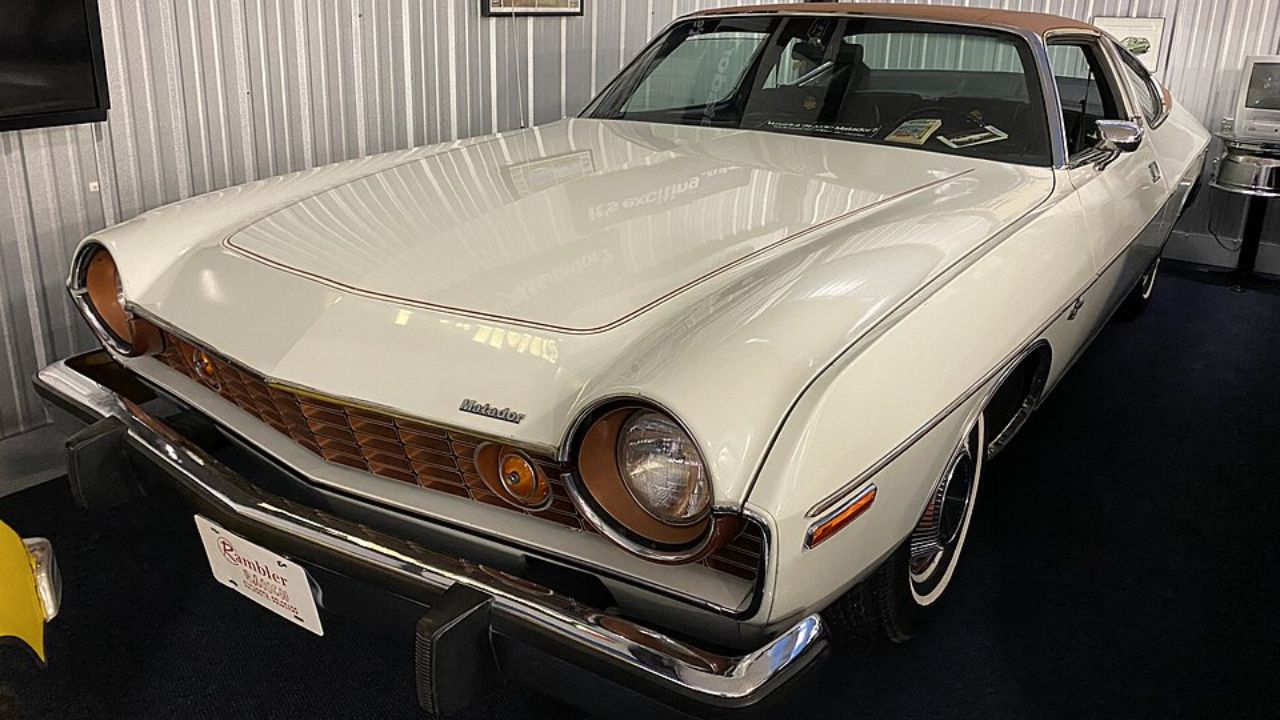
American Motors restyled the Matador for 1974 and gave the coupe a longer, lower and racier silhouette. One owner told Old Cars Weekly that its bulging headlights “just screams ’70s to me.”
Also, the Matador X came only with V8s, starting with a 150 hp two-barrel 304. Options ran to 360s and a four-barrel 401 rated at 235 hp. At $3,699, it was the most expensive Matador, and AMC sold 10,074 of them among 99,586 Matadors, per Old Cars Weekly.
8. 1978–1979 Dodge Magnum

Chrysler designer Carl Cameron gets credit for the Magnum’s front end. Clear plastic covers sat over its rectangular headlamps, and electric motors pulled them back when the lights came on, says Mac’s Motor City Garage.
Dodge shaped that nose to help its NASCAR cars, and Street Muscle notes retractable covers later became common on 1980s cars. Under the hood, V8s ran from a 318 to a 400. Then a 1979 GT with the 360 four-barrel was rated at 195 hp. Production fell from about 55,000 in 1978 to barely 30,000 in 1979.
More from Fast Lane Only