BMW has turned one of its most storied partners into a fully fledged marque, elevating Alpina from tuner-like collaborator to an ultra-low volume brand inside the Group. The move formalizes a relationship that has shaped some of the most discreetly potent luxury cars on the road and sets up a new tier of exclusivity above even the flagship 7 Series. I see this as less a corporate reshuffle and more a strategic bet that there is still room, and appetite, for hand-finished combustion and hybrid limousines in an increasingly standardized luxury market.
From family tuner to BMW’s rarest badge
Alpina’s journey from small German workshop to official BMW brand is one of the more unusual arcs in modern carmaking. Founded in 1965, Alpina built its reputation by taking standard BMW models and reworking engines, suspensions, and interiors to create cars that were faster, more refined, and far more exclusive than their factory siblings, with those modifications fully integrated into the vehicles rather than bolted on as aftermarket parts. Over decades of collaboration, Alpina’s products were recognized as manufacturer-built cars in their own right, yet the company remained an independent business that simply worked very closely with BMW on engineering and homologation.
That independence has now ended, with the Alpina trademark rights transferred into the BMW Group and the brand relaunched as an exclusive label under the corporate umbrella. BMW has formally created a new “BMW ALPINA” brand, headquartered in Munich, that sits alongside its existing marques inside the Group structure and is described as an exclusive offering with its own materials and unmistakable details. The change means that what was once a niche German specialist is now positioned as BMW’s most rarefied internal brand, with the Group’s full industrial and regulatory muscle behind it while still trading on six decades of Alpina heritage.
Why BMW is carving out a new ultra-luxury tier
The decision to absorb Alpina and relaunch it as a standalone brand is rooted in both pressure and opportunity. Against the backdrop of global changes, including tightening emissions rules and rising development costs, maintaining Alpina’s previous business model as a small independent manufacturer had become economically unfeasible. By bringing Alpina fully under the BMW Group, the brand can tap into the larger company’s resources, platforms, and compliance capabilities, while BMW gains a ready-made label that already stands for craftsmanship, performance, and rarity. It is a way to preserve a beloved nameplate that might otherwise have struggled to survive the next regulatory cycle.
Strategically, BMW is also using Alpina to fill a carefully defined gap in its own portfolio. The Group is positioning BMW ALPINA as a luxury brand that sits between the 7 Series and Rolls-Royce, targeting customers who want more opulence and individuality than a standard BMW can offer but who are not ready to step into the overt grandeur of a Rolls. Reporting on the launch notes that this new tier will focus on highly specified models with bespoke options and custom materials, effectively creating a bridge between the mainstream BMW range and the ultra-luxury world. In that sense, Alpina becomes to BMW what Maybach is to the Mercedes-Benz portfolio, a halo sub-brand that stretches transaction prices and reinforces the parent company’s luxury credentials.
The first new ALPINA models and what they signal
The clearest sign of how BMW intends to use its revived brand comes from the first product already confirmed under the new structure. BMW has indicated that the initial model will be an ALPINA B7 based on the facelifted 7 Series, known internally as G72, which will serve as the flagship expression of the new label. This car is expected to build on the latest 7 Series platform with Alpina’s traditional blend of increased performance, reworked chassis tuning, and a more sumptuous interior, effectively turning an already high-end limousine into a low-volume, near-bespoke offering. The choice of a 7 Series derivative as the launch product underlines that BMW sees Alpina first and foremost as a luxury brand rather than a pure performance arm.
Further reporting suggests that the broader BMW ALPINA range will arrive in phases, with new models planned from late 2026 and a focus on high-end segments where customers are willing to pay for customization. The strategic repositioning described by BMW emphasizes concentration on exclusive automobiles with their own unmistakable character, and there is explicit mention that both combustion and electric powertrains are under consideration for future Alpina products. That mix hints at a transitional lineup where traditional high-torque petrol or hybrid drivetrains coexist with more advanced electrified offerings, allowing Alpina to serve loyalists who still want a powerful engine while gradually aligning with BMW Group’s wider electrification roadmap.
Craftsmanship, rarity, and how “standalone” Alpina will feel
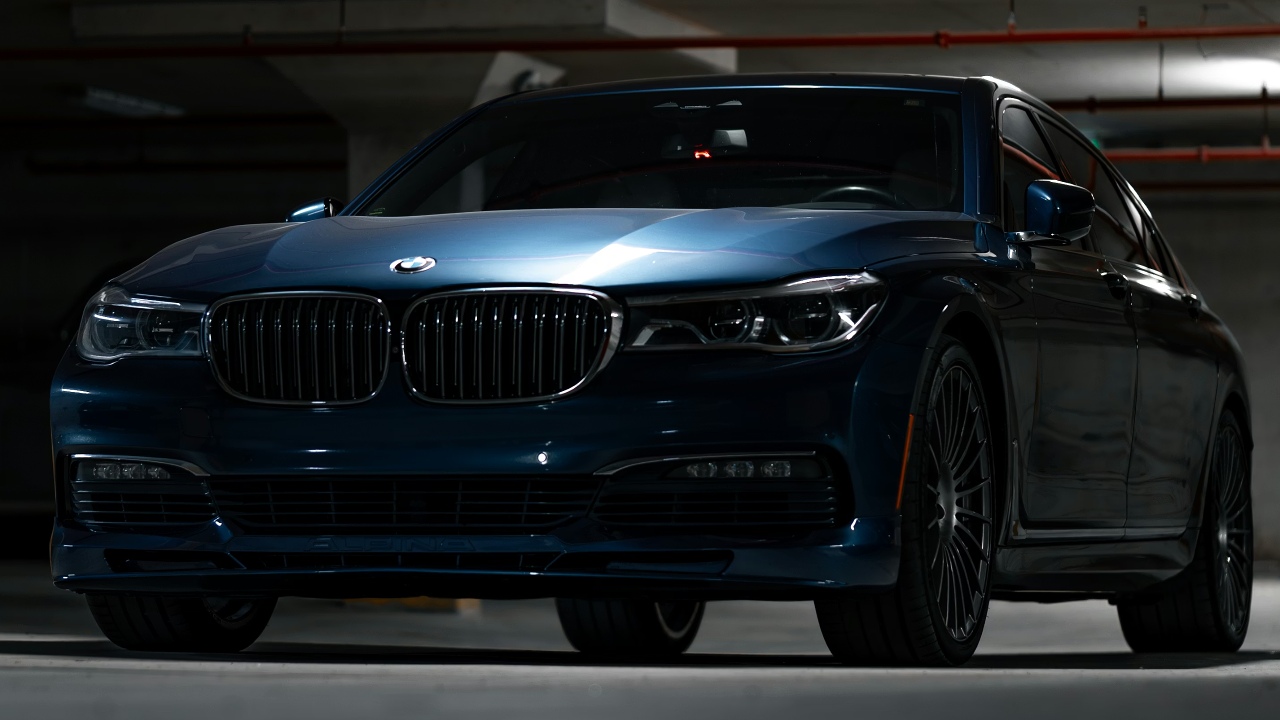
For buyers, the most important question is what will actually distinguish a BMW ALPINA from a top-spec BMW with an options list ticked to the ceiling. The Group is leaning heavily on Alpina’s reputation for meticulous build quality, noting that BMW ALPINA vehicles are manufactured according to rigorous standards for materials selection and craftsmanship. Historically, that has meant unique leather treatments, hand-finished trim, and subtle exterior changes that signal exclusivity without shouting, and the new brand positioning suggests those traits will be amplified rather than diluted. The promise is that each car will feel more like a tailored commission than a mass-produced model, even if it rolls down a BMW production line.
At the same time, BMW is careful to stress that Alpina will retain its own character inside the Group, with design cues and tuning philosophies that remain distinct from M performance models or standard luxury trims. Official language around the launch talks about exclusive materials and unmistakable details, and early analysis of the strategy frames Alpina as a kind of finishing school for BMW’s most sophisticated cars. In practice, that likely means lower volumes, more conservative styling than M cars, and a focus on long-distance comfort and effortless speed rather than track times. The result should be vehicles that feel genuinely separate in personality, even if they share platforms and technology with the broader BMW range.
What changes for the Bovensiepen family and Alpina loyalists
One of the more intriguing aspects of the transition is what happens to the people who built Alpina’s reputation in the first place. While BMW now owns the ALPINA brand and controls its future products, the Bovensiepen family, which founded and ran Alpina, is not disappearing from the automotive scene. Reporting on the deal notes that the family will continue independently creating modified BMWs under a different label, with projects such as a special 3.0 CSL at Villa d’Este cited as examples of the kind of work they may pursue. That arrangement allows BMW to integrate the Alpina name while the original team retains the freedom to build one-off or limited-run cars outside the new corporate structure.
For existing Alpina owners and fans, the shift is both reassurance and adjustment. On one hand, the brand they love is now backed by the full capabilities of BMW Group, which should secure parts, service, and regulatory compliance for years to come. On the other, the romantic notion of a small German manufacturer quietly turning out hand-finished sedans in limited numbers has given way to a more formalized, brand-managed reality. I expect some purists to worry that integration will smooth out the quirks that made older Alpinas special, but the explicit focus on ultra-rare, highly crafted models suggests BMW understands that the value of the name lies precisely in its difference from mainstream BMW products.
A new playbook for ultra-rare combustion and hybrid luxury
Viewed in the broader context of the luxury market, BMW’s revival of Alpina as a standalone brand is a calculated response to shifting tastes at the very top of the segment. As electric flagships and software-driven experiences become the norm, there is a growing niche of buyers who still want the tactility of combustion or hybrid power, wrapped in a car that feels personal rather than mass-configured. By explicitly positioning BMW ALPINA between the 7 Series and Rolls-Royce, and by emphasizing bespoke options and custom materials, BMW is effectively creating a sanctuary for those customers inside its own ecosystem. It is a way to keep high-margin, low-volume clients from drifting to coachbuilt offerings or rival marques that promise more individuality.
At the same time, the brand’s future will be shaped by how convincingly it can navigate the transition to electrification without losing its identity. The acknowledgment that electric powertrains are under consideration for Alpina models shows that BMW is not treating this as a purely nostalgic combustion play. Instead, I see the new BMW ALPINA as a test bed for how to deliver ultra-rare, highly crafted vehicles in an era when the underlying hardware is increasingly shared and regulated. If BMW can maintain the sense of rarity and craftsmanship that defined Alpina’s past while layering in modern platforms and drivetrains, the revived brand could become one of the most interesting corners of the luxury car world rather than a mere badge exercise.
More from Fast Lane Only: