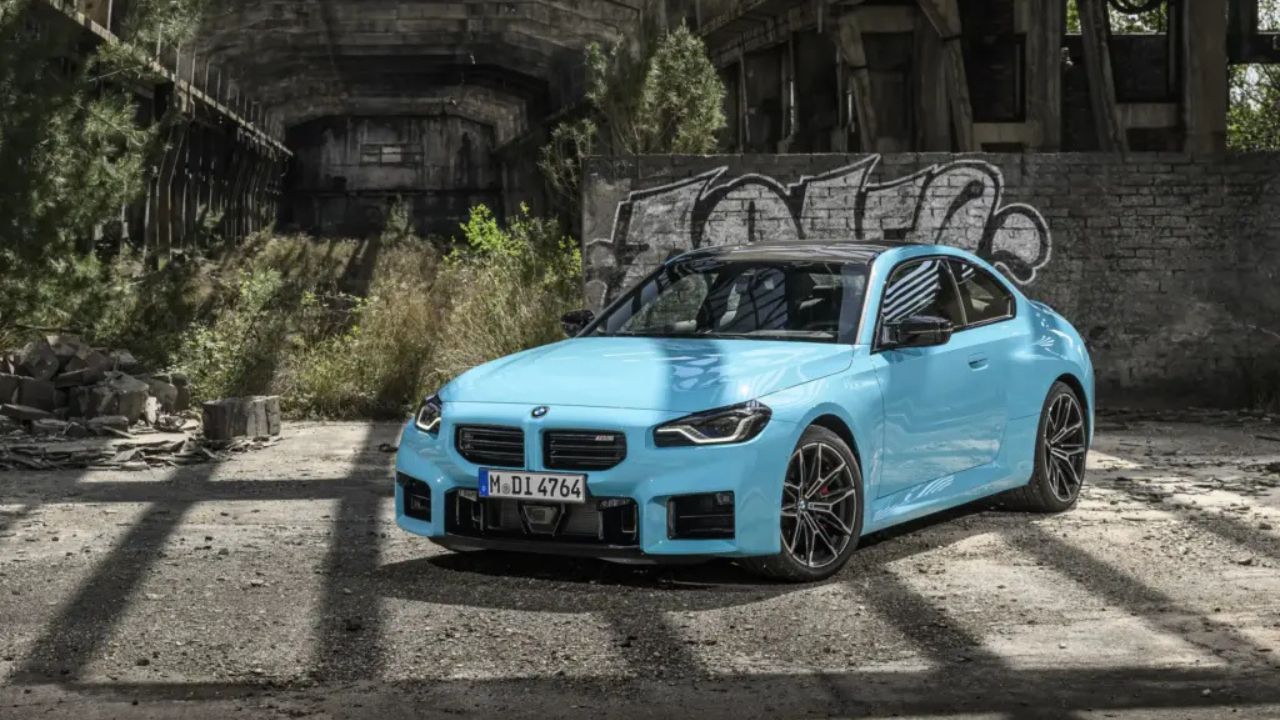
BMW is preparing a first for its smallest full-fat M car, adding all-wheel drive to the next M2 while keeping a switchable rear-drive mode for purists. The move mirrors what the brand has already done with larger M sedans, pairing serious performance with year-round usability instead of forcing buyers to choose.
That combination of xDrive traction and rear-driven adjustability shows where BMW M is heading as power outputs climb and customer expectations broaden. The all-wheel-drive M2 is more than a spec sheet tweak; it is a test case for how far the brand can evolve its icon without losing the playful balance that made earlier generations cult favorites.
How BMW’s first xDrive M2 changes the compact M formula
The most obvious shift is hardware. By adopting an xDrive system, the next M2 gains a driven front axle that can share torque with the rear wheels rather than relying solely on a rear differential and traction control to manage its output. On current M sedans and wagons, that layout has already shown how a performance-focused all-wheel-drive system can deliver both brutal launches and calm stability when conditions turn poor.
BMW has already demonstrated this recipe in the larger M5, where an electronically controlled clutch pack sends torque forward only when needed. In that car, the system works with an active rear differential and a suite of drive modes that let the driver decide how aggressive the torque split should be. The upcoming M2 with xDrive is expected to follow the same playbook, using software to make the compact coupe feel rear-biased in normal driving while still leaning on the front axle for grip under hard acceleration or in the wet.
Crucially, BMW is pairing that hardware with a selectable rear-drive-only setting. On the M5, the company already allows drivers to switch the system into a pure rear-wheel-drive configuration that disconnects the front axle, a feature highlighted in early reviews of the rear-drive mode and its impact on the car’s character. Translating that approach to the M2 gives owners a way to enjoy the traditional, tail-happy behavior that defined older M cars without sacrificing the all-weather assurance that modern buyers often demand.
Alongside the drivetrain, BMW is likely to refine the chassis tune to account for the extra hardware over the front axle. All-wheel-drive components add weight and alter weight distribution, so engineers typically respond with revised spring and damper rates, new steering calibration, and updated stability control logic. The goal is to keep the compact coupe’s steering feel and agility intact, even as the car gains more capability when the road surface is less than perfect.
Why an all-wheel-drive M2 with a rear-drive mode matters now
The timing of this shift is not accidental. BMW has steadily migrated its high-output M cars to all-wheel drive as power levels and tire sizes have grown. That evolution started in earnest with the current M5, which uses xDrive to make its performance accessible to a broader group of drivers. The same philosophy is now being applied to smaller models, reflecting how customer expectations have changed for daily usability and safety.
In the super-sedan world, the formula has already expanded to include practical body styles that still carry full M credentials. The upcoming 2026 BMW M5 shows how the brand is willing to combine wagon practicality, plug-in hybrid power, and all-wheel drive in a single package aimed at buyers who want one car to do everything. An all-wheel-drive M2 points in the same direction, just scaled down for drivers who prioritize compact size and sharper responses over outright space.
Regulation and performance targets are also pushing BMW in this direction. As engines produce more torque from lower revs, especially when electrification is involved, sending that output through only two driven wheels can overwhelm the rear tires. All-wheel drive spreads the load, which lets engineers unlock stronger acceleration without constantly fighting wheelspin through electronics. For a car like the M2, which sits at the gateway to the M range, that balance between performance and approachability is particularly sensitive.
The switchable rear-drive mode is the counterweight that keeps the new approach from alienating enthusiasts. Traditional M buyers often value steering feel, throttle adjustability, and the ability to modulate the car with the rear axle. If the M2 adopted all-wheel drive without a way to return to a purist layout, it would risk losing that core audience. By giving drivers a choice, BMW can satisfy those who want a playful weekend car while still offering the confidence and traction that make the coupe more usable as a daily driver in markets with challenging weather.
Competition is another factor. Rivals in the compact performance segment increasingly rely on all-wheel drive to deliver high outputs without sacrificing everyday drivability. By giving the M2 a configurable system instead of a fixed layout, BMW is positioning the car as a more flexible alternative that can shift personalities with a button press. That adaptability fits modern expectations for configurability, where buyers are used to tailoring drive modes, exhaust sound, and even steering weight to their preferences.
What the first xDrive M2 signals about BMW M’s next steps
The introduction of an all-wheel-drive M2 with a rear-drive setting hints at a broader roadmap for BMW’s performance division. As electrification spreads through the lineup, powertrains will only become more complex, with multiple motors and battery packs joining traditional combustion engines. All-wheel drive, whether mechanical or electric, will be a natural fit for distributing that power, and software will play an even bigger role in shaping how the cars feel from behind the wheel.
In that context, the M2’s configurable drivetrain looks like an early example of how BMW plans to keep driver engagement alive as the hardware evolves. Giving owners clear, distinct modes that change the character of the car, rather than just adjusting throttle response or steering weight, will be essential for maintaining a sense of connection. The rear-drive setting is more than a party trick; it is a statement that even as the brand embraces traction and technology, it still sees value in a more analog, rear-led experience.
The success of this approach in the compact segment could influence how future M models are packaged. If buyers respond positively to an M2 that can shift between secure all-weather coupe and playful rear-drive sports car, BMW may double down on similar dual-character setups in other models. That could mean more M cars that blend practicality, like the M5 Touring, with configurable drivetrains that let drivers decide how much help they want from the front axle.
At the same time, the move raises expectations for how well BMW can mask the compromises that come with additional hardware. Weight, complexity, and cost all increase when an all-wheel-drive system is added to a compact platform. To justify those trade-offs, the car will need to deliver a clear step up in real-world performance and usability without dulling the feedback that enthusiasts expect. The way the M2 manages that balance will be watched closely by both fans and rivals.
Looking ahead, the first xDrive M2 is likely to be remembered less as a radical break and more as a logical evolution of the M formula. It reflects a brand that is trying to serve a wider range of use cases while still honoring the traits that built its reputation. If BMW can pull off that blend, the compact coupe may become the template for how performance cars navigate a future shaped by higher outputs, stricter rules, and more demanding buyers.
More from Fast Lane Only
- Unboxing the WWII Jeep in a Crate
- 15 rare Chevys collectors are quietly buying
- 10 underrated V8s still worth hunting down
- Police notice this before you even roll window down
*Research for this article included AI assistance, with all final content reviewed by human editors.