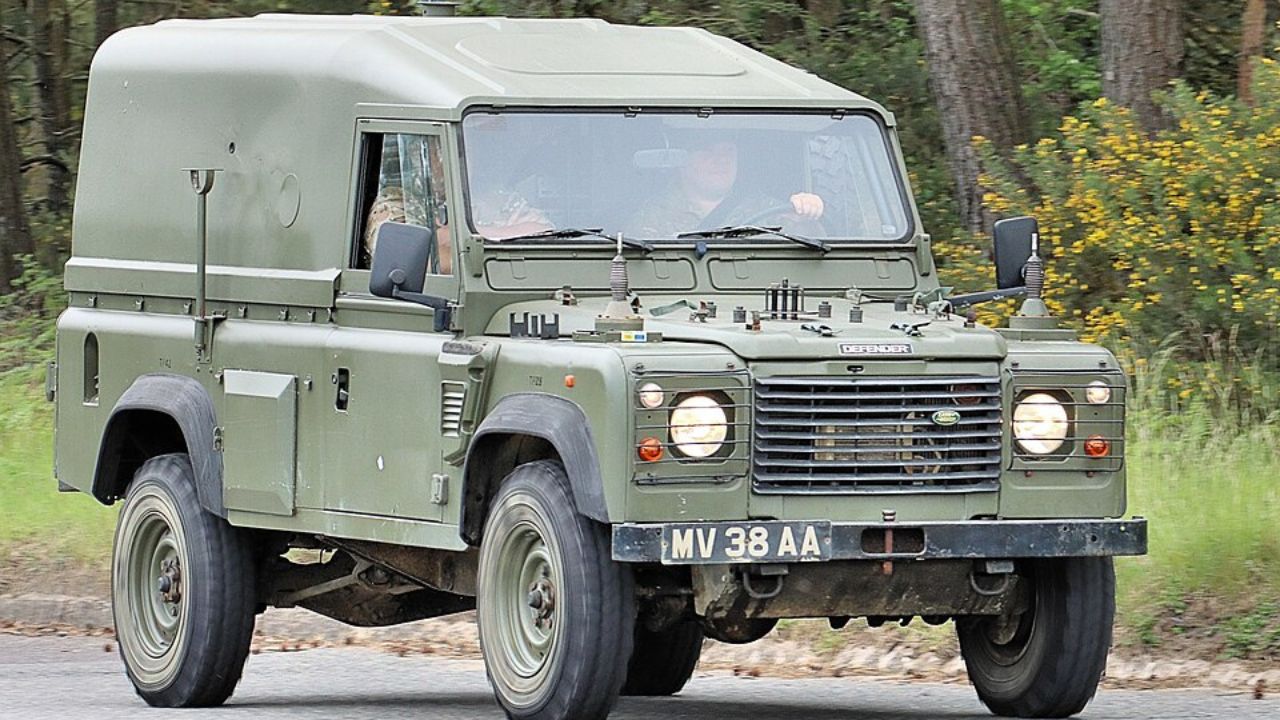
You are living through the quiet end of one of Britain’s most recognisable military silhouettes. After 70 years of service, the British Army is starting to withdraw its Land Rover fleet, the boxy workhorse that carried troops, radios and rations from Northern Ireland to Helmand. The decision closes a chapter in British military history and forces you to think about what replaces a vehicle that has become shorthand for the Army itself.
How a farm vehicle became a battlefield icon
To understand the significance of this retirement, you have to go back to the beginning. The first Land Rover entered British military service in the years after the Second World War, adapted from a civilian design that farmers loved for its simplicity and toughness. Over time, the Army adopted thousands of variants, from soft-top runabouts to heavily modified patrol trucks.
Earlier this year, The British Army confirmed that the Land Rover has been in uniform for 70 years, a span that covers operations in Malaya, the Falklands, Iraq and Afghanistan. In official language, it became a core part of British Army’s mobility. In less formal terms, you would struggle to find a conflict involving British forces where a Land Rover did not appear somewhere in the background.
From the outset, the vehicle’s appeal was its mix of ruggedness and adaptability. You could strip it down for air transport, bolt on radio masts, or fit armour kits as threats evolved. That flexibility meant the Army kept finding new roles for it long after more modern designs might have been expected to take over.
Why the Army is finally moving on
The question for you now is why the Land Rover’s long run is ending. The answer sits at the intersection of safety, survivability and modernisation. Under the Future Soldier modernisation plan, the British Army and the wider Ministry of Defence are rethinking how light forces move, communicate and survive on a battlefield saturated with drones, sensors and precision weapons.
Officials have been clear that the basic Land Rover design, for all its virtues, belongs to a different era of threat. Protection against roadside bombs and ambushes, load carrying for digital equipment, and integration with modern communications all demand a new platform. In public statements, the Ministry has framed the change as part of a wider reset of light vehicle fleets rather than a single nostalgic decision.
The tone of the announcement reflects that. When the Army set out its plan to retire the Land Rover, it described the moment as a significant step in the evolution of its mobility, while hinting at a successor that would deliver better protection and performance. The official statement on the retirement of the iconic Land Rover framed it as part of a broader shift rather than a one-off cut.
The ‘workhorse’ that defined Army life
Ask anyone who has served and you hear the same word again and again: workhorse. Coverage of the decision has leaned on that description too, with one report calling it a Workhorse Land Rover and highlighting that it is being retired from the Army after 70 years. The term captures how deeply the vehicle was woven into everyday military life.
You can picture members of a Brigade Patrol Troop, part of a Brigade Recce formation, loading up Land Rovers before a long night exercise. For generations, those vehicles were the first thing new soldiers learned to drive and the last thing they saw in the rear-view mirror when they left a training area. They moved ammunition and mail, carried section weapons, and doubled as makeshift ambulances when casualties needed to be pulled out fast.
The Land Rover also carried a symbolic weight. Photographs from the early Cold War show King George VI inspecting troops alongside the same basic outline that you still recognise today. That continuity reinforced the sense that, whatever else changed in the Army, the Land Rover remained a constant presence.
What replaces a legend
The harder question for you is what comes next. Officials have not yet unveiled a single direct replacement, and for good reason. The roles the Land Rover filled are now likely to be split across several platforms, from protected patrol vehicles to lightweight utility trucks and specialist reconnaissance designs.
Reporting has already highlighted that the Ministry is running competitive trials for new light 4x4s, with companies from Britain, Europe and North America positioning their designs. Some coverage has described how Some of the and defence firms are competing for the contract to supply the British Army’s next generation of light vehicles.
At the same time, you see the Army experimenting with more radical options. Video reports have examined the ISV utility, a five seat infantry squad vehicle produced by the American company General Motors Defense, and asked whether such a design could replace at least part of the Land Rover’s portfolio. Under the Future Soldier plan, the British Army and the Ministry of Defense are looking for platforms that can be air transported, networked and protected to a standard that a 1950s design cannot reach.
How the phase-out will work
You are not going to see every Land Rover vanish overnight. The Army has described the process as a phased withdrawal, starting with the oldest and most heavily used vehicles. One detailed account of the plan noted that the Army begins to after more than 70 years, with units gradually handing back their Land Rovers as new vehicles arrive.
Some of the better preserved examples are likely to move into training roles or ceremonial duties for a while, and a select few will go straight into museums. One report explained that thousands of the iconic vehicles will be preserved, with some of the most historically significant Land Rovers heading to collections such as the one at Bovington in Dorset, where you will be able to see them alongside tanks and other armoured vehicles.
Others will be sold off or donated. Specialist Land Rover outlets have already described how the British Ministry of Defence has begun releasing batches of surplus vehicles, with some sent abroad as donations and others entering civilian hands through auctions. One overview of the process noted that Armed Forces Begins and that many vehicles have already been sent to Ukraine as donations.
What the change means for you
If you are serving, this transition will shape your daily reality. The Land Rover’s simplicity meant you could often fix it with basic tools and a bit of ingenuity. New vehicles will arrive with better protection and electronics, but you will also have to navigate more complex maintenance regimes and software driven systems. The trade off between survivability and field repairability will feel very real when you are miles from a workshop.
For you as a taxpayer, the retirement raises questions about cost and value. The Land Rover delivered seven decades of service from a relatively modest original investment. Any successor will have to justify itself not only in terms of protection and performance but also through lifecycle costs. Coverage of the competition for new vehicles has already stressed that The Ministry of Defense is seeking platforms that provide better capability at acceptable cost, a point repeated in several analyses of how Ministry of Defense is running its trials.
If you are simply a fan of military history or classic vehicles, the emotional impact is different. The Land Rover is part of the visual language of post war Britain, from newsreels of decolonisation to footage of peacekeeping missions. Knowing that the British Army is formally closing that era will change how you look at those images and at the green 4x4s that still trundle around training areas for a little while longer.
More from Fast Lane Only