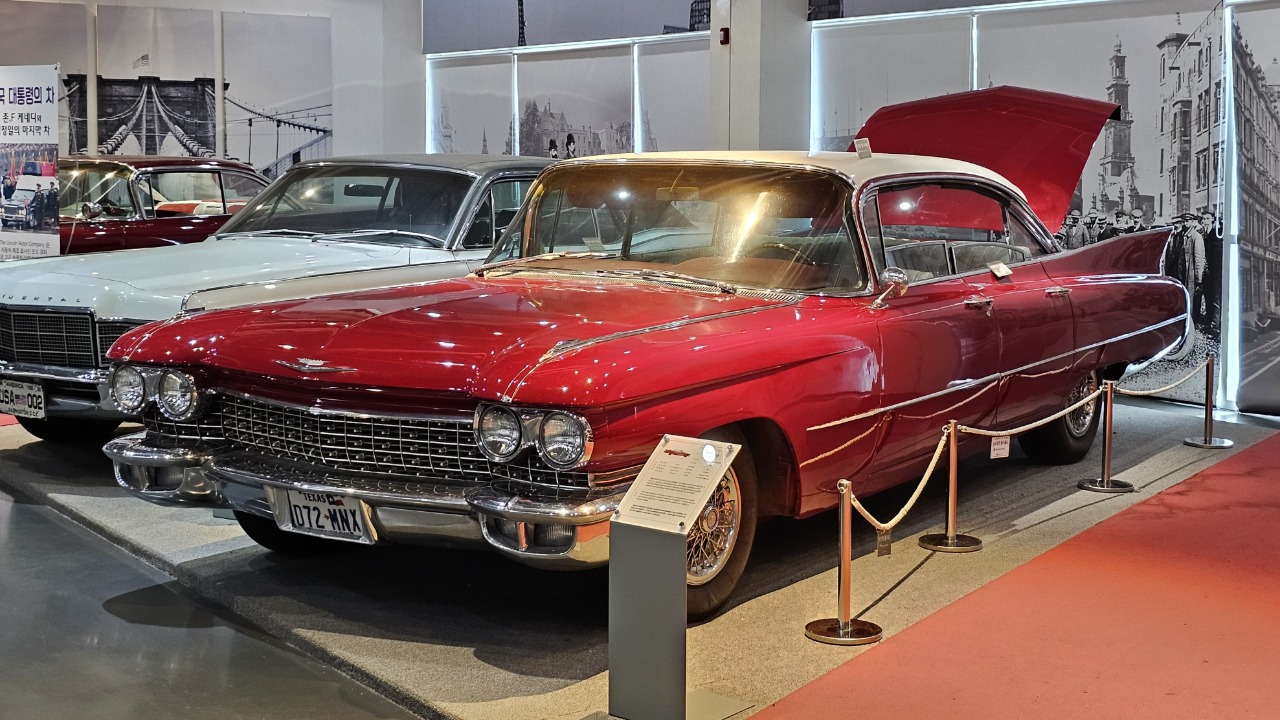
You step into a 1960 Cadillac Fleetwood and the first thing you notice is not the chrome or the tailfins, but the quiet. This was a car engineered so the person behind the wheel could glide through the world in a kind of rolling cocoon, insulated from noise, vibration, and even the passengers in the back. If you are used to modern luxury, the surprise is how deliberately this car separated the driver from the chaos outside and, in many cases, from the people being chauffeured behind.
That focus on isolation turned the 1960 Fleetwood into more than a status symbol. It became a tool of power, a favorite of executives, entertainers, and officials who wanted to be heard only when they chose to be. When you look closely at the structure, the options, and even the way famous owners used it, you see a car that delivered on a very specific promise: the driver would be in control, but rarely in the spotlight.
The Fleetwood as rolling authority
If you think of American luxury in 1960, you are really thinking of the Cadillac Fleetwood. The car projected weight and authority, with a long, formal roofline and a stance that made everything else on the road look tentative. In period culture, the Cadillac Fleetwood was described as “Chosen for” its silence, its mass, and the sense of command it gave to whoever occupied the rear compartment, a symbol of control rather than raw performance in American crime stories and political imagery. You were meant to see it glide past and understand that someone important was inside, even if you never saw their face.
That image of authority was not accidental. Cadillac’s own full line material framed the brand’s big sedans as the pinnacle of comfort and composure, with the Fleetwood positioned at the top of that pyramid. In brochures, the dramatic elegance of models like the SIXTY-TWO and COUPE DE VILLE was laid out page by page, but the Fleetwood sat above them, the car you chose when you wanted more formality and separation. On Page spreads that also highlighted the SIXTY, TWO, CON, COUPE, and VILLE variants, the Fleetwood’s longer body and more reserved trim made clear that this was the car for people who expected to be driven, not to drive themselves.
Engineering a quiet, separated cabin
The isolation you feel in a 1960 Fleetwood is not just psychological, it is baked into the structure. Cadillac engineers layered insulation into the body, especially in the roof and floor, to keep road and wind noise out of the passenger space. In the technical literature, you see how the company singled out the Other examples of luxury in the Sixty Special, including extra insulation between the roof and headlining, and carefully tuned materials to create a harmonious interior for each exterior color. The Sixty Special nameplate, spelled out as Sixty Special, was shorthand for a car that went further than standard Cadillacs in isolating you from the outside world.
Underneath, the chassis and suspension were tuned for what later observers would call a pillowy ride. Even when you look slightly ahead to early 1960s models, the same philosophy is clear: Cadillac relied on ball jointed front A arms, helical coil springs, rubber mounted strut rods, and rubber bushings to soak up harshness before it ever reached the cabin. The 1960 Fleetwood sat squarely in that lineage, using its long wheelbase and soft suspension to float over broken pavement so the driver’s hands and the passengers’ conversations were never disturbed by the road beneath.
Powertrain and controls built for effortlessness
For the driver, isolation also meant effort free control. Cadillac’s automatic, the Hydra Matic Transmission, was central to that experience. In period descriptions, the Hydra Matic Transmission was praised as Cadillac’s renowned system, with smooth and seamless shifts that kept the big V8’s power in the background and contributed to a serene driving experience. You did not have to think about gear changes, which meant you could focus on guiding the car’s bulk with fingertip inputs while the mechanical drama stayed out of sight and out of mind.
Stopping such a heavy car without drama required equally careful engineering. Factory literature highlighted BRAKES that were described as Cadillac Power Brakes with self adjusting shoes and finned rear drums, with Effective brake lining designed to resist fade. Manual height control was also provided, giving the driver a way to keep the car level under varying loads, which mattered when the rear compartment might be filled with passengers and luggage. All of this meant you could guide a very large, very heavy sedan through traffic with surprisingly little physical effort, another layer of separation between you and the work the car was doing underneath.
Fleetwood Sixty Special: luxury priced and padded
If you wanted the purest expression of this isolation in 1960, you looked at the Fleetwood Sixty Special. This model sat between the standard sedans and the formal limousines, with a focus on rear seat comfort and extra sound deadening. Period pricing put the Fleetwood Sixty Special at a list price of $6,233, a figure that signaled to buyers that they were paying for more than chrome and fins. At that level, Cadillac customers expected a quiet, cosseting ride, and the Sixty Special delivered with thicker carpets, richer upholstery, and that extra insulation between the roof and the headliner.
Inside, the Sixty Special’s trim and color coordination were treated almost like interior design projects. The optional specifications material described how the Sixty Special offered a harmonious interior for each exterior color, with fabrics and leathers chosen to reinforce the sense of calm. You were not just buying a car, you were buying a curated environment where the driver’s seat felt like a command post and the rear bench felt like a private lounge, both insulated from the noise and glare outside.
Series 75 and the art of separating driver and passengers
The most literal expression of driver isolation came in the long wheelbase limousines, especially the 1960 Cadillac Series 75. In these cars, the body was bodied by Fleetwoo, with a partition between the front and rear compartments that turned the driver into a professional operator and the rear into a private room. Modern video drives in a 1960 Cadillac Series 75 show how that separation still feels today, with the chauffeur sitting upright behind a large wheel while the camera pans back to a deep, plush rear seat that seems almost disconnected from the road.
Another look at a similar 1960 Cadillac Series 75, again bodied by Fleetwoo, reinforces how the partition and intercom defined the relationship between driver and passengers. The chauffeur could be spoken to when needed, but otherwise the rear compartment functioned as its own world, with its own lighting and controls. In these limousines, the driver was intentionally isolated not only from the outside environment but also from the conversations and decisions happening a few feet behind the glass, a structural reminder of hierarchy built into the car itself.
More from Fast Lane Only