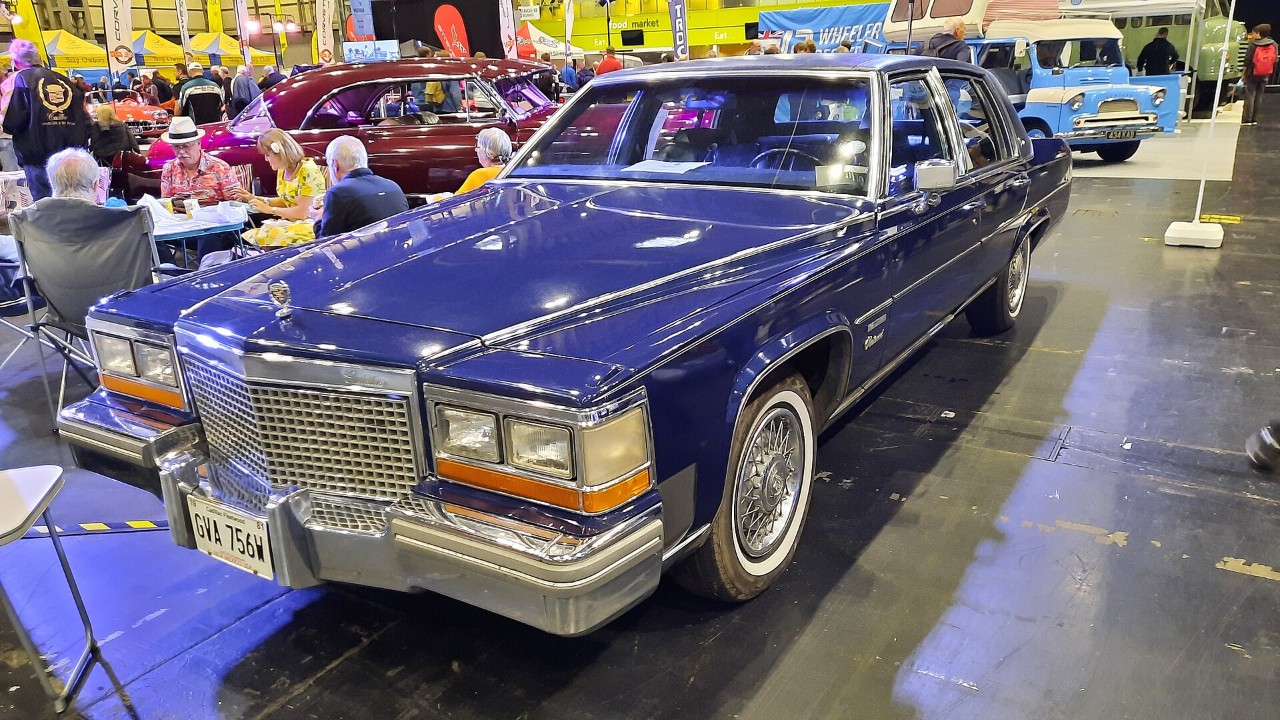
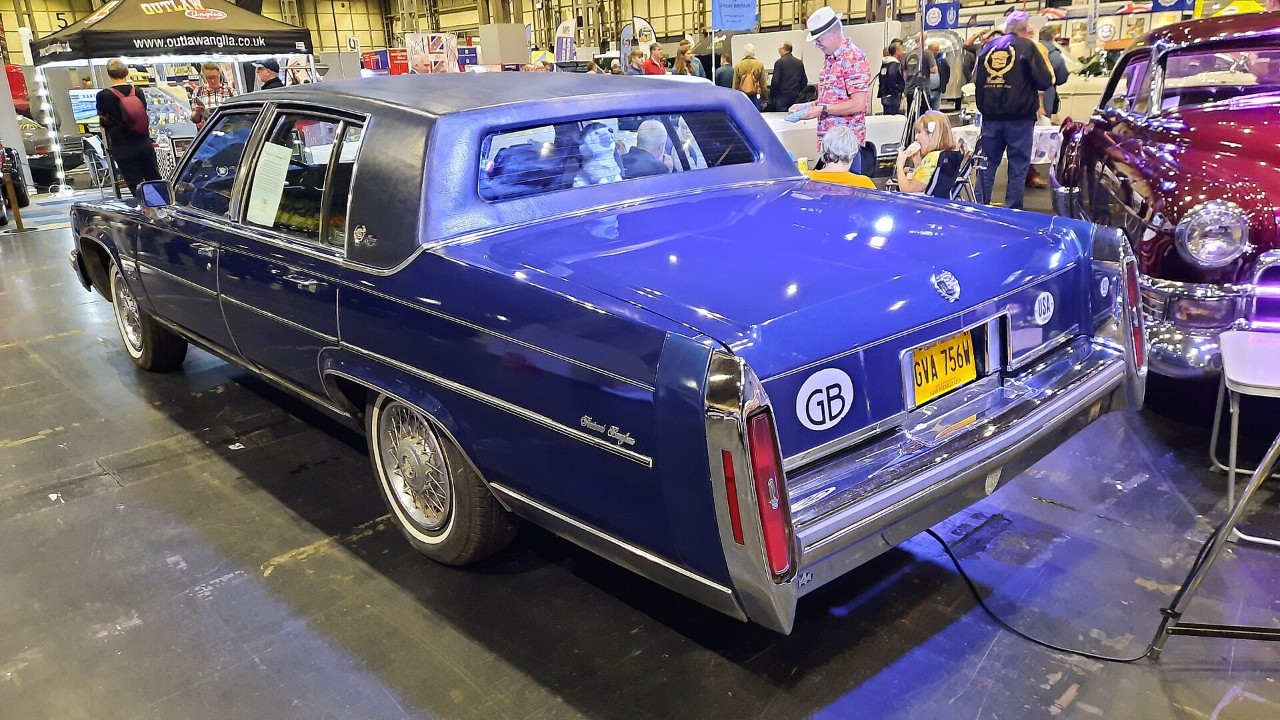
For the 1981 model year, Cadillac gave its big cars an engine that could run on eight, six or four cylinders. The Cadillac V8-6-4 shut down cylinders at light load to save fuel. Retail buyers could get it only for 1981. Even so, Fleetwood limousines kept it through 1984.
Cylinder deactivation is common today. In 1981, however, the electronics to manage it were new, and owners noticed the switches between modes.
Here is how the system worked, why customers complained, and why the limousines kept it after the rest of the lineup moved on. The details come from Curbside Classic, Consumer Guide and Mac’s Motor City Garage.
How the Cadillac V8-6-4 worked
The base engine was Cadillac’s 368-cubic-inch V8, or 6.0 liters. According to Curbside Classic’s Aaron Severson, it carried the order-form code L62. He also traces it back to the Cadillac V8 family of 1968, from the 472, 500 and 425 engines.
The clever part was in the valve gear. Four of the eight cylinders had solenoids that could disengage their rocker arms, so the valves in those cylinders stayed shut. The pistons kept moving, but no fuel went in, Curbside Classic explains. Consumer Guide’s Tom Appel adds that Cadillac said the trapped air acted as a cushion to smooth operation.
Cadillac did not invent the hardware alone. Both sources credit the supplier Eaton with the valve gear. In fact, Curbside Classic says the system was based on 1975 Eaton patents that Ford had also experimented with.
Eight, six or four cylinders
The engine always started on all eight cylinders. Then, under light load, the computer cut it to six or four. When the driver pressed the accelerator, the idle cylinders came back in the same order, according to Curbside Classic.
Mac’s Motor City Garage puts it another way. Dropping two cylinders created in effect a 4.5-liter V6, while dropping four made a 3.0-liter V4. A computer module ran the whole show, and Consumer Guide says Cadillac advertised it as handling up to 300,000 operations per second.
Drivers could also watch it happen. An option on the MPG Sentinel display showed how many cylinders were working, Curbside Classic says. Mac’s Motor City Garage notes that the same digital display reported estimated fuel consumption.
Which 1981 Cadillacs had it
Consumer Guide lists the V8-6-4 as standard in the 1981 DeVille, Fleetwood and Eldorado. The Seville came with a diesel as standard, so buyers could choose the V8-6-4 in its place. Curbside Classic adds that most models also offered a Buick-built 4.1-liter V6 as a credit option.
Many buyers took it. Citing Automotive News data, Curbside Classic counts 165,611 cars from 1981 with the V8-6-4. It adds about 1,200 Fleetwood limousines from the same year.
The fuel savings were modest on paper. Curbside Classic says the city EPA rating stayed at 15 mpg, the same as the 1980 carbureted 6.0-liter cars. Meanwhile, Cadillac wanted to stay clear of the 1981 gas guzzler threshold of 17 mpg, the same source says.
Why the Cadillac V8-6-4 left retail cars
Owners soon had complaints. Consumer Guide says customers disliked the delay in response when the engine switched back to eight cylinders. Also, the system tended to hunt between modes at steady speeds. Appel recalls a limousine driver who kept a dashboard note to avoid about 45 and 68 mph.
Mac’s Motor City Garage blames slow solenoids and throttle-body injection that was not quick or clever enough. Cadillac tried more than a dozen revisions, the site says. Consumer Guide puts the number of computer updates at 13. In the end, Cadillac dropped the feature from retail cars after 1981. It also told dealers to disable the system for customers who were having problems, according to Mac’s. Curbside Classic adds that Cadillac offered a 5-year/50,000-mile warranty on the engine control system, while GM faced class-action suits in more than a dozen states.
Curbside Classic argues that problems were not the whole story. It says Cadillac had already planned the new aluminum-block HT4100 V8 for 1982, before the 1981 cars went on sale. Consumer Guide also names the HT4100 as the replacement in retail cars.
Why the limousines kept it
The heavy cars were a different case. Consumer Guide says the V8-6-4 stayed in production through the end of 1984, mainly for commercial-chassis vehicles such as limousines that were too heavy for the HT4100.
Curbside Classic adds that those limousines avoided the gas guzzler tax because their gross vehicle weight rating topped 6,000 pounds. According to the same source, Cadillac built 3,093 Fleetwood limousines with the V8-6-4 from 1982 through 1984.
More from Fast Lane Only
- Unboxing the WWII Jeep in a Crate
- 15 rare Chevys collectors are quietly buying
- 10 underrated V8s still worth hunting down
- Police notice this before you even roll window down
This article was created with the help of AI and was reviewed and edited by Fast Lane Only editors before publication.