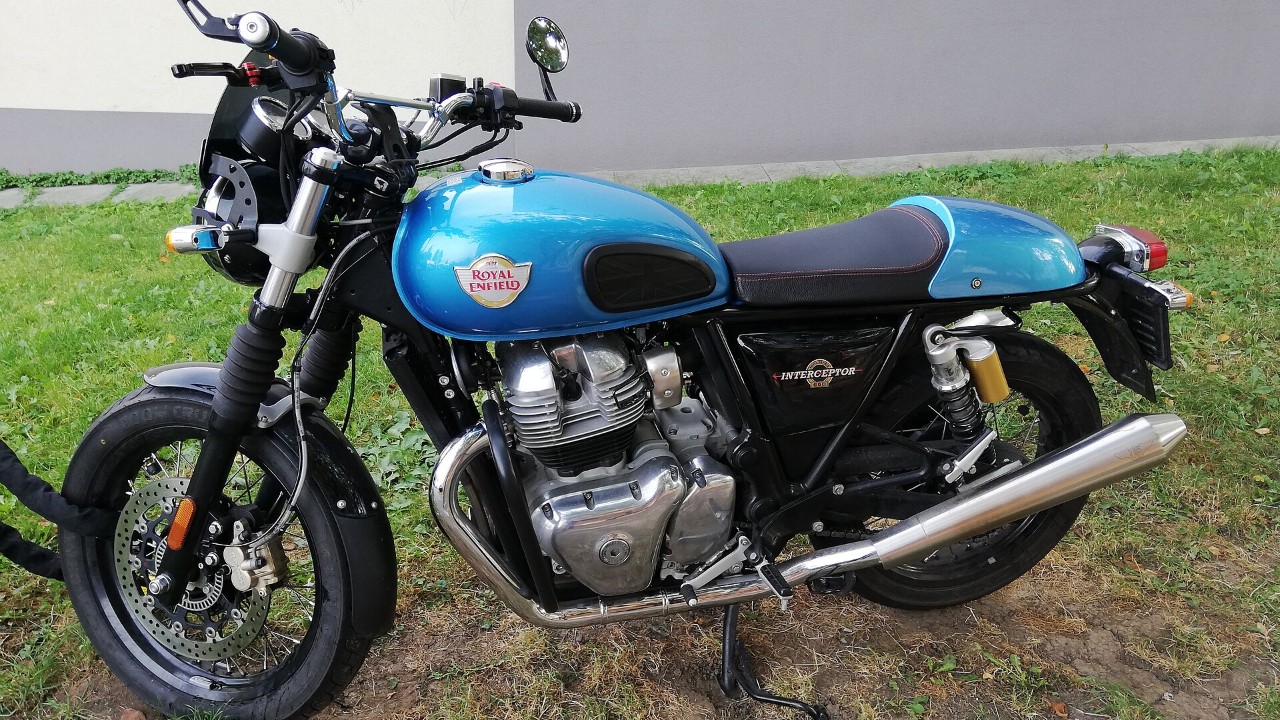
The Royal Enfield Bullet first went on show in London in November 1932, and the name still sells motorcycles today. Between that debut and the modern 650 twins, the company went to war, moved to India and nearly vanished in England. These eight machines trace that path.
They run in date order, from a prewar single to a twin built for the American market. Each entry carries the figures its source supports, and nothing more.
1. 1932 Royal Enfield Bullet
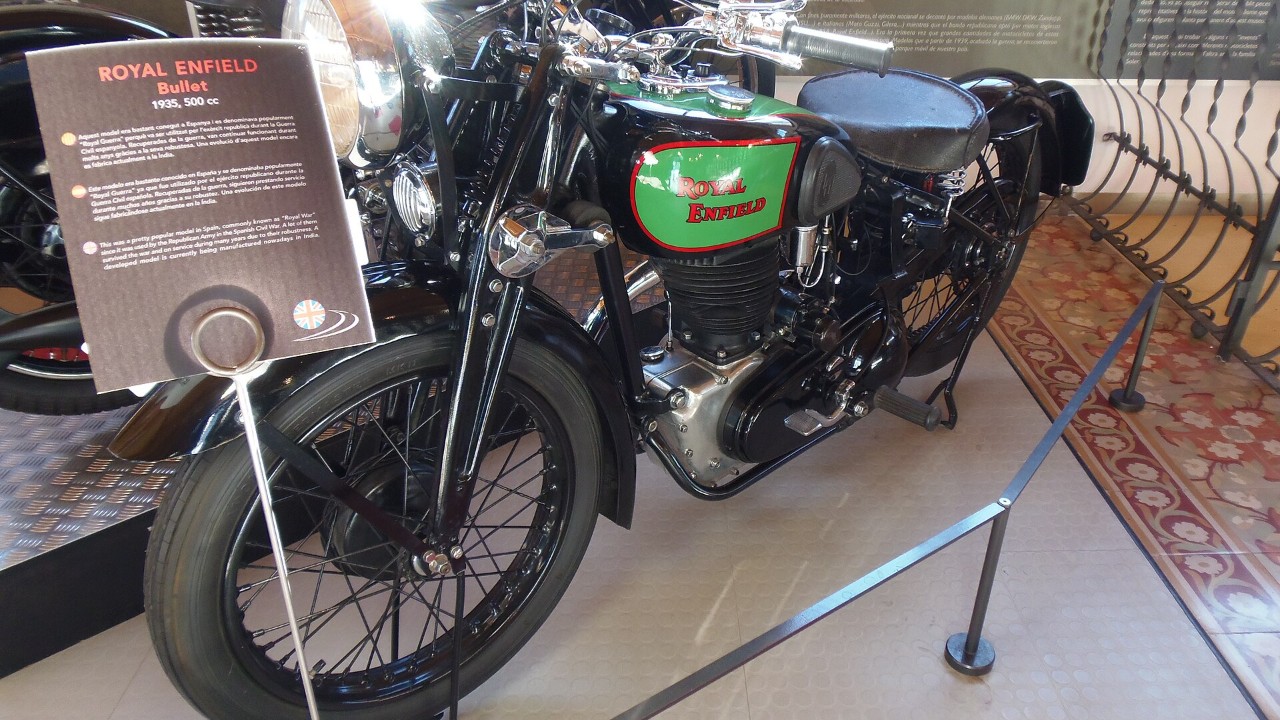
The Bullet started the story, and it gave the brand its most durable name. Royal Enfield’s own timeline says the bike was unveiled in November 1932 at the Earls Court Motorcycle Show in London. The timeline describes that show as an important event on the London calendar.
The name was no accident, either. Grace’s Guide explains that both the Royal Enfield and Bullet names come from the company’s links with the Royal Small Arms Factory in Enfield. In fact, the Royal Enfield heritage timeline marks 1932 as the year the Bullet was born, and it calls the bike “leggendaria” (legendary).
2. 1942 Royal Enfield WD/RE “Flying Flea”
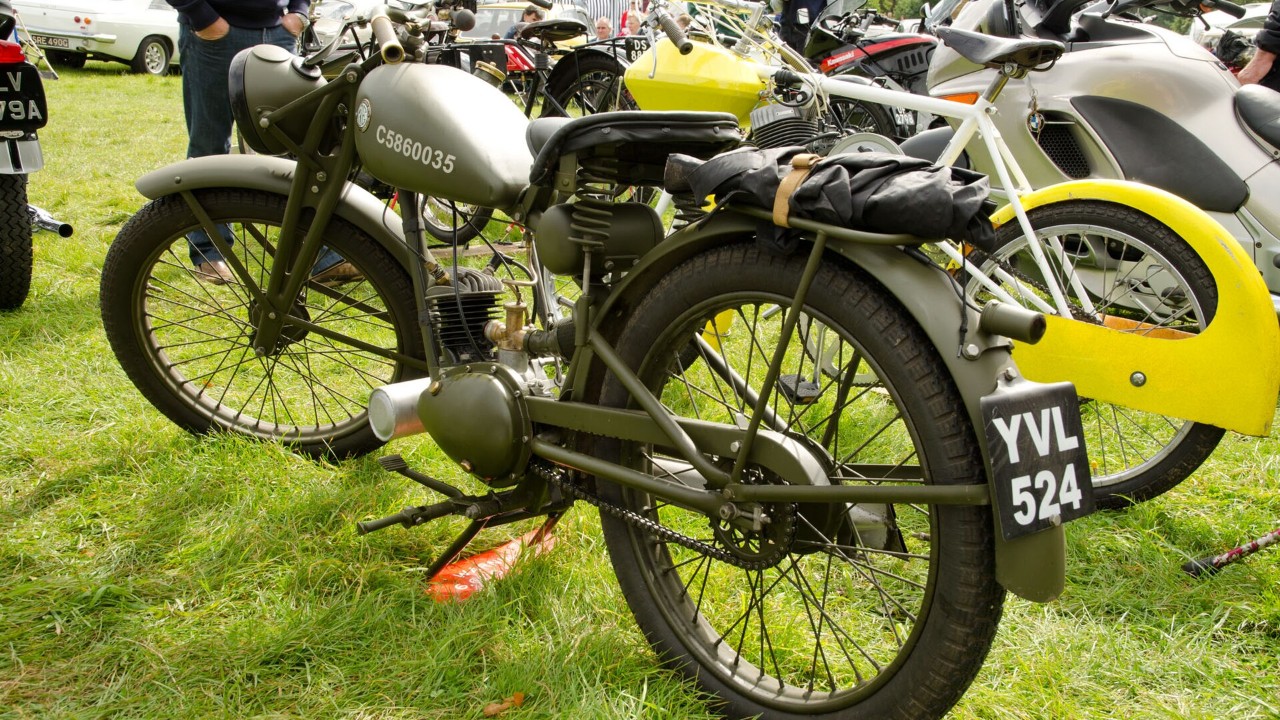
During the Second World War, Royal Enfield built a tiny motorcycle that could fall from the sky. The company’s timeline names its most representative military model as a 125 cc “Airborne” bike nicknamed the Flying Flea. It was built for Britain’s new airborne forces.
According to ParaData, the Airborne Assault Museum’s archive, testing began in 1942, and the bike weighed 130 pounds (59 kg). A special cage with a parachute let crews drop it from aircraft such as the Dakota. It was also light enough to ride along inside a glider, and it became a common sight in airborne units. Later, in 2018, Royal Enfield paid tribute with the Classic 500 Pegasus, launched at the Imperial War Museum Duxford.
3. 1955 Enfield India Bullet 350
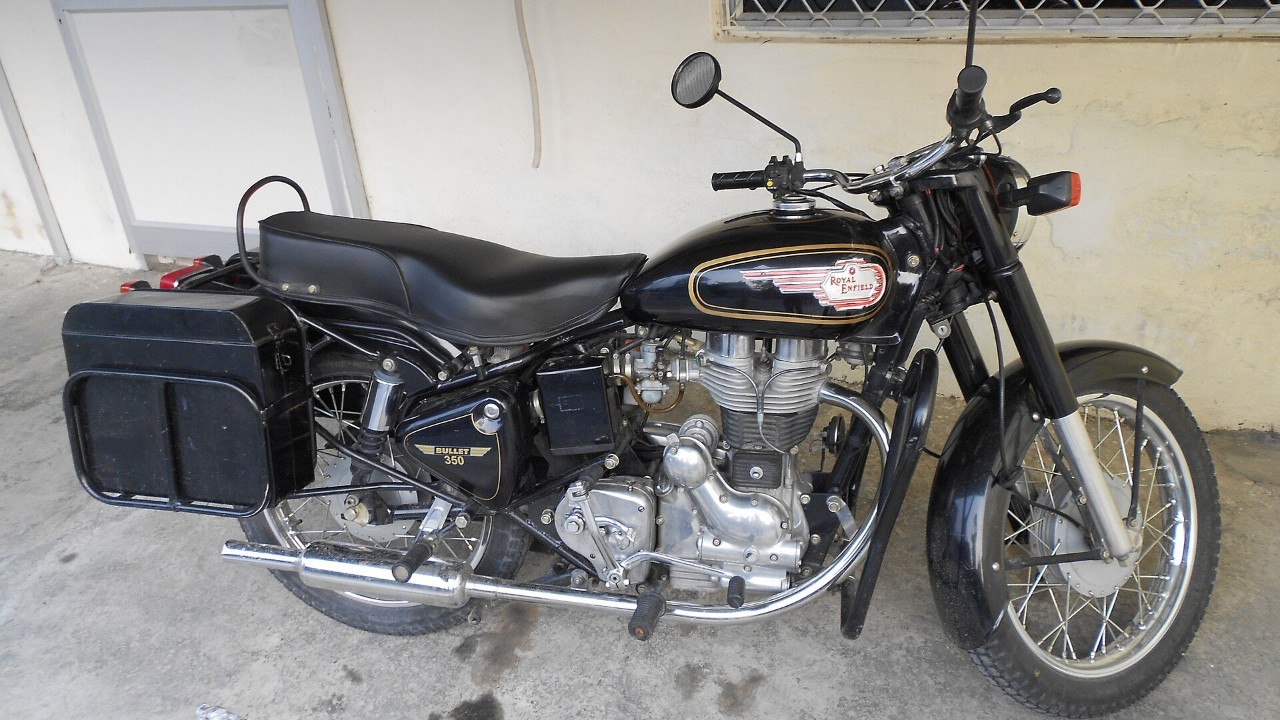
The Bullet’s second life began in Madras, now Chennai. Royal Enfield’s timeline says K. R. Sundaram Iyer founded Madras Motors in 1949 to import British motorcycles. Then, in 1952, the firm won an Indian Army order for 800 Bullet 350s.
In 1955, the Redditch company and Madras Motors formed Enfield India. Rider magazine adds that Madras Motors held the majority of shares, as Indian law required. Work then began on a purpose-built factory at Tiruvottiyur, near Madras. At first, the plant assembled kits shipped from England, and the Indian operation later built complete Bullets under licence. Finally, in 1994, the Eicher Group bought Enfield India.
4. 1958–1963 Royal Enfield Constellation
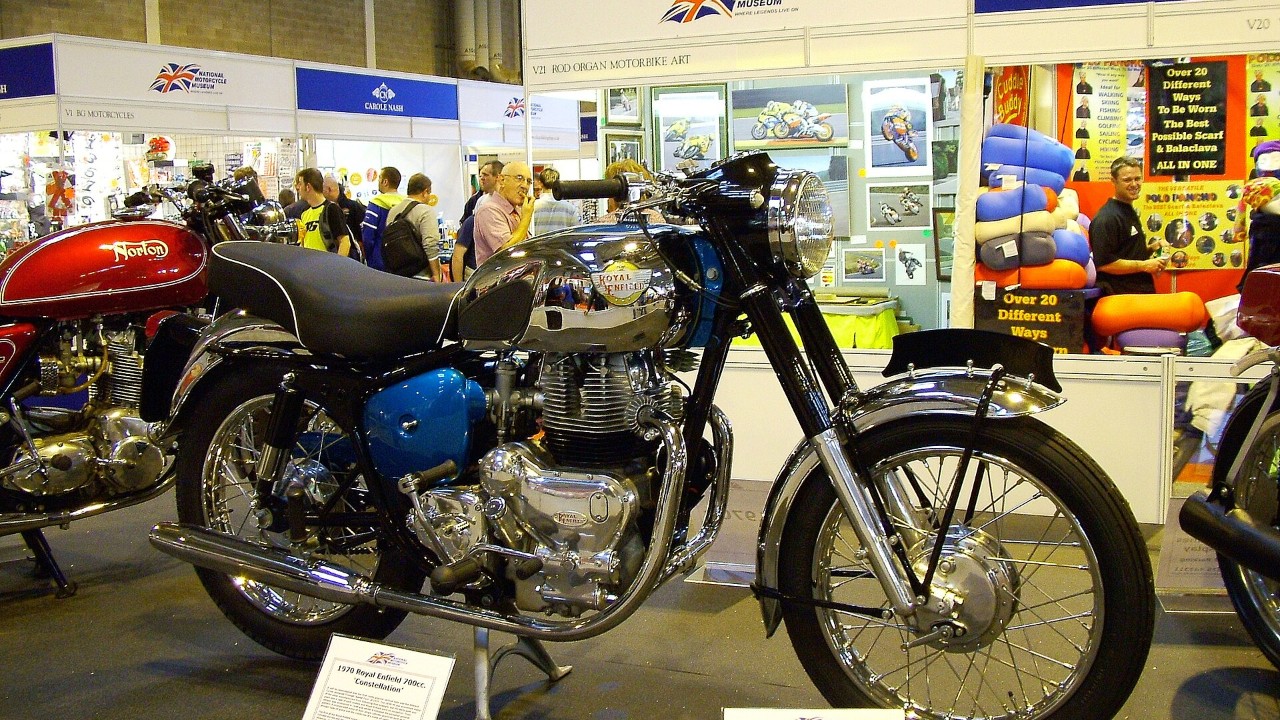
Back in England, Royal Enfield chased the big-twin buyer with the Constellation. The Classic MotorCycle says the original Constellation launched for 1958. It had a 693 cc parallel twin, and Royal Enfield claimed 51 bhp for it.
However, the model did not last long. By 1963, the magazine notes, the only Constellation on the list came as a sidecar machine. Royal Enfield then dropped it for 1964.
5. 1962–1970 Royal Enfield Interceptor
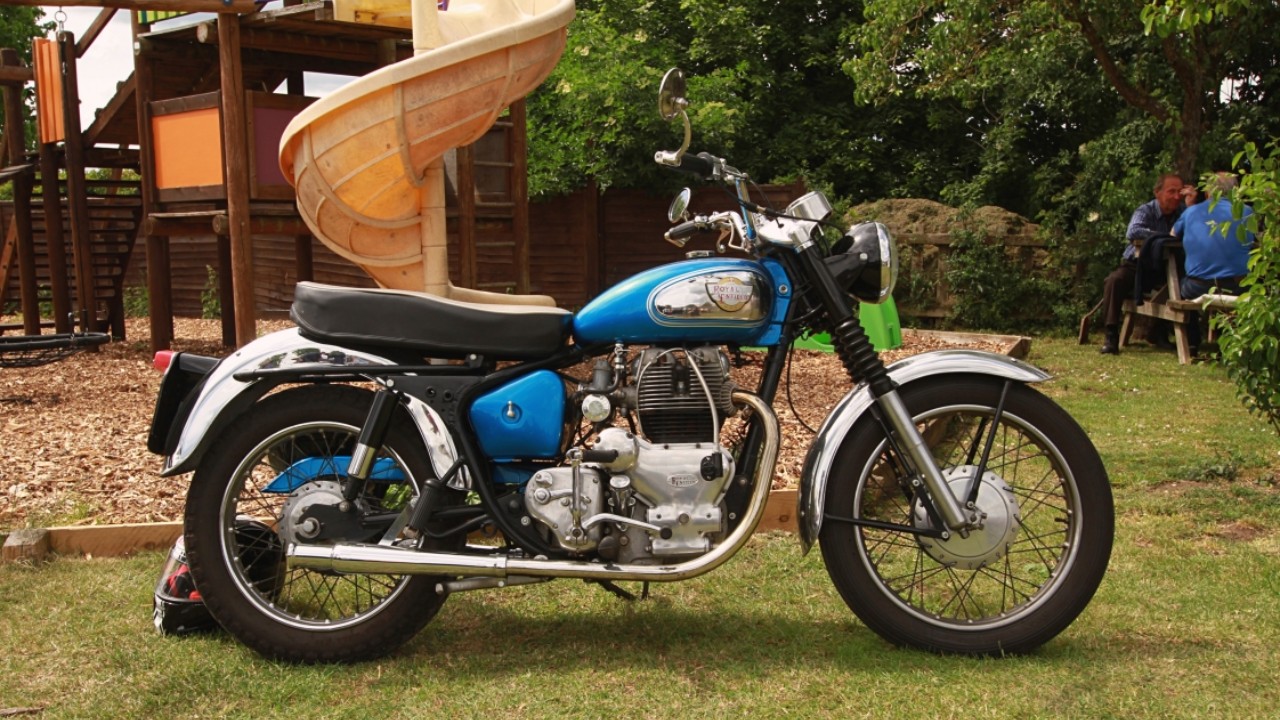
The Interceptor was Royal Enfield’s big British twin, and it aimed squarely at America. Hagerty’s valuation guide says the 736 cc model arrived in 1962. Hagerty also counts 979 Mk I bikes, 759 Mk IA bikes from 1967 and 1,122 Mk II bikes from March 1969.
Meanwhile, the company around it was shrinking. Royal Enfield’s timeline says the Redditch works closed in 1967, when only the Continental GT and the Interceptor were left. Production of the Interceptor then moved to Enfield’s underground plant at Bradford on Avon. According to Hagerty, that factory closed in June 1970. Rider magazine adds that the 736 cc twin could reportedly run the quarter-mile in under 13 seconds.
6. 1964 Royal Enfield Continental GT
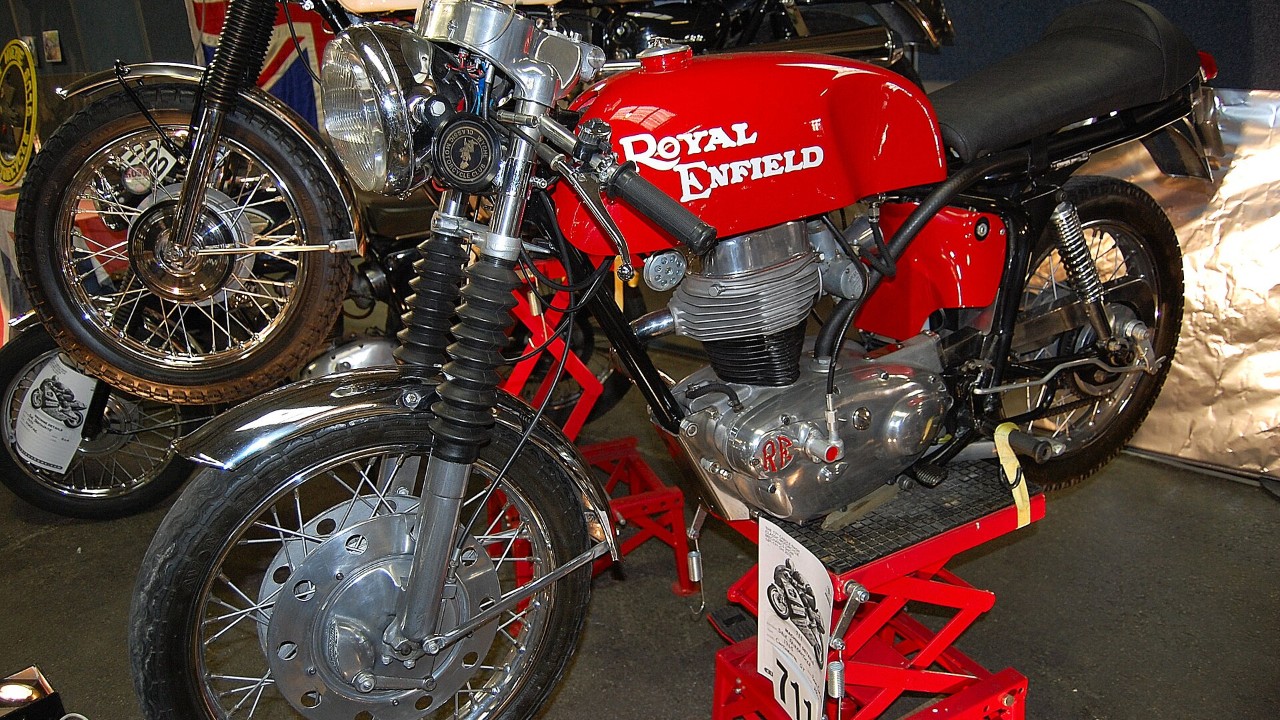
The Continental GT was a 250 cc café racer straight from the factory. Old Bike Australasia says it made its public bow in November 1964. Its 248 cc single made 20 bhp at 7,500 rpm, according to the same article. It also came with a five-speed gearbox, clip-on bars and rear-set footrests.
Royal Enfield launched it with a stunt, too. A team of journalists rode a Continental GT from John o’Groats to Land’s End, with laps of Silverstone on the way. By Old Bike’s account, the whole run took 22 hours and 20 minutes. Royal Enfield’s own timeline simply says the trip took less than 24 hours.
7. 2016 Royal Enfield Himalayan
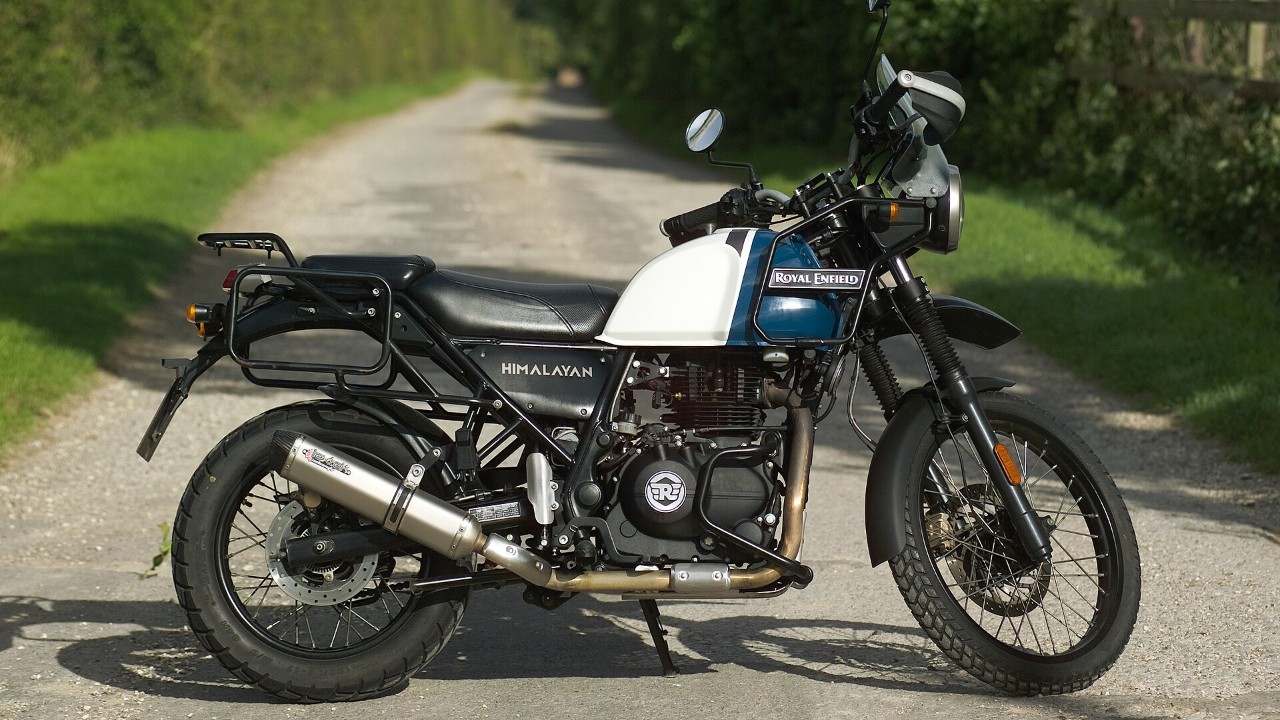
The Himalayan took the Indian company off the pavement. Royal Enfield’s timeline says it presented the bike in 2016 with an all-new LS410 engine. It also says the suspension was tested on every kind of terrain.
Bike India’s launch report from March 2016 gives the details. The air-cooled single displaced 411 cc, used an oil cooler and made 24.5 PS at 6,500 rpm, with 32 Nm of torque. In addition, the Himalayan was the first Royal Enfield with a linked rear monoshock. Its ex-showroom price in Mumbai was Rs 1,55,545.
8. 2018 Royal Enfield Interceptor 650
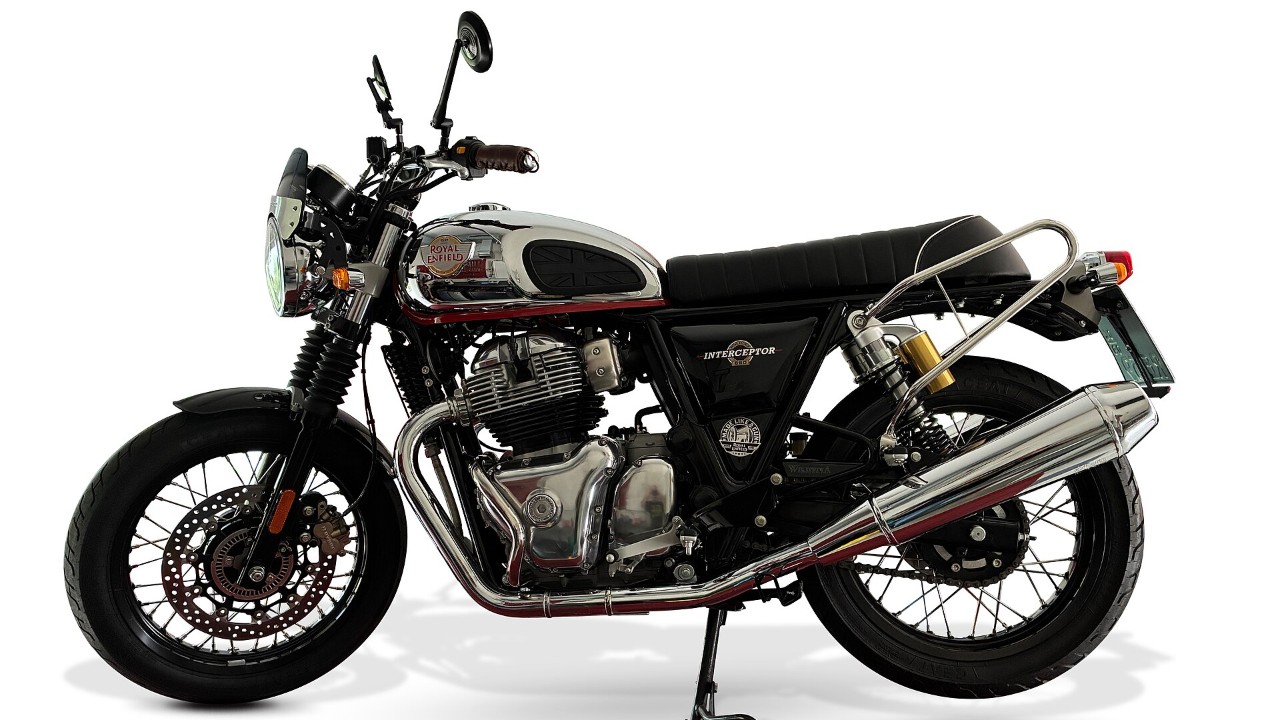
More than five decades after the first Interceptor, Royal Enfield revived the name for a new twin. Rider magazine describes an all-new 648 cc air- and oil-cooled parallel twin, with a single overhead cam and four valves per cylinder.
For American buyers, the price stood out. In September 2018, Rushlane reported a U.S. price of $5,799 for the Interceptor 650. It also listed 47 hp at 7,100 rpm and 52 Nm of torque at 4,000 rpm. Then, in 2019, the Interceptor 650 won the Indian Motorcycle of the Year award, according to Royal Enfield’s timeline.
More from Fast Lane Only
- Unboxing the WWII Jeep in a Crate
- 15 rare Chevys collectors are quietly buying
- 10 underrated V8s still worth hunting down
- Police notice this before you even roll window down
This article was created with the help of AI and was reviewed and edited by Fast Lane Only editors before publication.