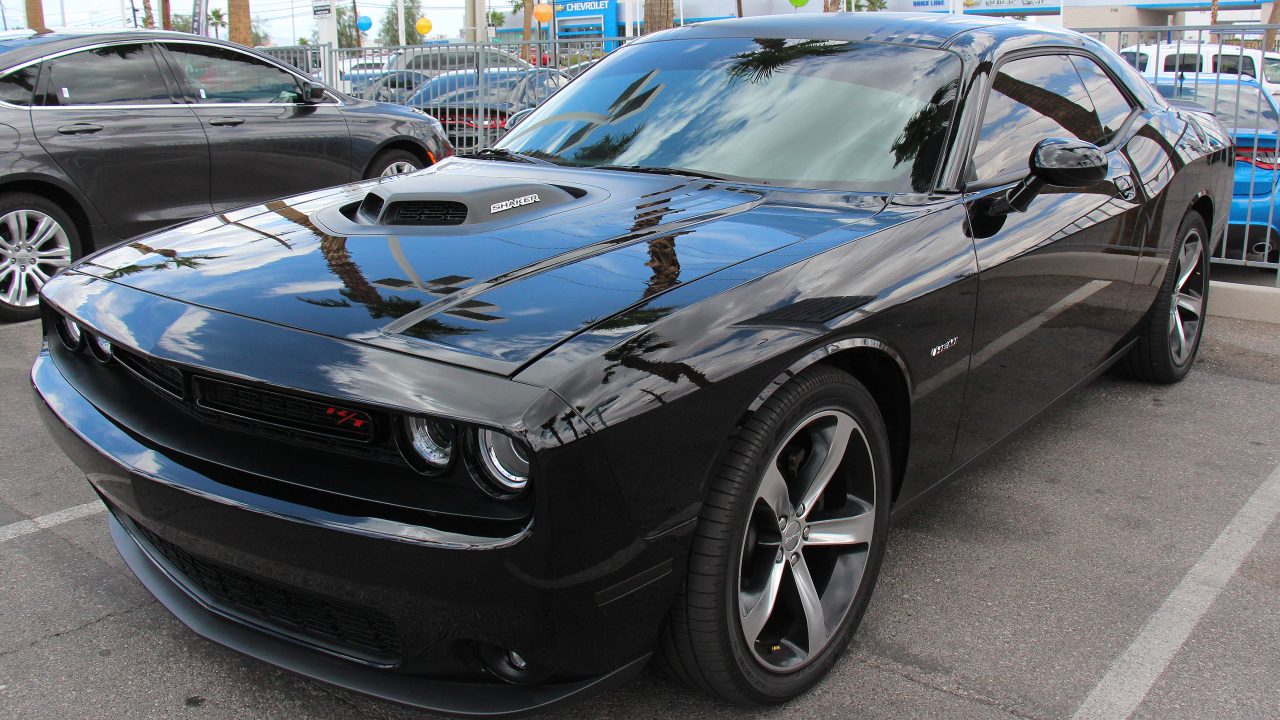
Dodge is reshaping what “Hemi power” means in the electric and hybrid era, and the company’s own marketing chief has drawn a sharp line in the sand. If the current Charger ever gets a traditional Hemi V8, he argues, it only pencils out at the very top of the range, in a Hellcat-grade halo that can justify its cost and complexity. That stance reflects not nostalgia, but a cold calculation about performance branding, regulatory pressure, and the business realities of building a modern muscle car lineup.
Why a Hemi Charger Only Adds Up as a Hellcat
From a pure product planning perspective, the idea of dropping a Hemi into every new Charger sounds attractive, but Dodge’s marketing leadership sees a different equation. The argument is that a Hemi V8 is no longer a mass-market workhorse for this platform, it is a statement piece that must sit at the very top of the performance pyramid. According to Jan, if Dodge were to add a Hemi V8 to the current Charger, the only configuration that makes financial sense is a Hellcat-level variant, where a premium price, limited volume, and intense brand halo can offset the engineering and compliance costs tied to a big displacement engine.
Jan’s position is informed by hard experience with the Hemi nameplate in other parts of the portfolio. He has pointed out that bringing one version of the Hemi back to the trucks was not a simple plug and play decision, but a complex relaunch that demanded careful positioning and volume discipline, a lesson he now applies to the Charger discussion. In that context, a Hellcat-spec Charger becomes less a nostalgic indulgence and more a calculated flagship, a car that can carry the Hemi banner without undermining the broader business case for Dodge’s new multi-energy strategy.
Lessons From Trucks: The Cost of Reviving Hemi Power
The internal debate around a Hemi Charger is shaped by what Jan describes as the difficult path of reintroducing Hemi power to Ram trucks. Doing so was not a slam dunk or an easy move, he has said, because the Hemi brand carries expectations for durability, performance, and sound that require significant investment to meet in a modern regulatory environment. That experience taught Dodge that reviving a storied engine family is not just about bolting it in, it is about reengineering, certification, and marketing, all of which must be justified by pricing power and incremental sales.
Those truck lessons loom large as Dodge weighs how, or whether, to integrate a Hemi into the Charger lineup. Jan has framed the earlier Ram launch as a cautionary tale, one that underscores why a Hemi cannot simply be sprinkled across mid-tier trims without eroding margins or complicating fleet emissions. Instead, the company appears intent on reserving any Hemi return for a narrow, high-impact role, which again points to a Hellcat-grade Charger as the only realistic venue for such an engine within the current business model.
Multi‑Energy Charger Strategy and the Rise of SIXPACK
While enthusiasts fixate on the possibility of a Hemi Hellcat, Dodge has already built a new performance identity around its multi-energy Charger lineup. At the center of that strategy is the SIXPACK powered Charger, which has emerged as the public face of the brand’s transition to a mix of electric and combustion performance. In Detroit, Dodge CEO Matt McAlear accepted the 2026 North Americ Car of the Year recognition for the Charger, highlighting how the SIXPACK configuration leads a family of two-door and four-door models that span different propulsion technologies while still trading on the Charger’s muscle car image.
This multi-energy approach is not a side project, it is the core of Dodge’s near-term business plan. By anchoring the lineup around the SIXPACK and related variants, the company can deliver strong performance and everyday usability without relying solely on large displacement V8s. That context helps explain why a Hemi would be treated as a rare, top-tier option rather than a volume engine. The Charger’s current success, validated by its North Americ Car of the Year victory, gives Dodge the leverage to treat any future Hemi Hellcat as a limited, high-impact extension of an already robust product strategy rather than the foundation of the range.
Hints, Teases, and the Hemi’s Broader Future
The Charger conversation is unfolding alongside broader signals that the Hemi V8 is not finished within Dodge’s universe. In a widely shared appearance, Dodge leadership has been quoted with the emphatic line that “Hemi will be” back, a declaration that resonated with fans who had feared the engine family’s demise. That message, delivered in Feb and amplified across enthusiast channels, underscored the brand’s recognition that the Hemi name still carries enormous emotional and marketing weight, even as electrification accelerates.
Further hints have come from product discussions that extend beyond the Charger. Reporting around Feb has noted that a Hemi V8 May Return In The 2026 Dodge Durango, even as executives acknowledge that the existing 5.7, 6.2, 6.4-liter V8s are “pretty old at this point” and would require substantial work to meet future standards. Dodge CEO Matt has also used social platforms to tease that the supercharged era is not over, suggesting that high output combustion power will continue to coexist with electric performance as long as regulatory policy allows. Taken together, these signals reinforce Jan’s stance on the Charger: the Hemi is being repositioned as a specialized, high-impact tool, not a default engine choice.
Regulation, Brand Halo, and the Logic of a Hemi Hellcat
Behind the marketing sound bites lies a straightforward regulatory and financial reality. Large displacement V8s face tightening emissions and efficiency requirements, which raise the cost of keeping them compliant across a broad range of trims and volumes. By confining a Hemi to a Hellcat-grade Charger, Dodge can treat the engine as a low volume halo product, absorbing its higher per unit costs through premium pricing and limiting its impact on fleet averages. That strategy mirrors how the company has approached supercharged performance in the past, using it to draw attention and aspiration while selling larger numbers of more efficient models.
At the same time, the brand halo created by a Hemi Hellcat would feed directly into the appeal of the SIXPACK and other multi-energy Chargers. Enthusiasts who know that a fire-breathing flagship exists are more likely to view the rest of the lineup as authentically performance focused, even if they ultimately buy a different powertrain. Jan’s assertion that a Hemi only makes business sense in a Hellcat trim is therefore less a dismissal of V8s and more a blueprint for how Dodge intends to balance heritage, regulation, and profitability. In that blueprint, the Hemi survives not by returning to every driveway, but by ruling a carefully chosen corner of the Charger kingdom.
More from Fast Lane Only