Chase Briscoe expected the first production day of his 2026 NASCAR season to be about fresh paint schemes and new partners, not a digitally shaved head. Instead, an artificial intelligence image that rendered him completely bald ignited a social media storm and left fans, colleagues, and even media members wondering what was real. Now the Joe Gibbs Racing driver is spelling out what actually happened, and his response is revealing as much about NASCAR’s uneasy relationship with AI as it is about his own sense of humor.
By addressing the uproar directly, Briscoe has turned a fleeting meme into a window on how modern drivers manage image, sponsorship, and technology all at once. His explanation, and the reaction around it, shows how quickly a playful stunt can blur into something more complicated when artificial intelligence is involved.
The AI bald photo that fooled the garage
The spark for the uproar was a single headshot, created with artificial intelligence, that showed Chase Briscoe with a completely bald scalp instead of his familiar dark hair. The image surfaced around the first major content shoot of the year, when teams typically gather for photos, promotional videos, and sponsor material. Because it looked like a standard media-day portrait, the AI edit was convincing enough that many fans and even people inside the industry briefly believed Briscoe had gone through with a dramatic haircut.
Briscoe later acknowledged that the image was generated as a joke built around a rival’s look, specifically referencing fellow racer Brayton Laster as the inspiration for the shaved style. The gag was meant to play off the visual contrast between the two drivers, but the realism of the AI treatment pushed it beyond a simple inside joke. Once the photo began circulating widely, it no longer looked like a playful nod to a colleague, it looked like a genuine rebrand of Briscoe’s appearance, which set the stage for confusion and, eventually, a full-blown social media frenzy.
“Did he really go bald?” Briscoe’s media day reality check
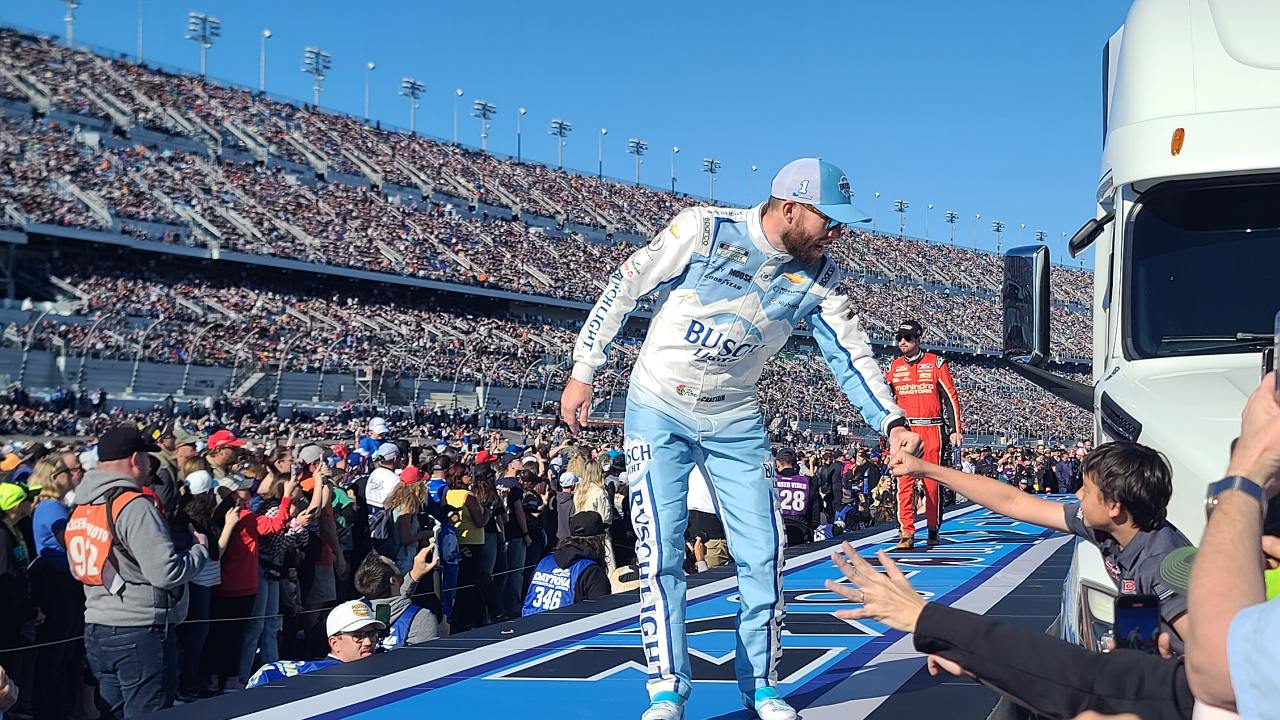
The scale of the reaction only became clear to Chase Briscoe when he walked into NASCAR’s official media day. He later described how Everybody at NASCAR events kept trying to work out whether he had actually shaved his head or whether the viral image was artificial. That uncertainty followed him from room to room, with reporters, photographers, and team personnel all trying to reconcile the online photo with the real person standing in front of them.
Briscoe leaned into the absurdity, joking that the AI version of himself had effectively beaten him to media day. His comments made it clear that he understood why people were confused, because the image had been framed like a legitimate headshot rather than a clearly labeled edit. By recounting how often he was asked to confirm his hair status, he effectively acknowledged that the stunt had crossed from harmless fun into a small identity crisis, at least for a day, inside the sport’s traveling circus.
From Facebook glimpses to a full-blown frenzy
The AI stunt did not happen in a vacuum. In the days around the first production sessions for 2026, Chase Briscoe was already sharing glimpses of his new season on social platforms. On Facebook, through a page associated with Sportskeeda NASCAR, Photos from that initial production day showed Briscoe in fresh gear and settings, signaling that the content pipeline for the year was officially open. That context made the bald image feel even more plausible, because fans were primed to expect new visuals and updated looks from the driver.
Once the AI headshot began circulating alongside legitimate production-day material, it blended into the stream of official imagery. The same feeds that carried real behind-the-scenes shots of Briscoe at work also carried the altered version of his face, and the distinction was not always obvious. In that environment, the line between authentic and synthetic content became blurred, and the joke escalated into a broader conversation about how easily AI can slip into the everyday media diet of NASCAR followers without clear labeling or warning.
NASCAR’s uneasy moment with AI, from FOX ads to driver memes
Briscoe’s experience landed at a time when NASCAR fans were already wary of artificial intelligence creeping into their sport. Earlier in the month, FOX unveiled a Daytona 500 commercial that leaned heavily on AI-generated elements during an NFL broadcast, and the reaction from viewers was overwhelmingly negative. Many fans criticized the spot for feeling artificial and disconnected from the gritty, mechanical reality that they associate with the Daytona 500, turning what was intended as a cutting-edge promotion into a cautionary tale about overusing technology.
Against that backdrop, an AI-altered image of a prominent driver was always going to be scrutinized more closely. The FOX Daytona 500 ad had already primed the audience to question whether AI belonged anywhere near the core storytelling of the sport. Briscoe’s bald portrait, even as a joke, became another data point in a growing pattern of skepticism. It highlighted how quickly AI can shift from a novelty to a source of distrust, especially in a fan base that values authenticity and has just watched a major broadcaster misjudge the mood around artificial imagery.
Brand building, new sponsors, and the risk of digital misfires
For Chase Briscoe, the AI stunt intersected directly with a pivotal moment in his commercial profile. Joe Gibbs Racing had recently announced a multi-year partnership with Free Bird Southern Spring Water, a rapidly growing Southern Spring Water brand that will appear on his No. 19 car in a three-race primary sponsorship package. The NEWS of that deal, shared through JGR channels and later detailed in a Story about Free Bird Southern Spring Water, positioned Briscoe as a key face for a company trying to break through in a crowded beverage market.
In that context, every image of Briscoe carries more weight, because it is not just about his personal identity but also about how a sponsor’s investment is presented to the public. A viral AI photo that changes his appearance can cut both ways: it shows that his likeness is powerful enough to drive conversation, but it also introduces an element of unpredictability that brands may find unsettling. When a sponsor is paying to be associated with a recognizable driver, the prospect of that driver’s image being reshaped by AI, even in jest, underscores why companies and teams are starting to think more carefully about how digital content is created and shared.
More from Fast Lane Only