Tesla has quietly crossed a line that rivals and regulators have spent years circling. In Austin, the company is now ferrying paying passengers in robotaxis that have no human safety driver in the front seat, a shift from supervised testing to what amounts to a live commercial experiment on public streets. The rollout, framed by Tesla as a controlled pilot, is already raising questions about transparency, safety oversight, and how far ahead of regulators the company is prepared to drive.
Behind the scenes, the move also signals a strategic pivot. Tesla is leaning harder into software and services at a moment when its traditional vehicle sales have come under pressure, betting that a network of automated rides can both validate its Full Self-Driving ambitions and unlock a new revenue stream in Austin before expanding across the United States.
The quiet debut of a driverless fleet
The shift in Austin did not arrive with a splashy consumer launch so much as a subtle change in what riders encountered when they opened the Tesla app. Earlier robotaxi trials in the city relied on safety monitors in the front seat, but Tesla has now begun offering public rides in which the front row is empty and the vehicle handles the trip on its own. Reporting on the pilot notes that the first unsupervised rides began on Jan. 22 in Austin, with Tesla describing this as the start of a broader robotaxi program that will gradually increase the share of cars operating without in-car oversight.
Although the vehicles are marketed as fully driverless, the company has not removed human supervision entirely. Some accounts describe a mixed fleet in which a limited number of unsupervised cars operate alongside robotaxis that still have safety monitors, while other reports highlight that Tesla has shifted certain monitoring functions to a trailing car rather than the front seat of the taxi itself. That arrangement allows Tesla to claim that passengers are riding without a safety driver, even as the company maintains a human presence nearby to observe and, if necessary, intervene from another vehicle.
Inside Tesla’s “no safety monitor” claim
The phrase “no safety monitor” has become central to Tesla’s messaging in Austin, but the reality is more nuanced than a simple on or off switch. Company representatives have said that the first public robotaxi rides are operating without safety monitors in the vehicle, and that the ratio of unsupervised cars will rise over time as the system gathers more data. At the same time, detailed accounts of the program indicate that Tesla did not eliminate human oversight altogether, instead relocating staff to follow behind in separate cars that shadow the driverless vehicles through city streets.
This structure allows Tesla to present the Austin pilot as a bold step into unsupervised autonomy while still preserving a layer of human backup that is invisible to riders. One analysis of the rollout notes that Tesla “didn’t remove the Robotaxi ‘safety monitor’” but moved that role into a trailing car, a configuration that keeps the front seat empty yet maintains a trained observer within line of sight. For passengers, the experience is that of a car with no one at the wheel. For Tesla, the presence of a chase vehicle offers a measure of risk management during the earliest phase of the program.
Elon Musk’s national robotaxi ambitions
For Tesla CEO Elon Musk, the Austin pilot is not an isolated experiment but a proof point in a much larger narrative. Musk has told investors and the public that Tesla will have a “widespread” network of driverless robotaxis across the United States by the end of this year, and he has framed the unsupervised rides in Austin as evidence that the company’s aggressive timeline is achievable. Earlier statements from Musk indicated that Austin would be an early test bed, with a small number of robotaxis deployed first and then scaled up as performance improved.
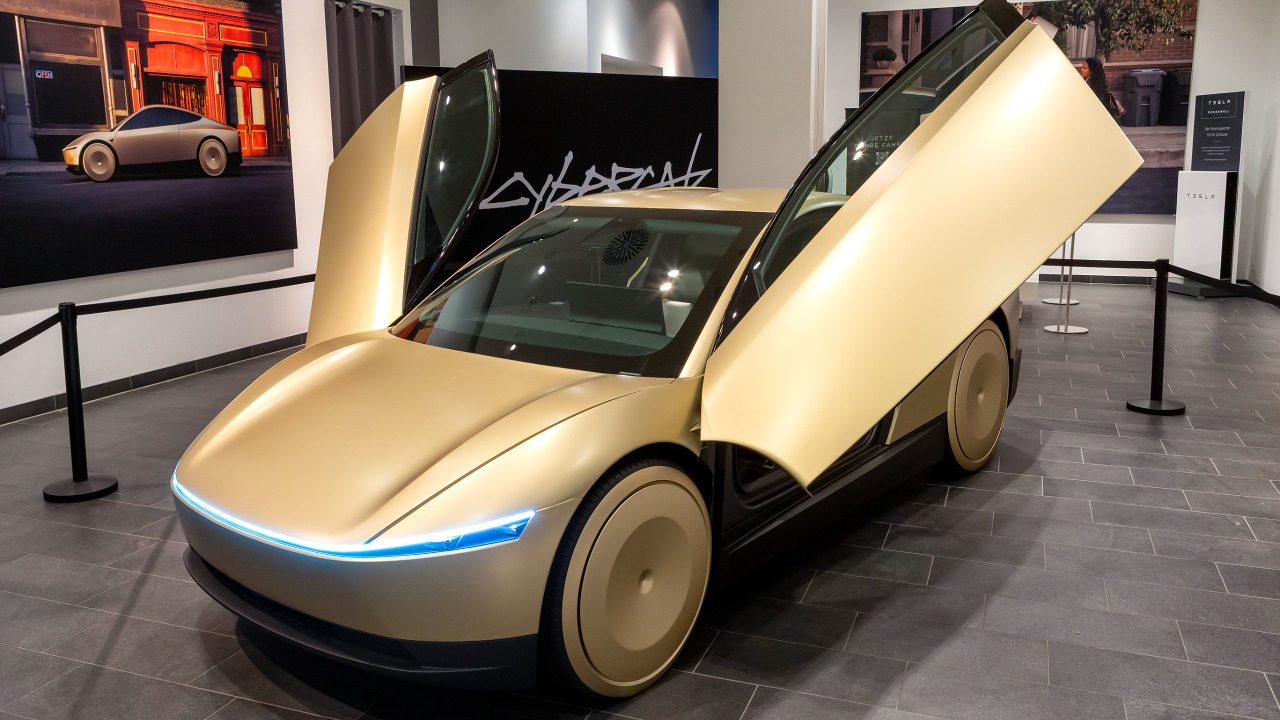
The company’s dedicated Cybercab Robotaxi, which Musk has promoted as a purpose-built autonomous vehicle, is expected to follow an “S-curve” production ramp in which initial output is slow before accelerating. Musk has said that the speed of that ramp is inversely related to the number of new technologies introduced at once, a hint that Tesla may be trying to limit hardware complexity while relying heavily on software updates to refine behavior. For investors, the Austin launch is being interpreted as validation of Musk’s long standing promise that autonomy will transform Tesla from a carmaker into a platform for transportation services.
Safety questions and unpredictable behavior
As soon as the first fully driverless rides began, Austin residents started sharing their experiences, and not all of them were reassuring. Posts from early riders describe robotaxis that handled routine segments of trips smoothly but occasionally behaved in ways that felt unpredictable, such as abrupt braking or hesitation at complex intersections. A detailed account of the pilot program notes that multiple public test rides have already sparked concern, with observers pointing to erratic maneuvers as evidence that the system is still learning how to navigate the city’s varied traffic patterns.
These reports land in a broader context in which Tesla’s automated driving features have been scrutinized for their real world safety record. Analysts following the Austin rollout argue that the company will need to publish clear safety statistics if it wants to support its claim that unsupervised operation is safer than human driving. Some investor focused commentary has suggested that the market’s positive reaction to the robotaxi milestone is justified only if future data show that the system’s performance in Austin, measured in collisions and disengagements, meaningfully outperforms human drivers under similar conditions.
Regulatory, competitive, and local stakes in Austin
The Austin deployment also functions as a live test of how regulators and local communities will respond to a robotaxi service that appears to be out in front of formal rulemaking. While Tesla has secured the necessary permissions to operate its vehicles on public roads, the decision to remove in car safety drivers for paying passengers pushes into territory that many policymakers expected to reach only after more extensive supervised testing. One report on the broader regulatory landscape notes that Musk is simultaneously seeking approvals for Tesla’s Full Self-Driving system in Europe and China, suggesting that the company views Austin as a showcase for international regulators as much as a local pilot.
Within Austin itself, the robotaxi rollout is unfolding in a city that has already become a hub for Tesla’s manufacturing and engineering operations. The company’s decision to start unsupervised rides there reflects both logistical convenience and a desire to demonstrate autonomy in a market that is closely associated with its brand. At the same time, local reaction is being shaped by the visibility of the cars on city streets, the presence of trailing safety vehicles, and the degree to which residents feel informed about how the system works. As more Austinites encounter driverless Teslas in daily traffic, the balance between curiosity, skepticism, and acceptance will help determine whether the company’s quiet experiment can scale into the nationwide network that Elon Musk has promised.
More from Fast Lane Only