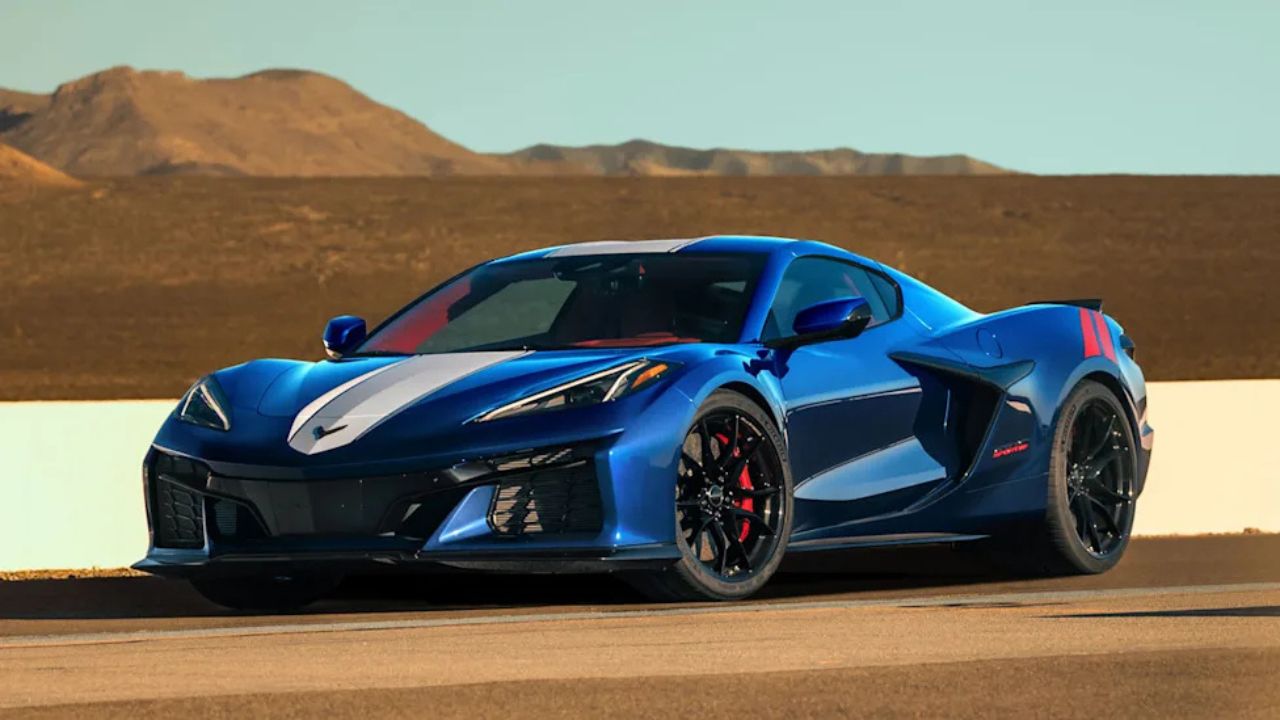
Chevrolet is quietly preparing the next chapter of the Corvette performance ladder, with new Grand Sport and Grand Sport X variants expected to slot between the standard Stingray and the track-focused Z06 in the 2027 model year. These models are shaping up as the bridge between traditional V8 power and the hybrid experimentation already seen in the E-Ray, while also capitalizing on an interior and tech refresh arriving earlier in the decade.
Key updates shaping the 2027 Corvette Grand Sport lineup
The groundwork for the 2027 Grand Sport family starts with changes already confirmed for the current C8 generation. Chevrolet is rolling out a cabin update for the 2026 Corvette that revises materials, trim choices, and the user interface, with reporting pointing to a more upscale look and improved switchgear in the driver-centric cockpit. The refreshed layout is expected to carry directly into the Grand Sport models that follow, so the new variants will not inherit the earliest C8 interior but a more mature evolution of it. That continuity matters because it allows Chevrolet to focus engineering resources on performance tuning rather than basic packaging.
Alongside the interior work, the broader C8 range is expected to keep its staggered performance hierarchy. The Stingray continues to serve as the accessible entry point, the Z06 focuses on naturally aspirated track performance, and the E-Ray blends V8 power with electric assistance for all-wheel-drive traction. The 2027 Grand Sport and Grand Sport X are set to sit in the middle of that structure, likely using a version of the familiar V8 architecture but with chassis and aero tuning that pulls lessons from the Z06 and E-Ray without matching their price or extremity. The strategy mirrors how previous Grand Sport models paired wide-body hardware with more attainable power outputs.
Chevrolet is also using the interior refresh to address long-running criticisms of the C8 cabin. Reports on the 2026 update describe a more cohesive design, with revised trim pieces and improved perceived quality compared with the early cars, as well as updates to the digital displays and infotainment interface that bring the system closer to the latest GM software standards. Those changes, outlined in coverage of the 2026 Corvette, are expected to become the baseline specification for the Grand Sport variants, which positions them as more than just performance packages.
The Grand Sport X label signals a further step beyond the standard Grand Sport, likely focused on track-day customers who want more serious hardware without committing to the full Z06 or ZR1 experience. In practice, that could mean more aggressive suspension tuning, stickier tires, and additional cooling capacity, again using existing C8 components where possible to control costs. By stacking the range this way, Chevrolet can create multiple price and performance rungs that keep the Corvette family in front of shoppers who might otherwise drift toward European or Japanese rivals.
Why new Corvette Grand Sport variants matter in the current market
The timing of these models is not accidental. By the middle of the decade, the sports car market is split between traditional internal combustion flagships and an emerging wave of electrified performance coupes and sedans. Chevrolet already signaled its willingness to experiment with the E-Ray, which pairs the LT2 V8 with an electric front axle, but it also knows that a large share of Corvette buyers still want a relatively simple, rear-drive V8 layout. The Grand Sport and Grand Sport X are positioned to capture that audience while still benefiting from the chassis lessons learned on the hybrid car.
Pricing pressure is another factor. As the Z06 and any future higher-spec variants climb in cost due to their exotic engines and low-volume hardware, Chevrolet needs a performance model that feels special but remains reachable for customers moving up from a Stingray. Historically, the Grand Sport badge has filled that role by offering wide-body stance, upgraded brakes, and track-ready suspension without the expense of a bespoke powerplant. Applying that logic to the C8 generation lets Chevrolet spread development costs across a broader range of trims while giving dealers a clear step-up story.
The refreshed interior also plays into a wider competitive narrative. Premium rivals are leaning heavily on cabin quality and digital features to justify their prices, and early criticism of the C8 often pointed to its button-heavy center stack and mixed material choices. By the time the 2027 Grand Sport arrives, the Corvette cockpit will have evolved, with the 2026 update delivering a more cohesive design and improved touch points. As a result, the Grand Sport family will not feel like a mid-cycle afterthought but instead like a fully integrated part of the updated range.
There is also a brand heritage angle. The Grand Sport name carries decades of Corvette history, associated with track-oriented models that stop short of full race homologation. Reviving the badge in the C8 era reinforces the idea that Corvette remains a performance car first, even as GM invests heavily in electric platforms elsewhere in its lineup. For buyers skeptical of a future all-electric Corvette, a 2027 Grand Sport that leans into naturally aspirated power and analog driving feel becomes a reassuring statement about where the car still stands.
Finally, the split between Grand Sport and Grand Sport X suggests Chevrolet is thinking carefully about how enthusiasts actually use these cars. A standard Grand Sport can be tuned for fast road driving and occasional track days, with comfort and usability kept intact. The X variant can then push further toward lap-time performance, potentially with more aggressive aero and fewer comfort concessions. That two-pronged approach mirrors how European brands separate their performance trims and gives Corvette owners clearer choices without fragmenting the lineup with too many unique badges.
How the Corvette performance ladder could evolve after 2027
The arrival of the Grand Sport duo in 2027 will not be the end of the C8 story. Instead, it is likely to mark the beginning of a more layered performance ladder that can adapt as regulations, technology, and buyer expectations shift. With the interior and infotainment package already refreshed for 2026, Chevrolet can focus its engineering budget on powertrain and chassis experiments, including further hybridization or even limited-run track specials that borrow from Corvette Racing programs.
One plausible path involves the Grand Sport X serving as a testbed for future hardware that could later appear on even higher trims. If Chevrolet refines active aero components or next-generation magnetic ride calibration on the X, those learnings can migrate upward into a more extreme model while keeping the Grand Sport itself relatively accessible. That approach allows GM to spread R&D costs across multiple variants and reduce the risk of betting everything on a single halo car.
The broader GM portfolio will also influence what happens after 2027. As the company rolls out more Ultium-based electric models, pressure will grow to showcase that technology in a flagship performance context. The E-Ray already blends electrification with the traditional Corvette formula, but a future all-electric sports car would need to coexist with, or eventually replace, the current V8-powered range. In that scenario, the Grand Sport and Grand Sport X could become the last fully combustion-focused performance trims before a more radical shift, which would only increase their appeal to collectors.
Dealer strategy and production planning will matter too. By offering multiple mid-tier performance variants, Chevrolet can smooth demand spikes that might otherwise concentrate on a single high-demand model like the Z06. If supply constraints or regulatory changes tighten availability of certain engines or components, the company can emphasize Grand Sport production to keep showroom traffic healthy. That flexibility is particularly valuable as global markets adopt differing emissions and noise standards that can affect high-output powertrains.
More from Fast Lane Only
- Unboxing the WWII Jeep in a Crate
- 15 rare Chevys collectors are quietly buying
- 10 underrated V8s still worth hunting down
- Police notice this before you even roll window down
*Research for this article included AI assistance, with all final content reviewed by human editors.