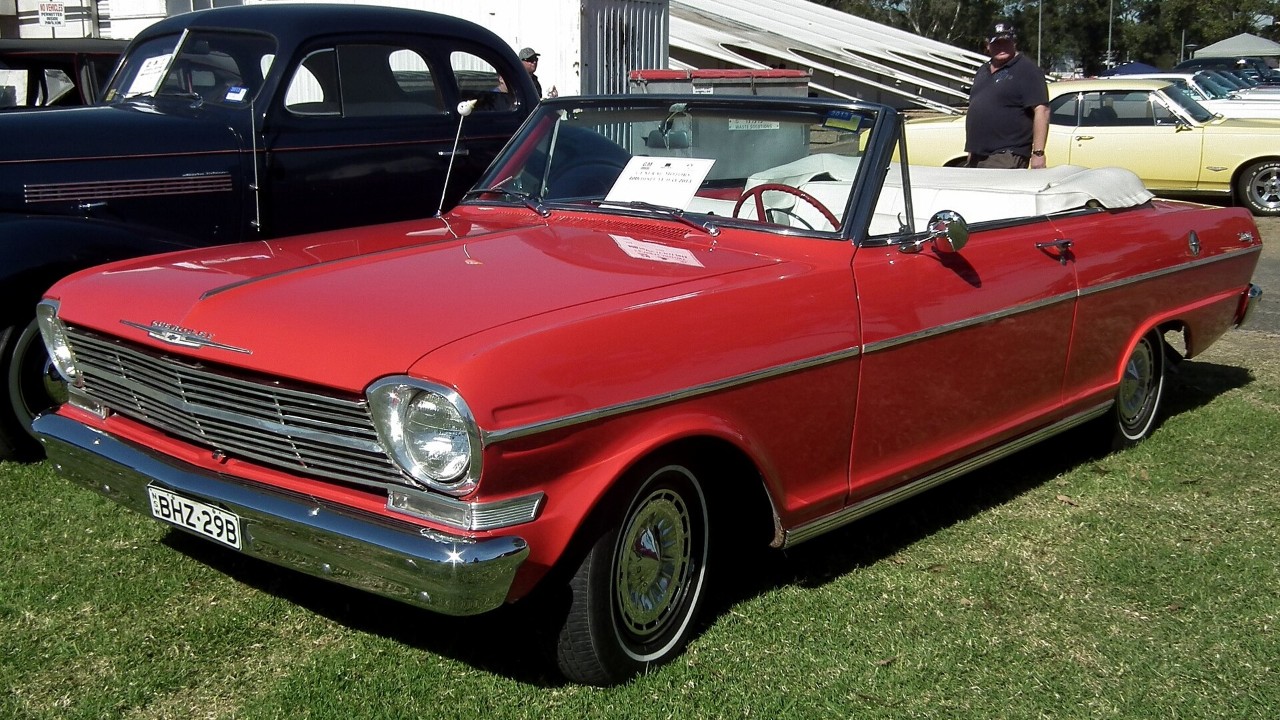
Chevrolet introduced the Chevy II Nova on September 29, 1961, as a 1962 model, and it gave the company a simple, honest compact. Production had started a month earlier at Willow Run. Over the following years, that plain little car grew into a Super Sport, a dealer-built street fighter and a long-running family sedan.
Most Nova lists chase the same few big-block coupes. However, the Nova story is wider than that. Some of the best cars in this family are base models, sedans and late Super Sports that most people walked past at the time.
These are our picks for the Novas we’d keep in the garage for good. The verdict is our opinion. Still, every year, engine and number below comes from period records and current auction and museum sources, so you can see why each one earned its spot.
1. 1962 Chevy II Nova 400 convertible
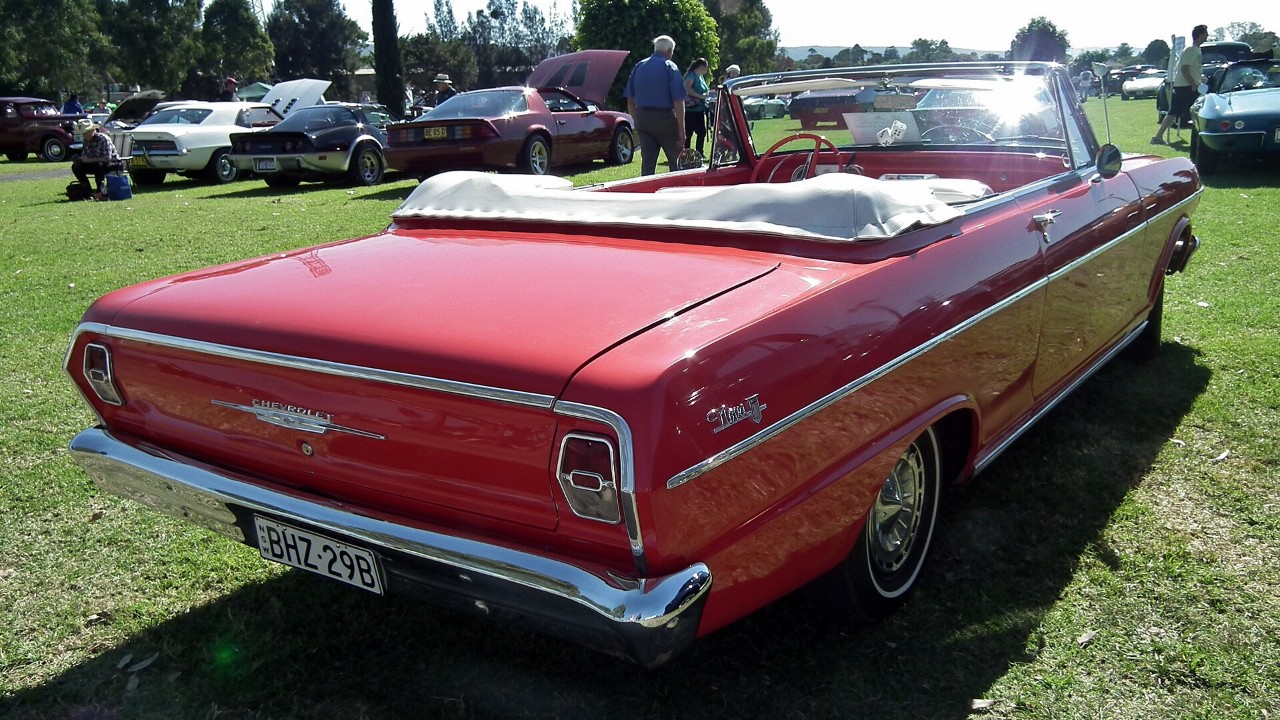
The first-year Nova 400 convertible was the top of a short ladder. Chevrolet sold the new compact in 100, 300 and Nova 400 series, and only the 400 came with a soft top. It listed at $2,475, and Chevrolet built 23,741 of them that year. Power came from a 153-cubic-inch four or a 194-cubic-inch six, both mounted on a 110-inch wheelbase. A 200 series was planned too, but Chevrolet dropped it almost at once.
Its design was kept basic on purpose. According to Hagerty’s look at the 1962–67 cars, designer Clare MacKichan said the tight schedule left no time for experiments. Hagerty also notes that the Nova name was first passed over because it didn’t start with a “C.” Chevrolet even skipped a utility coupe so the car would not step on the El Camino.
Our take: this is the purest Nova there is. In fact, it is a sunny-day car with a six-cylinder and almost nothing to go wrong. If you want one, we’d look for the six, because it suits the car’s easygoing nature. We’d never sell one, because it captures the car exactly as Chevrolet first imagined it.
2. 1964 Chevy II Nova Super Sport
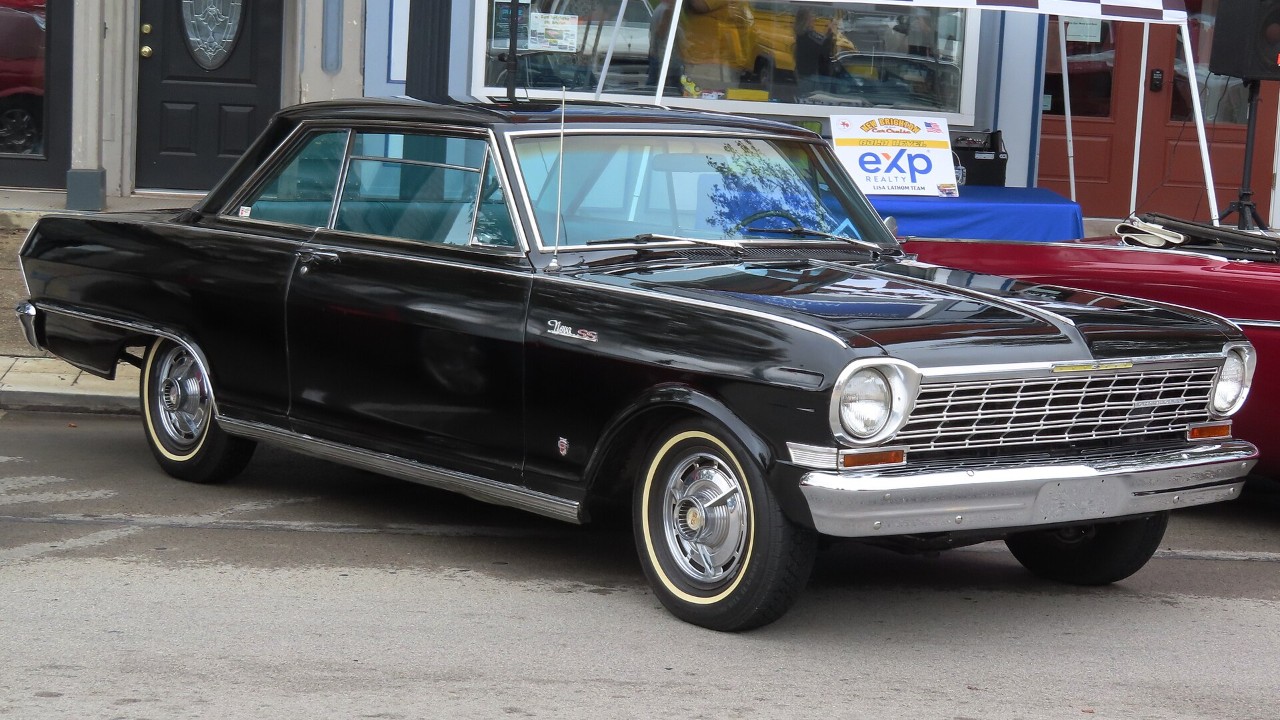
The Super Sport package arrived for 1963 under RPO Z03, and it cost $161.40. At first, it came only on the 400-series sport coupe and convertible. That made the SS a dress-up and comfort package more than a muscle car, because the standard engine was a six. In fact, Chevrolet did not officially offer a V8 in the Chevy II that first SS year.
Then 1964 changed the mood. That year, the Chevy II received its first factory V8, a 283-cubic-inch engine rated at 195 horsepower. Chevrolet also added a new 230-cubic-inch six. Suddenly, the small, light Nova could carry a small-block, and the hot-rod crowd took note.
We love the 1964 car for that reason. It sits right on the line between economy compact and street car. If you find one with the 283, you own the first factory-built V8 Nova, a car that pointed straight at everything the badge became. For more on why the SS name later went quiet, read the little-known reason the Chevrolet Nova SS disappeared for decades. Our verdict: a keeper, especially in a clean sport coupe body like the one shown here.
3. 1966 Chevy II Nova SS
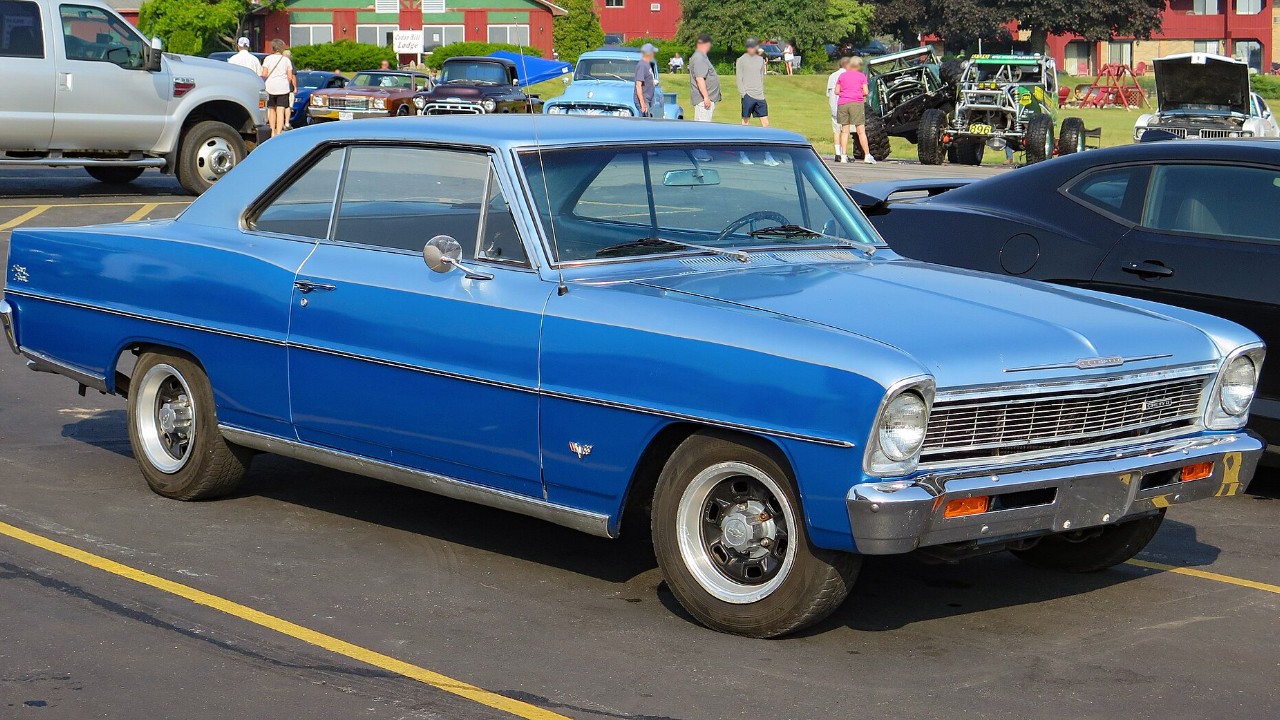
For 1966, Chevrolet redrew the Nova with a new grille and a fastback roofline. The SS was sold only as a Sport Coupe that year, and it cost $159 more than a Nova 400. Surprisingly, the standard SS engine was still the 194-cubic-inch six. This body also had a short life, since a full redesign arrived for 1968.
The option sheet told a different story. Buyers could check a 275-horsepower 327 V8, or the 350-horsepower Turbo-Fire 327. Hagerty calls the 350-horse car the most valuable of the early Novas. In 2019, it put the average 327/350 SS at $54,400 in good condition, with concours cars at $126,000.
Our take: the 1966 SS is the moment the compact became a sleeper. Its body is clean and square, with little chrome to hide behind. Meanwhile, the hot 327 gave it real speed without a big-block’s weight. For a ranked look at other generations, see 8 Novas we’d quietly rank among the best. We’d keep a 1966 SS forever, even with the six, because the shape alone is worth the garage space.
4. 1967 Chevy II 100
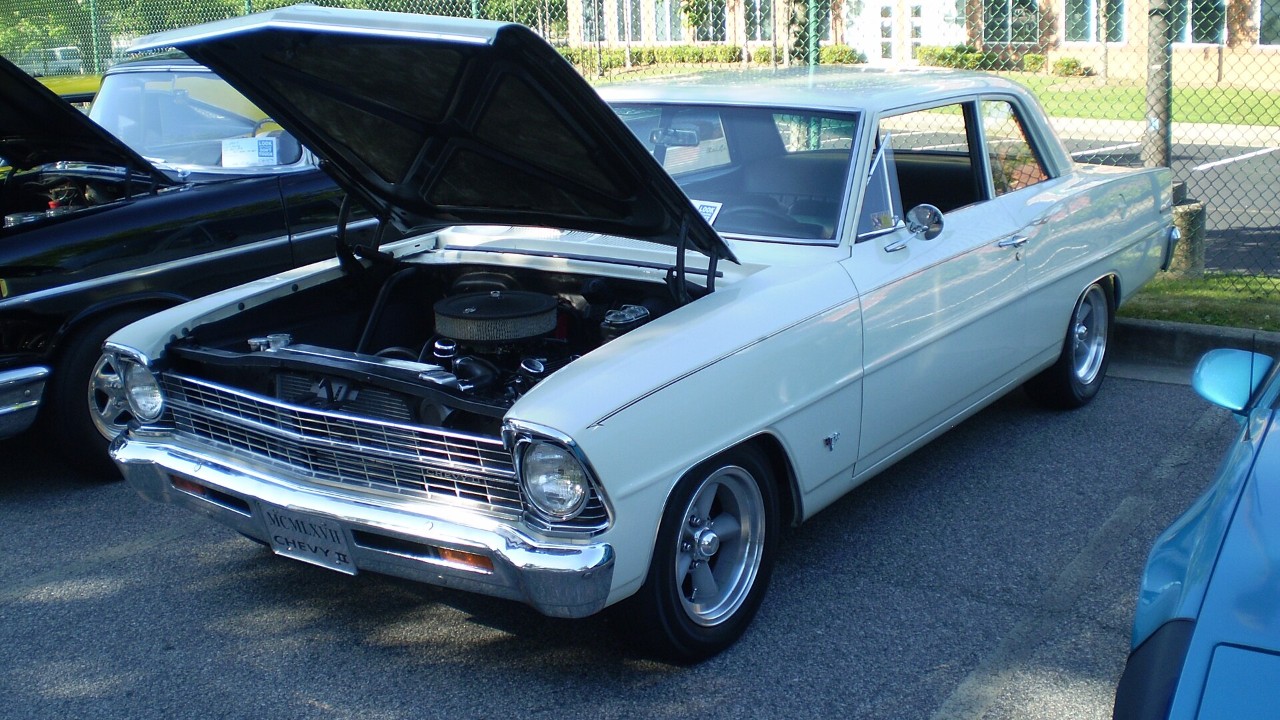
Here is the Nova family’s plainest member. The Chevy II 100 was the base series, and it carried very little trim or brightwork. By 1967, the Nova had outsold it. Yet the 100 kept one quirk all to itself: the 153-cubic-inch four, rated at 90 horsepower, came only in the base 100 series.
That makes the 100 a lesson in how compact cars were sold. Chevrolet built 106,500 Chevy IIs in 1967, including 12,900 wagons. Of those, only about 10,100 were Super Sports. So most cars that year were plain sedans and wagons, bought to save money. By comparison, a 275-horsepower 327 cost just $93 more than the 195-horsepower 283 on a 1967 SS. That shows how wide the gap was between the slowest and fastest Chevy II.
In our view, that is why a clean 100 is worth saving. Collectors tend to chase the SS badge instead. As a result, a stock 100 with its original drivetrain shows the kind of Chevy II that most buyers brought home in 1967. It is simple, light and honest, and that is exactly why we’d hold on to one.
5. 1970 Chevrolet Yenko Nova
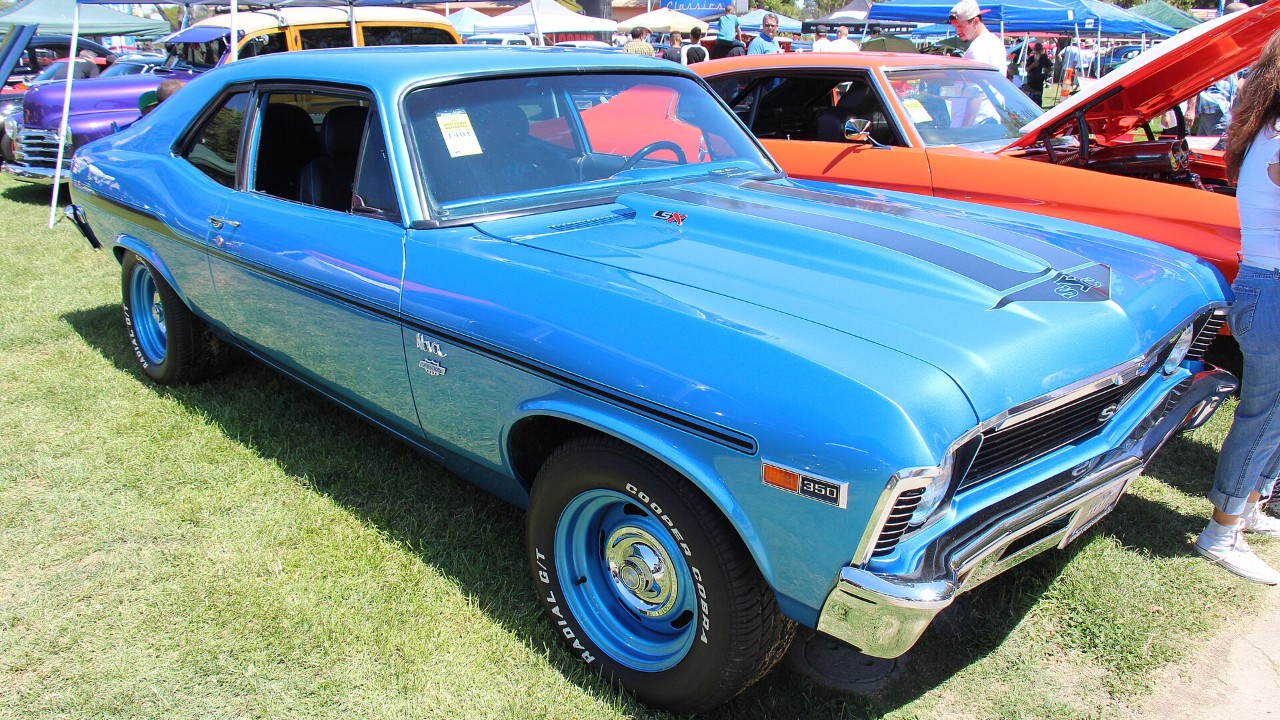
Don Yenko’s 1970 Nova took a smarter route than his big-block cars. He expected insurers to punish large engines. So he persuaded Chevrolet to build his Novas with the LT1 350 small-block from the Z28 Camaro and Corvette. The Audrain Automobile Museum lists that engine at 360 horsepower.
Yenko called the car the “Deuce,” a nod to the Beach Boys’ 1963 hit “Little Deuce Coupe.” According to the museum, Yenko produced 175 of them, and 122 had a four-speed manual. Buyers could also pick a Turbo-Hydramatic 400 automatic. A 12-bolt Positraction axle sat out back. Earlier, Yenko had also built the big-block 427 Supernova, and only 37 of those were made.
Today, the Deuce is a serious collector car. For example, RM Sotheby’s sold one from the Ron and Sarah Jury collection for $126,500. Our take: the Deuce is the best-judged dealer special of its era. It made big power from a small-block, and it shows how Yenko read the market. For more on the dealer behind it, see this rare Chevrolet Yenko Nova. We’d never let one go.
6. 1974 Chevrolet Nova Custom sedan
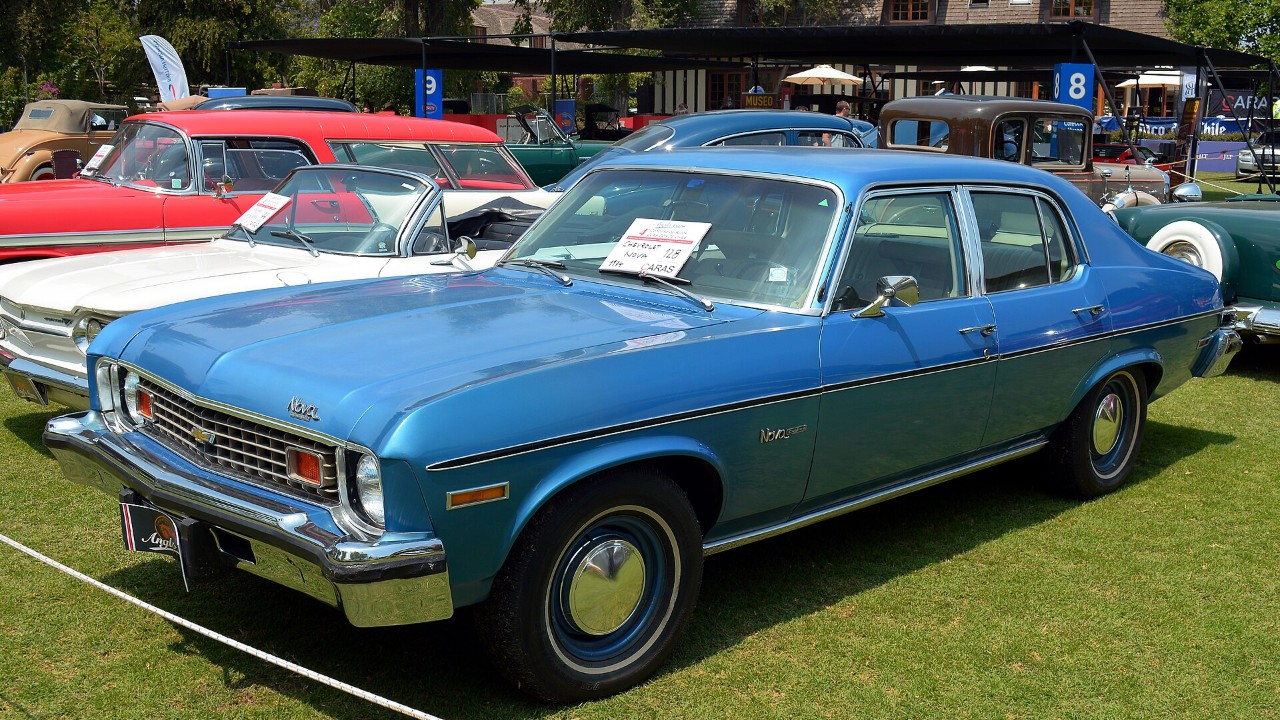
By 1974, the Nova had become one of Chevrolet’s busiest cars. Production reached 390,537 that year, and prices ran from $2,810 to $3,105. The Custom trim sat above the base car, so it brought extra comfort to an everyday sedan.
Underneath, 1974 brought real changes. First, the old Powerglide automatic gave way to a lighter Turbo Hydra-Matic 250. Next, the 350 became the only V8 on the list. Finally, the rear bumper was rated for 5-mph impacts, matching the front bumper Chevrolet had added for 1973. The 1973 update had also brought a larger 21-gallon fuel tank and a new hatchback body.
Most enthusiasts skip these cars, and that’s a mistake in our view. A 1974 Custom sedan with the 350 and the newer automatic is an easy classic to live with. It has four doors for friends and a smoother automatic. Above all, it reflects the Nova that buyers chose in huge numbers in the 1970s. We’d keep this one as a daily-driver classic and never feel short-changed. If you shop for one, the 350 with the new automatic is the pairing we’d look for.
7. 1976 Chevrolet Nova SS
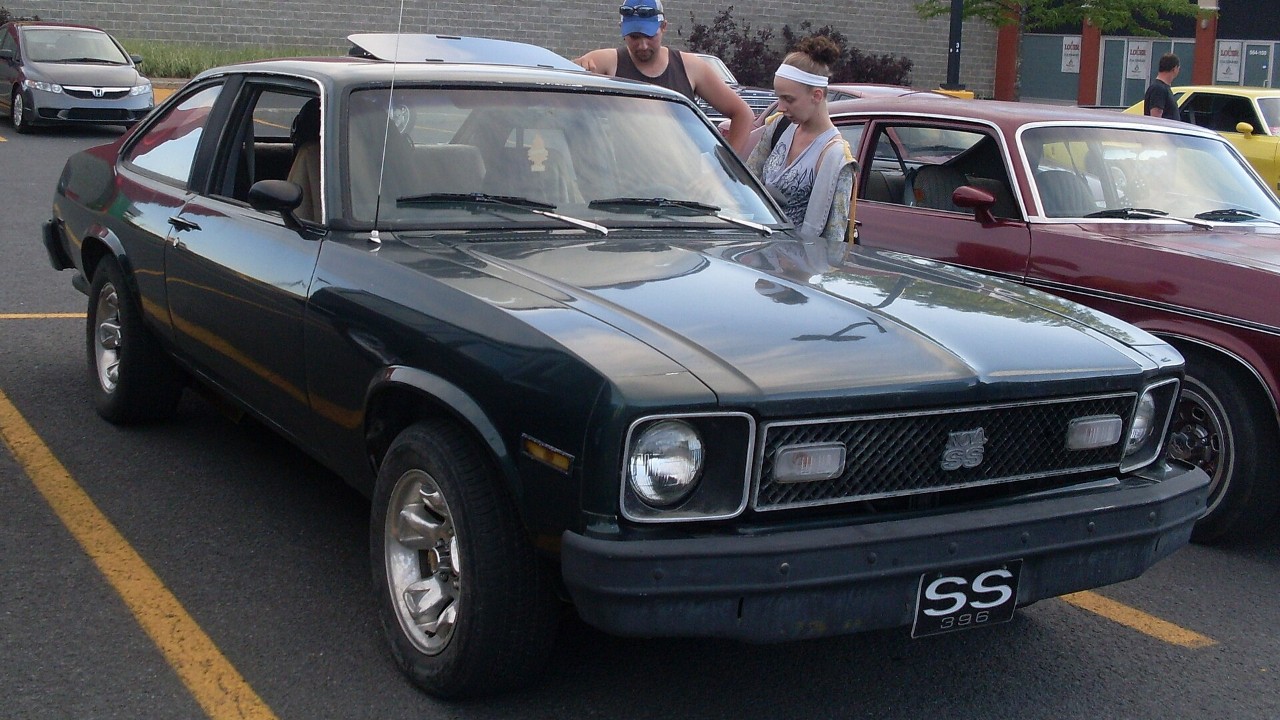
The 1975 Nova wore all-new sheet metal on the same 111-inch wheelbase. It also gained standard front disc brakes and steel-belted radial tires. As a result, the mid-1970s Nova stopped better than many of the older cars on this list.
The 1976 SS was an option group that cost $187. It added a black diamond-mesh grille, Rally wheels, a four-spoke steering wheel and heavy-duty suspension. Engine choices that year started with a 105-horsepower 250 six. Buyers could step up to a 140-horsepower 305 or a 165-horsepower 350 V8. Also that year, the LN package became the Concours, and a V8 Concours coupe cost $547 more than a comparable base Nova.
Those outputs look small next to the Deuce. Even so, the 1976 SS has a charm of its own. Our take: a 350-equipped 1976 SS is a fun, honest driver with better brakes than the early cars. We’d keep it as a closing chapter of the Nova Super Sport story. If you find one, make sure the SS parts are real, because the package was mostly trim and suspension. Chevrolet offered the package for 1975 and 1976 and then dropped it.
More from Fast Lane Only