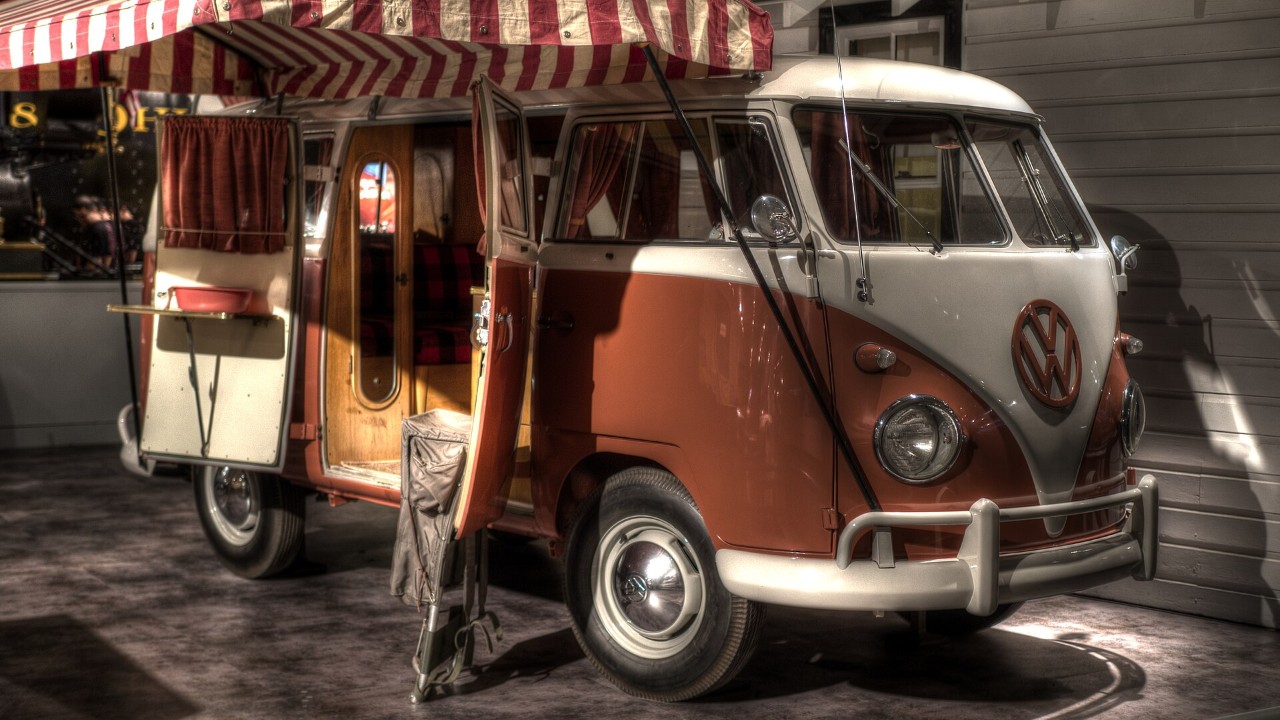
The camper van grew out of a simple idea: put a bed, a table and a sink inside a box on wheels. From the 1950s to the 1990s, Volkswagen, Ford, Chevrolet and Dodge all built boxes worth hanging on to.
These seven earned their keep with clever packaging, tough drivetrains or room to live in. Each one comes with a sourced detail you can repeat at the next campground.
1. 1962 Volkswagen Type 2 Westfalia camper van
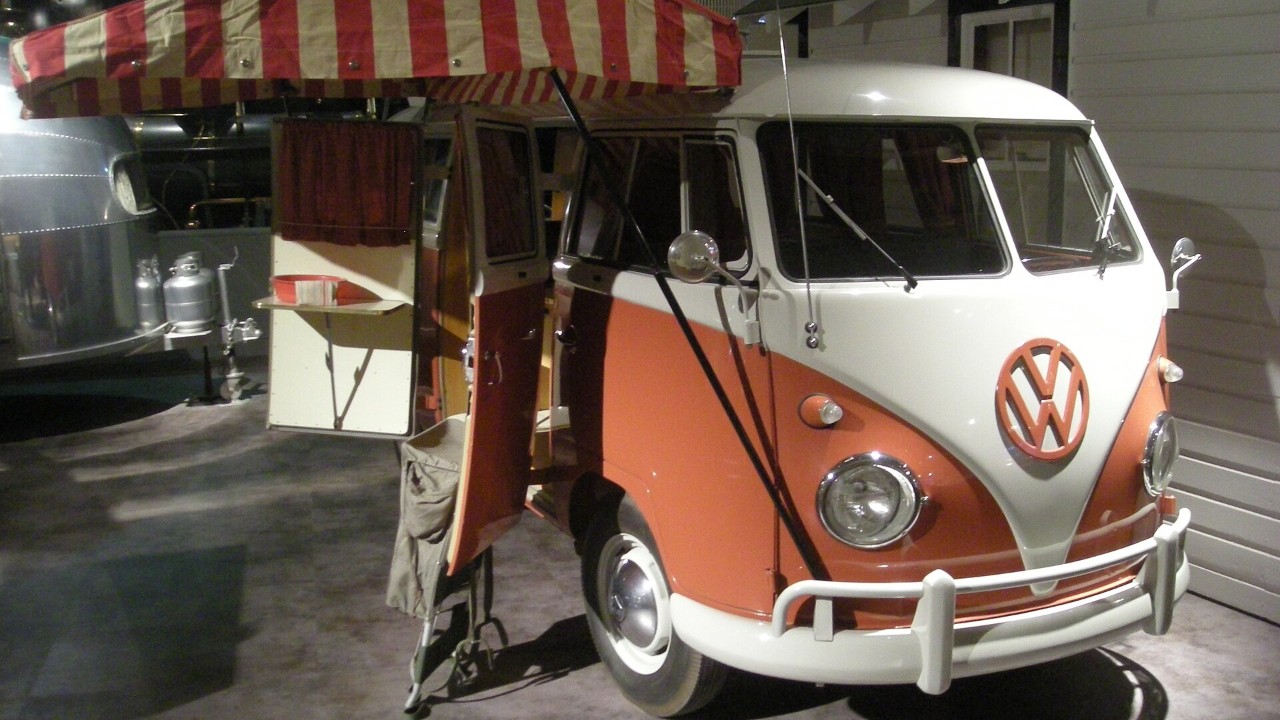
Volkswagen’s Type 2 followed the Beetle closely and shared many of its parts. Westfalia, a firm named for the Westphalia region of western Germany, began converting VW vans in 1951. In the early days, it turned out only a few hundred campers a year.
A conversion could include beds, curtains, seats and tables, says Silodrome’s look at a 1962 Westfalia. Some also got an ice box and a sink with running water. Buyers could also add a toilet, a stove, a refrigerator, an awning, a pop-top or even a baby’s cot fitted to the driver’s seat. Later, Volkswagen sold Westfalia campers through its own dealers around the world.
2. 1961–1967 Ford Econoline
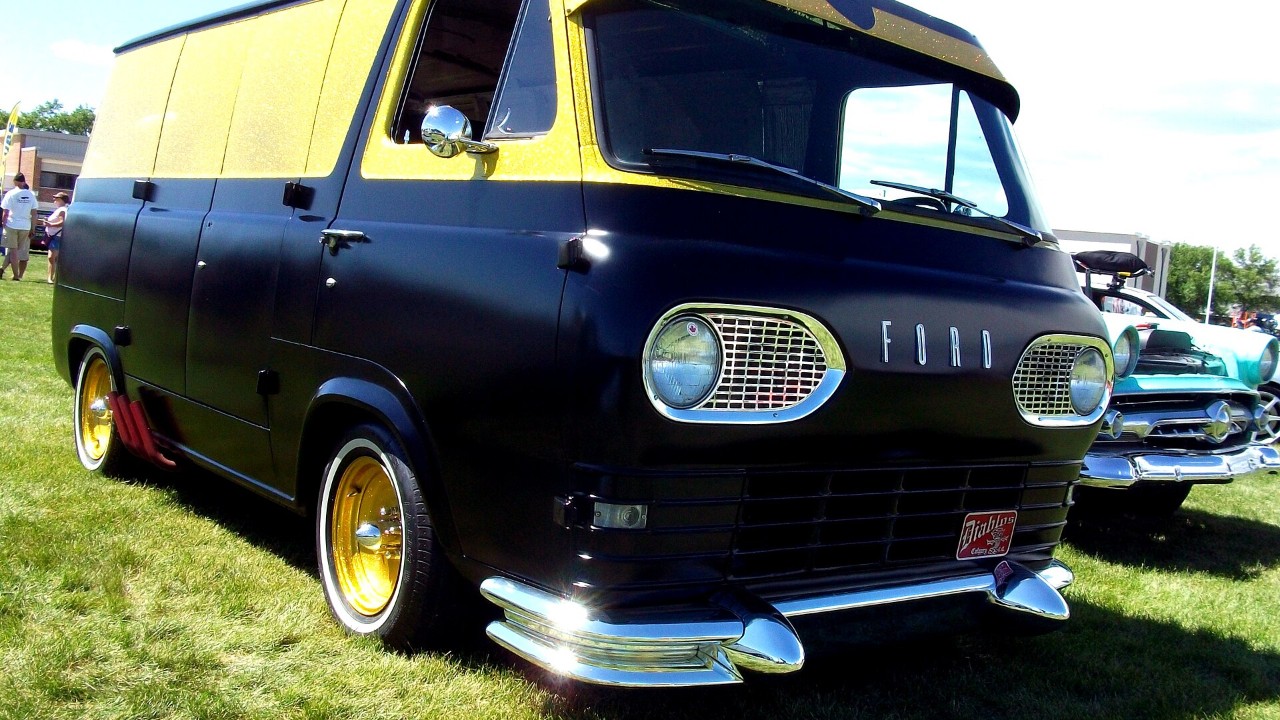
Ford’s first Econoline was close to a cube. It measured about 14 feet long and just over six feet wide and tall. Even so, the passenger versions held three rows of seats for eight people.
Under the skin it used Falcon parts, says Mac’s Motor City Garage. The base 144-cubic-inch six made 85 hp inside a sheet-metal box beside the driver. Buyers could order the 240 “Big Six” starting in 1965. That same year, the Supervan added 18 inches of cargo box on the same 90-inch wheelbase. In all, Ford built roughly 552,000 first-generation vans before a larger Econoline arrived for 1968.
3. 1961–1965 Chevrolet Corvair Greenbrier
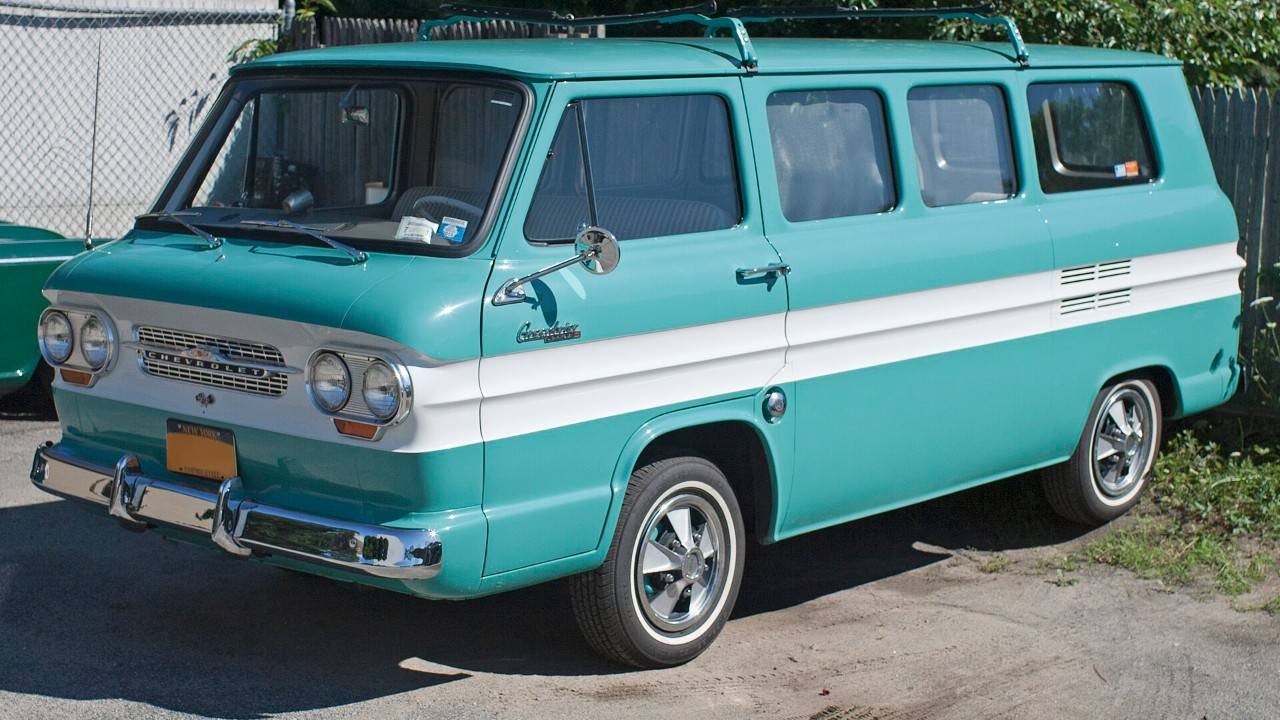
Chevrolet aimed the Greenbrier squarely at the Volkswagen Microbus. GM’s research found that VW buyers wanted more room in a small footprint. They also complained about weak power and the lack of an automatic.
So Chevrolet answered both complaints, according to Chevy Hardcore. The Greenbrier carried a rear-mounted, air-cooled Turbo-Air flat-six of 2.4 or 2.7 liters, rated at 80 to 110 horsepower depending on the engine. Buyers could also pick a two-speed Powerglide automatic or a three- or four-speed manual. GM advertised it as “the most versatile van in the world.” After 1965, however, Chevrolet dropped its rear-engine vans.
4. 1964–1970 Dodge A100
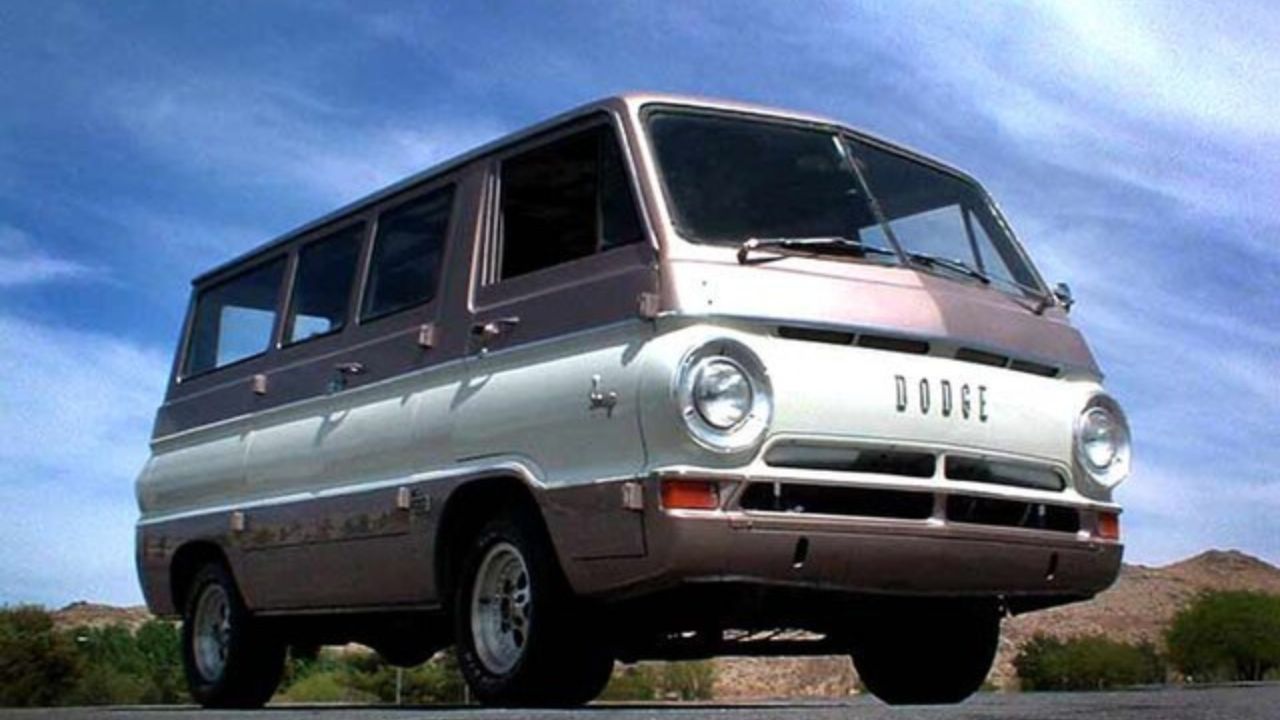
Chrysler developed the A100 to fight the Volkswagen Type 2, the Ford Econoline and both Chevrolet vans. It even borrowed the VW’s split windshield. The engine sat between the driver and the passenger inside a steel unibody.
The choices ran wide, according to Silodrome’s A100 profile. Engines ranged from a 2.8-liter slant-six with 101 bhp through 3.2- and 3.7-liter sixes to a 5.2-liter V8 with 210 bhp. Owners could also choose a three-speed manual or a three-speed automatic. Meanwhile, the A100’s cab moved on to Dodge’s medium-duty L-series cab-over trucks.
5. 1971 Dodge Tradesman B-van

Chrysler’s next van came with a letter that explained itself. Curbside Classic’s Daniel Stern says the B in B-van stood for bigger than the A-vans before it. Chrysler also sold a Fargo-badged twin.
For 1971, the engine list included the 198 or 225 Slant-Six or the 318 V8, according to Stern’s study of a Fargo B200 Tradesman MaxiVan. A 360 V8 followed for 1972. Also, the MaxiVan body ran 18 inches longer than the regular one. That extra length suits a camper van, and readers identified the fittings on Stern’s example as a sink drain and fresh-water connections.
6. 1984–1992 Volkswagen Vanagon Syncro

Volkswagen did not build the Syncro’s four-wheel drive alone. Steyr-Daimler-Puch in Austria developed and made that system. VW then built the Syncro in low numbers from 1984 to 1992.
Compared to a regular Vanagon, it had a slightly shorter wheelbase and more ground clearance, plus 48/52 front-to-rear weight distribution, according to Silodrome’s Syncro feature. Owners keep these vans going with new hearts, too. For example, the 1987 Syncro in that story now runs a 2.5-liter Subaru flat-four and a five-speed gearbox after a restoration that began in 2018.
7. 1975–1991 Ford Club Wagon Chateau
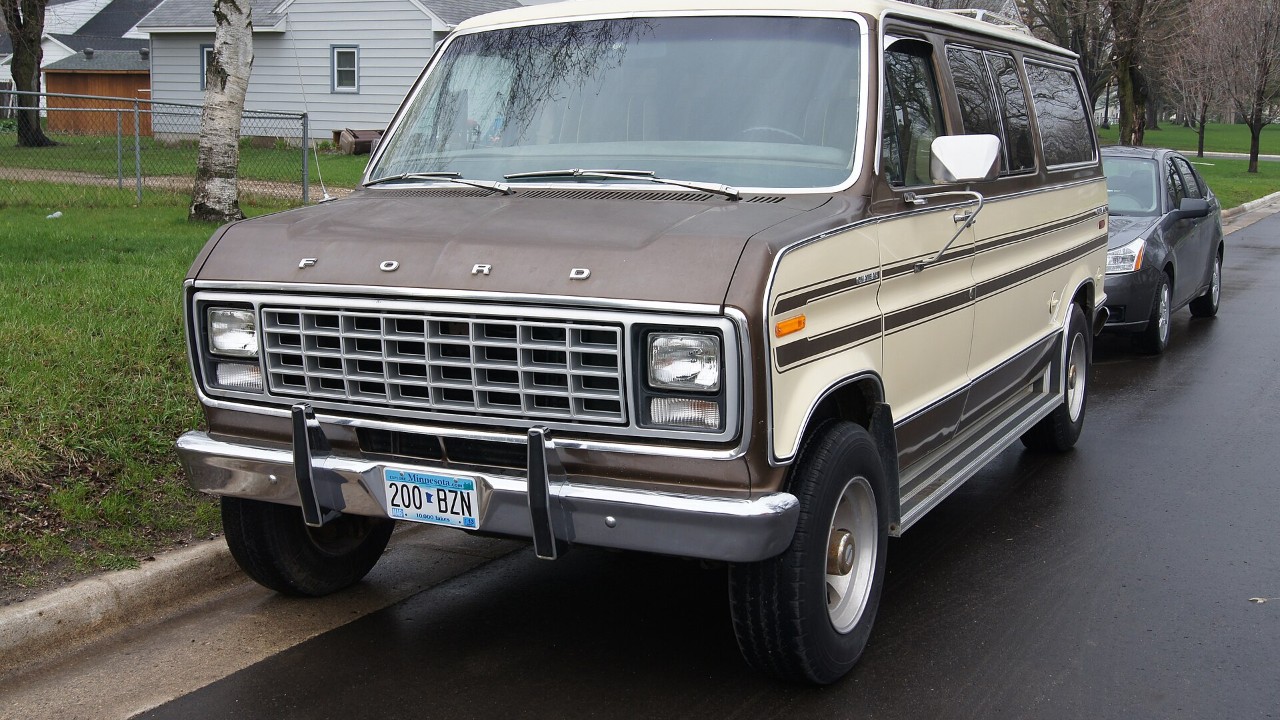
Ford’s third-generation Econoline arrived for 1975 and stayed nearly unchanged through 1991. The Club Wagon was the passenger model. Its top trim, the Chateau, goes back to at least 1969.
Curbside Classic’s Club Wagon Chateau story describes a cabin of cloth, vinyl and carpet, with passenger room on par with a Country Squire wagon. The 1975–91 vans also carried twin fuel tanks of 25 and 15 gallons. As for keeping one, the writer’s family bought a later 1995 Chateau new and kept it until 2006, covering about 160,000 miles.
More from Fast Lane Only