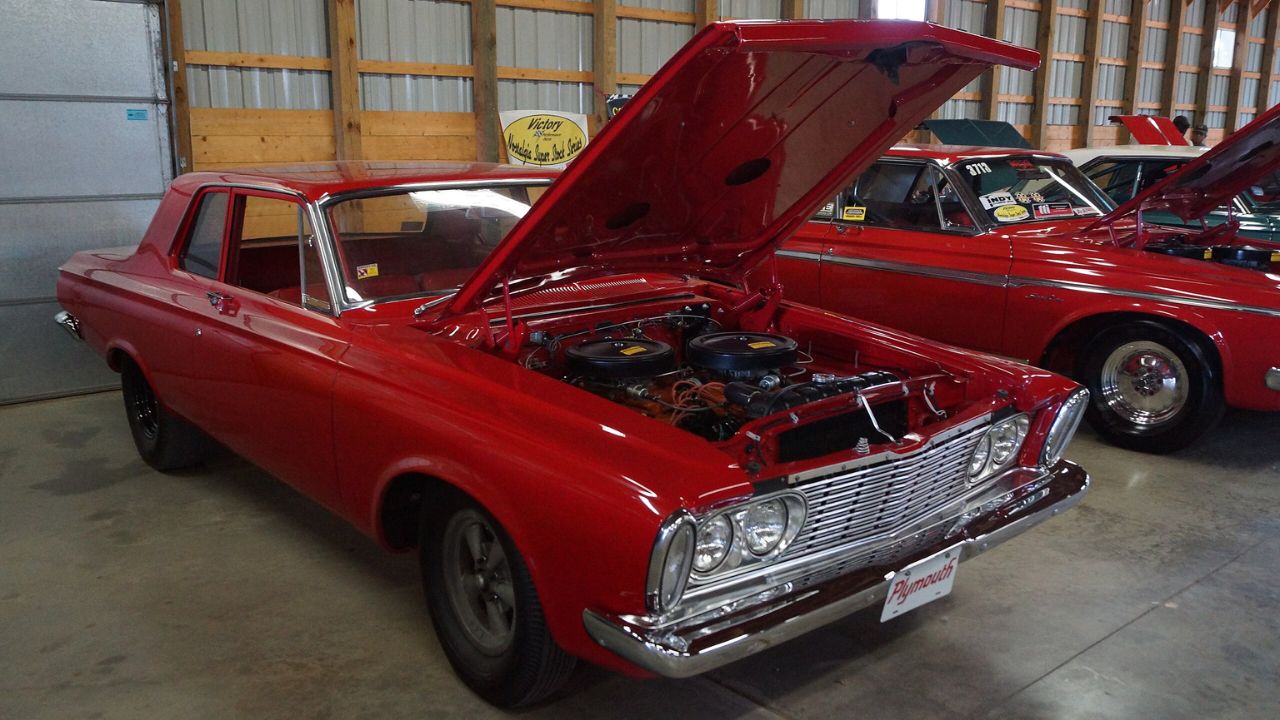
Three of these five cars carry the Plymouth Fury name, and each has a detail that makes it hard to replace. One of them even came back to the family that raced it, 48 years after it was sold.
Of course, we can’t poll every owner. So the case for each car rests on the record instead: the engine, the build numbers and what one is worth.
1. 1962 Plymouth Fury 413
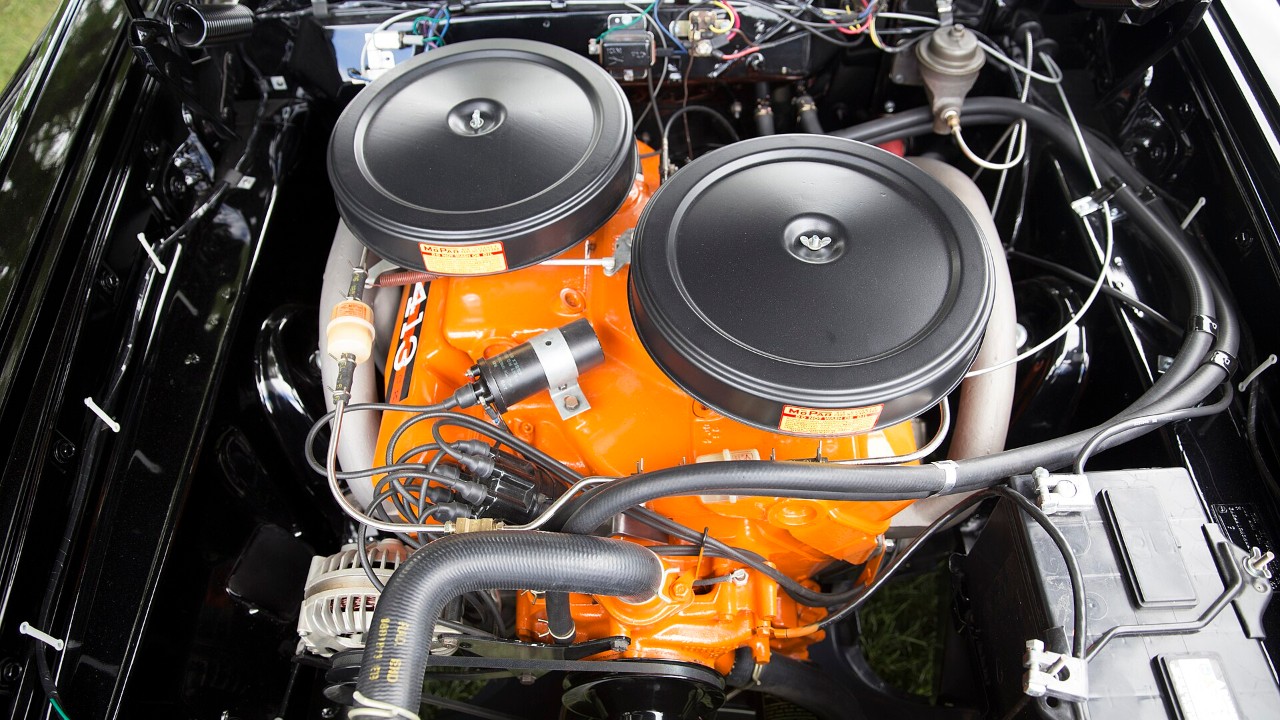
In 1962, the Fury range ran from the slant-six to something much stronger. The base V8, for example, was a 318-cubic-inch engine rated at 230 hp. That same year, Plymouth also brought back the Sport Fury as a two-door hardtop and a convertible.
At the top sat a 413-cubic-inch V8 with two four-barrel carburetors on short-ram manifolds, rated at 420 hp, according to Hagerty’s valuation guide for the 1962 Fury. Still, Hagerty lists a concours 1962 Fury at $20,900. In other words, an owner who keeps one isn’t waiting for a windfall.
2. 1963 Plymouth Savoy Max Wedge
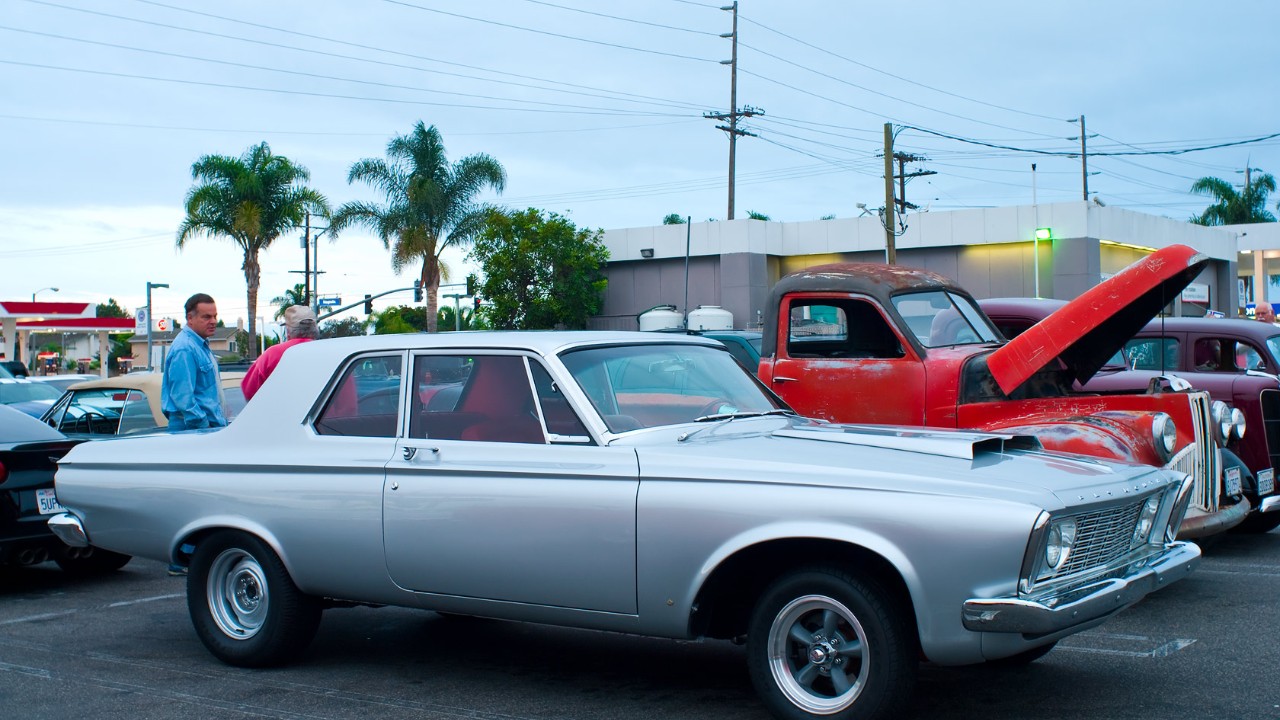
Hagerty calls this 1963 Savoy a factory super stocker. It used a 426 Max Wedge with 13.5:1 compression and a pair of Carter AFB carburetors on a cross-ram intake, rated at 425 hp. It also wears an aluminum front end, one of 50 cars built that way.
Fred Gillogly raced it in NHRA’s AA/SA class through 1966. In spring 1965 he ran as quick as 11.86 seconds at 120.16 mph on 7-inch tires. Then, in 1969, he sold it to help pay his wife’s medical bills. His son, Hagerty writer Brandan Gillogly, bought it back in 2017, as he tells it in Hagerty’s story of the Savoy. That’s a car nobody plans to sell twice.
3. 1963 Plymouth Sport Fury
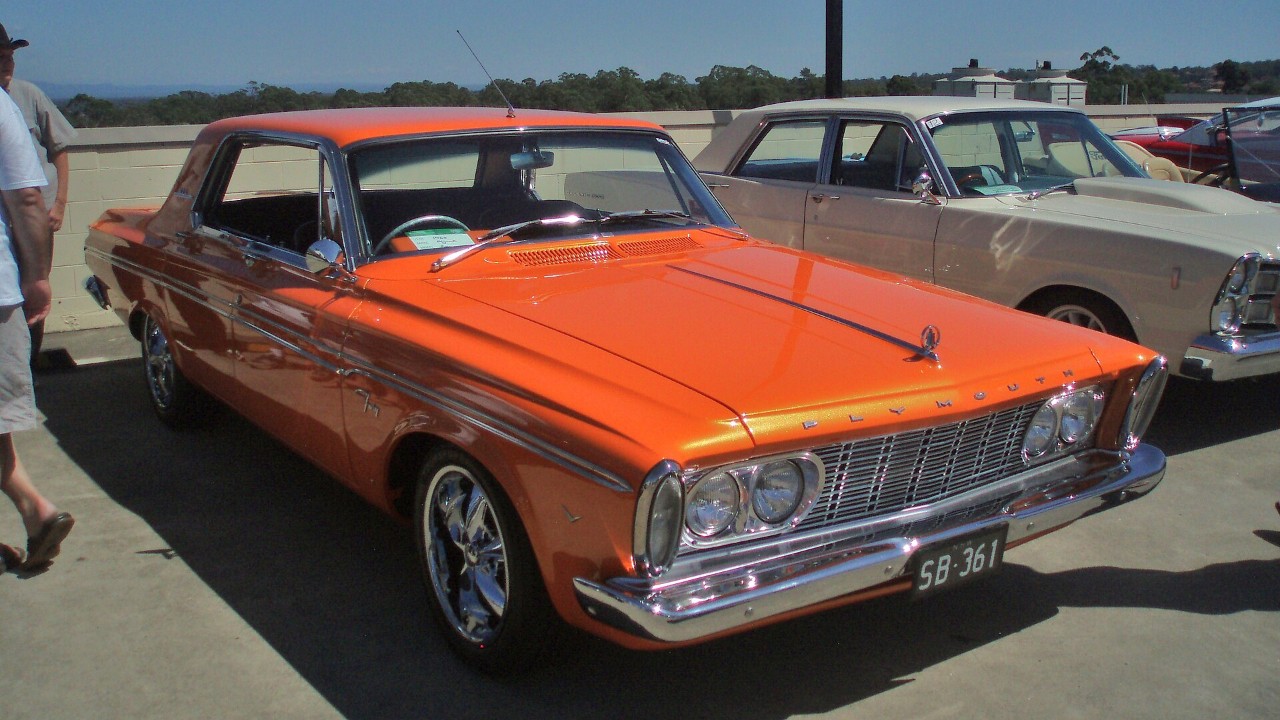
For 1963, Plymouth reworked the front end of a body that buyers hadn’t warmed to in 1962. The Sport Fury got full-length painted side moldings and an engine-turned trim insert. In addition, its front turn signals sat high on the fenders, with white lenses over amber bulbs. Also, Plymouth sold the Sport Fury only with a V8, never the six.
Production stayed modest. In fact, Conceptcarz’s 1963 Sport Fury history counts 15,319 cars, with 11,483 hardtop coupes and 3,836 convertibles. A new hardtop listed at $2,580 and a convertible at $3,080. Today, the same page puts the average auction sale at $39,244.
4. 1973 Plymouth Fury Gran Coupe
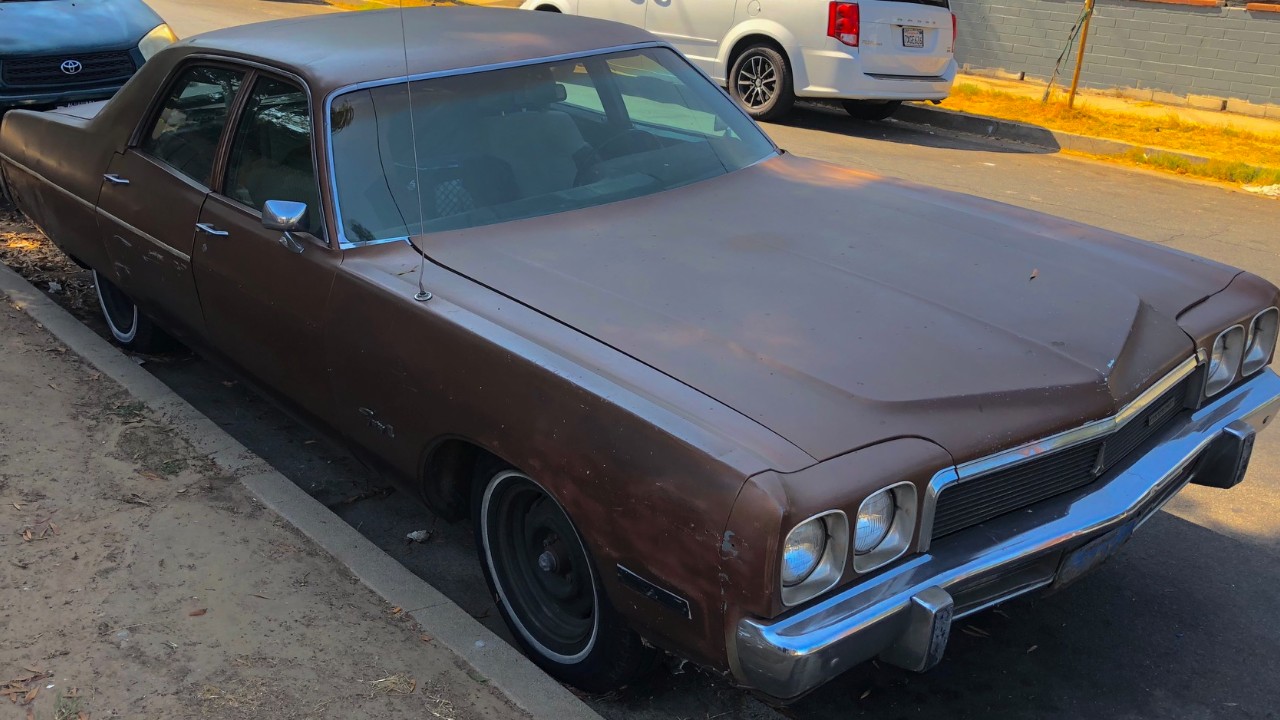
The Gran Coupe was a big car even by 1973 standards. It measured 223.4 inches long on a 120-inch wheelbase and weighed about 4,200 pounds. Plymouth called it one of the biggest hardtops in the industry. A 360-cubic-inch V8 rated at 170 hp was optional, and 5-mph bumpers arrived that year.
However, only 4,177 of the 14,852 Gran Coupes sold in 1973 had bucket seats. According to Curbside Classic’s Gran Coupe history, that was the highest bucket-seat rate of any domestic full-size car that year. Chrysler then dropped buckets from all its full-size lines for 1974. So a 1973 bucket-seat car is the last C-body Plymouth built with them.
5. 1977 Plymouth Volare Road Runner

After a single year on the 1975 Fury, the Road Runner package moved to the new Volare coupe for 1976. In its first year, the options were a 150-hp 318 or a 170-hp 360, both on two-barrel carburetors. Meanwhile, the 360 came only with an automatic.
Then, for 1977, the 360 gained 25 hp from a dual exhaust and an electronically controlled four-barrel carburetor. Street Muscle’s Volare Road Runner history calls that carburetor the first of its kind. The 318 also got a four-barrel option worth 10 more hp. Later, Plymouth built only about 1,000 of the final 1980 cars before the package ended.
More from Fast Lane Only