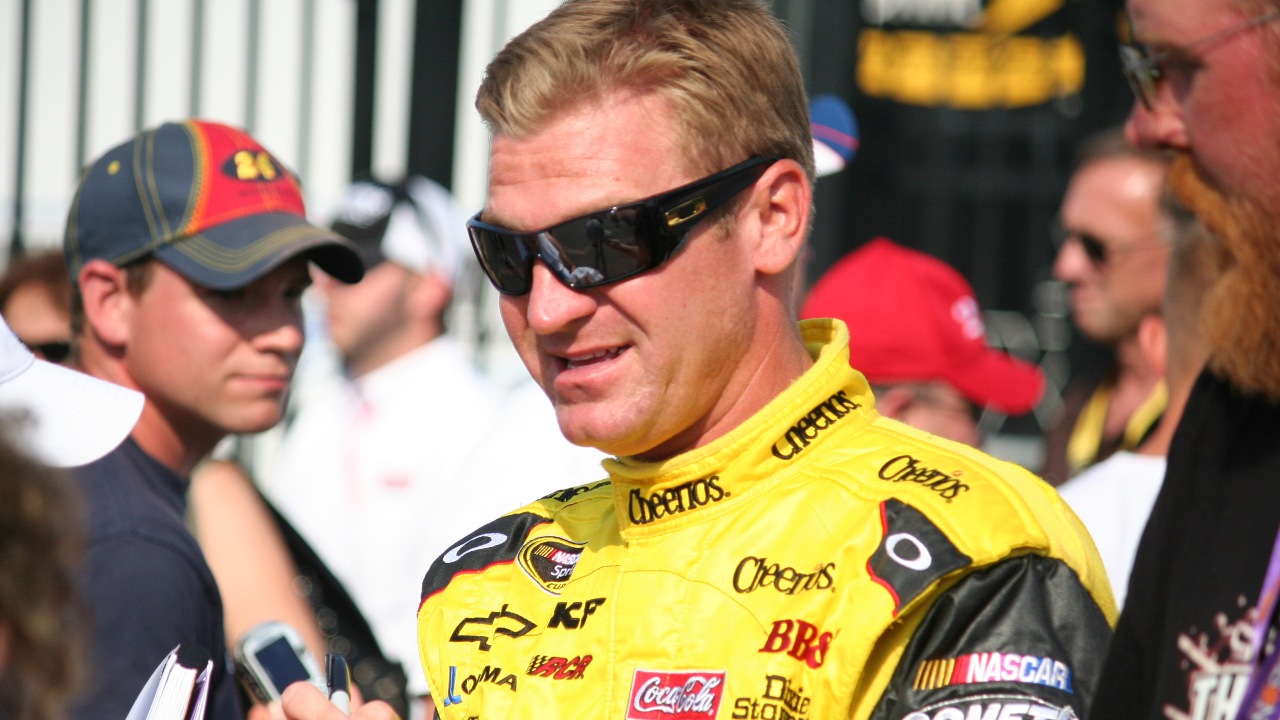
Clint Bowyer never fit the mold of the polished, media-trained racer who kept his visor down and his personality tucked away. He was loud, loose, and relentlessly himself, and that energy did as much to shape modern NASCAR as any trophy he ever lifted. When I look at the mark he left on the sport, I see a driver whose legacy is as much about how he made people feel as it is about where he finished on the track.
His story runs through packed grandstands, late-night garage laughs, and now a Fox broadcast booth that suddenly feels a lot less stiff. The wins and championships matter, of course, but the real throughline is how Clint Bowyer turned being an unapologetic character into a kind of connective tissue for NASCAR, linking drivers, fans, and his Kansas hometown in a way that still lingers every race weekend.
The racer who turned grit into staying power
Before Clint Bowyer became the guy cracking jokes on television, he was Clinton Aaron Bowyer, an American racer grinding his way up the ladder. He built his name in stock cars long before the cameras fell in love with his personality, starting his national NASCAR career in the mid-2000s and carving out a place in the Cup garage through persistence more than hype. Over time he stacked results across the Truck Series and Xfinity Series, picking up 3 wins in Trucks and 8 in Xfinity on his way to becoming a full-time Cup Series fixture, proof that the class clown label never canceled out the competitor underneath.
That résumé gave his personality real weight. When he eventually took over the No. 14 in the NASCAR Cup Series from three-time champion and team co-owner Tony Stewart, he was not just a fun pick, he was a proven one. His Cup career stretched across top-tier organizations and kept him in the mix for more than a decade, long enough that later retrospectives on his NASCAR legacy could talk about wins, championships, and playoff runs in the same breath as his one-liners. The numbers did not make him beloved on their own, but they gave his whole act credibility, the sense that the guy laughing on pit road had earned the right to loosen the room.
“Class clown” with a purpose
Inside the garage, Clint Bowyer’s personality was not a side note, it was a defining trait. When fellow NASCAR drivers were asked who the sport’s class clown was, the answer came back almost unanimously: Hands down, they picked Clint Bowyer. That reputation did not come from a few viral moments, it came from years of being the guy who could break tension after a wreck, turn a dull media scrum into a comedy bit, or keep a sponsor dinner from feeling like a chore. He leaned into that role, and the paddock quietly relied on it more than anyone admitted at the time.
He knew exactly what he was doing. In one extended conversation about his career, Clint Bowyer talked openly about being one of NASCAR’s most captivating personalities and about wanting to leave his mark beyond the stat sheet. He framed his approach as something the sport needs, a kind of familial, open-door vibe that keeps fans and drivers on the same level instead of opposite sides of a velvet rope. That same mindset showed up when he described having beers with racing fans and everyday people, or when he joked his way through tough stretches on track. The humor was real, but it was also a strategy to keep NASCAR feeling human at a time when big-money polish threatened to sand off its rough edges.
From wild man to family man, without losing the spark
What makes Bowyer’s personality interesting to me is how it evolved without ever really softening. Earlier in his career he was painted as a wild man, the guy you expected to close down the bar after a race weekend. As his life changed, he shifted into more of a family man, but the core of his persona stayed intact. Reports on that transition made it clear that while Bowyer’s lifestyle may have changed, his Stewart-Haa era intensity and edge at the track did not simply vanish. He just redirected some of that energy toward home, kids, and a different kind of responsibility.
That balance showed up in how he talked about his day-to-day life. He could joke about dialing things back, then immediately undercut himself with a line like “Let me retract that statement,” a wink that told you the old Clint was still in there. The same guy who once lived for late nights in the hauler became the one who still lit up the garage, just with a slightly different set of priorities. The evolution did not erase the wild streak, it reframed it, and that made him relatable to fans who were growing up and settling down right alongside him.
Emporia roots and a two-way loyalty
For all the national spotlight, Clint Bowyer never stopped being the kid from Emporia, Kansas, and that hometown connection is a big part of his legacy. Local business leaders talked about how most people with name recognition on a dealership sign might show up every six months, shake a few hands, and disappear. Bowyer did the opposite. He kept showing up, investing time and presence in a way that made it clear he saw Emporia as more than a branding opportunity. When one executive at Davis Moore Auto Gro described how often he came by, the subtext was simple: this was not a transactional relationship, it was a shared identity.
That loyalty ran both ways. Emporia embraced him as a favorite son, and he carried that small-town pride into every national broadcast and sponsor appearance. When he talked about his background, it was not a polished origin story, it was a set of lived-in details that made sense of his whole vibe. The dealership visits, the local partnerships, the way he kept circling back home even as his NASCAR profile grew, all of it reinforced the idea that Bowyer’s personality was rooted in a real place with real people. That grounding helped keep his jokes from feeling like an act, because everyone back home knew exactly where they came from.
Reinventing himself in the Fox booth
When Clint Bowyer stepped away from full-time racing, he did not drift quietly into retirement. He jumped straight into the Fox broadcast booth, sitting alongside veteran lead announcer Mike Joy and other former drivers, and immediately tried to spice up the coverage. Enter Clint Bowyer, the second color commentator who was really there to shake up the rhythm, fill dead air with stories, and make the booth feel more like a rowdy pit box than a corporate studio. He brought the same quick wit and unfiltered reactions that had defined his driving days, only now they were piped directly into living rooms every Sunday.
That transition has not always been smooth, and that is part of the charm. Clint Bowyer has been in the Fox booth full-time since he retired from racing in 2020, serving as an analyst whose on-air meltdowns and unscripted moments are now part of the show. When Kyle Larson can roast him on live TV for losing it over a call, you know the personality is still fully intact. Earlier coverage of his move into television framed him as the guy who would bring extra flavor to Joy and Gordon, and that is exactly what happened. The same traits that once made him the sport’s class clown now help keep a three-hour broadcast from feeling like homework.
The itch to race and the competitor underneath
For all the laughs, the racer in Bowyer never really clocked out. It has only been a few years since he retired from NASCAR full time, and already he has admitted the racing itch is back. In one recent look at his post-driving life, he talked about how stepping away felt like the right call at the time, but you could hear the tug of the track in the way he described it. That tension between moving on and wanting one more shot is familiar to a lot of veterans, but with Bowyer it is especially vivid because he never hid how much he loved the grind.
That lingering competitive fire is part of why his legacy resonates. When analysts break down how good Clint Bowyer really was, they point out that he has been one of NASCAR’s best personalities in the last 15 to 20 years of the sport, but they also underline the performance behind it. But behind that persona sat a driver who could win in Trucks, in Xfinity, and in Cup, who could step into the No. 14 after Tony Stewart and keep the car relevant, and who could hold his own across 15 years in the top tier. The fact that he still feels the pull of the driver’s seat only reinforces that the jokes were never a mask for indifference. He cared, deeply, and that caring is part of what fans remember.
How the garage remembers him
When word spread that Clint Bowyer was stepping away from full-time racing, the reaction from other drivers said as much about his legacy as any stat line. Teammates and rivals alike talked about the hole his retirement would leave in the garage, not just in terms of a competitive car but in terms of energy. In the run-up to his final races, drivers were already reflecting on how different the grid would feel without the guy who could crack a joke on the grid walk or defuse a brewing feud with a one-liner. The sense was that NASCAR was losing more than a driver, it was losing a mood setter.
That is the throughline I keep coming back to when I think about Clint Bowyer’s place in NASCAR history. He was a winner, a Cup contender, and a reliable presence in the top tier, but his real imprint is cultural. He showed that you could be fiercely competitive and still be the class clown, that you could grow from wild man to family man without sanding off your edges, and that you could carry Emporia, Kansas, into every big-city spotlight without forgetting where you started. In a sport that sometimes struggles to balance authenticity with polish, Bowyer’s legacy is a reminder that the loudest, loosest guy in the room can also be the glue that holds it together.
More from Fast Lane Only: