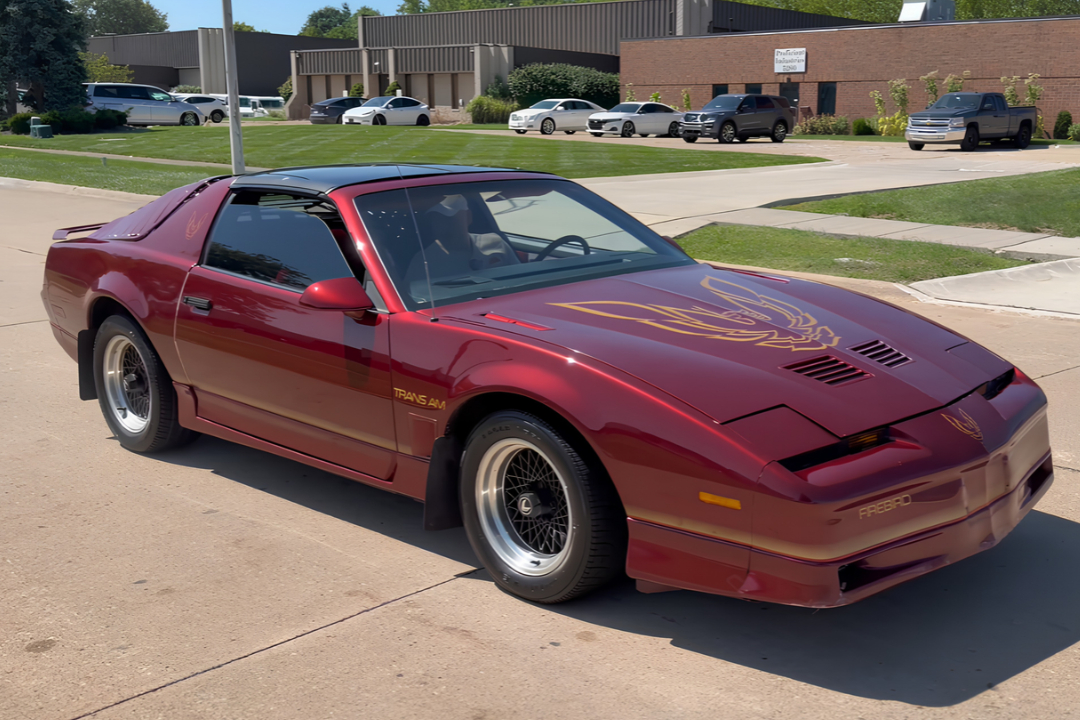
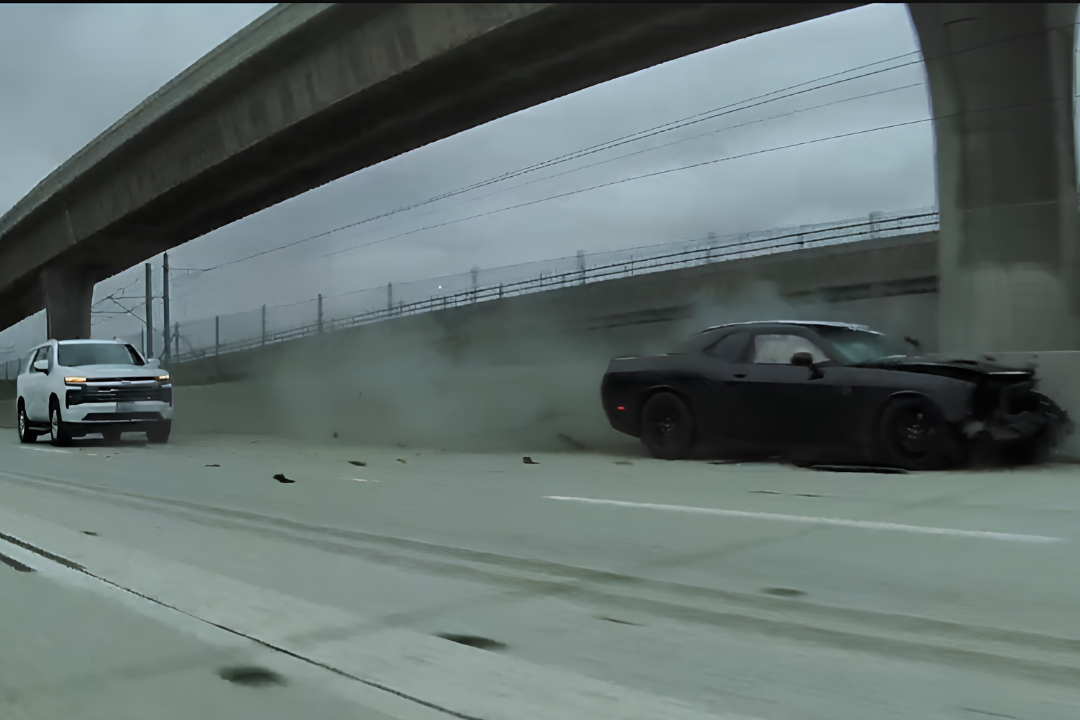
A bright Corvette Stingray perched across active train tracks in Boston is the kind of image that makes commuters groan and safety officials wince. What looked at first like a bizarre parking job quickly unraveled into a case study in how one driver’s choices can shut down a critical transit line and expose a tangle of legal problems.
Instead of a routine rush hour, riders were left waiting while crews worked around a low-slung sports car that never should have been anywhere near the rails. I see in this incident not just an odd traffic mishap, but a revealing snapshot of how fragile urban mobility becomes when basic driving rules are ignored.
How a wrong turn put a Corvette on Boston’s tracks
The core of the story is deceptively simple: a Corvette Stingray ended up stuck on Boston train tracks after what the driver later described as a wrong turn. Rather than backing out or stopping before the rails, the car wound up positioned in a way that blocked service and forced trains to halt. Reporting on the incident describes the vehicle as a Corvette C8 Stingray and places the scene in Boston, where the low ground clearance and unfamiliar layout near the rail line combined to trap the car on the tracks, turning a navigation mistake into a full-blown disruption that affected far more people than the person behind the wheel Corvette Stingray.
According to detailed accounts, the driver told authorities that he had taken a wrong turn in the Boston area shortly before the car became lodged on the tracks, a claim that has been repeated in multiple descriptions of the event. One report notes that the incident unfolded on a Wednesday afternoon, just before the evening rush, when the Corvette, referred to as a “Corvett” in one summary, came to rest in the path of oncoming rail traffic and forced an immediate halt to service so crews could secure the scene and remove the car train halted. The driver’s explanation of a simple navigation error may sound mundane, but the location and timing turned that mistake into a high-impact obstruction.
An unlicensed driver and a long list of violations
Once police arrived, the situation shifted from an odd traffic call to a serious enforcement case. Investigators quickly determined that the young man behind the wheel did not have a driver’s license at all, a fact that transformed the narrative from an unlucky wrong turn into a preventable incident that never should have happened. Police accounts describe the driver as unlicensed and the Corvette as both uninsured and unregistered, meaning virtually every basic legal requirement for operating a car on public roads had been ignored at the moment it rolled onto the tracks Police say.
Further reporting underscores just how extensive the violations were. One account characterizes the situation as an unlicensed driver halting train service in Boston after getting an uninsured, unregistered Corvette stuck on the tracks, a formulation that captures both the legal and operational fallout in a single line Unlicensed Driver Halts Train Service. When I look at that combination of factors, it is hard to see the Corvette’s position on the rails as an isolated lapse. Instead, it reads as the predictable endpoint of someone driving a powerful sports car with none of the paperwork, training, or insurance that the law requires precisely to prevent high-risk situations from spiraling into public hazards.

Train service, commuters, and the MBTA’s scramble
For Boston’s rail system, the stranded Corvette was not just a curiosity, it was an operational emergency. The car’s position on the tracks forced trains to stop, and service had to be halted while crews coordinated with police to secure the area and arrange for the vehicle’s removal. Reports on the incident describe train service being halted after the Corvette was parked on the tracks, with the timing just before 5 p.m. compounding the disruption for riders who rely on that corridor to get home from work train halted. In a dense urban network, a single blockage can ripple outward, delaying multiple trains and stranding passengers far from their destinations.
The response fits a pattern that Boston riders have seen in other rail incidents. When a commuter rail train collided with a tractor-trailer at a Canton railroad crossing earlier this year, The MBTA deployed shuttle buses to move passengers between the Stoughton and Canton Center stations while the tracks were cleared and inspected The MBTA. Over the summer, when a planned shutdown affected parts of the system in Boston, the MBTA again turned to shuttle buses to ferry riders between affected stops at no charge, a strategy that has become a standard tool whenever trains cannot safely operate on a segment of track MBTA. In that context, a Corvette stuck on the rails is not just a quirky headline, it is another stress test for a system that must pivot quickly whenever the right-of-way is compromised.
Why a low sports car and rail infrastructure are a bad mix
Beyond the legal violations, the choice of vehicle made the situation worse. A Corvette Stingray, particularly in its C8 generation, sits low to the ground and is designed for smooth pavement, not uneven crossings or complex rail junctions. When a driver like this one steers such a car into an area near tracks that is not meant for regular traffic, the risk of getting high-centered or trapped rises sharply. Accounts of the Boston incident describe the Corvette becoming stuck on the tracks after the wrong turn, a scenario that fits with how a low-slung sports car can bottom out on raised rail beds or embedded hardware that a higher-riding sedan or SUV might clear more easily Corvette Stingray.
In my view, that physical mismatch between car and environment is a reminder that performance vehicles demand more situational awareness, not less. The same aggressive stance and mid-engine layout that make a Corvette C8 so capable on a track day leave it vulnerable when a driver ventures into poorly marked or restricted zones near rail lines. When the person behind the wheel is unlicensed and unfamiliar with both the car and the area, as police say was the case in Boston, the margin for error shrinks even further Police. The result is a car that is not just in the wrong place, but physically incapable of escaping without outside help, which is exactly what played out on the tracks.
What this says about driver responsibility and urban safety
When I step back from the details, the Corvette on the tracks reads less like a one-off oddity and more like a warning about how fragile shared infrastructure can be when basic rules are ignored. The driver in Boston was not simply lost. According to multiple accounts, he was operating a powerful Corvette Stingray without a license, in a car that was uninsured and unregistered, and he ended up blocking a rail line that thousands of people depend on every day Boston After Getting Uninsured, Unregistered Corvette Stuck. That combination of personal risk-taking and public impact is exactly what traffic laws are designed to prevent, and it shows how quickly one person’s choices can cascade into systemwide delays.
Boston’s recent history with rail disruptions, from collisions at crossings to planned shutdowns that require shuttle buses between key stations like Stoughton and Canton Center, has already forced riders to adapt to a network that sometimes feels perpetually on edge Stoughton and Canton Center. Adding an unlicensed Corvette wedged across the tracks to that list underscores how much urban safety depends on individual drivers respecting both the letter and the spirit of the law. When they do not, the cost is measured not just in tickets or towing fees, but in missed connections, delayed commutes, and a little more strain on a transit system that has to be ready for everything from tractor-trailers at crossings to sports cars parked where they never belonged.